Published
- 06:00 am

Provenir, a global leader in data and AI-powered risk decisioning software, today announced the appointment of Carol Hamilton as its Chief Product Officer.
Based in Provenir’s London office, Hamilton will be responsible for shaping the company’s global product strategy, overseeing product development and management, and identifying new growth opportunities. She will play a pivotal role in driving innovation and expanding Provenir’s product suite, including decisioning, data and artificial intelligence to help lenders make smarter decisions across credit, compliance and fraud.
Since joining Provenir in 2021, Hamilton has served as Senior Vice President, Global Solutions and Chief Commercial Officer of Provenir AI, showcasing her expertise and profound understanding of the company’s operations.
With a wealth of experience in product strategy, innovation, and customer-centric design, Hamilton is uniquely suited to drive Provenir's product vision and lead the company's next phase of growth; she brings rich experience in developing fraud, compliance, and security solutions for the financial services industry. Prior to joining Provenir, Hamilton held senior leadership roles at GBG, SAS and BAE Systems, where she led regional teams responsible for creating long-term strategy, driving growth, and seeking new areas for expansion.
“In today’s ever-evolving market, organizations’ real-time decisioning software needs to keep pace. Provenir is built to solve industry-specific needs today, while anticipating the ones businesses will face tomorrow,” said Larry Smith, Provenir Founder and CEO. “Carol’s recent efforts leading Provenir AI give her an ideal background to assume overall responsibility for Provenir’s full product suite. She’ll be instrumental in the advancement of our strong value proposition and capabilities to organizations worldwide.”
“Provenir has long delivered on its promise of increasing customers’ agility and responsiveness to market challenges and client needs, from supporting banks in embracing digital strategies to partnering with fintechs on their growth journey,” said Carol Hamilton. “I’m looking forward to further developing our product suite and helping our customers to maintain their rank as innovative and disruptive financial services players.”
- 05:00 am

Bloomberg today announced that Apex Group, a global financial services provider, has selected Bloomberg to provide market data for its global operations. Apex Group will be using Bloomberg’s Data License solution to provide reference, pricing and corporate actions data for equities and fixed income.
With this solution, Apex Group will be able to use Bloomberg’s data sets predominantly for its Fund Administration business, which manages fund and portfolio accounting for various global funds. Apex Group has also recently made several strategic acquisitions, and the firm-wide consolidation to using primarily Bloomberg’s data sets will ensure that the entire group will have access to the same data going forward. The implementation has been carried out by Apex Group’s Global Operations and Technology team based out of India.
Bloomberg provides high-quality, standardized and reliable data that can be integrated into Apex Group’s existing workflows and systems. The data sets enable independent calculation of Net Asset Values (NAVs) of a Fund’s portfolio, which is a key regulatory requirement in most markets. They also simplify and support pre-trade compliance with local regulations, as well as portfolio and counterparty risk monitoring.
In addition, Apex Group has selected Bloomberg’s BFIX for multi-currency portfolio reporting. BFIX is a robust, regulated benchmark covering a wide array of FX instruments that offers comprehensive coverage of global currencies.
“We chose Bloomberg’s Enterprise Data solutions because they offer reliability, a global presence, and adaptability, allowing us to promptly address our clients’ evolving needs at every stage of their business journey. By adopting Bloomberg’s solutions, we ensure that our entire company can efficiently access reliable, strong, and high-quality data. This collaboration demonstrates Apex’s dedication to continuously improve and optimize our operations, as well as deliver exceptional service.” said Jeff Pamplin, Global Head of Operations and Group ExCo member at Apex.
“We are pleased to work with Apex Group as their leading global provider of market data. Doing business in a complex global marketplace and complying with various local regulations require firms to have access to efficient systems and workflows. Adopting Bloomberg’s Enterprise Data solutions will significantly streamline and standardize Apex Group’s post-trade corporate actions process,” said Rajiv Mirwani, Head of Enterprise Sales, South Asia, Bloomberg.
Bloomberg’s Enterprise Data business transforms the way customers extract value from data by providing comprehensive coverage and high data quality. Enterprise Data produces pricing, reference and regulatory data sets, real-time market, event and news data, liquidity analytics along with data management and distribution technologies.
- 03:00 am

Sell-side derivatives clearing firms are expanding their memberships and expecting more competition in the market as rising interest rates add hundreds of millions of dollars to global revenues, according to an Acuiti study.
The Growing Opportunity in Derivatives Clearing, released today in partnership with ION, found that almost two-thirds of futures commission merchants (FCMs) plan to expand their number of clearing memberships over the next three years.
The expansion plans come as rising interest rates over the past 12 months have created the potential for hundreds of millions of dollars in additional revenues to FCMs. This has been complemented by large increases in market volumes creating a dual tailwind for FCMs.
Of the 61 senior executives surveyed, less than 10% said that they thought interest rates would not remain high for long enough for them to expand their business with confidence today.
The reversal in fortunes for clearing comes after over a decade of poor conditions as record-low interest rates hit FCMs’ revenues. At the same time, volumes plummeted in the wake of central bank support of global markets. This combination contributed to the number of FCMs globally declining from around 170 before 2008 to 70 today.
While there have been some new entrants to the market over the past decade, firms pulling out of the market and consolidations have outweighed the number.
The Acuiti study suggests that the downward trend will soon be reversed as new cryptoassets and retail market entrants eye-clearing memberships to expand their offerings.
However, new entrants face several challenges. Capital charges facing FCMs remain a significant barrier to entry. Firms looking to expand or enter the market also cite finding skilled staff, compliance with new regulations, and sourcing the right technology as challenging factors.
Francesco Margini, Chief Product Officer for Cleared Derivatives at ION Markets, said: “The radical evolution of the clearing landscape has made powerful real-time systems and back-office functionality all the more critical for the growing FCM community. At ION, this new demand is evident across our customers. We see it as a mission for technology providers to resolve the costly, complex deployment challenges new entrants face when modernizing their post-trade infrastructure. Rather than being a barrier, technology solutions – such as ION’s XTP Spark – should reduce vital overhead for businesses and enable them to seize opportunities in a competitive and volatile environment.”
In addition to expanding their memberships, incumbent FCMs are seeking to increase their profitability by optimizing the allocation of cash and collateral pledged to cover client margin requirements.
“There has been a significant and abrupt change in the economies of providing clearing services in derivatives markets over the past decade,” says Ross Lancaster, head of research at Acuiti. “This is resulting in existing FCMs seeking to expand their offerings, and new entrants eyeing launches. The market needs more FCMs, and the continuation of the current conditions is likely to reverse the long-term declines in the number of firms providing services to the market.”
Download the full report here: https://iongroup.com/resource-center/markets/shifting-trends-for-fcms/
- 06:00 am

Sonovate, the leading provider of embedded finance and payment solutions for the contingent workforce, has today announced the opening of a new European hub in Amsterdam as part of its international expansion strategy.
Amsterdam was chosen as the location for the company’s first overseas office due to the Netherlands' flexible working environment. The country ranks second in Europe after the UK in terms of contingent workers per capita, according to the Staffing Industry Analysts.
Sonovate’s funding activity will focus on supporting mid-size and large recruitment businesses, consultancies and online labour marketplaces. The new operation in Amsterdam will be headed by Tjalle Kujit who has been appointed as Sonovate’s first Country Manager. He has 20 years of banking and experience in B2B lending and financial services. Prior to joining Sonovate, he was a trusted advisor to more than 500 companies, helping them to develop working capital strategies.
This is the latest announcement as Sonovate continues its ambitious growth strategy throughout 2023. The company recently significantly enhanced its funding technology platform to enable it to better serve large, multinational recruitment businesses and launch new lines of products in the future as it continues to grow and expand its customer base.
The new platform gives customers the ability to optimise cash flow, provides enhanced operational efficiencies with far faster onboarding, and offers highly scalable funding options. These enhanced capabilities will empower Sonovate to increase the number of large, enterprise-size customers that it serves.
Sonovate also recently partnered with HR platform, Deel, to become the only funder to serve its global customer base. The partnership highlights the trend for recruitment businesses to operate in multiple markets as flexible and remote working becomes the norm for organisations across the world.
Following a securitisation deal with BNP Paribas and M&G Investments, which added £165 million to Sonovate’s funding structure, Sonovate has already made strides in expanding the number of enterprise-size customers it serves.
Richard Prime, Co-Founder and Co-CEO, Sonovate comments: “With flexibility now a business norm, unlocking access to embedded payments is vital to allow businesses to thrive in an increasingly competitive landscape. As the demand for flexible workers continues to soar, this international expansion cements Sonovate’s position as a global leader in the embedded payments market and a driving force in supporting the global flexible workforce.
“Our Amsterdam hub is a major step in our ambitious growth plans to expand internationally and scale up our funding capabilities to ever-larger companies. The recruitment industry in the Netherlands is growing at pace so having an in-country presence is vital to ensure that Sonovate remains at the forefront of the Fintech and lending industries.”
Tjalle Kujit, Country Manager, Sonovate, says: “With fast, flexible, technology-driven capabilities, Sonovate is set to disrupt the Dutch market, empowering firms who place contractors and freelancers to fully focus on expanding their business without financial pressure to hinder their activities. Sonovate started working with Dutch businesses before it had a team on the ground, which is proof that it brings powerful solutions to the fast-growing contingent labour market in the Netherlands and beyond. I look forward to introducing even more companies to Sonovate, and to playing a role in empowering the workforce.”
Since it started funding in 2014, Sonovate has lent over £3.5 billion to 3,300 businesses and 40,000 workers in 44 countries and increased its revenue by over 51% from 2021 to 2022.
Sonovate delivers swift credit decisions, same-day funding, credit insurance, and collections services, empowering companies to concentrate on expanding their business with confidence, knowing that funds are in place to help meet payment deadlines.
- 04:00 am
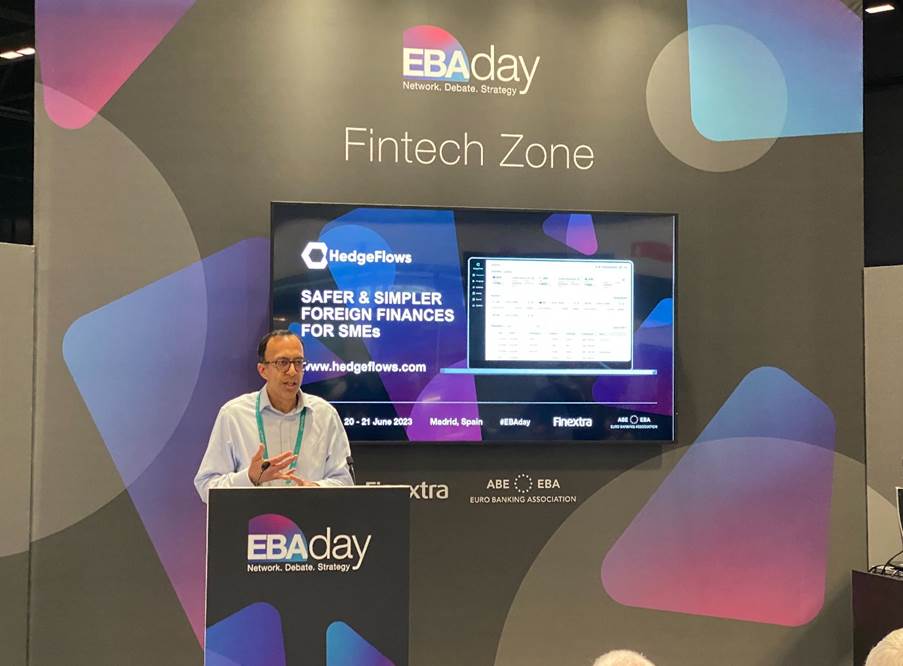
68 per cent of businesses currently lack the appropriate tech infrastructure necessary to expand and need to be afforded with better solutions to operate internationally, according to industry experts at EBAday.
A higher 70 per cent of business owners have ditched expansion plans beyond the UK due to high trading costs, revealed the SME Empowerment Report from financial toolkit, HedgeFlows.
Speaking from EBAday in Madrid, Neh Thaker, Co-Founder of HedgeFlows, used his time presenting to delve into the reasons behind the untapped potential of SMEs in global trade and how HedgeFlows aims to bridge the gap, and empower these businesses to thrive.
“SMEs play a key part in every economy, and accessing international markets for supply chains and customers brings everyone immense benefits. However, without proper support, these businesses are unable to fully capitalise on these opportunities”, says Thaker.
Alex Axentiev, Co-Founder of HedgeFlows, added: “Many fixate on the visible costs of making foreign payments, such as currency conversions and payment fees, however, this represents only a fraction of challenges. There are also a multitude of financial pitfalls that remain hidden from view until it is too late to take preventive measures, leading to significant losses.”
This comes as research revealed that companies lose 4-5 per cent of their annual revenues due to payment inefficiencies and fragmentation when trying to operate in multiple geographies.
EBAday, which took place between the 20th – 21st June in Madrid, welcomed over 1, 300 senior industry participants from 39 countries to analyse topics including KYC, intra-day liquidity, real-time payments and trade finance, and meet trailblazing startups and entrepreneurs who are leading digital transformation.
On the 20thJune, Neh Thaker and Alex Axentiev, Managing Directors of HedgeFlows, exhibited within the FinTech Zone Finalists, presenting the HedgeFlows’ toolkit’s innovative solutions.
Axentiev highlighted: “Doing business internationally can be a risky and unsettling process for SMEs and early-stage businesses, so it is vital that they have access to the resources and support to simpler financial planning, risk management and AP/AR automation across currencies.”
HedgeFlows is a financial toolkit that enables smaller companies to manage all their international finances on a self-service platform. All the way from invoice management and seamless payments through to expert risk management.
HedgeFlows presents banks with diverse partnership models to extend all these services to their SME customers.
- 08:00 am

Checkout finance platform Divido today launches ‘Finance Matcher’, a new tool to support UK consumers in finding checkout finance repayment plans that they can afford, supporting merchants to boost sales without compromising on responsible lending standards.
After a soft credit search by the lender, Finance Matcher presents finance options based on consumer affordability, allowing Novuna-enabled merchants to offer adjusted finance payment plans and increase acceptance rates. For example, shoppers get a second chance to adjust their deposit total or extend repayment terms to reduce their monthly repayment amounts. This responsible approach means consumers can complete purchases without overstretching their monthly budget. Further, consumers passing the soft search the first time have an improved experience by easily seeing if they can save money on interest payments by repaying faster, and still be accepted for finance.
Divido estimates that merchants can lose up to 2% of their retail finance sales because consumers unknowingly set monthly repayments too high, which get declined by the lender. For a merchant selling £20 million through retail finance, this can mean £400,000 in lost sales every year.
Todd Latham, CEO of Divido, comments: “When you get all the way to the checkout and get turned down for finance, you’re going to feel a whole range of emotions and none of them is positive. We saw this problem impacting basket abandonment and customer experience, so decided to develop a frictionless finance solution for the moments that matter. With our partners Novuna, we’re proud to launch Finance Matcher, which gives customers a better chance at being accepted for finance, and boosts merchant’s sales at a time when budgets are being squeezed.
“Today’s shoppers are more savvy, with many now actively choosing to shop with merchants that offer them a variety of payment options. Finance Matcher means happy customers, and less money left on the table.”
Providing support during the cost-of-living crisis
Today’s challenging economic climate means more consumers are turning to alternative financing options to access necessary funds for the essentials, and sometimes unexpected costs. This year alone, over 36% of consumers have used BNPL more than once because of rising inflation and cost of living. With disposable income set to fall by 4% by April 2024 according to the Resolution Foundation, alternative financing options will become essential.
Divido research earlier this year found that 58.3% of consumers see checkout finance as a tool for helping them manage their finances, 50.4% of consumers would be more likely to complete a purchase if they knew checkout finance was a payment option and 54.2% would consider spending more if this was an option. The research highlighted the opportunity for merchants to maintain and in some sectors boost sales, tap into a new customer base, and retain customer loyalty.
Retailers are aware that consumers have shifted their financing habits to keep pace with the rising cost of living. In fact, last year, 76% of large retailers in the UK had implemented at least one form of checkout finance. Now, they need to make their retail finance programmes work harder for them, to prevent bad customer credit experiences and potential sales losses.
Brian Flesk, Head of Retail at Novuna Consumer Finance comments: “We are delighted to be collaborating with Divido to launch Finance Matcher for UK retailers. Providing consumers with alternative finance repayment plans is an ever-increasing priority for retailers. Our unique package of smart, bespoke, credit offerings will match customers to finance plans they can afford and support them during times of need. As finance continues to play a crucial journey in the customer buying experience, this tool with numerous tailoring options will create the right finance option for each individual customer, increase consumer loyalty and nurture stronger relationships with retailers.”
- 06:00 am

“We’re thrilled to announce our partnership with Tuum, and through this collaboration, we'll provide a pre-integrated fintech solution that leverages our open APIs, tokenisation as a service, Just-in-Time gateway funding and other market-leading features. Financial services innovators can build, test, launch and iterate modern and scalable card programmes from the ground up, on their terms, delivering a customised card product that fits their needs best,” said Jeff Parker, SVP and Managing Director, International at Marqeta.
"To keep up with the current pace, it's becoming increasingly important for banks and fintechs to offer modern digital payment experiences to consumers, and we're excited to help them take this step through our collaboration with Marqeta. While our cloud-native, next-generation core banking platform gives them the security and reliability they need for the future, the pre-built integration allows them to create their own card programmes and deliver highly personalised experiences to consumers," comments Jean Souto, VP Global Partnerships at Tuum.
- 01:00 am

SAP Fioneer, a leading global provider of financial services software solutions and platforms, has announced the launch of its Fioneer SME Banking Edition. The solution will enable banks and neobanks to offer banking capabilities in a digital-first and data-driven approach, tailored to the financial needs of small and medium-sized enterprises (SMEs) – a historically underserved market segment.
The SME sector is a vital component of the global economy, accounting for 99% of UK and EU businesses and employing approximately 16.4 million and 84 million people respectively.* Despite making up a significant proportion of GDP and the workforce, SMEs have traditionally struggled to access financial services that meet their unique needs, as the perceived risks and costs associated are deemed too high.
Fioneer SME Banking Edition addresses these challenges by connecting banks to external data sources such as Open Banking, central company registry, e-commerce and Enterprise Resource Planning (ERP) data, to form actionable insights that significantly help SMEs to stay ahead. This will give SMEs clear transparency about cashflow and provide insight to the banks and enable e.g. smart funding options, offering more variety and increasing the number of businesses banks can serve.
As a unique end-to-end solution, Fioneer SME Banking Edition covers front-to-back capabilities and seamlessly integrates with any core banking system. It enables banks to offer services that go beyond traditional banking products such as loans and deposits. Banks will be able to broaden their offering with embedded services and stronger financial advice directly for SMEs. The solution can also be easily integrated and connect to ecosystems via pre-configured APIs.
Charlie Platt, Managing Director of Banking at SAP Fioneer, comments on the launch: “SMEs represent the lifeblood of the economy, and it is critical that they are able to access the financial services they deserve. Through our SME Banking Edition, banks will be able to create commercially viable, unique and better banking experiences for SMEs that will help them to stay ahead in a challenging economic environment.”
“The introduction of our Fioneer SME Banking Edition significantly strengthens how banks interact with SMEs. Utilizing our proven technology, we're facilitating banks to better serve SMEs in a dynamic economic landscape. Drawing inspiration from the B2C market, we're empowering banks to elevate their service offerings for SMEs”, adds Dirk Kruse, CEO of SAP Fioneer.
- 04:00 am

LHV Bank, a leading banking services provider to fintech companies, has been selected by Montonio, a rapidly growing e-commerce checkout solution provider, to enhance its merchant services. LHV Bank's robust API-driven infrastructure will serve as the backbone for Montonio’s enhanced customer experience.
With LHV Bank's suite of services, Montonio can provide key improvements such as a streamlined refund process, the establishment of merchant accounts under respective merchants' names, and improved efficiency of instant EUR payments. Furthermore, the ability to securely segregate client funds using safeguarding accounts, and the provision of virtual IBANs (vIBANs) for merchant settlement accounts, are crucial steps towards optimising Montonio's merchant solutions.
Through these integrated services, Montonio will simplify its payment process from end users to merchants, improving trust and user experience. A notable improvement is the introduction of a two-click merchant refund mechanism – an operational requirement often stipulated by larger e-commerce merchants. This feature enables Montonio to extend its reach to these businesses, positioning itself well for growth. Last year, Montonio successfully raised €11 million in a Series A funding round led by Index Ventures and has grown to a workforce of over 60 professionals.
LHV Bank, one of the largest banking infrastructure providers, offers a comprehensive range of solutions tailored to the needs of merchant acquiring and open banking providers, including real-time GBP payments through the Paster Payment Service (FPS), EUR payments through SEPA Instant or TIPS payment schemes, SEPA and SEPA DD payments, virtual IBANs, and safeguarding accounts via a user-friendly API.
Having secured its UK banking license in early May 2023, LHV Bank’s collaboration with Montonio aligns with its growth strategy to broaden its banking services portfolio for e-commerce businesses.
Markus Lember, Co-founder and CEO of Montonio, commented: “Thanks to LHV Bank’s robust payment infrastructure, Montonio can now provide our customers with enhanced flexibility for accepting payments – all without compromising security or convenience. We are thrilled to join forces with LHV Bank to deliver efficient money movement and payouts to our new and existing merchants.”
Erki Kilu, CEO of LHV Bank, said: “Our partnership with Montonio aligns with LHV Bank’s strategy to serve the e-commerce sector more effectively. We are known for providing efficient and secure banking solutions, and working with Montonio allows us to extend these services to a broader market.”
- 01:00 am

Modulus, a US-based developer of ultra-high-performance trading and surveillance technology that powers global equities, derivatives, and digital asset exchanges, today announced the launch of its AI conversational assistant, especially designed for use within digital asset exchanges. The assistant allows users to ask for and receive instantaneous help with trades, their order status, and their account history, among other functionalities.
“This development is not only a game-changer for exchanges across the globe, but for the digital assets industry, as well,” said Modulus CEO Richard Gardner. “We’ve got exchanges on six continents signed up to roll out our new assistant, and it really is going to change the way they do business. From Asia to Africa, from London to San Francisco, digital assets are about to see a significant shift.”
“A lot of people think this is a matter of eliminating customer service manhours, but it goes far beyond cost reduction. This isn’t designed to take over customer service. It is designed to revolutionize it completely, helping customers with routine inquiries while routing the most important, urgent queries to the human who is best qualified to answer them,” said Gardner.
“Cryptocurrency is known for its technical nature. One of the greatest barriers to entry is that retail investors simply don’t feel confident enough in their ability to navigate crypto. This is a gamechanger, as it will allow exchanges the ability to customize responses to investor queries. As time goes on and the system learns, it will be able to adjust to specific investors and their questions, as part of human-in-the-loop technology,” said Gardner.
Modulus has led the way on exchange innovation in the cryptocurrency industry for years. In 2018, the company launched a market surveillance and risk management solution, which targets abuse within cryptocurrency markets and helps exchange operators identify risks of money laundering.
“As more and more exchanges adopt this patent-pending technology, they’re going to be able to expand the demographic groups they look at as potential customers. There are two ways to increase revenue. Take a bigger slice of the pie. Or make the pie bigger. This technology will allow exchanges to do the latter, tapping into new markets and making digital assets more accessible to a wider investor audience,” said Gardner.