
Published
- 07:00 am
Earlier today, Singapore-homegrown mobile payment company SpherePay announced its strategic partnership and investment from one of China's leading blockchain company Titanium (TV). Titanium Value (TV) has confirmed this investment into SpherePay cryptocurrency project SAY as part of its globalisation plan to penetrate the Southeast Asian market. The investment value was not disclosed.
Titanium (TV) is the chain on the titanium chain (Ti-Blockchain), which has been registered on many exchanges with current market capitalization of about 160 million yuan (USD 25 Million). Titanium chain is committed to the development of the public chain ecosystem beyond the existing blockchain, combining IPFS systems to solve existing financial problems and a large number of network storage idling issues. Its main feature is encrypted distributed storage with smart contracts based on graphene technology.
SpherePay which recently launched SAY, a cryptocurrency project that will allow its users to pay using virtual currency in real-life scenes through their mobile app saw itself securing several partnerships including oBike, a well-known Singapore owned bike-sharing company, to provide direct payments to cyclists via cryptocurrencies such as BTC, ETH, DASH, OCN, TRUE, TV and SAY via SpherePay. Other significant partnerships include Odyssey (OCN), TrueChain (TRUE) and DATx (DATx), a sign of strong support within the industry.
Titanium (TV) placed this strategic investment in SpherePay, in line with its globalisation process, tapping into the strong market access in Southeast Asia. In addition, in a circumstance that a unicorn has not appeared in the mobile payment industry in Southeast Asia, SpherePay is looking out to lead the way for innovation and has taken a bold step to introduce the encryption of real money with blockchain technology. This is also an important reason why the Titanium (TV) team has decided to jump into this strategic investment with SpherePay. This will also further broaden the flow of Titanium (TV) and promote the value of Titanium (TV) turnover.
- 01:00 am

INDATA, a leading industry provider of software, technology and services for buy-side firms, today announced that Wright Investors’ Service, Inc., an investment management and advisory firm based in Greenwich, CT with more than $1.3 Billion in AUM, has successfully implemented INDATA’s iPM Epic platform delivered via iPM Cloud. Wright is utilizing INDATA for OMS & front office, portfolio modeling, IBOR, compliance, portfolio accounting, performance, reporting and reconciliation, as well as INDATA’s SA Outsourcing Services.
Wright Investors’ Service, an internationally recognized investment management and financial advisory firm, decided it was time to upgrade its investment management software to a fullyintegrated package that provides strong front office capabilities including portfolio modeling, compliance and OMS, as well as one that would allow them to take advantage of back office outsourcing services. Outsourcing is a growing industry trend as investment firms look to refocus on the business of investing and servicing clients, while simultaneously containing costs and managing growth.
With INDATA’s SA (System Administration) outsourcing, clients can “mix and match” services to provide the best fit for individualized needs. INDATA’s SA allows clients to operate in a “hands free” environment without having to worry about or staff around processing-type functions so that operations and administrative staff can shift their focus to core functions that relate to their business.
“Now that we have implemented INDATA, we have what we feel is a complete package that combines strong functionality and technology that will evolve with our needs as we continue to grow. We also use INDATA’s SA outsourcing services as an extension of our back office operations, with reconciliation services as a key area that INDATA assists us with,” commented Diane Carstensen, Information Technology Manager at Wright. “With INDATA as our front-toback office investment software, technology and services provider, our end users are able to operate more efficiently,” she added.
“We are very pleased to be working with Wright Investors’ Service and look forward to continuing to serve their needs,” commented David J. Csiki, President of INDATA. For more information on INDATA’s product offering, visit www.indataipm.com
- Product Reviews
- 26.02.2018 07:52 am
What is FitPay?
FitPay is a wholly owned subsidiary of NXT-ID Inc. It provides a licensed technology platform that adds contactless payment capabilities to wearable and IoT devices. It does not require much time to start and investment into software development. Customers will have instant access to the leading payment networks. Overall, FitPay’s solution is consolidated into a wearable and IoT devices that customers can use to make purchases from top worldwide merchants.
Who needs the product?
Majority of consumers of wearable devices stop using it within a short period of time. FitPay mainly works with device manufacturers providing them with contactless payment solutions. In short, it enables manufacturers keeping their customers using their device for a long time, tapping into new ones and recurring revenue streams.
What does the product do?
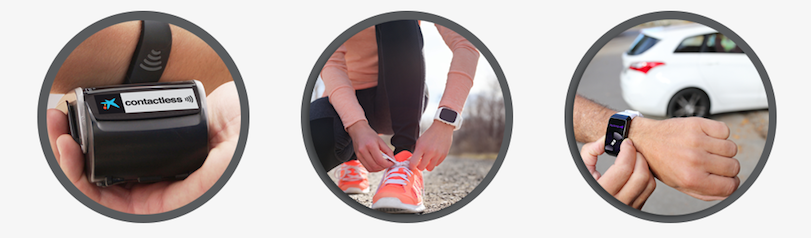
As a proprietary technology platform, FitPay provides phone-less and app-less payment solutions to manufacturers of wearable devices. Particularly, the know-how is integrated into the manufacturer’s devices so that customers can use it anytime anywhere. The developers also ensured that the solution is built in a credential way, adding authentication and other secure services within the IoT ecosystem.
What are the key features?
FitPay’s comprehensive platform technology offers the following key features:
- Flexible integration. The company has formed essential relationships with world’s top payment providers and card issuers and white-label wallet is ready for your branding.
- End-to-End security. Every single transaction is absolutely secure. There is a fully encrypted PCI level 1, compliant infrastructure and bank-level tokenization allows safety of customer’s data.
- Faster time to Market. The FitPay platform is ready to integrate anytime. The company’s developer-friendly platform means shorter time to market less than three months.
Other Product Reviews
- 06:00 am
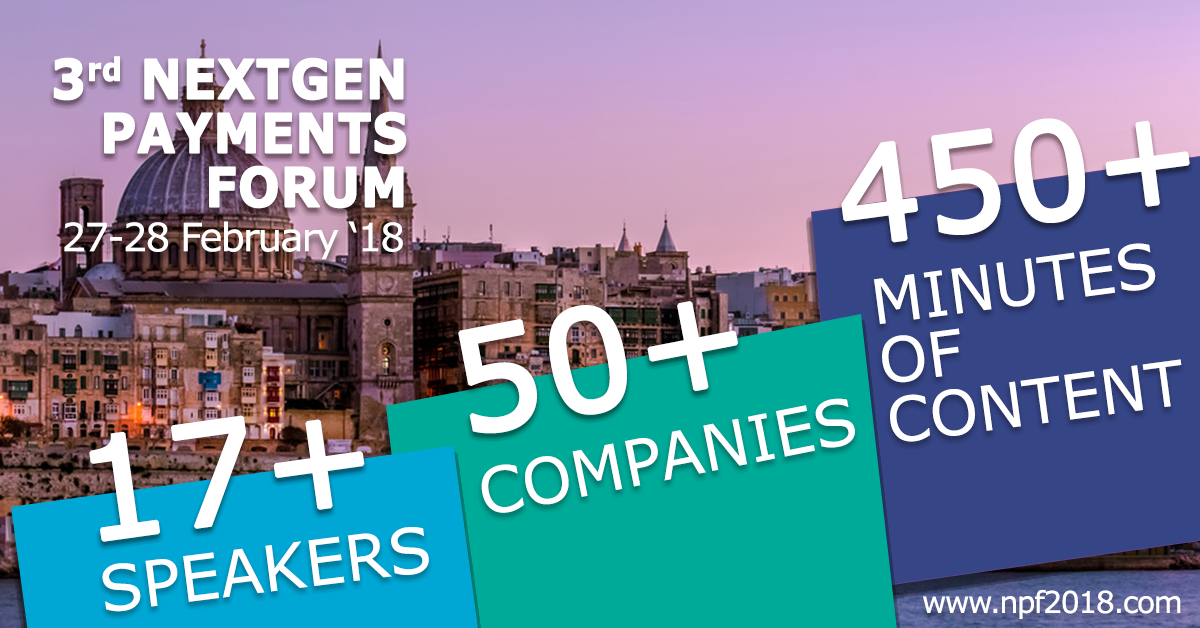
Fintech and banking experts are set to gather in Malta on 27-28 February 2018, to participate in the 3rd Nextgen Payments Forum.
Global industry leaders will engage in thought-provoking discussions on burning issues such as, digitalisation of the financial sector, PSD2, GDPR, data protection, compliance, growing competition among banks and fintechs, as well as cryptocurrency and blockchain. Special emphasis will be placed on blockchain, to be discussed by Ronny Boesing, Co-Founder & CEO of the world’s first blockchain powered conglomerate - OpenLedger.
Ronny Boesing describes the main features of OpenLedger APS and the benefits available to end-users:
The unique aspect of OpenLedger is the mixture of platforms that interrelate with each other. OpenLedger is a blockchain powered decentralized conglomerate, based in Denmark. The company OpenLedger ApS offers Blockchain-as-a-Service (BaaS) in a number of fields and is constantly seeking new opportunities for innovation and development, in order to expand its portfolio of projects. We strive to create an ecosystem of blockchain-based solutions which cross promotes and market of each other. This is done, by ensuring that the different platforms complement each other; each platform has its own specific focus that has the potential to leverage the others.
Currently, OpenLedger offers a decentralized cryptocurrency trading platform based on the Bitshares blockchain - openledger.io, where cryptocurrencies such as Bitshares (BTS), Bitcoin (BTC), Ethereum (ETH), Litecoin (LTC) and EOS can be traded. Many other blockchain-based platforms are under development. They will offer such services as: all-in-One Payments Card, Demand Side Advertising Platform, Freelancing Platform.
Based on your preference, list several problems that your solutions helped your clients to deal with or success stories you are most proud of.
OpenLedger is a complex conglomerate that offers differentiated solutions for different customers. With cryptocurrency exchange at its core, OpenLedger diversified its portfolio of services by offering crowdfunding-solutions. OpenLedger was one of the first companies in the world to offer BaaS (Blockchain as a Service). Therefore, OpenLedger covers a wide range of cryptocurrency and crowdfunding services, ranging from token creation, IT development, marketing as well as legal assistance.
OpenLedger has had numerous successful collaborations with different parties. Three of the most crowdfunded ICO projects among many others are Crypviser, Scorum as well as Karma. OpenLedger has managed to create a long-lasting relationship with the three parties, by offering advanced solutions to their problems. For all three projects, OpenLedger solved issues ranging from blockchain development, to marketing as well as the token creation process.
Apart from the above, a successful crowdfunding story, OpenLedger DEX provides a decentralized way of transacting cryptocurrencies. With a volume of more than 1 million dollars daily, OpenLedger DEX empowers its users to trade on a decentralized exchange, where users have full control over their funds. We are proud to say that the OpenLedger DEX has proven to be a reliable cryptocurrency exchange alternative by offering up-to-date solutions for its customers, such as:
- Global accessibility
- Customizable anonymity
- Industry-grade security
- Freedom from counterparty-risk
- Flexible account control
- Low transaction delay
- Worldwide decentralized network
HubDSP is OpenLedger’s programmatic advertising platform for different crypto and ITO projects. OpenLedger has used more than 31 million cookies globally for segments such as Cryptocurrency, Blockchain Technology and Bitcoin. More than 134 million cookies were used globally for the top-level Finance Industry segment as well as Trading and Investment. Marketing campaigns and banners have been created on websites such as coinmarketcap.com, coindesk.com as well as coingecko.com among others. HubDSP advertises its clients on over 300 crypto-oriented mobile apps.
All in all, we are proud of HubDSP because it provides solutions for its customers in terms of:
- Saving money
- Saving time
- Growing their brand
- Increase customer conversion
Which OpenLedger ApS services or solutions have changed the industry and which industry problems have you solved by implementing OpenLedger ApS?
OpenLedger revolutionized the trading world by being one of the first Decentralized Exchanges on the market offering cryptocurrency gateways. The solution offered by OpenLedger empowers its users with full control over their funds, and at same time enables the entry from outside blockchains to trade and convert for hedging purposes to a native stablecoin and as such a safe haven from the constant volatility. With a native coin as example, the stablecoin, the risk of loss due to the highs and lows of the crypto are reduced drastically and with full control the risk of theft is limited and can only be caused by the actions of an individual over its own funds.
The network of the decentralized exchange also known as BitShares, which OpenLedger is using to offer their many gateways have helped solve the security/theft problem, which all exchanges have to deal with. The most prominent thefts having involved centralized exchanges such as MtGOX, Bitfinex, and recently Coincheck.
Furthermore, OpenLedger’s HubDSP has changed the digital advertising industry by combining precise targeting with high-quality traffic and creative banners. We help turn our customers’ ideas into reality by bringing their products to the market quickly and effectively.
What are the main challenges you are currently facing due to a rapidly changing industry and user needs?
It is still an issue that most governments and people in general are very skeptical about when it comes to blockchain, and especially cryptocurrencies. This uncertainty makes operating a blockchain company rather challenging - mostly because governments and countries have very different laws and regulations in place that you have to navigate in. And these laws and regulations can change from one day to the next.
Even though cryptocurrencies should be decentralized, meaning that it is peer-to-peer money, it is still important that governments align their expectations and regulatory approaches. This is necessary if they want to create an environment where blockchain companies can thrive.
Currently work is being done to create international ISO-standards for blockchain technology. This will hopefully help create some common ground, where blockchain companies and governments can meet, and agree on the basic requirements that have to be met. However, ISO-standards take a long time to develop, since there has to be an international general consensus for it to happen - it will take a couple more years before ISOs will be ready to be implemented in practice. So governments need to engage now if they want to have any chance of riding the crypto- and blockchain-wave. They especially need to figure out where they stand in regards to the cross-section between cryptocurrencies and fiat money - at least in these years where we need to transition from fiat to cryptocurrencies.
Apart from the ISO Certificate Creation, cryptocurrency exchanges have difficulties in collaborating with banks. It is of utmost importance (until an alternative solution will be found) for cryptocurrency exchanges to maintain a long-lasting relationship with different banks, so that users can withdraw and deposit fiat currencies.
How would you describe the users of your services? What features are most important to them?
As we are a complex conglomerate, so are OpenLedger’s users, a mix of demographics across industries. However, we would classify our users in three main categories:
- Traders – The first category of users would be the daily traders that hold long and short positions on the OpenLedger DEX. With over 1 million dollars traded on our exchange daily and with a steady increase as well as an average amount of signups daily of 500 users, we can say that the number of users of OpenLedger is growing significantly from day to day which emphasizes a steady improvement in our services.
- Crowdfunding and Advertising Users – The second category of users would be the people that use our offerings for advertising and crowdfunding campaigns.
- The everyday mainstream user - with the platform eDEV is the first of more OpenLedger projects to start offering mainstream users an access to the blockchain technology through the way they get paid and in many cases they may not even know.
- Governments and NGOs – OpenLedger has the experience and expertise to advise both governments and NGOs in exploring and realizing the benefits of blockchain throughout their services and operations
Within the upcoming year, what new developments and innovations are you planning to put in place?
One of the most anticipated projects of OpenLedger is eDev.one, the freelancing platform based on blockchain technology. We are going to take an innovative stance and disrupt the freelancing industry by releasing our brand new freelancing platform.
We expect an impressive and ever increasing amount of users of this new freelancing platform making use of the decentralized exchange for its marketplace as well as the economic part offering speedy, secure, and transparent ways to settle a contract (www.openledger.io).
Learn more about 3rd Nextgen Payments Forum taking place in Malta and networking possibilities with Ronny Boesing by contacting us at info@qubevents.com or visiting join.qubevents.com/attendance.
- 02:00 am

The 3rd Nextgen Payments Forum, taking place on 27-28 February 2018 in Malta, will connect more than 80 key industry players and financial experts from all over the globe, who will network and gain top insights from presentations delivered from over 16 industry-leading experts. These thought leaders will be sharing their knowledge and expertise on the future of the financial services industry.
The 3rd Nextgen Payments Forum will focus on the continued growth of digitalisation within the financial sector and its impact on fields like regulation (with a look at already implemented and upcoming regulations), data protection, compliance, cryptocurrency and blockchain. These topics will be covered during extensive panel discussions and masterclass presentations, while addressing key industry challenges, solutions and trends.
The growing competition among banks and fintechs, mentioned as one of the key industry trends, will be covered from the viewpoint of the emerging solutions and benefits, along with rising regulatory changes aimed at fostering competition and increasing the power of users, both in Malta and on a global scale.
Phil Jackson, Managing Director, Boxhill Technologies PLC - the company managing emexGO - a rapidly growing payments platform, will be taking part in NPF Malta as a fintech expert, delivering a keynote presentation on Day 1: “The evolving nature of relationships between Fintech and Banks”. During his presentation, Phil will be sharing his expertise on the advancing fintech world and how they are challenging traditional banking. He will also be elaborating on the solutions allowing them to gain a competitive edge over banks, following the emexGO brand moto: the way that banks should be.
The 3rd Nextgen Payments Forum will provide a rare opportunity to learn and network with some of the industry’s leading international experts, policy makers and like-minded professionals. Delegates will gain the opportunity to exchange ideas and insights on the latest innovations transforming the financial landscape and the way we pay. Some well-known attendees include: Western Union Business Solutions, International Regtech Association (IRTA), OpenLedger, Payments Advisory Group, Bird & Bird, ComplyAdvantage, Bank of Lithuania, HSBC, ACI Worldwide, Ferratum Bank, Royal Panda, Payout, Central Bank of Malta, FinanceMalta, Bitmalta, Grant Thornton, RSM and many others.
To find out more about the 3rd NPF in the series and how to get involved, please visit www.npf2018.com or contact us directly at info@qubevents.com
- 02:00 am
Fare evasion costs UK rail operators in the region of £240m annually. Tackling fraudulent travel by those travelling without a valid ticket, providing false information or more complex avoidance techniques has always been an on-going challenge.
Now, evading payment by exploiting technical complexities in the current penalty system will soon be a thing of the past as Spire Payments teams up with ITAL to deliver an mPOS based penalty notice system called PayMe.
Taking payment on the UK national rail system has always been inefficient and slow for revenue inspectors when issuing penalty notices and the out of date systems haven’t been easy for passengers to negotiate either. The PayMe payment solution streamlines the entire process by utilising Spire Payments’ latest generation mPOS device; the SPm2. This device links with the PayMe app residing on the revenue protection officers’ mobile phone or tablet, which in turn links in real time to a cloud based central system monitored 24/7/365.
On issuing a fine, the revenue inspector can process payment immediately, while the central system can check cardholder identity. This not only results in settlement within 3 days, but prevents fraudsters giving false information because inspectors can administer a real-time name/address check. Data collected from the system gives valuable information about evasion hot spots on the network. The solution is already approved by Barclays and the pilot has been successfully completed with Greater Anglia trains. Roll out will commence imminently.
ITAL is a UK based company providing telephone, mobile and cloud-based technologies for leading businesses, making their processes simple.
Derrick Bilsby, Chief Executive Officer of ITAL, says of the project, “This is an extremely exciting time for ITAL and its many customers. PayMe has already been shown to deliver immediate efficiency savings and customer service improvements for UK train operators, but this is just the first implementation. Multiple growth sectors in our sights include field-workers, taxi fares, mobile service & repair, pop-up parking etc. Ongoing development of the central system will bring on new capabilities based on the very successful pilots with Abellio Greater Anglia and C2C train operating companies.”
TK Cheung, President of Spire Payments, adds, “This is yet another example of how Spire Payments’ mPOS technology has enabled a customer to develop an extremely powerful solution. The fact PayMe in conjunction with the SPm2 can take mobile payments is just one, but an essential facet of this solution. Linking to the cloud, however, is the real enabler and offers huge potential for any environment requiring mobile payment and real time cardholder checks.”
- 03:00 am
Saxo Bank Group (“The Group”) reported a positive net profit of DKK 401 million for 2017, an increase of 33 per cent compared to 2016. Client collateral deposits continued to rise to DKK 103.6 billion while the operating income for the group was DKK 3.0 billion, a three per cent increase compared to 2016.
Saxo Bank Group continued to strengthen its capital position with the total capital ratio for the Group reaching 22.7 per cent as of the end of 2017 compared to 19.5 per cent at the end of 2016, thus retaining a comfortable buffer.
2017 Key figures at a glance (2016)
· Operating income: DKK 3.0 billion (DKK 2.9 billion)
· EBITDA: (profit): DKK 931.6 million (DKK 845 million)
· Adjusted EBITDA*: DKK 1.0 billion (DKK 954.5 million)
· Net profit: DKK 401.1 million (DKK 302.4 million)
· Client collateral deposits: DKK 103.6 billion (DKK 92.3 billion)
· Total equity: DKK 4.6 billion (DKK 4.2 billion)
*EBITDA adjusted for income and expenses that are not considered to be recurring and have significant impact on the Group’s net profit.
Commenting on the results, Kim Fournais, CEO and co-founder of Saxo Bank, said:
- The 2017 results are further evidence of the strength of Saxo Bank’s scalable business model as a fintech and regtech specialist focused on multi-asset trading and investment for direct clients as well as delivering ‘Banking-as-a-Service’ to wholesale clients. Despite low market volatility, Saxo has attracted record numbers of new direct and wholesale clients. A new high in client collateral deposits is a further testament to Saxo Bank’s multi asset offering which enables clients to trade in all market cycles.
- With a strong capital base we will continue to invest in and improve our client experience and technology to enable us stay at the forefront of client focused digitisation.
The results confirm that Saxo Bank is on the right path and we will continue to prioritise the ongoing development of best in class technology to ensure our clients and partners benefit from the best trading experience with regards to product, platform, price and service.
In February 2018 Saxo Bank announced the sale of its subsidiary Saxo Privatbank, a fully licensed retail bank with branches across Denmark to Alm. Brand, a Danish financial services group operating within non-life insurance, banking and life and pension insurance. Simultaneously Saxo will enter into a white label partnership with Alm. Brand Bank enabling clients to trade and invest in stocks, bonds, ETFs and mutual funds through Saxo’s award winning platform SaxoTraderGO.
In October 2017 it was announced that Geely Financials Denmark A/S, a subsidiary of Zhejiang Geely Holding Group Co., Ltd (“Geely Group”) offered to buy 51.5 per cent of the shares in Saxo Bank, with Sampo Group, a leading Nordic financial services group, taking a 19.9 percent in the bank. The transactions are pending regulatory approvals in their respective markets and are expected to be finalised in H1 2018.
The full report is available here: https://www.home.saxo/about-us/investor-relations
- 02:00 am
For UK senior executives who admit their organisations have suffered at least one significant cybersecurity breach within the past two years, the associated costs of a breach are considered the most important consequence. This is according to a new study by Centrify, a leading provider of Zero Trust Security through the power of Next-Gen Access, commissioned through Dow Jones Customer Intelligence.
Nearly two-thirds (63 per cent) of respondents in the UK believe investigation, remediation and legal costs are the most important consequence of a breach, followed by disruption to operations (47 per cent) and loss of intellectual property (32 per cent). They showed less concern for impact on brand, including loss of customers (16 per cent) and damage to the company’s reputation (11 per cent).
The study of 800 senior level executives, including CEOs, Technical Officers and CFOs in the UK and US, also indicates that there is confusion among the C-suite about what constitutes a cybersecurity risk and what needs to be done to prevent it. In the UK, malware is seen as the biggest threat to an organisation’s success among 44 per cent of respondents, compared to just 24 per cent who point to default/weak or stolen passwords and 29 per cent who blame privileged user identity attacks. However, of those organisations that experienced at least one significant security breach in the past two years, just 11 per cent admit it was due to malware, while almost twice as many put it down to either a privileged user identity attack or the result of stolen or weak passwords (both 21 per cent).
In fact, 63 per cent of UK organisations that experienced a major breach admit that privileged identity and access management would have most likely prevented the breach. The Verizon 2017 Data Breach Investigation Report supports this, indicating that 81 per cent of breaches involve weak, default or stolen passwords. More than half (53 per cent) of respondents at breached organisations say audit trails for system accesses, and a quarter say training or awareness would most likely have stopped a breach.
According to the survey, the largest areas of cybersecurity investment over the next 12 months will be for malware (44 per cent) and phishing (38 per cent), while protection against stolen or weak passwords (33 per cent) and privileged user identity attacks (26 per cent) are investment priorities for fewer respondents.
Barry Scott, CTO EMEA at Centrify, explains: “It’s no surprise that the C-suite often points to malware as the biggest threat. Sensational headlines about major attacks could be to blame, which companies see and react to, often mistakenly, when in fact identity-related attacks – such as stolen or weak passwords, and attacks on privileged users within organisations – are the primary threat to cybersecurity today.
“What’s worrying is that they then look to invest money in protecting against malware, when in fact they should be focusing on the increase in identity-related attacks. Business leaders need to rethink their strategy with a Zero Trust Security approach that verifies every user and every device, and provides just enough access and privilege.”
CEO disconnect weakening security
A Centrify white paper accompanying the research points to a disconnect between CEOs and their technical peers (CTOs/CIOs/CISOs) in both countries when it comes to the most important cyber risks threatening an organisation, which could leave them vulnerable to breaches. View the study: https://www.centrify.com/resources/ceo-disconnect-weakening-cybersecurity/
Notes for editors:
Additional findings from the research:
- 62 per cent of all CEOs cite malware as the primary threat to cybersecurity, compared with only 35 per cent of Technical Officers.
- Only 8 per cent of all executives stated that anti-malware endpoint security would have prevented the “significant breaches with serious consequences” that they experienced.
- 68 per cent of all executives whose companies experienced significant breaches indicate it would most likely have been prevented by either privileged user identity and access management or user identity assurance.
- Three quarters (74 per cent) of UK respondents that experienced at least one breach say they are ‘very confident’ they could prevent a similar beach, compared to 58 percent in the US.
- While just 11 per cent of UK respondents believe damage to their company’s reputation is the most important consequence of a breach, nearly half (44 per cent) say that protecting brand reputation is most important for building a business case for spending more on cybersecurity.
Research methodology
The statistics cited in this report are from a survey of 800 senior executives conducted in November 2017 by Dow Jones Customer Intelligence (a unit of The Wall Street Journal/Dow Jones Advertising Department), with sponsorship from Centrify. More than three-quarters of these executives are CEOs, CFOs or technical officers (including CIOs, CTOs and CISOs) and the remainder are their direct reports. The companies represented have at least 1,500 employees and over half have more than 10,000 employees. They are positioned across 19 industries in the US and the UK, and about half report annual revenues exceeding US$5 billion.
- 05:00 am

FactSet, a global provider of integrated financial information, analytical applications and industry-leading services, today announced that active asset manager J O Hambro Capital Management (JOHCM) selected FactSet as its investment risk management and reporting solution.
Driven by the convergence of risk and performance, increasing regulation, and more sophisticated investment strategies, FactSet has been expanding its multi-asset class solutions for more than 20 years. With the recent launch of FactSet’s linear risk model and the integration of the fat tail approach acquired through the recent acquisition of BISAM, it now has one of the strongest multi-asset class analytics, performance, and risk management offerings in the industry.
"JOHCM chose FactSet’s multi-asset class risk package because it provides a comprehensive, flexible, and competitively-priced way to monitor factor sensitivity in portfolios and avoids unnecessary complexity," said Sandy Black, Investment Director, J O Hambro Capital Management.
Following implementation by FactSet’s Professional Services Group, JOHCM will have access to FactSet’s award-winning solutions for risk management and reporting, as well as its industry-leading client service.
“FactSet is focused on providing clients with flexibility and choice around their risk modeling assumptions and functionality,” said Rob Robie, Senior Vice President, Global Head of Analytics Solutions, FactSet. “We are delighted that JOHCM has selected FactSet, validating our leadership as one of the premier multi-asset class risk and analytics solutions in the marketplace.”
Learn more about FactSet's risk analytics solutions: https://www.factset.com/analytics/quant.
- 08:00 am

Milestone Group, provider of managed technology solutions for the investment management industry, today announced changes to the senior management team as it aligns the business to focus on its evolving market, clients and successes.
After leading the effective development of the EMEA business for the last eight years, Paul Roberts will take on the role of CEO. In this position he will take responsibility for the company’s global software business, developing and deepening its presence in key markets, and steering the global spread of the firm’s solutions for fund managers, life companies, pension funds and delegated/OCIO businesses in the same way as it has achieved a global presence for NAV automation, control and oversight.
Geoff Hodge, Co-founder and previously CEO of Milestone Group, will assume a dual role continuing as Executive Chairman and becoming President of North America. This role has been newly created to provide strategic support to the growth Milestone Group has seen in North America, and the significant potential it sees in the region.
Paul Roberts commented: “In many ways, this is a very natural progression for us when you consider the way the business has grown in recent years. Around 70 per cent of our business is now in EMEA and North America, while a strong focus remains in Australia and APAC, so it made sense to align the leadership team accordingly to best serve clients and support future growth.
“As part of my new role I will be overseeing the development of our core solutions, the global roll-out of our newer NAV and Multi-Asset solutions, and in particular supporting our exciting ‘smart-sourcing’ initiatives, which deliver more intelligent, blended operating models.”
Geoff Hodge commented: “2018 is going to be a significant year for Milestone Group, and this change ensures we are correctly positioned to support that. We have had great success to date operating with a low profile supporting innovation in mission critical functions for our clients and we are now layering on top of that a new level of relationships with organisations looking to achieve big things in new ways.”
Hodge continued, “The move provides a more balanced global distribution of our executive and relationship management teams. We are also adding to our relationship management function enabling us to spend more quality time with existing clients to understand their needs and make sure they have the opportunity to understand innovations, product developments and operating model possibilities that may be valuable to them.”
Hodge will be based in Boston given the focus of his role in the near term. Roberts, meanwhile, will be based in London.








