
Published
- 04:00 am

NEX Optimisation, which helps clients reduce complexity and optimise resources across the transaction lifecycle, and Capitolis, a pioneering technology provider for the capital markets announce today they will collaborate in a partnership to provide immediate access to Capitolis’ FX novation service through the NEX Infinity platform. The collaboration will enable NEX Optimisation customers of the service to connect to the Capitolis FX novation service through the NEX Infinity platform, with minimal integration requirements and resources, while reducing the time taken to go-live.
Launched in 2018, Capitolis has created the first industry-wide streamlined platform for end-to- end FX novation processing to bring standardisation, automation and transparency to the buy and sell side. The service is live and is being adopted by numerous leading banks and buy side participants. Novation plays an increasingly critical role in increasing efficiencies for participants. Complying with the ISDA Novations Protocol, ‘Capitolis Novation’ automates the currently manual workflow in both FX prime broking and bilateral trading. The service addresses operational, audit, cost, speed and scale inefficiencies resulting from the manual process.
The new solution will be delivered via NEX Infinity. This will allow NEX Optimisation customers to access it through their existing connection, with minimal changes to infrastructure. This can significantly speed up the time taken to adopt the solution and go-live. Alongside its relationship with NEX Optimisation, Capitolis will continue to provide this solution to market participants on a standalone basis.
Andrés Choussy, CEO of Traiana, said: “As the FX industry increasingly incorporates novation into their portfolio optimisation processes, there is an increasing market need for an end-to-end automated solution such as Capitolis. The addition of the Capitolis FX novation service to the Infinity platform complements our expanding suite of third party service offerings, and allows us to bring new post trade services to our customers”
Gil Mandelzis, CEO of Capitolis, said: “We believe novation is a significant part of the future market structure and we are happy to partner with NEX Optimisation, with their wide distribution and connectivity in the global market. This new partnership will help Capitolis to accelerate the global adoption of this important new product.”
- 02:00 am

Belgium-based bpost bank has chosen Wolters Kluwer’s Finance, Risk & Reporting business to provide its regulatory reporting and AnaCredit software for its operations in the country.
OneSumX Regulatory Reporting uses a single source of data to ensure consistency, reconciliation and accuracy and includes the firm’s Regulatory Update Service. This unique service is maintained by Wolters Kluwer experts who actively monitor regulation in approximately 30 countries.
AnaCredit is the European Central Bank project to set up a dataset containing detailed information on individual bank loans in the euro area, harmonized across all Member States. Wolters Kluwer’s integrated, scalable OneSumX AnaCredit solution uses grid and in-memory computing to handle the large data volumes required by the extensive regulation. This enables faster processing time and a more flexible operational environment for end users. In-memory processing preserves data lineage at each functional stage enabling more transparent reporting and full confidence in the reporting process leading to lower risk of mis-reporting.
“AnaCredit introduces a step-change in the amount of data that banks are required to report on and on such a frequent basis – daily in some cases,” noted Pierre-Aymar de Potter, Chief Financial Officer at bpost bank. “As a result we required an expert in the field to ensure we are comprehensively managing our AnaCredit and wider reporting obligations. Wolters Kluwer was the natural choice.”
“Wolters Kluwer is delighted to have been chosen by bpost bank to provide its AnaCredit and regulatory reporting software,” commented Kris Van Bavel, Managing Director, EMEA, for Wolters Kluwer’s Finance, Risk & Reporting business. “We continue to add clients across Benelux and the rest of Europe and expect this trend to continue particularly due to AnaCredit.”
Wolters Kluwer’s Finance, Risk & Reporting business is a global market leader in the provision of integrated regulatory compliance and reporting solutions, supporting regulated financial institutions in meeting their obligations to external regulators and their own boards of directors. It receives frequent independent recognition of its excellence and innovation. Notably, in July 2018, Risk magazine awarded Wolters Kluwer its coveted Regulatory Reporting System of The Year Award and Central Banking magazine recently named OneSumX for Regulatory Reporting as Best Technology Solution For Regulatory Compliance. Chartis Research, meanwhile, has also named the firm a Category Leader in both its IFRS 9 Technology Solutions Report and CECL Report.
- 01:00 am

GlobalPlatform, the standard for secure digital services and devices, has published a Financial Configuration to update the configuration for banking smart cards and support the deployment of Secure Elements (SEs) in contactless-enabled wearables like rings and wristbands. Chip and device makers, banks and app developers now have an implementation guide to help them launch wearables that can be remotely updated and support multiple applications including payment, access control and transport ticketing.
“Contactless payment cards have made us familiar with tap & go, and smartphones have made the convenience of multi-function devices desirable. Wearables such as smart rings and smart wristbands are bridging the gap between simple cards and feature-rich smartphones by enabling consumers to pay, unlock and travel with a tap,” comments Gil Bernabeu, Technical Director of GlobalPlatform. “This new configuration standardizes all of this, saving implementers time and money, increasing revenue opportunities and enriching the experience for consumers.”
The Financial Configuration 1.0 defines the minimum implementation requirements of the GlobalPlatform Card Specification for financial products. It enables users to identify the exact specifications relevant to their project to ease development and deployment. Sub-configurations introduce new options to address different types of objects, from a simple card with a single payment application through to a multi-use, multi-application contactless wearable. This configuration supersedes the Basic Financial Configuration, which was created primarily for plastic payment smart cards.
“The Card Spec is extensive, covering a wide range of use cases and business models that are not needed by manufacturers launching these simpler contactless wearables,” adds Gil. “Configurations give them the focused subset of specs they need, reducing the time needed to develop and deploy new devices and services.
“More broadly, with the Financial Configuration, device makers embedding SEs now have a consistent approach, regardless of whether they are launching a payment card, a contactless wearable or a feature-rich smartphone. This gives the financial community a single point of reference to protect all of their devices and services.”
Become a member to get involved in the maintenance and advancement of the GlobalPlatform SE Specifications. Interested in learning more? Download the ‘Introduction to Secure Elements’ guide.
- 04:00 am

B-Hive and KOOPHub signed a Memorandum of Understanding on September 19, 2018, during the Blockchain Fest in Istanbul. The signing ceremony took place in front of the audience.
Both Hubs will support each other towards networking events, business visits, scouting, start-up mapping, innovation programs, digital sandboxes and regulatory frameworks.
Dave Remue, Head of TrustHive & Blockchain Programmes at B-Hive was excited about the new partnership. “We are excited about our new partnership with KOOPHub in Turkey and Romania. There is a vibrant fintech community here at the Blockchain Fest with established financial institutions and start-ups collaboratively exploring the potential of this new technology in a wide range of interesting use cases.”
“We are eager to learn more about the different players in this market and to jointly build bridges with KOOPHub to exchange know-how and business opportunities across our regions to the benefit our fintech ecosystems in Europe, Turkey and beyond.”
Demet Zubeyiroglu, Co-founder and Managing Director of KOOPHub, has indicated “We value greatly the collaboration with international peers and partners. KOOPHub is currently operational both in Turkey and Romania. We plan to expand further to the region to enable cross-border interaction in financial innovation and blockchain. The region is full of potential, but it still requires an international perspective. It is why we investigate cooperation with fintech hubs around the world. In due course, the partnership with B-Hive is a building block in integrating with the international markets.”
“I extend my gratitude to the B-Hive team in positioning us a partner. We look forward to jointly developing projects and programs that add value to the innovation community here and there”.
- 05:00 am

New research from Econocom, a European digital services company, has revealed that over half (55%) of office workers believe access to the latest workplace technology would make them more productive. Additionally, 43% said this would make them feel more valued, while 38% said it would motivate them to work harder.
The research for the report, entitled The Hidden Value of Workplace Technology, was conducted on behalf of Econocom by survey consultant Censuswide. It polled 1,069 office-based workers across the UK in a range of roles, including sales/business development, account management, marketing, technical/IT, HR, legal and more.
The research found that workplace technology is important not just for companies looking to retain existing staff, but also to recruit new members. Fifty-eight per cent of respondents said workplace technology would influence their decisions when searching for a new job. Additionally, 62% said a ‘choose-your-own-device’ model – in which employees get to choose from a range of different company-approved devices to use at work – would be an influencing factor in their search for a new role.
Chris Labrey, MD, Econocom UK & IRL says: “Workplace technology is more important to employees than ever before, and these findings really reflect that. Not only do they shine a light on how important it can be from a productivity perspective, but it also emphasises its often-overlooked role in boosting motivation and morale among staff. Businesses today could do far worse than to look at their own workplace technology and consider the wider impact this might be having on their employees.”
Other key findings from the report include the fact that more than one-quarter (26%) of office workers are bringing their own technology into the office every day. A further 10% use their own technology every other day, while 13% admitted to doing so a few times a week.
“The fact that 26% of all respondents are relying on their own technology on a daily basis is a strong indicator that workers are becoming increasingly dissatisfied with the state of technology available in the workplace. The only way for these numbers to change is for businesses to place more focus on the devices being given to staff when they come into the office. Hopefully this research can help to give the issue the attention it deserves.
“As for adoption challenges, it is perhaps unsurprising to see that budget remains a primary obstacle. But this is where subscription models can prove their value. These allow businesses to purchase the workplace technology they want and pay back the cost in instalments over a period of years, which makes the investment far more financially viable. The subscription model also means businesses can upgrade their technology on a continual basis to keep employees happy and improve the employee experience,” says Labrey.
This correlates with the fact that, perhaps unsurprisingly, the majority of respondents found the technology they use at home to be better than what they use at work. Specifically, 53% said their home smartphones were better than their work ones, while 46% said the same for their laptops and tablets.
When asked what they thought the biggest obstacle to the adoption of new workplace technology is, just under half (49%) said budget. This was overwhelmingly the most-cited challenge from respondents – a lack of resources came in second place, cited by just 12% of respondents.
You can download and view the full The Hidden Value of Workplace Technology report here.
- 09:00 am

OpenWay, a recognized leader in digital payments software, has implemented the nexo Acquirer protocol on the WAY4 platform. Now acquirers who run their payment processing business on WAY4 can use ISO 20022 to enhance their payment acceptance interfaces with extended transaction data and improved interoperability across their acquiring networks.
The rapid development of new payment acceptance technologies, next-generation terminals, and new collaborative models in the payment market have driven the adoption of ISO 20022. Compared to ISO 8583, the incumbent standard for card payments, ISO 20022 enables greater security and flexibility. This is important for easier customization and supporting value-added services based on transaction data. The protocol caters for growing diversity in the payment industry while maintaining standardization and interoperability.
“Open and technology-neutral, the nexo Acquirer protocol strikes market players by its business-oriented nature and great potential for cross-border growth. Our customers can leverage it to reach a new level of financial services personalization thanks to the XML-based format which significantly enriches transaction data. WAY4 users can reduce maintenance costs when growing acquiring network as the protocol is completely independent in terms of terminal manufacturers, hardware and acceptance technology,”- comments Dmitry Yatskaer, CTO at OpenWay.
Acquirers on WAY4 can deploy the nexo Acquirer protocol to connect merchants directly or via any intermediary, such as payment facilitators or service providers. The protocol can be used to connect any types of payment acceptance devices, such as POS and mPOS, including smart Android-based terminals. The protocol handles all industry standard transaction types, while ensuring reconciliation among the different parties involved in the transaction processing.
The WAY4 system is able to analyze the transaction information in real time, including level-3 data. It supports a variety of values-added services such as tokenization, dynamic currency conversion, loyalty and coupons based on customer behavior analysis.
nexo standards is an international association dedicated to enabling fast, interoperable and borderless payments acceptance by standardizing the exchange of payment acceptance data between merchants, acquirers, PSPs and other payment market stakeholders. nexo’s messaging protocols and specifications adhere to ISO20022 standards. Being a member of nexo standards, OpenWay is able to support new protocols quicker and help its customers on WAY4 to deliver a better payment experience.
- 04:00 am

Nordea has entered into an agreement with the Norwegian company B2Holding to sell a portfolio of non-performing loans. A total of 12,000 non-performing customer accounts will be transferred to B2Holding, which operates the debt collection company Nordic Debt Collection in Denmark.
“We let professional debt collection companies take over more of the non-performing accounts. Instead we can focus on our prevention work and help our customers avoid debt problems,” says Mads Skovlund, Deputy Head of Personal Banking, Denmark.
The portfolio of close to 12,000 customer accounts represents total debt of EUR 388m. The transfer will take place on 31 October 2018 and also means that six employees will be transferred to Nordic Debt Collection at 1 December 2018.
B2Holding offers debt solutions to banks and institutional providers. The company is listed on the Oslo Stock Exchange, is headquartered in Oslo, and operates in 23 countries with a total of 2,200 employees.
“The debt collection companies we work with have been selected very carefully – and one of the criteria is their way of handling both our customers and our employees. I’m confident that this will benefit our customers as the transaction allows us to focus even further on our core business,” says Mads Skovlund.
Upon completion of the transaction, Nordea is expected to generate a capital gain of approximately EUR 35-45m which will be included in the financial statements for 2019 as the loan documentation is transferred to the buyer.
- 02:00 am
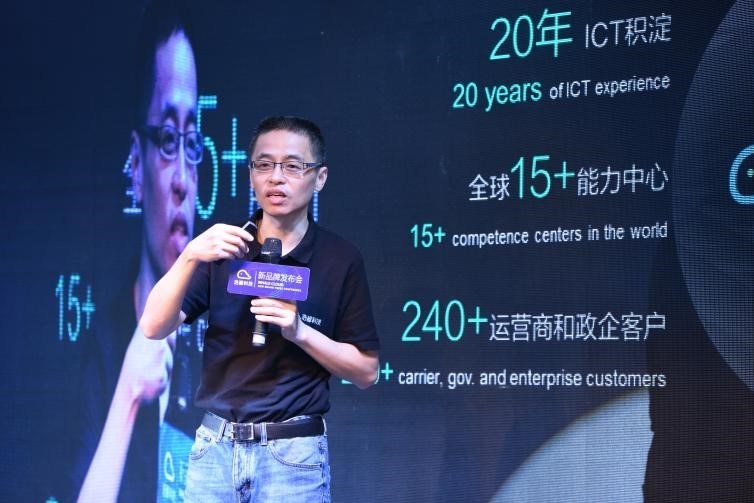
Whale Cloud Technology Co., Ltd ("Whale Cloud") launched its new brand, logo, and strategy in the West Lake Expo Museum in Hangzhou. Whale Cloud executives, global partners, media, and experts from the industry were all present to witness this important event.
A world-leading data intelligence company, Whale Cloud was founded in 2003 as the largest subsidiary of ZTE and has been involved in telecom data processing and ICT domains for 15 years. In early 2018, it became a strategic partner of Alibaba Cloud. Today, Whale Cloud provides digital transformation technologies and services for telecom operators, governments, and enterprises in more than 80 countries and regions in the world.
"The center of the digital economy is data, and we believe we will outperform our competitors if we possess powerful data computing capabilities. The whale is a symbol of power and wisdom. Naming our company Whale Cloud reflects our mission of exploring unlimited data values," said Bao Zhongjun, CEO of Whale Cloud.
The slogan "Data intelligence creates unlimited possibilities" shows the company's unique position.
Reflecting on what it calls a unique position in the market, Zhou Yong, VP of Whale Cloud, added: "We are the only company with experience in delivering digital services to not only the telco industry, but in government and other industries. With the Alibaba partnership, we now have the infrastructure to leverage Alibaba Cloud technologies and our telco capabilities to expand our business from ICT to vertical industries."
Mr. Yang Ming, VP of Whale Cloud, shared the company's "321" strategy, which explains Whale Cloud's future initiatives to build its strengths in "3" areas, namely, technology, business model, and basic research, and focus on "2" prioritized market segments (enterprise and city) in digital transformation to serve "1" ultimate goal of creating value for theircustomers.
Whale Cloud has earmarked 1 billion yuan ($145.3 million) over the next three years for research into its core technologies. It also plans to launch an AI lab, a city brain research institute, and a cloud computing application development program to ensure continuous innovation and quick implementation of new technologies and products.
SOURCE Whale Cloud
- 03:00 am

The Cyber Defense 2018 Global Award for "Hot Company Forensics" has been won by international cybersecurity company Resecurity in recognition of one of its core products - Context™, combining a platform for digital forensics, intelligence analysis and cybercrime investigations.

The Cyber Defense 2018 Global Award for “Hot Company Forensics” has been won by international cybersecurity company Resecurity.
Cyber Defense Magazine scoured the world to reach out to almost 3,000 InfoSec players from the USA to Israel to Japanand to Germany, before narrowing the list down to a small group of finalists, announcing the winners at the major IP Expo Europe conference in London on October 3.
"Cyber Defense Magazine spent six months searching the globe to find the most innovative and cutting-edge cyber security companies for our Cyber Defense 2018 Global Awards," said Gary S. Miliefsky, Publisher, Cyber Defense Magazine. "Resecurity, Inc. won this award for 'Hot Company Forensics' because it is an innovator on a mission to help stop breaches and get one step ahead of the next threat, proactively."
The "Hot Company Forensics" award went to Resecurity for its development of innovative technologies for digital forensics and cybercrime investigation. Leveraging its strong partnerships with law enforcement agencies internationally, Resecurity has developed a next-generation digital forensics platform - Context™ - now being utilized by leading Fortune 500 corporations and governments.
In order to enable commercial organizations to take full advantage of next-generation forensics tools, Resecurity developed Context™ in close consultation with law enforcement agencies and security professionals. Context™ is delivered on a platform-as-a-service model (PaaS) model in order to simplify forensics procedures in the enterprise environment, providing companies with comprehensive forensics reports and valuable analytical information. The Context™ platform supports numerous file formats and platforms, including desktop, mobile platforms and cloud-based environments. It can be used for file, network and malware forensics, along with actor-focused investigations.
Combining forensics analysis with data enrichment technologies in this way enables Resecurity to provide the end forensics results with additional meaningful intelligence from repositories ranging from IP reputation, indicators of compromise (IOCs) and breached data to historical Dark Web records. Resecurity's Context™ now has a growing meta database of over 600 million Dark Web records, 8 billion Compromised Credentials, 12 million threat actors and over 30 million IOCs extracted from various Dark Web sources and analyzed security incidents (targeted cyberattacks, cyberespionage campaigns, malicious activity).
According to Resecurity chief executive, Charles Yoo: "Resecurity is an intelligence-driven company with a great team of experts, who understand the vital role of data in digital forensics and computer crimes investigations in practice. Our mission was to build a scalable next-generation digital forensics platform which will help law enforcement, fraud and risk managers, investigators, DFIR experts and intelligence analysts to accelerate the pre- and post-analysis lifecycle - making their work more effective and scalable and, crucially, more cost and time-efficient. We are proud to win the 'Hot Company Forensics' category in the Cyber Defense 2018 Global Awards and will keep doing a great job for the worldwide security and intelligence community."
- 06:00 am

Duco, the enterprise software as a service (SaaS) company today announced an agreement with Societe Generale, the French bank and global provider of financial services to deploy Duco’s platform across the group as one of its primary reconciliation and data control systems.
Societe Generale will use Duco’s innovative platform to automate key reconciliation processes across all business areas, dramatically improving efficiency compared to legacy systems and spreadsheet-based processes. Societe Generale will also use Duco’s API to provide external reconciliation services to its clients in its capital markets business, adding value to its trade execution and clearing services.
Estelle Letribot, Global Head of Reconciliation Post Trade in Societe Generale Global Banking and Investor Solutions, said, “Innovation and digital transformation are core to Societe Generale’s strategy, both internally and for our clients. By working with Duco, we have an opportunity to reinvent our operations, introducing agility, automation and machine learning in a function that has traditionally proved very expensive and time consuming.”
Cristóbal Conde, Duco advisor and former CEO of SunGard, adds, “This is the first time in more than a decade that a new reconciliation model for financial services firms is emerging and being put to use in a core, mission critical function. The transformation of the reconciliation process from installed point solutions towards Software as a Service and more intelligent user-driven controls is proving compelling from a cost and risk perspective, and is gathering pace.”
Christian Nentwich, CEO of Duco, said, “The advantages of SaaS and self-service solutions in the reconciliation space are clear and we are glad that Societe Generale shares our vision. With machine learning and cloud-based delivery models now ready for prime time, the industry is rapidly going through a major transformation towards agile services like Duco that mutualise cost and remove unnecessary manual work.”








