Published
- 09:00 am
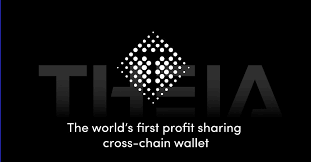
Theia Wallet, the world's first cross-chain wallet, recently announced open 1.0 version beta test, which supports BTC public chain. Theia Wallet is a multi-crypto asset management wallet based on cross-chain technology. Theia cross-chain wallet is used as a traffic portal to provide main chain and Dapp with solutions for user assets management and ecological landing applications. It is also the world's first user directed ICO launch platform.
Their wallet has delved into the cross-chain technology for several years and had already supported the tokens issued by ETH and WAN. Based on Wanchain cross-chain technology, Theia wallet thoroughly uses all the characteristics of the Wanchain cross-chain technology. Along with the development of Wanchain main chain, it achieves interconnectionwith more and more blockchains. Theia Wallet will support more cross-chain crypto transactions of crypto assets and all digital assets in the Wanchain ecosystem.
Cross-chain is a complicated process, the technical implementation is more about the acquisition and verification of some chain-to-chain external information, which requires nodes to have independent verification capabilities. Therefore, the current cross-chain technologies mainly have the following four implementation modes.
First of all is the notary mechanism. It is the simplest method of chain and chain interaction, the centralized or multi-signature witness mode, the witness is the legitimate user of chain A and responsible for monitoring the event and state of chain B to further operate chain A. Its essential feature is that there is no need to pay attention to the structure and consensus characteristics of the chains in question. Assuming that A and B cannot trust each other, introducing a third party that can be trusted by both A and B to become a notary and act as an intermediary. With the help of this intermediary, assets are allowed to flow between the account books. For digital crypto assets, the wallet is also run by an individual or organization. Firstly, it can't be decentralized, and secondly, it is quite difficult to support large amounts of transactions due to trust issues.
Second, the sidechain to the digital crypto assets is just like Alipay and WeChat wallet in terms of asset management, anchoring the crypto assets on the main chain to the side chain. However, the side chain cannot completely solve the trust problem of asset management. Alipay and WeChat wallets are endorsed via Alibaba and Tencent, and the side-chain is solved through the multi-centered approach of the blockchain. Besides, it is difficult for side-chain wallets to establish cross-chain smart contracts, and it is difficult to implement various financial functions, restricting the application of blockchains in stocks, bonds, derivatives, and other fields.
Moreover, Hash lock is a trigger that sets interoperability between chains AB, usually appear as a hash value of a random number to be disclosed. The essential feature is HTLC, which is a mechanism for redeeming payments by locking the original value of the hash for a period of time. Although the hash lock implements the exchange of cross-chain assets, it cannot realize the transfer of cross-chain assets and fails to achieve cross-chain contracts. Therefore, its applied scenario is relatively limited.
In the cross-chain mechanism of Wanchain, the cross-chain transaction proves that the node is not a single entity but a consensus group. To verify the legality and finality of the transaction of the other chain through the consensus is the method that can effectively word around the imperfection of the third-party notary. In terms of security assurance, Wanchain implements a small consensus by adopting cryptographically secure multiparty computing and thresholding methods. Participants must participate in the calculation to generate the public and private keys for locking accounts.
Technically, the private key of the locked account is merely theoretical. It is scattered in the hands of each locked account management node in the form of a fragment and participates in an account control process through multi-party computing.
Thus, the Theia wallet, which is created based on Wanchain cross-chain technology, has truly realized cross-chain trading and stands out in functional and security aspects. Based on Wanchain's Theia wallet, it realizes cross-chain multi-crypto-currency instant swap, perfects the crypto asset trading ecosystem, fills the blank of crypto assets transaction for cross-chain wallet, and subverts the existing crypto asset trading ecosystem. The multi-node authentication transaction of the consensus group avoids the credit risk of centralized transactions and better protects users' privacy. By interfacing with all crypto assets across the chain, Theia enables the management of multi-crypto-currency and the coexistence of digital crypto assets and wallets on different chains, thus better promoting the positive development of blockchain projects.
"We always insist on emphasizing technology and true value. The model of Internet technology development will be reproduced in the blockchain. As a developer who is enthusiastic about technology, we should continue to improve and expand the functionality of this technology and explore more possibility," the founder of Theia, Jin Huayue said. "The vision of Theia is to achieve the circulation of digital assets, virtual goods, physical asset warrants, etc. And it will serve the global production, consumption and trade field widely, in order to achieve the integration and circulation of multi-category digital assets, to explore the new value of economics and sociology!"
- 08:00 am

Trustly, the European payments company, announces today the appointment of Sara Berg to Chief Operating Officer (COO) at Trustly.
 Sara Berg joined Trustly in 2012 as Chief Legal Officer prior to which she was a Senior Associate at a Swedish law firm, focusing on mergers & acquisitions and commercial contracts. She holds a Masters of Law and has also served at the District Court of Stockholm. In 2017, she was recognized by Innovate Finance on its “Women in Fintech Powerlist.” The COO position is a newly formed role at Trustly and reports directly to the CEO.
Oscar Berglund, CEO at Trustly, says:
“I am delighted to announce that Sara Berg has been appointed COO of Trustly. Since joining Trustly in 2012, she has supported all parts of the company across a range of topics and is a proven leader. I will count on Sara in her new role to leverage her experience and knowledge about Trustly and our operational processes to help us grow efficiently.”
Sara Berg comments:
“I am proud to have helped Trustly become what it is today and excited to assume the new position as COO going forward. Over the past years, we have seen a rising interest for account-to-account payments, and Trustly is at the forefront of this development, enabling consumers to pay in a convenient and safe way, directly from their bank account and merchants to increase their conversion rates. Our journey is just beginning and I am looking forward to continuing to work together with the rest of the Trustly team to further improve our products for consumers and merchants alike.
- 12.10.2018 -- 02:02 pm
Other Videos
- 08:00 am
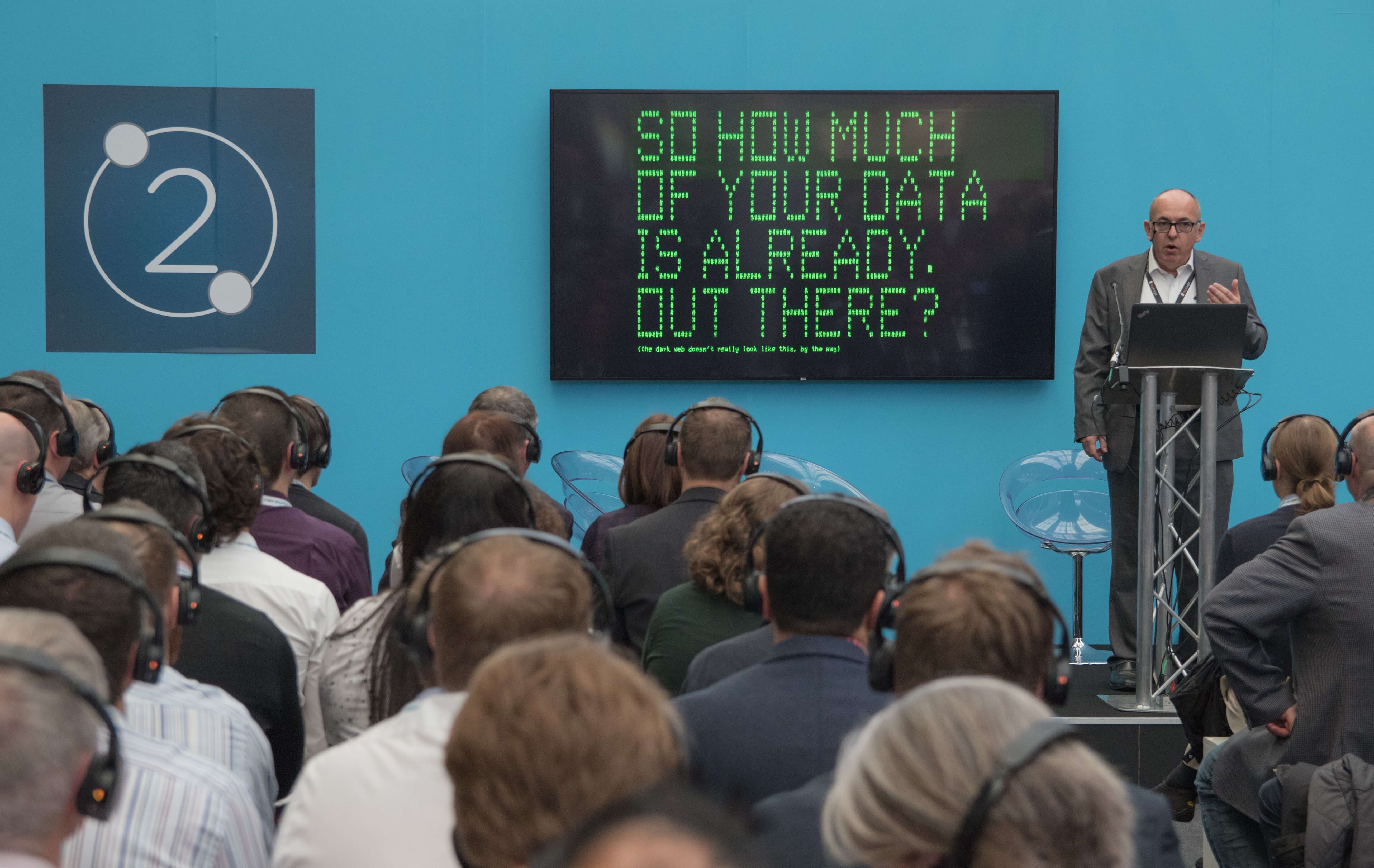
On November 15th at the Business Design Centre in London, the Cyber Security Summit & Expo the UK’s leading one day event dedicated to cyber security in both the public and private sectors returns for its 9th year. Aside from the dedicated Cyber Security Summit, the event also features the Data Protection Summit focussing on the impact of GDPR as well as providing an essential update on the latest legislation. This is complimented by a series of free-to-attend conference streams on the exhibition floor that will take the delegate through a journey from an initial cyber breach thorough to the recovery and how a future cyber-attack can be prevented.
The event will build on last year’s new expo centric format by delivering industry inspired content from household names in both the private and public sectors. These include Will Smart CIO of NHS England and Pascal Hetzscholdt, Director of Content and Protection for Europe and Africa at 21st Century Fox as well as key insight from leading technology providers. Balancing technical discussions with real life case studies and keynotes from leading organisations the Cyber Security Summit & Expo will provide clarity for those looking to understand the multitude of threats posed today.
Both the Cyber Security and Data Protection Summit are designed for C suite and director level professionals as well as those looking for advice and case studies on the latest cyber threats and data protection issues. The Cyber Security Summit itself will feature a plethora of organisations from both the public and private sectors. Organisations on this stage in addition to the NHS and 21st Century Fox include; NCSC, the FCA, Health and Safety Executive (HSE), the United Nations and more. The Data Protection Summit also offers a stellar speaker line up with presentations from organisations such as the ICO, DEFRA, Mastercard, Privacy International, techUK, The Trainline and more. Tickets are priced at £599 for the private sector and £399 for the public sector. Click Here to access further ticketing information.
The 3 free-to-attend ‘Industry Stages’ the “breach”, the “recovery” and the “prevention” showcase organisations including the likes of AIG, JustGiving, NHS, Innovate UK, the Austrian Government, Nielsen Ratings and many more. To access a ticket to the free to attend exhibition please click here.
EXPERT SPEAKERS ALREADY CONFIRMED INCLUDE:
- Senior representative, National Cyber Security Centre
- Tom Parkhouse, Head of Nuclear Cyber Regulation, Office for Nuclear Regulation
- Peter Brown, Group Manager (Technology Policy), Information Commissioners Office
- Stephen Browning, Interim Challenge Director - Next Generation Services, Innovate UK
Technology and solution providers exhibiting at the Cyber Security Summit & Expo include providers such as; Darktrace, Egnyte, Hewlett-Packard, Lloyds Register, Performanta, Onetrust and more.
Other major features on the exhibition floor include the interactive HackChat and the CyberXchange
The exciting HackChat feature will provide visitors with stories and interviews from technology leaders, cyber security professionals and black/white-hat hackers at the forefront of cyber security today. Headlining the HackChat feature will be Cal Leeming who at 12 years old was the youngest person to be convicted of hacking) providing a live interactive demonstration of a hack with the audience. The CyberXchange will offer access to key trade bodies such as techUK, IRMS, the Cabinet Office and NCSC to ensure visitors are given the opportunity to ask the questions they need to help them protect their business.
Speaking ahead of the event Portfolio Director James Samuel states “As the ONLY event supported by HM Government and the NCSC the 9th edition of this annual collaboration of cyber security leaders, data protection officers, IT experts and technology innovators continues to be a must attend event. Amidst the number of ever increasing cyber-attacks in both the public and private sector in this year alone there has never been a more prevalent time to meet with leading suppliers and to listen to leading experts to ensure that your organisation doesn’t become the next victim to cyber crime
To register for the summit or for your free exhibition visitor ticket, click here.
2017 Testimonials
- Mike StJohn-Green, Honorary Fellow and Technical Advisor, University of Warwick - Information Security Forum – ‘The latest perspective from central government, the hacking world and regulators was great. A couple of lively panel discussions gave speakers and audience some fresh ideas on talking to the Board and how to measure security. This world changes so quickly, there is always something new to hear each year at this conference.’
- Tom Parkhouse, Superintending Inspector Head of Civil Nuclear Cyber Security Regulation, Office for Nuclear Regulation - ‘The agenda was packed with excellent opportunities for interaction on contemporary issues on the Summit conference floor, at the break-out events, and at the expo.’
- Jasvinder Pham, Information and Cyber Security Manager, High Speed 2 – ‘I really enjoyed partaking in the HackChat! It was fabulous to listen into the subsequent interviews as the selected speakers all made interesting points and showed passion for the subject matter discussed!’
- 06:00 am

Profisee, a market leading master data management software company announced today, it is expanding its partner network through a systems integrator partnership with WorldLink, a Frisco, Texas based leader in emerging technology consulting solutions.
This strategic partnership will pair the fastest-growing Master Data Management (MDM) company with some of the world's foremost data experts. Having already supported numerous Profisee software implementations, WorldLink will leverage this formalized partnership to provide increased efficiency and faster time-to-insight through its clients' Master Data Management projects. By removing cost and complexity from the traditional MDM solution, WorldLink and their clients have testified that Profisee's software is agile and easy to use for even the most complex MDM projects.
"People have seen the report that 90% of the world's data has been generated in the last few years. While this statistic speaks to the growing volume of data, it is misleading because a large portion of this data is not actionable. The Profisee solution helps business users sort through the increasing amount of data to highlight the quality data that will lead to meaningful insights. The Profisee solution also validates the new Master Data Management (MDM) norm that provides the ability to perform MDM at the data lake level and then push it to both upstream and downstream applications. This partnership will effectively combine this impactful tool with the strong business understanding that WorldLink delivers to its client partners," said Murli Manickam, Cloud & Data Strategist at WorldLink.
Greg O'Sullivan, Profisee Senior Vice President, Global Partner Alliances & Channels, states, "We are very pleased to announce our partnership with WorldLink. Their proven expertise in helping clients transform into data-driven enterprises makes them the perfect partner to deliver value-driven Data Management solutions on the Profisee Platform."
This partnership will continue to empower organizations and their users with the ability to cleanse, govern, and manage the quality and lifecycle of master data, giving them access to the strategic insights they need to drive business growth and provide high value to their customers.
- 01:00 am

Digital Signature Market by Solution (Software, Hardware, Services [Managed, Professional]) by Deployment Type (Cloud Based, On-Premises), by Application (Government, IT, Healthcare & Life Sciences, BFSI, Retail, Telecom), by Region (U.S., Canada, Germany, U.K., France, Italy, China, Australia, Japan, India, Brazil, U.A.E.) - Global Market Size, Share, Development, Growth, and Demand Forecast, 2013-2023.
Global digital signature market is expected to reach $3,410.8 million by 2023, according to P&S Market Research.
A significant growth in demand for these signatures is anticipated due to increasing use of them to reduce deception, growing government focus towards eliminating paperless work coupled with growing adoption of biometrics with this technology in various end use industries, across the globe.
Insights on Market Segments
Based on solution, digital signature market is categorized into hardware, software and services, of which services has been contributing the largest revenue share globally. However, software is expected to be the fastest growing category during the forecast period. This can be attributed to the increasing demand for accessibility of such signatures in connected devices such as smartphones, tablets, laptops in different applications such as government, banking, financial services and insurance.
On the basis of deployment type, digital signature market has been categorized into cloud-based and on-premises. Cloud-based has been the dominant category, as it reduces IT cost and ensures mobility.
North America has been the largest market for digital signatures
Digital signature market was led by North America, where it accounted for more than 40% of the global market size in 2017, majorly due to the technological advancement in digital technology and implementation of various legislations.
In the U.S., some of the major legislations implemented for the digital signature technologies include Uniform Electronic Transactions Act (UETA), and Electronic Signatures in Global and National Commerce Act (E-SIGN). These laws permit the use of these signatures in each state of the country. Similarly, in Canada, laws for electronic signature have been implemented through the Personal Information Protection and Electronic Documents Act (PIPEDA).
Asia-Pacific will be the fastest growing market
The digital signature market will witness rapid growth in Asia-Pacific region, where it is expected to register a CAGR of 31.0% during the forecast period. The major factors driving the growth of the digital signature market in Asia-Pacific are improving BFSI sector and initiatives taken by various government associations for the elimination of paper use and enhancing the use of digital technology in countries such as China and India.
The improving healthcare infrastructure in Asia-Pacific has increased the demand of signatures based on this technology in the region. Moreover, the increasing investment by digital signature software manufacturing companies has spurred the growth of the market. This is due to the low manufacturing cost and availability of skilled manpower in the developing countries such as China, India, Thailand.
Need to curb fraudulent activities in BFSI sector is a key growth driver of the market
The increasing acceptance of biometric component based on this technology in the BFSI sector is bolstering the growth of digital signature market. Use of this technology in biometric systems is one of the most secure methods for the identification and authentication procedures, due to its unique characteristics of the user's signature. Moreover, advancement in encryption-based security eliminates possibility of duplication. These innovative and advanced applications of the signatures based on this technology in BFSI sector are driving the growth of the digital signature market.
Also, these technologies help in reducing the enormous amount of time involved in filling forms, such as banking forms, insurance forms, and legal and advisory forms. The one-time digitized scanned signature can be used several times in banking and insurance procedures. The tradition of using online forms for filing income tax returns, opening of saving and credit account in banks and buying insurance have increased the demand of digital technologies, including digital signatures.
These signatures are helpful in eliminating frauds and thefts in many areas of security. By authentication of signatures of healthcare professionals, paper-based prescriptions can be digitally transferred from doctor to hospital's server, and then to patient's pharmacy, thus inhibiting a person's ability to manipulate or forge the doctor's prescription. Pharmacists have an online copy for the comparison of a patient's digitized prescriptions, for the better healthcare services.
- 01:00 am

Updated strategy in conjunction with today’s Capital Market’s lunch. Stefan K Persson will today on 12 October 2018 present Precise Biometrics’ revised strategy on a Capital Market’s lunch.
Precise Biometrics’ core operation has historically been within fingerprint biometrics with a focus on mobile devices. With help from a number of partnership collaboriations’ Precise Biometrics now work on developing solutions with the objective to unite various biometrical modalities. These will be able to apply to new user areas and sectors such as finance, gaming, medical and security.
These biometric solutions, where continuous user identification can be applied ensure a convenient and secure experience, and is adapted to what application the end user wish to use. As a result, Precise Biometrics gets closer to the end users. The revised strategy will primarily focus on the Nordic market.
”We are confident in the current biometric technology which enables us to take the next step of our development. Looking at the market and how the technology is developed, I see opportunities to expand our current business to new areas of use. Biometric systems with fingerprints, face, voice, behaviour and iris enables a digital identity that makes it more convenient and secure in the daily life”, said Stefan K Persson, CEO Precise Biometrics.
- 09:00 am
The new solution aims to provide secure payment services to retailers, private label issuers and domestic schemes across the world. Customers will benefit from an end-to-end secure cloud service compliant with every digital wallet available in the market.
Gemalto, a company with a broad range of solutions from secure software to biometrics and encryption, has customers in over 180 countries and provides leading businesses and governments with solutions to authenticate users and protect data.
Vipps has now become the Nordic region's largest payment and identification company after merging with BankAxept and BankID.
Self-developed solution
“This agreement represents a milestone for us, and it demonstrates that we are world-leading in this area. Our self-developed solution will be fuelling the payment industry of the future. I am very proud that we have become a preferred partner to one of the most important companies in the world of digital security,” says Rune Garborg, CEO of Vipps AS.
Global potential
“As a partner to Gemalto, we have secured a global position within the very competitive secure digital payment market - an area that will experience enormous growth over the next few years,” says Bjørn Skjelbred. He oversees international business development at Vipps.
Leading-edge technology
“Throughout the past year, we have been in close dialogue with Vipps, regarding a possible collaboration, and we are convinced that the company has the state-of-the-art technology that complements our digital payments offer well. Through this strategic agreement with Vipps, we have been able to capture new businesses that will bring significant growth opportunities for both companies, "says François Chaffard, senior vice president of Digital Payment in Gemalto.
- 02:00 am

The UK’s leading FinTech organisations came together last night to celebrate innovation in the sector at the 11th annual Emerging Payments Awards.
The FinTech industry was worth an incredible £6.6 billion to the UK economy last year, thanks not just to an attractive business environment in the country, but to a commitment to excellence and creativity within the sector. The awards ceremony at The Hilton, Park Lane, London on Wednesday 10th October celebrated this ingenuity, recognising both big names and innovative start-ups for their ongoing work.
Among the companies honoured at the event was Caffè Nero, which took home the gong for Most Innovative Retailer Implementation of Emerging Payments for its loyalty app powered by Yoyo.
Prepaid card specialist, PrePay Solutions, won the Best Banking Initiative category for its work with Tide. Challenger bank, Monzo, took home the silver award in the Best Customer Facing Experience category for its Jumio-powered ID verification system. Best Professional Service Organisation supporting Emerging Payments, one of multiple new categories for 2018, went to SkyParlour.
Speaking about the winners this year, the Chair of the Judging Panel, John Chaplin, remarked: “The entries this year were truly awe-inspiring – in every category we had some spectacular examples of the inventiveness and resourcefulness that have made the FinTech sector a leading light of the UK economy. All the shortlisted entrants, as well as the winners, should be proud of their hard work over the last 12 months.”
Reflecting the growing number of exciting start-ups entering the UK FinTech space, a host of disruptors and new names came away with awards this year. Digital payment account provider Modulr is a prime example of a high-performing newcomer, being honoured in a clutch of categories, winning the gold award for the Best B2B Payments Programme and Best Technical Service Organisation. Payment app, Curve, was another, taking home the hotly contested title of Leading Payments Start-Up.
Director General of the Emerging Payments Association, Tony Craddock, added: “After 11 years of hosting these awards, I can honestly say that the calibre of the entrants is higher than ever. It is truly exciting to see how far the UK FinTech sector has come over the past decade.
“The ingenuity shown by our winners is testament to the creativity and dedication of everyone in the industry, developing solutions that transform the way consumers thinks about money and payments. I look forward to seeing what we will achieve in the future.”
The full list of winners for 2018 is as follows:
Best International Payments, Remittance or use of FX – Banking Circle
Best Consumer Funded Payments Programme – Lyk by Thomas Cook Money
Best Financial Inclusion Payments Programme – EcoCash powered by mobiquity Money, Mahindra Comviva and Econet Wireless (Cassava Fintech)
Silver – Vocalink, a Mastercard company for Vocalink PromptPay – Thailand
Best Corporate/Government Funded Payments Programme for consumers – IDEMIA – Aadhar Programme in India
Best B2B Payments Programme – Modulr
Silver – Banking Circle
Best Banking Initiative – PrePay Solutions – Tide
Best Collaboration Initiative – i-movo & PayPoint, Payment Exception Service
Silver – Balance Plus by Veon in partnership with Prepay Nation
Best Use of Payments Data – Cybertonica
Most Innovative Mobile or Proximity Payment Solution – Vocalink, a Mastercard company for
Vocalink PromptPay – Thailand
Silver – Judopay
Most Innovative Retailer Implementation of Emerging Payments – The Yoyo-powered Caffè Nero payments and loyalty app
Best PSP or Acquiring Solution Provider – Paysafe Group
Best Professional Service Organisation supporting Emerging Payments – SkyParlour
Best Back Office Innovation – Banking Circle
Silver – The Chargeback Company – Targeting the source: data-driven chargebacks
Best Customer Facing Experience – Klarna Pay Later
Silver – Jumio and Monzo
Marketing Campaign of the Year – Monese and PrePay Solutions – Free movement of money
Best Technical Service Organisation supporting Emerging Payments – Modulr
Silver – Payworks
Leading Payments Start-Up – Curve with Wirecard
Silver – Modulr
Leading Emerging Payments Organisation – PrePay Solutions
Silver – PPRO
Best CSR or Charity Initiative – B4B Payments Charity Solutions, with Wirecard
Silver – Semafone
Emerging Payments Industry Contributor of the Year – David Birch
- 02:00 am
The International Monetary Fund and the World Bank Group today launched the Bali Fintech Agenda, a set of 12 policy elements aimed at helping member countries to harness the benefits and opportunities of rapid advances in financial technology that are transforming the provision of banking services, while at the same time managing the inherent risks.
“There are an estimated 1.7 billion adults in the world without access to financial services,” said IMF Managing Director Christine Lagarde. “Fintech can have a major social and economic impact for them and across the membership in general. All countries are trying to reap these benefits, while also mitigating the risks. We need greater international cooperation to achieve that, and to make sure the fintech revolution benefits the many and not just the few. This Agenda provides a useful framework for countries to assess their policy options and adapt them to their own circumstances and priorities.
“The Bali Fintech Agenda provides a framework to support the Sustainable Development Goals, particularly in low-income countries, where access to financial services is low,” World Bank Group President Jim Yong Kim said. “Countries are demanding deeper access to financial markets, and the World Bank Group will focus on delivering fintech solutions that enhance financial services, mitigate risks, and achieve stable, inclusive economic growth.”
Mrs. Lagarde and Dr. Kim presented the Agenda in a panel discussion today during the Annual Meetings in Bali. They were joined by Sri Mulyani Indrawati, Minister of Finance of Indonesia; Lesetja Kganyago, Governor of the South African Reserve Bank; and Mark Carney, Governor of the Bank of England and Chair of the Financial Stability Board.
With their near universal membership, the Fund and the Bank, are well positioned to gather information from all countries and to reflect on their respective needs and objectives at various levels of economic and technological development. They both also offer a forum for sharing the experience of countries that are not members of international standard-setting bodies on issues such as combating money laundering and terrorism financing, market integrity, and consumer protection. The Financial Stability Board and several other international standard-setters have been reviewing the implications of fintech developments and have indicated regulation and supervision priorities.
The IMF and World Bank will start developing specific work programs on fintech, as the nature and scope of their members’ needs become clearer, in response to the Bali Fintech Agenda. The IMF’s initial focus will be on the implications for national and global monetary and financial stability; and the evolution of the International Monetary System and global financial safety net.
In response to the Bali Fintech Agenda, the World Bank will focus on using fintech to deepen financial markets, enhance responsible access to financial services, and improve cross-border payments and remittance transfer systems. The Bank will draw on the International Finance Corporation’s growing experience in this area. The Agenda contributes to building the foundations of the digital economy that is a key pillar in the World Bank Group’s larger disruptive technologies engagement.
Executive Board Statement
IMF Executive Directors welcomed the opportunity to consider the Bali Fintech Agenda, and praised the excellent ongoing cooperation between the Fund and World Bank staff in this area, along with other international bodies. Directors broadly endorsed the Agenda as a framework for the consideration of high level fintech issues by individual country members, including in their own domestic policy discussions. They recognized that the Agenda does not represent a work program for the Fund and World Bank Group. Directors concurred that the elements of the Agenda have broad relevance to all member countries and that national authorities should tailor the application of these elements in light of their specific circumstances. This would help reap the benefits of fintech while remaining vigilant about the potential risks and enhancing preparedness to address them. Directors also noted that the elements of the Agenda could apply to both conventional and Islamic financial instruments and products.
While recognizing the rapid pace of fintech development and its uncertain impact, Directors concurred that fintech offers wide ranging possibilities in deepening and enhancing the efficiencies of financial systems, broadening access to financial services—especially in low income countries and for underserved populations—and supporting broader economic development and inclusive growth. They acknowledged the potential risks posed by rapid technological changes to financial systems and individual users and stressed the need for adequate preparation and cross agency coordination by national authorities, including through strengthening of institutional capacity, building up knowledge, improving communication with stakeholders, and expanding consumer education. Directors called on the Fund to stand ready to provide technical assistance, particularly for countries with significant capacity gaps, while facilitating information sharing.
Directors generally considered the elements of the Agenda as broadly balanced in pointing out opportunities while acknowledging potential risks of fintech. They agreed on the need to strike the right balance between enabling financial innovation and reinforcing competition and the commitment to open, free and contestable markets on the one hand and addressing challenges to financial integrity, consumer protection, and financial stability on the other.
Directors broadly agreed on the need to augment regulatory and legal frameworks to support the sound development of fintech services and safeguard financial systems. They called for close international cooperation and coordination to address regulatory gaps and prevent the potential risk of a race to the bottom in regulatory compliance, including Anti-Money Laundering/Countering the Financing of Terrorism compliance and the spread of global systemic risks.
Directors called on staff to work closely with the standard setting bodies (SSBs) and relevant international bodies, while avoiding duplication and overlap. They encouraged staff to continuously monitor and analyze fintech developments and consider their implications within the Fund’s mandate, focusing on analytical and country work with respect to cross border capital flows, financial integrity, national and global monetary and financial stability, and the evolution of the International Monetary System and global financial safety net.