
Published
- 03:00 am

PPRO , the cross-border e-payment specialist, in collaboration with Edgar, Dunn and Company, is today announcing PPRO’s new and improved Payment Almanac 2.0 is now available both online and in-print for PPRO’s customers and partners. The new and updated Almanac is the most complete guide to the complex and evolving world of local payment methods. Listing and contextualising 450 payment methods, the PPRO Payment Almanac 2.0 is an invaluable document for PPRO partners and customers in need of insight into the global payment landscape to inform global strategies and extend international customer reach.
Visa and Mastercard account for only about 25 percent of global e-commerce payments, which will fall to 15 percent by 2021, says a Worldpay study. Acquirers, PSPs and merchants must accept that unless they can localise payments, they will miss out on sales. PPRO Payment Almanac 2.0 is the first step in organising and categorising the bewildering world of LPMs. Details on each LPM including the region where and how the LPM operates, making this an indispensable reference source for payment businesses looking to increase their e-commerce offering globally. The Almanac also identifies booming high growth e-commerce markets. For example, South Asia is an area with exceptional market growth, with 100% e-commerce growth in Malaysia, 50% in the Philippines, and 25% in Singapore.
An online version of the PPRO Payment Almanac will also be available and regularly updated with the latest figures and the newest LPMs, as the market continues to expand and adapt rapidly in line with changing global consumer demands. A 30-day trial is available online for those interested in a nation’s e-commerce market, with detailed insights into over 60 high relevance countries exploring its market size, e-commerce growth, shopping habits and, which LPMs are prevalent. For an additional 100 markets, users will find basic information, but also which LPMs work in those countries.
“There’s a strange paradox at the heart of online shopping. It’s becoming more global as consumers look outside their home countries for a wider selection of goods and lower prices. Yet when it comes to paying for these goods, that’s still very much a local affair. Acquirers and PSPs are helping their merchants to increase reach and make customer journeys smoother. At the same time, the back-end payment challenges are growing. PPRO helps to make this part easier. When it comes to local payment methods across 175 countries, we’re the payment professionals. We process, collect, reconcile, consolidate and pay out to merchants — all on one contract, one integration and one platform. Simple. The Almanac explores hundreds of payment methods and presents our customers and partners with an array of new opportunities,” explains Stefan Merz, COO, PPRO.
The product of thousands of hours of research and analysis, this unique document contains the distilled knowledge of PPRO’s global team of online payment experts. The Almanac provides detail and up-to-date information every payment service provider and merchant needs – on 160 different markets and many hundreds of local and global payment methods – to plan for success in the year ahead.
- 01:00 am

Cobalt, the foreign exchange (FX) infrastructure based on shared ledger and high performance technology, has hired five experienced professionals to lead its drive to re-engineer the FX market.
Post-trade FX is currently riddled with complex legacy systems and manual processes, creating unnecessary cost and risk across the market. The new hires bring a wealth of FX experience to the company and will play an important role in the rollout of Cobalt’s shared infrastructure which optimises risk management and slashes cost by up to 80%.
Bob Linton, based in New York, has become head of connectivity and onboarding at Cobalt. He will be responsible for replacing old, legacy technology incumbent in many institutions’ post-trade FX operations with Cobalt’s low latency, high performance shared ledger technology. He joins following a 13-year stint at market infrastructure technology provider, Traiana.
Dan Evans was appointed product analytics lead and is focused on product innovation and reporting as well as highlighting the hidden opportunities for financial institutions. Dan is experienced in analysing FX trading data both as a director of FX trading at UBS, where he spent seven years, and as the director of his own consultancy.
John Fitzgerald joins as information security manager. John has over 15 years in risk and security management and prior to joining Cobalt, he was the lead for information security at Rathbone Brothers Plc.
Nitin Talwar has been appointed head of support. He has over 13 years’ experience in the FX industry having previously worked for institutions including Bank of America Merrill Lynch, RBS/Natwest Markets and Credit Suisse.
Kamaldeep Bhachu is now a senior business analyst at Cobalt. He previously worked at Murex and in the FX and treasury divisions at Morgan Stanley, UBS and Royal Bank of Canada. He brings extensive front to back knowledge of the FX cash and derivatives business.
Darren Coote, managing director of Cobalt, commented: “We are thrilled to welcome Bob, Dan, John, Nitin and Kamaldeep to the rapidly expanding Cobalt team. They bring a breadth of FX experience across the interdealer and prime broker space and have an intimate knowledge of the competitive landscape as well as financial institutions’ systems. Each will play a key role in reengineering the FX market from the ground up, getting rid of legacy systems and replacing them with new technology which is more suitable for the low-latency FX market of today.”
- 06:00 am

VSoft Corporation, a global leader in providing information and technology solutions for financial institutions, announced the launch of Wings, an all new, flexible and comprehensive core processing system built on advanced browser-based technologies.
VSoft took great care to make every facet of the platform straight forward and easy to understand for its institutional partners. Wings includes a suite of robust modules that simplify and modernize core processing for banks and credit unions. The new platform provides seamless, real-time, high-volume and high-performance transactions across multiple channels resulting in a more consistent and intuitive digital banking experience. It enhances the overall account holder experience and significantly increases operational efficiencies to give banks and credit unions more time to do what they do best; serve their account holders.
Institutions can easily customize reports and export in a variety of formats to fit their needs. Automated monthly report generation is available to help banks and credit unions leverage the data Wings collects. By providing a unified view of account holder information, the core system synchronizes fragmented systems and enables banks and credit unions to make data-driven decisions.
Wings is device agnostic, meaning it is available to staff on computer, tablet, or even smartphone. VSoft strives to certify a wide variety of technology options to maintain a financial institution’s freedom to choose hardware solutions that allow branch employees to be more flexible and available to account holders than ever before. Banks and credit unions can adapt quickly to industry changes and scale operations thanks to Wings’ independent platform and open-system design.
Banks and credit unions can adapt either real-time posting, batch posting or a combination of the two transaction processing methods in an operating environment of their choice. Due to the highly customizable nature of the platform’s business rules and thresholds, financial institutions can configure new products and roll them out quickly within a matter of minutes with Wings’ flexible parameters. New screens, sections, and fields can be added in real time natively in the system without having to depend on costly programming. With Wings, institutions are able to maintain and surpass their goals while spending less time and less money on costly edits and add-ons.
“Financial institutions with outdated, legacy core technology can no longer compete in today’s ultra-competitive market,” said Murthy Veeraghanta, Chairman and CEO of VSoft. “In response, we developed a functional, flexible core system that allows organizations to work more efficiently and compete at higher levels.”
Banks and credit unions that have implemented Wings have seen tremendous improvements in internal operations, resulting in streamlined functions and reduced manual steps. The new core system is user-friendly and provides great functionality for both institutions and staff.
VSoft serves thousands of financial institutions of all sizes in the United States and globally. Known for its deep history in payment processing solutions, the company has succeeded by adapting to evolving technology and supporting dynamic solutions that meet key business strategies. VSoft’s evolution helps them stand out as a diversified company offering a wide variety of products and services, including its core, payment and digital banking solutions. These products reduce cost and maximize efficiency while providing seamless, real-time, high-volume and high-performance transactions across multiple channels.
- 05:00 am
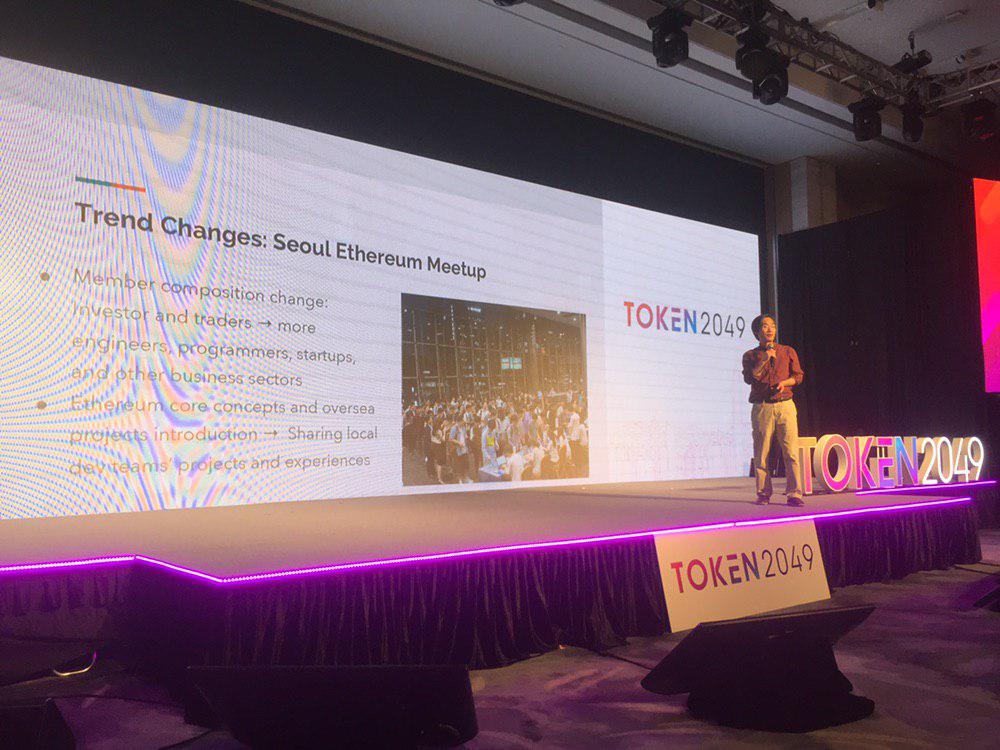
As part of the Token 2049 event, the Ethereum Supermeetup 2019 is the first of its kind held at the luxurious Kerry Hotel in Hongkong last March 13-14. People need to know what the future of Ethereum’s development would look like.
Token 2049 is one of the biggest crypto and blockchain conferences held in Hongkong. Several crypto companies and startups from various countries gathered together for this annual blockchain event.
Token 2049 speakers like Tron’s Justin Sun, Litecoin’s Charlie Lee, Singularity’s Ben Goertzel, Lisk’s Max Kordek, Zilliqa’s Xinshu Dong and the others have talked mostly about their respective projects’ future plans in their roadmap.
In addition to that, they have numerous panel sessions with the other CEOs, founders and other representatives from various crypto startups and companies worldwide. Various booths from crypto companies and startups flocked in some function rooms of Kerry Hotel Hongkong. In the second floor, there’s a networking lounge with few crypto booths served with snacks and coffee.
The Ethereum Supermeetup 2019 began around 7 PM with the presence of Ethereum co-founder Vitalik Buterin and other keynote speakers representing their respective countries.
The first keynote speaker was Vitalik himself, who talks more about the future of Ethereum and why we should be excited of that. To summarize his presentation, Vitalik is giving updates about the progress of Eth2, Eth1.x, Layer 2, adoption and goals of Ethereum in the next few months and years to come.
Up next was Digix co-founder and COO Shaun Djie from Singapore, who talks about the progress of meetups, provenance, key regulatory developments, the new enterprise profile, and blockchain courses being implemented in a couple of Singapore universities.
Ethereum Hongkong founder and Kenetic’s co-founder Jehan Chu, shares about the growth of their country’s ecosystem and the government/enterprise engagement.
Agridigital senior software engineer James Zaki from Australia, shares mostly about the meetups, workshops, blockathons being held in Sydney. On top of that, he shares about the development of their business community and its regulation being implemented in Sydney.
Seoul Ethereum meetup organizer and Atomrigs’ Brian Cheong of Korea, talks about the latest trend changes in their community meetups, the Korea Ethereum user and study group, Ethcon Korea 2019, challenges and nonce about blockchain kibbutz, grant, residency and apprenticeship.
NodeTokyo founder Yusuke Obinata of Japan, talks about the past and present Ethereum meetups in the country, Japanese enterprises in the space, regulatory landscape, government initiatives, universities and programs.
Indonesia Ethereum community leader and CCO of TokoCrypto Teguh Kurniawan Harmanda, shares about the widespread promotion of blockchain technology, past and present meetups, collaboration, activities, events, regulations and major players in the country.
Adsolve CEO Veronica “Cryptobabe” Andrino of the Philippines, talks more about the use of academic approach in educating the community regarding its real use and empowering more Filipino developers to start building Dapps on Ethereum. She also discussed the increased growth of Ethereum community, past and present meetups and the rise of blockchain education in the country.
Veronica and Vibe.PH hosted the First Crypto Massive Adoption Roadshow events in the Philippines as they move to all major cities. On top of that, her team planned to conduct Ethereum blockchain education events, art competitions, hackathons, and workshops in some universities and organizations in Cebu, Baguio, Iloilo, Davao and other major cities in the Philippines.
Ethereum Asia Pacific Limited co-organizer Chih-Cheng Liang of Taiwan, shares more about their small and big meetups from the past until present, and future improvements that Ethereum will be massively adopted.
Last, but not the least, Anna from Ethereum Berlin shares more about their meetup groups, Berlin Ethereum events, the rise of local communities, regulatory environment and their upcoming events.
After that, Vitalik Buterin and the rest of the keynote speakers are back at stage to have an AMA (Ask Me Anything) session to the crowd, where a few of them have asked technical and non-technical questions to them.
With over 1,500 people in attendance, the Ethereum Supermeetup 2019 was a success. The ambiance of the entire Token 2049 event was amazing, and it’s going to be an unforgettable one. It seems that Ethereum has a bright future ahead in terms of their development and worldwide massive adoption. There is no doubt that this will not be the first and last. It will continue for more years to come.
- 08:00 am
Oulu-based IoT and product development company Haltian and internationally-operating Nordic software and services company Tieto, have agreed a multiannual commercial cooperation concerning Tieto's Empathic Building service. The smart office market is predicted to double in the next five years, and the shared offering of the two companies provides customers with a faster way of digitising their office facilities.
The aim of the Empathic Building service is to increase the happiness and satisfaction of employees with respect to their work environments. The core of the service is a browser-based application that helps the employee in a multispace environment find the best facilities, people and resources for each task. Real-time data from sensors can be imported to the application to illustrate the utilization rates, temperature, noise levels – and even the location of colleagues – within the facilities. For example, Empathic Building generates space usage heatmaps and utilization reports for both desks and meeting rooms to help optimize and redesign the premises to support better employee experience. The application also provides the user with the opportunity to influence the administration and development of the facilities by supporting interaction between different agents. The administrator can create better work environments by comparing the feedback with the information collected by the sensors.
According to the agreement, Haltian is to provide Tieto's client facilities with sensor solutions that enable visualisation of, for example, data on the working conditions and the utilisation rate of spaces. Setting up Haltian's sensors has been made particularly straightforward, and they are delivered to the customer pre-connected to the service. The customer thus benefits from easier setup and cost-efficiency. In addition to Finland, Tieto's Empathic Building service is already in use in Norway and Sweden. The companies will now aim at expanding together in international markets.
“We chose Haltian as our partner because they are able to provide us with a comprehensive solution and because Haltian's Thingsee service includes options for different use case scenarios. Haltian provides Tieto with the devices, the connections and the system administration as a pre-integrated solution, thus streamlining the setup of new customer applications. The reliable data collection system allows us to focus on developing new functionalities that serve end users. Empathic Building is a fast-developing business, and flexible partners such as Haltian facilitate international scaling of our business”, says Reetta Ruusunen, Head of Ecosystems and Partners for Tieto Empathic Building.
Haltian Oy's Thingsee system facilitates rapid smartening of facilities. Haltian is developing a whole family of sensor devices and routers which can accommodate, for example, the collection of occupation data, utilisation rate data and conditions data from Tieto's client facilities. Haltian's Thingsee device management services facilitate transferring the data to Tieto's Empathic Building system.
”Tieto is a true pioneer in the digitalisation of workplaces, and we are extremely happy about having been chosen as a partner by such a major service company with international operations to smarten offices around the world. Our aim is to grow to be the world's leading data collector in the Internet of Things in selected segments, and this newly-agreed contract is an excellent step forward in the most interesting growth market in the world’’, says Pasi Leipälä, CEO of Haltian.
- 04:00 am

Finnish cyber security company F-Secure continues to receive market recognition for their solutions, with the current win being a first for the company. The latest accolade is the Professional User Rating: Security Solutions 2019 (PUR-S) Champion Award given for Radar by German research and analyst firm Techconsult.
F-Secure Radar is a PCI ASV certified, turnkey vulnerability scanning and management platform. It allows users to efficiently identify, evaluate, and prioritize vulnerabilities and security risks, even beyond their organization’s own network assets.
Unpatched and badly configured software is a key attack vector and breach enabler, especially when it comes to more advanced attacks. F-Secure Radar can significantly lower the cost of an organization’s vulnerability management process by automatically and proactively identifying vulnerabilities – and prioritizing them based on business risk.
F-Secure’s Teemu Myllykangas, Radar Solution Director, explains that prioritization of vulnerabilities should be done based on true business risk rather than the perceived severity of the vulnerability.
“For example, even a severe vulnerability doesn’t necessarily rise very high in remediation priority when it’s on a laptop that you do not particularly care about. However, a mediocre vulnerability on an internet-facing business-critical server will certainly be one of the top priorities. We help in prioritizing the vulnerabilities by providing the needed business risk context,” he says.
Vulnerability Management (VM) is the process of identifying, evaluating, reporting, and remediating security vulnerabilities in business processes, web applications, and systems, as well as the software that runs on them. This is not the entire attack surface, however.
“Unlike F-Secure Radar, most VM solutions do not look beyond your own network. Often, elements of old services remain online, even after the service is shut down. They are forgotten and unmaintained, and thus are vulnerable. For an attacker studying your attack surface, however, they provide an easy-to-exploit beachhead to your network,” explains Myllykangas.
F-Secure Radar leverages the Finnish cyber security company’s trademark combination of human expertise and AI excellence. The expertise and real-world experience gained from F-Secure’s penetration testers and red teaming exercises fuel the development of the solution, providing award-winning value for its users.
Techconsult conducted a large-scale user study on IT security products for 6 solution areas, with 14 categories and more than 60 individual criteria. The evaluation, which involved more than 2,000 user companies completing an online survey, involved ratings regarding company, and technology/solution rating. Around 160 manufacturers offering IT security solutions on the German-speaking market were in focus.
Marco Becker, IT market analyst at Techconsult comments about the award that “with its vulnerability management solution "F-Secure Radar", F-Secure achieved fifth place and thus a top position in the broadly diversified field of competition.”
“F-Secure was particularly convincing in the concrete solution evaluation, which even achieved a place on the winner's rostrum in several categories. In concrete terms, this means that F-Secure has the second-best rating for solution utility and manufacturer loyalty, and the third-best for user-friendliness and product loyalty,” he adds.
The latest award given to F-Secure comes on the heels of two from AV-TEST for F-Secure Protection Service for BusinessComputer Protection and the consumer-oriented F-Secure SAFE.
- 01:00 am

InstaReM, Asia’s only digital cross-border payments company with a global presence in over 50 countries, announced the close of its US$ 41 million Series C funding round in Singapore. The company’s spectacular growth has attracted an additional US$ 20 million investment in Series C round, led by Singapore-based Vertex Growth Fund (VGF) and supported by new investor, Atinum Investment, a leading Venture Capital investor from South Korea.
This latest round takes InstaReM’s total funds secured to US$ 59.5 million, making the Singapore startup one of the top ten most funded fintech companies in Southeast Asia. The digital transfer company is expected to IPO in 2021. The proceeds of the latest round of funding will be used to accelerate growth in existing and new markets, with InstaReM expected to receive licences in Japan and Indonesia later this year.
2019 will be a significant year for InstaReM with the plan to open a regional headquarters in Latin America and strengthening its teams in London and Seattle ahead of launching a cards platform in multiple markets before the year closes. All this comes after the fintech outfit secured card issuing abilities from the global payments giant Visa and embarked on a card program in Asia (to be delivered in a fraction of the typical 9-month development period), with plans to extend this capability through to Australia, Hong Kong and Malaysia by Q3 2019.
InstaReM recently became the first foreign digital money transfer service provider in Malaysia to get the Bank Negara Malaysia’s approval to onboard customers with the electronic KYC (e-KYC) process, which is expected to accelerate the company’s growth in the country.
InstaReM’s mission remains to democratise payments across the globe. The company’s next-generation payments platform makes it possible to send local ACH or real-time payments in over 50 countries, to issue virtual or physical cards in 25 countries and collect payments for SMEs in 35 countries. InstaReM already powers payments for four of the top ten Southeast Asian Banks.
Prajit Nanu, co-founder & CEO of InstaReM said:
“When we started InstaReM four years ago, our mission was to make moving money internationally, faster and more convenient through seamless digital payments. Our mission remains unchanged, the latest round of funding reflects investors’ continuing confidence in our business and value proposition. The digital cross-border payments market is growing and disrupting at an unprecedented rate. For InstaReM to continue to expand and stand out we need to offer a customer experience like no other, and so that’s our main focus as we move forward.”
James Lee, Managing Director of Vertex Growth Fund, who joins InstaReM’s board, said:
“There is still room for improvement in user experiences in cross-border payments despite the breakthroughs in technology. That’s why we decided to make InstaReM our first investment in Southeast Asia. What makes us confident about InstaReM is the sheer determination of its founders, backed by a solid team of professionals that work round-the-clock to provide a great product and experience to their consumer and enterprise customers. We have been witness to InstaReM’s phenomenal growth in the last four years and are keen to support them with their expansion in the North American, Europe, Latin American and ASEAN regions through strategic investment and advice.”
Aram Shin, Vice President and Head of Southeast Asia for Atinum Investment, said:
“InstaReMhas been able to expand globally and scale its operations without losing focus on its core values: reducing the costs and time needed for cross-border payments. Speaking with their customers and partners, we recognized the dedication the founders had towards maximizing value for their clients through tailored products and customer service. We are looking forward to working alongside InstaReM and keen to add to its success.”
- 01:00 am

Lexmark International, Inc. a global imaging solutions leader, today announced that Premier League football club, Fulham FC has selected a solution from Lexmark and Workflow to create a stable and reliable print infrastructure to drive cost savings, improve security and reduce the club’s environmental footprint.
The Fulham FC administrative organisation sees a significant peak in print demand every two weeks when, Fulham FC’s Craven Cottage stadium plays host to up to 25,700 fans.
In order to produce all printed material, Fulham FC staff were relying on a variety of aging printers, distributed across three different locations, using three different brands of printer which were reaching end of life, pushing the service costs high.
Fulham FC turned to Workflow Group, a specialist document and print services company and Lexmark business solutions partner, both of which have experience working with football clubs. After a detailed assessment, a new managed print solution was proposed, aiming to stabilise the club’s print environment and provide it with the reliability it required.
“Our printer fleet was causing staff a lot of problems. Constant failures and call outs – sometimes on a weekly basis for a specific printer – meant we had almost lost our trust in office print technology. Lexmark has restored our belief in the reliability and stability of a managed print solution,” commented Arturs Banks, IT Infrastructure at Fulham FC.
The new fleet of Lexmark devices comprises of twenty-seven colour multi-function printers (MFPs) and eighteen desktop colour printers in a mix of A3 and A4 sizes – replacing all existing desktop machines. The installation was rapid, with all devices up and running in one full day per site, which meant disruption was kept to a minimum.
The printer fleet deployment at Fulham FC has provided the club with modern, robust devices that are more responsive, with touchscreen controls, and increased options. This has driven cost savings by reducing the volume of colour printing and paper wastage, helping to support Fulham FC’s environmental policies. A print release system has also been delivered, improving important areas of security.
“Fulham FC is a good example of periodic peaks in print demand and how important it is to know that you can rely on the performance of your printer fleet. We are pleased that by working with the team at Workflow, we were able to provide Fulham FC with a stable print environment that fulfils its needs,” commented Martin Fairman, Managing Director of Lexmark UK.
- 04:00 am

Mactavish, the UK’s leading expert on insurance governance, has challenged insurers and brokers to guarantee that eight common flaws it has identified in policies will never be used as reasons to refuse pay-outs on cyber insurance claims.
Several insurers and brokers have denied that the flaws – discovered by Mactavish in analysis of dozens of ‘off-the-shelf’ cyber insurance policies - even exist.
Mactavish has now challenged the Association of British Insurers, brokers and insurers in an open letter to state publicly on behalf of its members that no claims will be rejected because of these flaws.
Bruce Hepburn, Chief Executive Officer, Mactavish, commented: “Some insurers and brokers were quick to denounce our findings. So we are challenging them to state publicly that they will never use the flaws we identified as the basis to turn down claims.
“These flaws are a consequence of the immaturity of the specialist cyber insurance market. But this is a rapidly expanding market and it is essential that the industry addresses these issues if the available policies are to meet the needs of companies seeking cover.”
The eight flaws were outlined in the Mactavish Cyber Risk & Insurance Report, published in November. The flaws include:
- Cover can be limited to events triggered by attacks or unauthorised activity – excluding cover for issues caused by accidental errors or omissions
- Data breach costs can be limited – e.g. covering only costs that the business is strictly legally required to incur (as opposed to much greater costs which would be incurred in practice)
- Systems interruption cover can be limited to only the brief period of actual network interruption, providing no cover for the more significant knock-on revenue impact in the period after IT systems are restored but the business is still disrupted
- Cover for systems delivered by outsourced service providers (many businesses’ most significant exposure) varies significantly and is often limited or excluded
- Exclusions for software in development or systems being rolled out are common and can be unclear or in the worst cases exclude events relating to any recently updated systems
- Where contractors cause issues (e.g. a data breach) but the business is legally responsible, policies will sometimes not respond
- Notification requirements are often complex and onerous
- Businesses are forced to choose IT, legal or PR specialists appointed by their insurer.
Mactavish, which advises organisations of all sizes on their insurance requirements and has worked with a quarter of companies in the FTSE 100, recently launched a new Cyber Risk Consulting Practice. This helps clients to understand their exposure to cyber risks, and to source appropriate insurance cover for these. It has recently reviewed dozens of ‘off-the-shelf’ cyber insurance policies and identified eight significant common flaws.
Mactavish is the UK’s leading independent expert on insurance placement and disputes. It has been operating in the commercial insurance sector for over 15 years.
- 03:00 am

MoneyNetint, one of London’s leading electronic money institutions, is launching PayTicket, an easy-to-use payment service for foreign motorists who receive tickets while traveling.
More people are driving on vacation than ever before, with 120 million vehicles being rented out each year, triggering a massive rise in traffic tickets. Google reports there have been 322,000 searches per month (in 17 countries, including the USA, UK, and Hong Kong) about ‘online fines payment solutions’. In the Netherlands, eight million traffic reports went to foreigners in 2017 alone. An estimated 5% of tourists will receive a traffic report on vacation, and paying the fines through money wires or bank transfers is slow, expensive and inefficient.
MoneyNetint has launched a new payment service for travelers who receive traffic tickets in Europe. In most EU countries, you pay the speeding or parking fines through local channels, and this includes tourists who cannot pay online with a foreign credit card. Visitors who don’t know the country’s driving rules are often caught by traffic cameras, especially in restricted traffic zones or bus lanes.
Until recently, the only payment solutions available were cross-border bank transfers or money wires. The fees for bank transfers and money wires are often more expensive than the tickets themselves. PayTicket solves this problem with an easy-to-use platform that allows motorists to pay international driving fines securely with their credit or debit card.
Yishay Trif, CEO of MoneyNetint, said: “In the past when you picked up a driving ticket in Europe, you probably didn’t know how to pay. Rules and regulations vary from country to country, so it hasn’t always been easy to pay for a ticket abroad. Fortunately, there’s now an online solution to this long-standing problem. PayTicket is a new service that helps travelers
pay their driving fines in minutes. It’s fast, secure and easy-to-use, paying the fine with the minimum of fuss.”
All over Europe, local authorities are using advanced enforcement to issue penalties to both domestic and international motorists. Most driving tickets are logged electronically to the rented car’s licensing plate, and the issuing authority then collects the driver's details from the car rental agency.
The period between getting fined and having to pay varies from country to country. In Italy, the authorities have up to a year to contact a driver once they’ve obtained their details. In Germany, the period is three months. Once drivers receive a ticket, they usually have 60 days to pay or appeal before the fine doubles. If the fine is unpaid, the issuing authority usually tries to recoup the debt through an overseas debt collection agency.
If you’re caught out on vacation, it makes common sense to pay your motoring fines promptly. PayTicket offers to remove all the payment barriers while saving you time and money.








