
Published
- 01:00 am

Almost three-quarters *(73%) of respondents to an MHR Analytics Twitter poll revealed they are not confident about their data and numbers on month-end closes and audit submissions.
The findings from the survey of 1,000 respondents underline the increasing pressures facing finance teams.
A separate **survey showed the new IFRS 16 lease accounting legislation to be taking its toll, with 30% of respondents calling it ‘complex,’ 17% ‘resource heavy’ and 24% ‘time consuming.’
“With a backdrop of rising interest rates, an uncertain economy and increased regulation, finance and accounting leaders are facing a wide range of competing demands, and this is something we’ve seen in our research as well as from working with our customers,” says Nick Felton, MHR Analytics SVP.
“Compliance, chaotic data sets and close processes paint a complex picture, but the good news is that these challenges come at a time when powerful technology is widely available to automate these processes and remove some of the burdens blighting finance and accounting teams,” he added.
The specialist provider of business intelligence and financial performance management sets out three practical ways to address finance woes through automation:
1.Automated close and consolidation: Financial close and consolidation encompasses everything from corporate reporting and regulatory filing to intercompany eliminations, tax reporting variables, disclosure management and consolidation of financial statements. Delivering reporting in a way that’s compliant and accurate, whilst closing and consolidating quickly is a balance that can be difficult to deliver. The MHR Analytics Twitter poll demonstrated these difficulties, with only 27% of those surveyed saying they were confident on audit submissions and month-end closes, 27% saying theirs required improvement and 46% saying they were not confident.
Tailored solutions like CCH Tagetik bring together disparate data sets and provide full control over reporting and time. This automated approach eliminates the costly mistakes made with manual methods and reduces admin time by automating repetitive tasks, creating fast and accurate reports to take away the month-end headache.
2. Automated reporting: IFRS 16 lease reporting software is a primary example, with companies obligated to include virtually all leases on the balance sheet since January this year. For finance teams, the biggest change has been the removal of the distinction between finance leases and operating leases. From premises through to big-ticket office equipment, IFRS 16 demands detailed consideration of lease data relating to a potentially huge range of assets – many of which were previously dealt with off-balance sheet.
Failures in data collection, calculation and disclosure can all mean sleepwalking towards non-compliance. This can lead to loss of investor and partner confidence or severed credit lines – risks that few businesses can afford to encounter.
Equipping your team with an analytics solution can help. Implementing a single hub for IRFS reporting, data repository, calculation modelling, reporting and disclosures will allow teams to manage obligations while retaining ownership of the accounting process and ultimate peace of mind.
3. Automated budgeting and forecasting. Research shows that the top performing businesses spend 20% more time on analysis of financial data than on gathering it. But to do this effectively, being armed with the right technology is fundamental – and a large number of businesses are still relying on spreadsheets which simply cannot provide the accuracy needed to effectively budget and forecast. Automated budgeting, forecasting and analysis, using IBM Planning Analytics for example, eradicates the risk of human error and transforms the finance function with complete visibility. One MHR Analytics customer has implemented financial workforce planning software to save an anticipated 30% in operational costs and generate long-term financial forecasts up to 10 years into the future.
- 09:00 am

The Derivatives Service Bureau (DSB), founded by the Association of National Numbering Agencies (ANNA) to facilitate the allocation and maintenance of International Securities Identification Numbers (ISINs), Classification of Financial Instrument codes (CFIs) and Financial Instrument Short Names (FISNs), for OTC derivatives, has today announced the results of their second 2019 industry consultation, revealing a significant appetite for further analysis on functionality that may be helpful in delivering improved data quality, standardization and automation as well as further strengthening the DSB’s cybersecurity processes and governance.
The second consultation closed on the 29th July with 9 responses representing 12 institutions, four of which were from trade associations. Industry concurred with 80% of proposals set out in the second consultation paper. Half the proposals are being taken forward for analysis, to allow the industry to better understand the benefits and potential impact.
The industry requested that the DSB undertake further analysis, for example, on leveraging the ISIN-LEI service to provide LEI and other supplemental data to further improve data quality. By placing the LEI mapping table in the product-mapping template the data enables anyone consuming the ISIN record to have easier access to LEI mapping. This, in turn, offers the potential to improve downstream processing. The DSB will be conducting this cost-benefit analysis on a business as usual basis, with no cost impact to users.
Another industry request for more analysis, resulting from the DSB’s 2nd Consultation, was for the DSB to look at the CFI code coverage it provides today and whether and how it needs to be taken forward for implementation as well. Evaluation will also be undertaken by the DSB to ascertain whether and by how much the annual fee determination process can be brought forward in 2020. Following industry feedback, an industry Agreement Forum will also be formed to commence work in relation to multiple or group-wide agreements with the aim for recommendations to be included in the annual industry consultation in 2020.
Emma Kalliomaki, Managing Director of ANNA and the DSB, said, “Collaboration is a cornerstone of our evolution at the DSB, and the enhancements and the further analysis being undertaken, driven by user feedback, focus on data quality and standardisation which is so important for all users. At its core, the DSB is focused on delivering the ISO obligations and principles to fulfil the industry needs for ISO standards while being as cost-effective, transparent and efficient as possible, to both help firms further their operational efficiency and manage risk for global markets.”
Malavika Solanki, a member of the DSB Management Team, said, “Industry ideas have driven this process, and we are pleased with the partnership-driven approach that is emerging. As we continue to adopt user sourced initiatives, we are increasingly focusing on aiding consistent use of data contained within the OTC ISIN record. We have also observed an evolution from use of OTC ISIN for RTS 23 purposes to improve integration in users’ infrastructures, as the industry realises the benefits of using OTC ISIN records in their own workflow processes.”
In line with the DSB’s critical market infrastructure role, the consultation also highlighted industry appetite for the adoption of international best practice on cyber-security governance. The DSB is, therefore, creating the role of a Chief Information Security Officer (CISO) in the short-term, who will be tasked with strengthening the DSB’s cyber-security processes. The DSB will review this part-time role in 2020 to determine the most effective way to enhance cyber-security governance in the medium term.
In conjunction with releasing the consultation report, the DSB has also published the draft 2020 DSB Access and Usage Agreement and associated policies, giving visibility over the proposed changes and an opportunity to comment. Deadline for feedback is 2nd September 2019 with a final version being published 20th September 2019.
- 09:00 am
JCB International, Co., Ltd. (JCBI), the international operations subsidiary of JCB Co., today announces a partnership with EVO Payments to enable JCB payment acceptance across the UK and Ireland.
The enabling of the EVO merchant portfolio increases JCB acceptance at small-to-medium sized businesses, particularly merchants utilizing integrated payments, and grants JCB additional access to ISV providers who are especially active in the UK. The UK and Ireland partnership follows a successful trial in Poland in 2017 when JCB acceptance was enabled for existing EVO merchants.
The expansion of JCB's relationship with EVO is a key milestone for JCB's growth, as the company continues to drive acceptance coverage across Europe for its 130 million global cardmembers and expands its network of around 30 million merchant partners.
Mr. Tsuyoshi Notani, Managing Director, JCB International (Europe) Ltd., said: “JCB's partnership with EVO Payments demonstrates our ongoing work to establish efficient acceptance across both the UK and Ireland and in Europe more widely. Our efforts to widen acceptance come about as JCB card membership grows in new countries from which more and more people are visiting Europe.”
Darren Wilson, President International, EVO Payments, Inc., said: “Our partnership with JCB will allow the 130 million JCB cardmembers to make payments at all EVO merchant sites across the UK and Ireland that are part of the JCB network. Expanding our card acceptance capabilities so that travellers from Asia can easily make card payments is an important enhancement to our merchant proposition.”
- 02:00 am

BrickVest, the London-based online real estate investment platform, has launched its second Employee Participation Fund (‘EPF’) in partnership with BEOS, the German commercial property specialist, part of the Swiss Life Asset Managers family since August 2018.
Belonging to the BrickVest Solutions product family, the innovative EPF is a co-investment fund that offers BEOS employees the opportunity to invest in their employer’s existing real estate deals alongside institutional investors securely through BrickVest’s pan-European platform.
The fund, which boasts €5 million in assets at launch, is managed by BrickVest, while the underlying asset, a €300 million higher yielding German real estate portfolio, is managed by BEOS.
This follows the successful launch of BrickVest’s first EPF for Beos in 2018.
The BrickVest EPF is a compelling employee incentive that helps Real Estate developers to attract and retain talents of the highest quality. Employees often generate attractive returns through their work for their institutional clients but are themselves unable to access these investments opportunities.
For the institutional investors, employee participation in the fund improves overall confidence and ensures greater liquidity in their investment. As such, the EPF structure uniquely ensures the alignment of interests of all three stakeholders.
Emmanuel Lumineau, CEO at BrickVest, commented: “We’re delighted to be partnering with BEOS to launch our second EPF which benefits deal sponsors, investors and employees equally. BrickVest is fast cementing its place as the go-to solutions platform for European real estate sponsors. We look forward to working with other European real estate firms to put similar schemes in place and further democratise commercial property investment.”
Holger Matheis, Management Board at BEOS, commented: “We have decided to renew our trust in BrickVest for our second employee participation fund, making it accessible to a larger number of our staff. BrickVest has designed and executed all of the steps involved in structuring and managing the fund in a tailor-made and flexible way.”
- 09:00 am

Bank Hapoalim, one of Israel’s largest banks has selected Wolters Kluwer’s OneSumX solution for Risk Management, specifically using the software for managing its credit risk profile.
The bank will now utilize Wolters Kluwer’s OneSumX software for Measuring Counterparty Credit Risk (SA-CCR). This is a revised rule under Basel III Standardized Approach, applied to calculate the exposure at default of derivatives, meaning banks need to consider how to integrate the standard into their overall regulatory approach.
OneSumX Credit Risk calculates credit valuation adjustment (CVA), debt valuation adjustment (DVA) and funding valuation adjustment (FVA), enabling exploration of the correlation between credit, market and behavioral risk in an integrated approach. The solution identifies and estimates the degree of systemic concentration based on counterparty risk and credit exposure analysis and enables compliance with regulatory requirements such as Basel II/III.
“Bank Hapoalim is now successfully using a wide variety of features available in Wolters Kluwer’s OneSumX Credit Risk solution” commented Uri Yanir, Senior Vice President and Head of Basel II/III Implementation at Bank Hapoalim. “Indeed, the software is now our main tool for calculating capital ratios.”
“We are delighted to be working with Bank Hapoalim to ensure it has access to a truly integrated platform for managing its credit risk profile,” added Kris Van Bavel, Managing Director, EMEA, for Wolters Kluwer’s Finance, Risk & Reporting (FRR) business.
Wolters Kluwer FRR, which is part of the company’s Governance, Risk & Compliance division, is a global market leader in the provision of integrated regulatory compliance and reporting solutions. It supports regulated financial institutions in meeting their obligations to external regulators and their own board of directors.
Wolters Kluwer FRR receives frequent independent recognition of its excellence and innovation. Risk magazine recently awarded the company its coveted Regulatory Reporting System of The Year Award for the second year running and Central Banking magazine has named OneSumX for Regulatory Reporting its Best Technology Solution For Regulatory Compliance. Wolters Kluwer FRR is also this year’s Category Winner for Regulatory Reporting in Chartis Research’s annual RiskTech100® report, which is a comprehensive study of the world’s leading risk and compliance technology companies. Notably, this is the seventh time in eight years that Wolters Kluwer FRR has achieved this honor. Chartis Research has also named Wolters Kluwer FRR a Category Leader in both its IFRS 9 Technology Solutions Report and CECL Report.
- 02:00 am
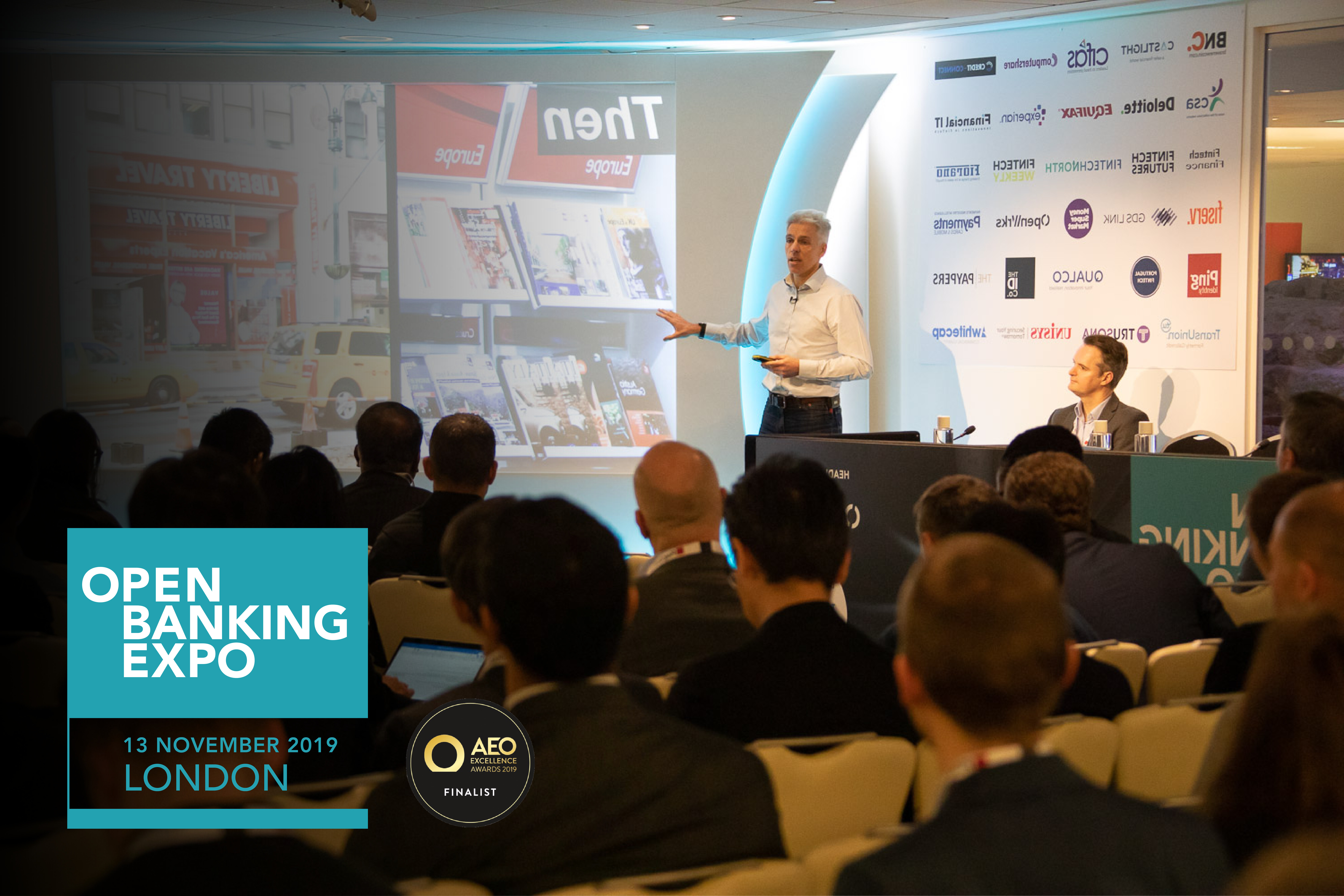
Open Banking Expo will bring together the innovators, disruptors and visionaries who will shape the future of Open Banking. Leaders and experts from financial services, fintech and regulation will reveal lessons learned from year one and what Open Banking 2.0 looks like.
This year’s event is again headlined by the developer of the first-to-market Open Banking API, OpenWrks, and will be held on Wednesday, 13th November 2019 at etc. venues near St Paul's Cathedral in London. More than 400 senior executives are expected to attend. The agenda is now live at www.openbankingexpo.com/london. Open Banking Expo was shortlisted for ‘Best Conference’ earlier this year at the AEO Excellence Awards.
With 60+ C-level headliners speaking from the UK’s largest banks, credit card providers, business lenders, charities and regulators, delegates will enjoy a full agenda that will this year span five stages. Speakers include:
High Street Banks
- Mark Curran, Director of Payments and Open Banking, CYBG
- Søren Rode Andreasen, Chief Digital Officer, Danske Bank
- Hetal Popat, Programme Director, Head of Open Banking & PSD2, HSBC
- Paul Davis, Retail Fraud and Financial Crime Director, Lloyds Banking Group
- Adrian Smyth, Head of Innovation, RBS
- Eduardo Martinez-Barrios, Head of Open Banking, Santander
Challenger Banks
- Andrew Smith, Chief Technology Officer, ClearBank
- Jason Maude, Head of Technology Advocacy, Starling Bank
- Sven Schindele, Products Director, Tandem Bank
Credit Cards
- Sujata Bhatia, Senior Vice President, American Express
- Liz Oakes, Vice President Payments, Mastercard
- Mark Nelsen, Senior Vice President, Open Banking, Visa
Business lenders
- Nick Fahy, Chief Executive Officer, Cynergy Bank
- Richard Kerton, Chief Executive Officer, Esme Loans
- Chris Rieche, Chief Executve Officer, iwoca
- Didier Baclin, Chief Innovation Officer, Zopa
Fintech
- Charlotte Crosswell, Chief Executive Officer, Innovate Finance
- Myles Stephenson, Chief Executive Officer, Modulr
- Olly Betts, Chief Executive Officer, OpenWrks
- Keith Grose, International Lead, Plaid
Policy and regulation
- Bill Roberts, Head of Open Banking, Competition & Markets Authority
- Imran Gulamhuseinwala, Trustee, Open Banking Implementation Entity
- Erik Porter, Interim Chief Executive Officer, The Money Charity
Open Banking was introduced by the government last year to encourage the development of new financial products and services to provide more choice for customers. After banks have implemented dedicated APIs for third-party providers in September, consumers should soon start to see the benefit of the innovation as new products and services are rolled-out. As the largest event of its kind, attendees at the Open Banking Expo will discover how this new technology will continue to disrupt traditional methods of banking and payments.
Open Banking Expo’s managing director Adam Cox, comments: “Open Banking is on the road to transform how we use financial services. The challenge of making this new way of banking more accessible remains, but Open Banking has incredible potential to improve people’s lives through new tools and services such as those designed to help people in debt. Now in its second year, the Expo is a unique forum to explore how Open Banking will change financial transparency and choice for consumers.”
Managing director of headline partner OpenWrks, Olly Betts, comments: “The next twelve months are set to be the most exciting yet. With consumer awareness on the rise, the impact that Open Banking has for the people that can truly benefit from it is more apparent than ever. With the launch of businesses such as Tully and Toucan that use Open Banking as a force for good, the true value is only just being realised.
But the ecosystem isn’t stopping there it’s continuing to collaborate, grow and improve and events like The Open Banking Expo help make this happen, it brings together the biggest and the best from incumbents to fintechs to the government to discuss all things Open Banking. At OpenWrks we’re looking forward to being the headline sponsor of this prestigious event for the second year running.“
- 09:00 am

Under the SberData project (Sberbank's initiative on processing and analysing big data), Sberbank has researched the consumer lending market: wage dynamics, interest rates, period and amount of loans, refinancing, expense structure and other aspects. The fast growth of retail loans over the past two years caused concerns over a possible bubble on this market.
Data of Sberbank, Bank of Russia, Rosstat and lending bureaux don’t support the concerns: the lending growth was objective and has not yet been exhausted.
A significant, but one-off factor was the nominal wage growth, especially of the smallest ones, in 2017-2018. According to Sberbank, the average salary of its clients who had received up to RUB 15,000 in 2017 increased by 42% in 2018. The results of other categories were more moderate: the growth speed smoothly decreased from 17% in a year for clients who receive RUB 15,000-30,000 on average in 2017 to 4% for all employees with more than RUB 100,000 salary.
An important factor is the minimum monthly wage growth by 48% over the same period. According to Sberbank, the average wage increased by 12.1% in 2018, compared to 2017.
The costs of not only new, but also many granted loans through refinancing and interest rates cuts by the banks themselves decreased over two years. It approximately increased potential market size by 20%. According to analysts’ estimations, about 17% of provided mortgage loans in 2018 and 14% of provided consumer loans were related to the refinancing.
The non-target consumer loan provision increased by 24% in a year. In general, 69% of non-mortgage loans are unsecured consumer ones, the second place is taken by credit cards (10% of the whole retail lending market). Sberbank’s analysts believe that they are very likely to play a more important role than non-target consumer loans.
Sberbank also managed to estimate their use structure. It turned out that they are not expenses to make ends meet, but quite the contrary. About half of them are related to repairs (22% of visible part of expenses), purchase of long-term use goods (18% of visible expenses: electronics, household equipment, furniture, clothes), then car (not a purchase, but repairs, spare parts, etc.) The third place is taken by tourism and vacations (7%) and transfers (8%) that can be payments for repairmen.
An important factor of borrowers’ creditworthiness is a high level of early repayments. The average mortgage payment at Sberbank is by 4 times higher than a scheduled payment, and the consumer loan payment — by 2.3 times higher. The 15-year loans are paid off in seven years on average, three-year consumer loans — in two years. The early repayment level in the bank has significantly grown in recent two years; it doesn’t prove the version of citizens’ debt overburden.
The bank’s analysts can see no reasons to be afraid of the average loan amount growth: it mostly grows due to the fact that the most small and expensive loans left the market under the Central Bank’s pressure.
However the Central Bank’s measures made small and expensive loans to leave the banking system to microfinance organisations. In this not quite transparent and weakly regulated sector, the share of borrowers with large amount of loans, the lending to borrowers with a delay of more than 90 days thrives; 86% of new loans to problem borrowers receive loans in microfinance organisations.
5% of all borrowers have loans in microfinance organisations, and no loans in the banks so far. Three year ago, this number was only 1.5%, at the same time the number of borrowers at the banks who received loans in microfinance organisations increased up to 7%, compared to 3% in 2015.
At the same time, all banking metrics of the portfolio quality and estimations of lending record bureaux, on the contrary, are at the historically high levels. Sberbank’s analysts agreed that a cautious approach to consumer lending will be beneficial, but all trends are still manageable using the traditional risk management.
The SberData research pays attention to the first signs of the consumer lending decrease that will amount to modest 8-10% in a year. However, the mortgage will inevitably continue to grow in the next years, and, despite all risks and challenges, the retail lending will still an essential area of the development of the Russian banking segment for years.

Andrew Stevens
Global Banking and Financial Services Specialist at Quadient
“When the CMA launched this report six months ago, it seemed a natural fit when most customers rated a bank without any branches, First Direct, as the one they would recommend to their friend f see more
- 01:00 am

Crypto.com, the pioneering payments and cryptocurrency platform, announced today that it has listed Tezos XTZ to its App and is exploring staking rewards “baking” for its users.
XTZ joins a growing list of cryptocurrencies and stablecoins on the Crypto.com platform, such as Bitcoin (BTC), Ether (ETH), Litecoin (LTC), XRP, TrueUSD (TUSD), PAXOS (PAX), and its own MCO and CRO Tokens.
Tezos is a distributed ledger, making use of blockchain technology to form a blockchain governance by establishing a true digital commonwealth. Tezos established formal verification, a technique which mathematically proves the correctness of the code governing transactions and secure smart contracts.
With XTZ added to the Crypto.com, users can now purchase it at true cost with no fees - credit card and bank transfer both supported. As Crypto.com also offers the MCO Visa Card, this adds additional utility to XTZ as users can easily convert cryptocurrencies into fiat currencies and spend at over 40m merchants globally.
- 01:00 am

All Work & Social, the operating company behind XYZ Work and the recently launched XYZ Social in Spinningfields has partnered with biometric payments provider, Fingopay.
From Autumn, members and visitors to All Work and Social’s XYZ building will be the first in the UK to pay for food and beverage with just a scan of their finger, using VeinID technology. The integration will make transactions easier, simpler and safer by removing the need for carrying cash, cards, ID or smartphones.
Simon Binns, CMO, Fingopay comments, “All Work & Social have seen the far-reaching potential of biometric-based identity for access and payment, and we are delighted to have confirmed a launch partner who has been so instrumental in the regeneration of Manchester.”
“Fingopay will be open for everyone to use at the new XYZ Social this autumn Those who sign up will be able to pay and ID themselves with a simple scan of their finger.”
Anthony Powell, Managing Director at All Work & Social, said, “We are thrilled to partner with Fingopay on this project, which can only further support Manchester’s growth as a digital city, and international hub for the tech, digital and creative industries.”
“With Fingopay, we are enhancing everyday life for XYZ Work and XYZ Social members and guests by giving them a convenient and secure new way to pay, with cashless and convenient biometric payments and transactions.”
The award-winning Fingopay technology, which uses VeinID scanning, allows customers to link their vein signatures with their payment cards to pay using just their finger at a network of merchants. At tills, the unique pattern of the customer’s vein is scanned, verifying biometric signatures and payments in seconds through its cloud-based matching system.
It has been recognised as the fastest and safest payment method on the market with no need for PIN or passwords and no transaction limits.
The technology platform has also been working with Greater Manchester Council, CityCo and MIDAS since announcing its intention to launch in the city in 2019.








