Published
- 02:00 am

Visa is looking to cosy up to fintech firms through the launch of an online portal giving them "unprecedented" access to its technologies and network.
Visa estimates that some $17 trillion in consumer payments are still made with cash or cheques, and that there are 1.7 billion people around the world who are still outside of the formal financial sector.
This offers a huge opportunity for fintech upstarts with new forms of digital payments. To help these firms, and keep itself at the table, Visa has launched Visa Partner, a one-stop shop to simplify the process of working with the payments giant, helping fintechs more easily leverage its network, resources and tools.
The portal helps with fast digitised licensing; offers a comprehensive partner directory full of BIN sponsors, issuer processors, PCI, compliance and KYC and AML partners; and contains educational videos that teach the basics of payments and issuing.
“Fintechs are constantly innovating on our network and creating new types of payment flows that we think will continue to push the boundaries on better ways to pay, everywhere,” says Terry Angelos, global head, fintech, Visa. “Through the launch of Visa Partner, we are making it easier for fintechs to launch with Visa, enabling them to innovate faster and bring new payment flows to market.”
- 03:00 am
The international delivery expert ParcelHero has released a new industry study looking at the impact of America’s controversial Wayfair ruling one year on; and it’s found that the effect it has had on UK sellers has been exactly the opposite of what had been expected. America’sSouth Dakota v Wayfair Supreme Court ruling paved the way for US states to impose sales taxes on out-of-state and overseas sellers, and ParcelHero’s Head of Consumer Research, David Jinks MILT, says: ‘Wayfair is way, way unfair on small British online marketplace traders.’
Says David: ‘The majority of American states have introduced marketplace facilitator legislation which means sales taxes have hit the smallest online traders first, rather than the multinational companies the Wayfair ruling was expected to target. That’s because Amazon, eBay and the like are identified as the seller, not the individual trader using their sites. Because Amazon and eBay’s sales are over every state’s tax threshold, they must impose automatic sales taxes.’
Explains David: ‘Though the Wayfair judgement was aimed at larger companies who achieve over $100,000 in a state, our new study reveals that the major UK multinationals are sitting tight and waiting for states to begin acting against UK sellers. It’s small Brit marketplace sellers that are already fully exposed to the new legislation. eBay, for example, automatically collects the online sales tax on the sellers’ behalf for the affected states; though it says that are no extra charges or fees for this service. Likewise, Amazon also now calculates, collects, remits, and refunds state sales tax on sales sold by third party sellers to states where marketplace legislation has been introduced.’
Until last summer, no US state’s sales tax applied to online sellers who didn’t have an employee or property in that state. That meant e-commerce traders from outside, including, of course, from another country such as the UK, were exempt from local sales taxes. And as there is no nationwide VAT system in the USA, this meant international companies such as UK online retailers paid zero sales taxes in the US. But ParcelHero – a Sunday Times Tech Track 100 shortlisted company - says the status quo was blown wide open when the US Supreme Court issued its much-anticipated ruling.
What the ruling means in practice, says David, is that, for example, South Dakota’s sales tax of 4.5% has added an extra $9 to an $200 item. ‘Add any relevant local sales taxes and the average overall sales tax is around 6.5% in total. That means a $200 item bought from a British online marketplace trader will now cost the buyer around $213. US customers have suddenly found themselves paying considerably more for their UK-sourced items than they had previously – and British traders’ prices have suddenly become a lot less competitive.’
David warns, however, that larger UK companies who sell directly to US consumers are far from being out of the woods. ‘UK multinationals with sales above the average $100,000 state threshold, could soon find themselves pursued aggressively by US states – and there’s no time limit on when these taxes can be demanded – meaning the clock is already ticking. Our report reveals organisations such as Deloitte, Ernst & Young (EY) and US Tax & Financial Services are now warning British companies to prepare for the aggressive application of state sales taxes. They say online retailers based outside the US will ultimately be most affected by the ruling.
‘Wayfair is a trap still waiting to be sprung for larger UK companies. There is no limit to the amount of time in which owed taxes can be pursued before the case must be closed. And, unlike for US federal income taxes, most states impose successor liability laws that will equally apply to any purchasers of the assets of a business that failed to collect sales. That’s a poisonous legacy that will last far into the future.’
Concludes David: ‘Our full study lists the sales tax thresholds of every state that has imposed a distance sales tax; and more details on how US states may pursue overseas companies.’
- 08:00 am

StrongSalt, a California-based startup, has raised $3 million in a seed financing round from Valley Capital Partners, the company announced on Thursday.
With the freshly raised funds, the company is planning to develop its encryption platform-as-a-service for developers and enterprises.
Commenting on the funding round, Ed Yu, founder and chief executive of StrongSalt, said: “Every data breach has one thing in common: the data was not encrypted. Existing current data management ecosystem is hackers delight causing trillions of dollars in damage to businesses while exposing consumers.”
“We are veterans in enterprise security technology who were tired of seeing the old ‘wall and alert’ model of security repeatedly fail businesses. We decided that instead of looking at the problem from the outside in, we would build privacy from inside out.”
With its services, StrongSalt targets companies that are facing concerns in managing data with the strengthening laws of the European Union’s Global Data Protection Regulation (GDPR) and the California Consumer Protection Act (CCPA).
Its encryption solutions on the blockchain offer transparency of data and its storage by any enterprise, creating a trusted environment for both users and regulators.
“StrongSalt’s encryption solution is one of the most advanced and easily integrated systems we’ve seen,” said Raymond Choi, general partner at Valley Capital Partners. “Currently, businesses have to sacrifice security for usability. Because StrongSalt’s innovative platform allows for complete data searchability without giving up sensitive information, it’s taking the stress off data management from businesses who can ill afford to drop the ball from being hacked.”
The company’s API allows the developers to introduce privacy into existing applications and workflows. It APIs are also open for both permissioned and permissionless blockchains.
“StrongSalt is giving privacy back to consumers while making data accessible for businesses in a non-zero sum relationship. As the regulatory environment ramps up enforcement and forces business to conform to tightening laws, businesses won’t have an easy out if the technology isn’t viable or cost-effective,” Steve O’Hara, co-founder and general partner at Valley Capital Partners.
- 07:00 am

Belgium's KBC has added PayPal balances and transactional information to its mobile bank account aggregation app.
KBC says the move to add PayPal followed a consultation with customers in which one-third of users said they would like to check their PayPal accounts via KBC Mobile. Within two days, over 5000 customers had synched up their Paypal account within the banking app.
Karin Van Hoecke, director of the Digital Transformation Division Belgium KBC, says: "Consulting and using all financial data in one app is a clear question from our customer and the integration of PayPal shows that we look beyond the traditional accounts. Customers can now not only follow the purchases they bought with the familiar KBC or Bancontact payment button, they can now also follow up on their PayPal account.
KBC was the first bank in Belgium to incorporate third party bank accounts to its mobile app, enabling customers to view balances, check transaction history and make payments from the account. Since launching the service in 2018, up to 15,000 customers have used the facility to link to at least one account from another bank.
- 01:00 am
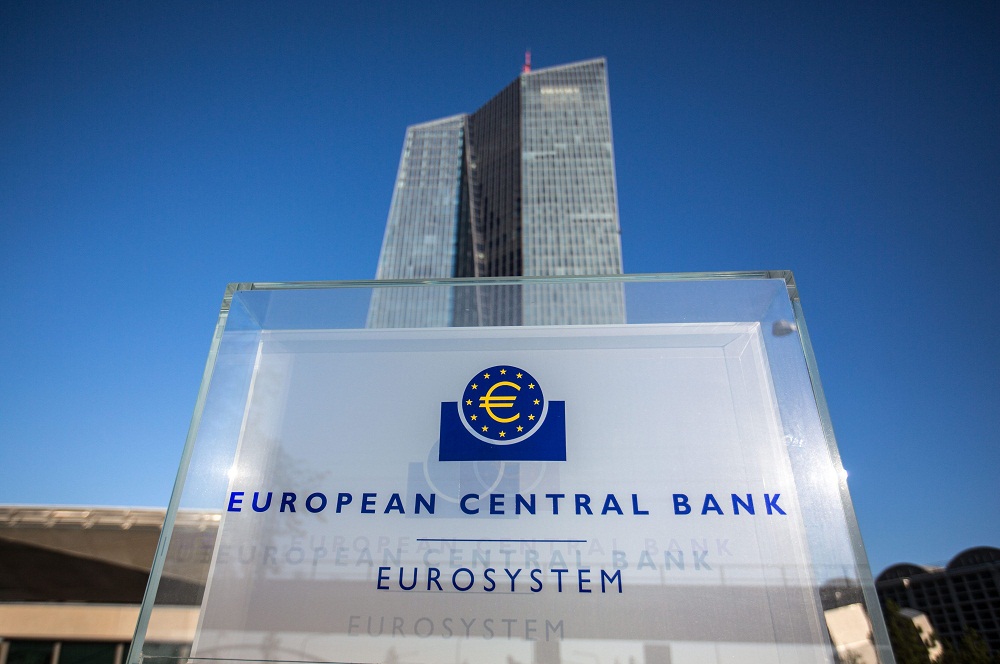
The number of card payments in the euro area have more than doubled in a decade as consumers increasingly dispense with the hassle of carrying notes and coins, according to the latest statistics from the European Central Bank.
Credit transfers and direct debits were the second and third most common non-cash payment methods, accounting for approximately 23% each, while e-money and cheques together made up around seven percent.
However, the relative popularity of each type of payment service still varies widely across euro area countries. In 2018 card payments accounted for just over 70% of all non‑cash payments in Portugal, compared with around 23% in Germany.
The stats show that the number of card payments made by consumers and businesses has more than doubled in the last decade, with an average of 121 card payments per capita in 2018, compared with 56 in 2008. However, the average value of each card payment has declined steadily, falling from €54 in 2008 to €44 in 2018.
Again, big differences appear between member states, with the Finns, for example, using their cards five times more often than people living in Germany and six times more often than people in Italy.
Curiously, the average value of annual cash withdrawals in the euro area also rose, from €1,925 to €2,082 per card between 2008 and 2018.
Most countries experienced a similar trend, but with considerable differences in the value of withdrawals. For instance, the average annual cash withdrawal per card in Austria was almost four times the size of the equivalent figure for Luxembourg and almost twice the euro area average.
- 02:00 am

TideiSun Group's Chairman Mr. Chen Ping, and CEO Ms. Robin Xie, were invited by the NASDAQ exchange in September to introduce the company's flagship platform iSunOne -- an asset management APP combining private chatting with global instant payment. As part of the US roadshow, iSunOne also exhibited at the "Think Asia, Think Hong Kong" event organized by HKTDC in Los Angeles. The management team also visited commercial banks, payment institutions and other collaborators.
Decentralized finance is a fast-growing trillion-dollar market. iSunOne is built on blockchain technology which does not rely on third parties to store, verify and transfer data. Mr. Chen Ping, Chairman of iSunOne, remarks: "We aim to build the world's first blockchain digital financial platform that links everyone. iSunOne has four core functions - encrypted messaging, exchange, asset management and digital banking. It enables people all around the world, regardless rich or poor, to enjoy the convenience and benefits of modern finance."
Nasdaq reporters commented that iSunOne's model is comparable to Venmo, a mobile payment service owned by PayPal which currently handles billions of transactions every year. As a Chinese American with global vision, Ms. Robin Xie reckons the idea: "While I agree that both iSunOne and Venmo combine social community with instant payment, iSunOne not only supports fiat currency, but also supports cryptocurrency. We are fundamentally different from WeChat, because all communications and transactions on WeChat are closely monitored in a central system, while users' data on iSunOne belongs to users themselves and will never be shared with any third parties. Privacy and safety are our DNA. What's more, our users can bind iSunOne card with iSunOne wallet, top up and swipe the card just like a Mastercard. Spending cryptos has never been so easy and simple."
Talking about the upcoming milestones, Ms. Xie believes that digital banking is the future. iSunOne is stepping up its digital banking service to provide online banking services to users around the world. Users can open an overseas bank account remotely. iSunOne token XTP are scheduled to list on major exchanges. XTP currently circulates on iSunOne platform and can be used to pay for services, to transfer or to send red packets between contacts. Users can now download the iSunOne APP to receive free XTP rewards or purchase XTP tokens for more platform benefits.
- 04:00 am

UnionBank of the Philippines' (UnionBank) globally-awarded API Marketplace is enabling fintechs to scale growth through co-creation and reaching a wider audience for their APIs. It is one of the largest in Asia with over 200 open APIs, and a regional network with connectivity to the ASEAN Financial Innovation Network (AFIN) and its API Exchange -- an initiative by the International Finance Corporation (IFC) and the Monetary Authority of Singapore (MAS) to create digital infrastructure that enables inclusive prosperity in the region.
UnionBank's API Marketplace allows fintechs and other innovative companies to tap into banking and other functionalities so these are offered at speed to customers in ways that are highly personalized. As UnionBank is the first and only Philippine bank in AFIN, it is the Philippines' international gateway and publishes APIs from its Marketplace to the region-wide APIX platform.
Towards collaboration and ecosystem building, the API Marketplace opens its doors to many API publishers including those for non-banking functionalities. These fintechs and tech companies can reach a wider consumer base, whether this be other fintechs that serve the unbanked, or even UnionBank and its account holders.
Fintech endpoints for cash payout and gift vouchers are already online, while bills payment, micro-investment, micro-insurance and digital credits among others will be available soon.
For UnionBank, opening up its APIs and the Marketplace fulfills its purpose of elevating lives and enabling communities through smart banking as this promotes inclusion by making financial services accessible to a greater customer base, many of which in the developing world are the unbanked population and SMEs. It is also a way for the bank to collaborate and gain insight into innovative financial services that customers are in need of.
Since the start of the year, the Marketplace has given the bank access to over 30 million Filipinos who consume its APIs via fintechs UnionBank collaborates with. By end-2019, nearly 40% of fintechs in the Philippines alone will be powered by APIs on UnionBank's Marketplace.
- 09:00 am

Mastercard today announced a global effort to pay garment factory workers digitally, a pivot the industry is making from traditional cash payroll to ensure workers receive their hard-earned wages securely and consistently. With industry partners including Levi Strauss & Co., Marks & Spencer and VF Corporation, and in conjunction with global nonprofit BSR (Business for Social Responsibility), this program aims to improve the wellbeing of factory workers who currently lack access to the financial tools and services that can help them and their families thrive.
Around the globe, 230 million adults – nearly 85 percent of adults in low-income countries — who work in the private sector receive their wages in cash. But getting paid in cash creates significant challenges for both employees and factory owners. Not only are workers at risk for theft, but they also have limited ability to save and often have to take days off to travel miles to pay household bills.
Mastercard and its partners are coordinating pilots in Egypt and Cambodia with a hybrid digital payment solution. Participating factories will have the opportunity to deposit wages directly into workers’ accounts. Workers can then activate debit or prepaid cards – or digital wallets – through which they can pay bills or send money directly to family and friends. Providing hands-on peer training on digital financial services, financial planning and management, and how to discuss finances with family members can help make workers feel comfortable and confident transacting digitally.
By partnering with companies that use labor-intensive supply chains, including garment manufacturing, Mastercard is creating digital solutions and delivering training support to give workers more control and transparency over their earnings and savings. The ability to receive regular wage payments gives factory workers the means to step into the world’s formal economy and can lead to a better quality of life for them and their families. The program also has the potential to specifically benefit women, who make up 68% of the garment worker industry, yet are often the most financially vulnerable.
“At Mastercard, our vision is to ultimately build a new ecosystem of partners – garment industry, technology, not-for-profit organizations, factories, banks – that work together to deliver social impact at scale. It’s an important step in helping workers feel safer, be more resilient and more financially independent,” says Sue Kelsey, Executive Vice President, Prepaid Solutions, Mastercard. “We’re committed to help digitize wages throughout supply chains across industries and continents, turning access into usage and in turn, fueling growth of local economies.”
In an age where there is increasing importance placed on sustainable practices and worker well-being, digital payroll can also create cost savings, increased efficiency and greater transparency for companies. Garment factories that shift to digital payroll, for instance, experience a 53 percent savings in staff time for the teams that count and disburse wages, according to data collected through BSR’s HERfinance programs. And moving to digital payments increases access to savings accounts for factory workers from 28 percent to 43 percent.
“Mastercard is an excellent partner for a pilot program like this, due to the infrastructure they have built around digital payment systems coupled with our longstanding commitment to the well-being of workers,” says Michael Kobori, Vice President of Sustainability, Levi Strauss & Co. “We look forward to seeing the outcomes of the pilot and hope this advances efforts to realize the potential of digital payments to benefit workers across apparel supply chains.”
“As the UK’s biggest clothing retailer, we recognize the importance of collaborating with others in the industry to create momentum and change,” says Lydia Hopton, Global Ethical Trade Manager, Marks & Spencer.
Paying people, particularly women, through a digital solution creates economic opportunities for them and their families, and it’s a project we’re proud to be working with Mastercard and other global brands on. Together, we can create sustainable change to improve people’s lives worldwide.”
The first step in maximizing the benefits of digital payroll for women is ensuring the garment workers’ needs remain at the forefront of product development. Access to tools is a key component, as is usage, but research has found that 75 percent of women garment workers do not have basic financial literacy.
A collaboration between The Mastercard Center for Inclusive Growth and BSR, the global nonprofit that works with businesses to integrate sustainability into their strategy and operations, supports the digital payroll initiative through BSR’s grassroots HERfinance Digital Wages education program. HERfinance is one pillar of HERproject, the leading workplace-based women’s empowerment program in global supply chains, which has empowered more than one million workers with knowledge and skills on health, financial inclusion and gender equality since 2007.
“Digitizing wages is an area where companies can make relatively small investments and have huge positive impacts, especially for low-income women workers,” says Christine Svarer, Director, HERproject. “But to realize these positive impacts, it is vital to ensure that workers have the skills and knowledge to benefit from the transition and that factories are supported during the process. We are delighted to be partnering with The Mastercard Center for Inclusive Growth and leveraging our experience in this space to make digital wages a success story.”
- 06:00 am

Introducing the “House of Klarna”. Hot on the heels of the news this week that 50,000 new Klarna customers a week are choosing ‘Pay later’ at retailer checkouts, and with over 12 million transactions in the past year alone, Klarna is hitting the high-street again with over 27 of the best retail brands in the UK. Following the success of Covent Garden pop-up in June, Klarna will now take up residence in the heart of Manchester’s city centre with an immersive and playful retail space for shoppers, which transforms the bricks and mortar experience into pure joy.
The “House of Klarna” (situated at the iconic 35 Kings Street location) will open its doors with a VIP launch party on 3 October, before welcoming the public on 4-13 October 2019. The three-storey house will be transformed into the home of the best of fashion, beauty and lifestyle brands in the business including ASOS, Oliver Bonas, Topshop, Topman, House of Holland, Missguided, BEAUTY BAY, My Protein and Schuh.
Over a 10-day extravaganza, there will be fashion and lifestyle events, beauty treatments, live DJs and a Klarna Kafé offering free sodas and coffee.
Klarna’s Pay later options are changing the purchase journey into a smoooth retail experience, and the “House of Klarna'' is designed to bring this to life. It invites you on an immersive journey through fun and quirky rooms, including a sustainable hub, with space dedicated to the best-loved retailers that you may have only seen through a screen. Klarna believes this is an important part of shopping; the surprise and joy of uncovering treasures and new brands right before your eyes.
Amongst the shopping, fun and Instagramming, there will also be styling masterclasses by industry experts, free beauty treatments and exclusive ticketed events in collaboration with the showcasing brands. Tickets will be available free of charge in the week prior to the event. To find out more, click here.
Global fashion destination ASOS returns for the “House of Klarna”. Eve Williams, Brand Experience Director at ASOS said: “At ASOS we want to give our customers the best choice in everything we do; whether that is in the broad range of ASOS Design and branded products, smooth and fast delivery options or payment options. We know these are all important to our customers and we look forward to bringing them to life with Klarna’s fun event in Manchester”.
Leading British Lifestyle store, Oliver Bonas will also be joining the list of favourite retailers. Sara Morris, Senior Press & Marketing Officer at Oliver Bonas, commented: “We are so excited to join Klarna in Manchester for the ‘House of Klarna’. We believe that design has the power to positively affect how people feel and with Klarna’s understanding of how to create a first-class customer experience, we’re excited to present OB at the ‘House of Klarna’. As the only brand showcasing furniture at the pop-up, we can’t wait to welcome shoppers into our home for ten days”.
- 08:00 am