
Published
- 07:00 am
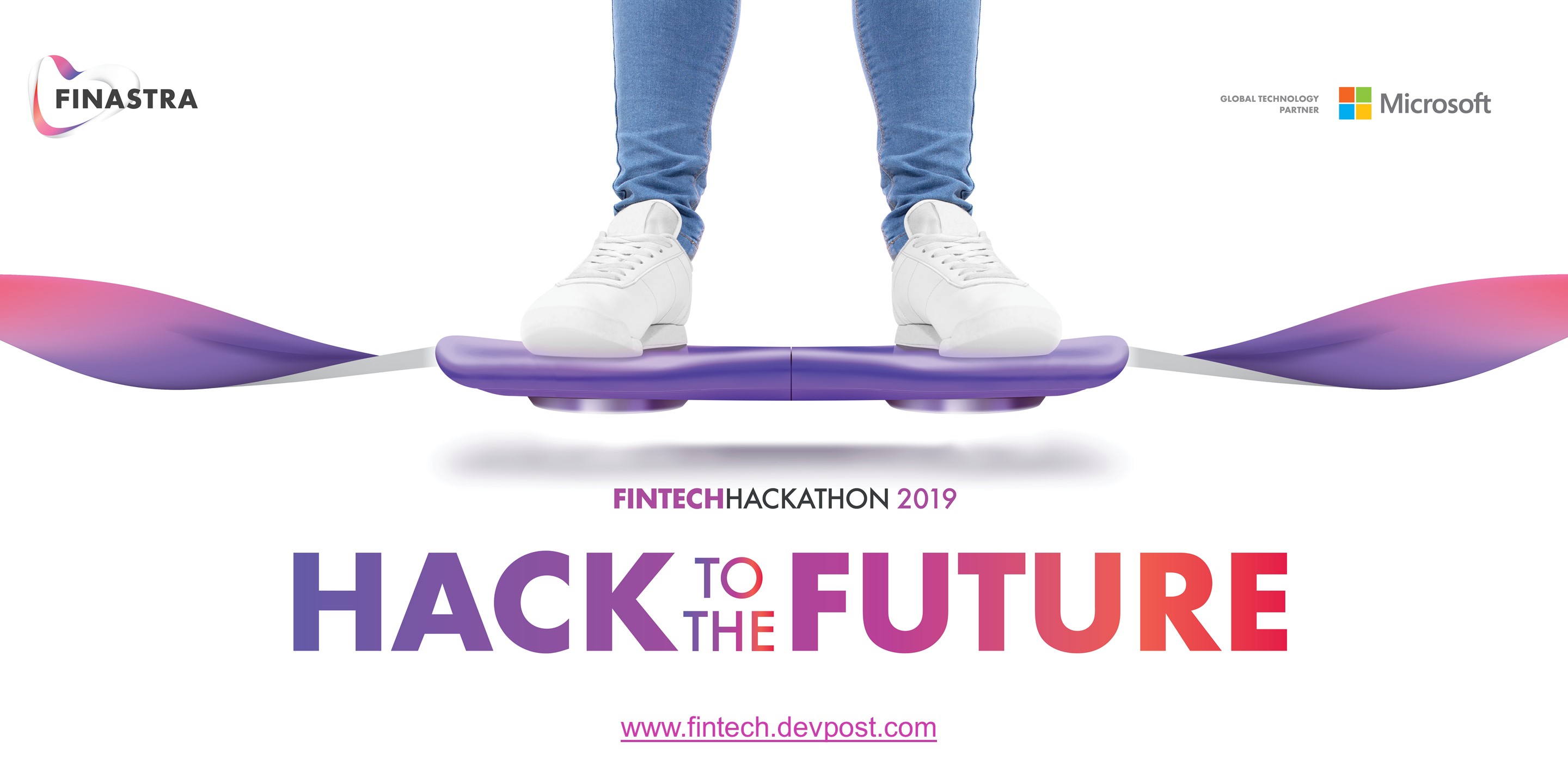
Finastra is inviting developers to step forward and build the next wave of innovative apps in its global fintech hackathon. Hack to the Future blends virtual hacking around the globe with in-person ‘City Hack’ locations, bringing together hundreds of students, data scientists, developers and fintechs, to collaborate, innovate and build.
Eli Rosner, Chief Product and Technology Officer at Finastra said, “This is a momentous occasion for our FusionFabric.cloud platform for open innovation and our growing API set. We truly believe that the future of finance is open and now we’re able to embody that in what we hope will be our largest fintech hackathon yet. With developers hacking around the clock, around the world, using APIs connected to our core systems, we’re sparking innovation and paving the way for some potentially amazing apps to be created. This is the future of finance!”
Between now and December 5, 2019, teams of up to five people are invited to register to build apps, integrating at least one Finastra API, across the following areas:
- Retail Banking
- Corporate Banking
- Capital Markets
- Payments
With the chance to scoop a trip to Atlanta* to compete for the ultimate title at the FusionONE USA DevCon in February 2020, judges will be looking for the standout apps, critiqued on technology innovation, prototype execution and potential business value. They will also have an eye on the extent to which the app makes a positive impact on communities, with a bonus prize for the app which best embodies ‘banking for a better future’.
In the true spirit of open, Hack to the Future is delivered alongside Finastra’s global technology partner, Microsoft.
The City Hacks include a range of local host partners, spanning countries such as the US, Tunisia, Morocco, France, India and the Philippines, with more to be announced. Finastra customer, Texas Capital Bank will host in America. ING, and partner Cognizant, will host in The Netherlands.
Register here for #HacktotheFuture: https://fintech.devpost.com/
The winning teams will be announced on December 12 online at https://fintech.devpost.com/.
- 02:00 am
A new study, The Gen Z Effect on Workplaces in the UK, has uncovered the career drivers, views and values of the largest generational population in the world. The research, which focused on both current and future Gen Z employees in the UK, alongside UK business decision makers, found that employers must ditch the Millennial playbook and write an entirely new one for their newest, youngest employees.
Conducted by Nintex, the global standard for process management and automation, the findings revealed a number of key differences between Millennials and Generation Z. Whilst Millennial workers tended to prioritise office environments and team dynamics, Gen Zers are firmly focused on companies’ ethical values such as sustainability and inclusion. For them, company values are second only to salary as the biggest driver behind their selection of their first job. By contrast, while Millennials notably focused on company culture, Gen Zers ranked culture toward the bottom of the list.
Gen Z is also prepared to be loyal – a trait that many employers cited as absent from Millennial workers. According to the new report, they are ready and willing to commit to a single company. But in order to stick around, they need to feel they have opportunities both to grow and to do fulfilling work.
“Generation Z has both the DNA and the inclination to drive next-gen enterprise efficiency,” says Florian Haarhaus, Nintex VP for EMEA. “However, companies must ensure they provide a values-driven environment if they are to attract the next wave of talent coming into the workplace.”
“The rise of Gen Z is an opportunity for companies to foster a committed new class of employees who will help take the business to the next level,” adds Haarhaus. “It’s up to employers to recognise the importance of providing them with an environment that offers them dynamic opportunities to grow, while staying true to its values and ethics.”
Key findings from the Nintex Gen Z UK report include:
- Face time, not FaceTime. Nine out of 10 Gen Zers want check-ins with their manager to happen in-person, while a mere 4% want virtual check-ins. Nintex found weekly, in-person check-ins to be the optimal cadence for both employee happiness and productivity.
- Loyal. Fifty-six percent of Gen Z surveyed expect to remain at their first job past the one-year mark, with 69% of that group planning to stay past the two-year mark. Only 31% of Gen Zers said they plan to leave at or before the year mark. But, in turn, Gen Z expects prompt promotions: Over half of Gen Z employees (51%) anticipate a promotion within one year of starting their first job.
- Personal interest = passion. The overwhelming majority of Gen Z (66%) say they selected their program of study due to personal interest, not because it prepares them for a specific career path (only 27% said this). Regarding their selection of major, Gen Z is again driven by what is personally interesting. Yet even as university students, many are also considering the state of the economy.
- The debt factor. Over three-quarters of Gen Zers in the UK graduate from university with student loan debt. Student loan debt plays a decisive role in the decisions Gen Z makes as they prepare to enter the workforce. As Nintex found, student debt pushes Gen Z to stay longer in their first jobs. Compared to their UK peers without university debt, current Gen Z UK employees with debt are much more likely to plan to remain in their first job for less than one year (38% vs. 16%) and to negotiate their salary (48% vs. 40%).
- AI awareness = openness. Gen Zers who say they are extremely familiar with AI/automation in the workplace are much more likely to feel it will make their work easier, as compared to Gen Zers who are only somewhat familiar with AI (62% vs 30%). Companies should position AI and automation as technology partners, not as competitors, and as tools to augment, not replace, people.
The Gen Z Effect on Workplaces in the UK study from Nintex provides ample evidence that the youngest working generation will elevate current and future workplaces if given the opportunity for growth, recognition, and advancement.
According to the report, it will be imperative for decision makers and managers of Gen Z employees to invest in their incremental career growth, cultivate a culture of improvement, and build an empowerment narrative around AI and automation.
The complete UK findings are available in this e-book at https://www.nintex.com/resources/the-gen-z-effect-on-the-uk-workplace/. Nintex has also published Gen Z study findings for New Zealand and Australia and the United States.
- 20.11.2019 -- 03:37 pm
Anil Awasthi, VP, Retail Banking, Virtusa is giving his insights on how Virtusa helps banks to grow their business and the advantages of open banking concept for the industry players
Other Videos
- 08:00 am

MuleSoft, provider of the leading platform for building application networks, today announced that HSBC is leveraging MuleSoft’s Anypoint Platform to build a digital banking platform to power the bank of the future. As one of the largest banking and financial services organizations in the world, HSBC is taking advantage of open banking to drive new, connected experiences for its more than 38 million customers worldwide. With MuleSoft and its Anypoint API Community Manager, HSBC is building APIs that securely unlock access to core banking products to enable collaboration with partners, accelerate innovation and open new revenue channels.
The rise of PSD2 requirements and open banking are requiring financial institutions to share customer data with third-party developers via APIs. Connected customer experiences have become the new battleground. Banks are going through a revolution where they must move from transactions to personalized interactions and digital services for customers. HSBC is leveraging an API strategy to develop a digital platform and co-create new experiences with a broader ecosystem of developers and partners.
“HSBC is driving incredible innovation in the era of open banking through API-led connectivity,” said Dinesh Keswani, group CTO and CIO of retail digital banking, HSBC. “We are moving to serving customers across multiple online and offline channels. With MuleSoft, HSBC has built thousands of APIs in an application network and deployed them across multiple environments to deliver new and consistent experiences. We’ve been able to reduce our app development time by 75% and release new functionality to consumers every two weeks versus once a quarter.”
Building a digital banking platform
HSBC realized that the bank of the future will be a digital platform, powered by a collection of APIs that enable truly connected, multi-channel experiences. The bank chose MuleSoft and its API-led approach to connectivity to develop a shared services platform for secure asset reuse and business self-service. HSBC was able to turn its core banking products, including credit cards, mortgages, and payments, into APIs in an application network that can be easily and quickly assembled to create new experiences.
For example, HSBC can draw data from legacy systems using APIs to enable new features, such as showing customers an overview of their spending across all their bank accounts.
Building APIs with MuleSoft, HSBC can unlock its backend systems and connect them with trusted third parties to develop a range of other new customer-facing services. By enabling an API ecosystem to innovate on top of its core bank platform, HSBC can drive speed, agility and innovation at scale to deliver more value for its customers.
Tapping into the API economy
In the same way that APIs have accelerated internal innovation, external APIs present the opportunity for HSBC to collaborate with partners and create new revenue channels. In this new API economy, developers are HSBC’s new customers and developer portals are the new customer storefront. To engage and evangelize its APIs to developers, HSBC is leveraging API Community Manager built on Salesforce Community Cloud and Salesforce Service Cloud to deliver an internal and external developer portal that will span more than 30 markets and three global businesses.
API Community Manager uniquely combines a full-featured API portal and industry-leading digital experience capabilities, transforming how teams collaborate across the entire lifecycle of an API program. With API Community Manager, HSBC can easily build and engage API ecosystems, so it can foster new partnerships to deliver joint business value and innovate faster. For example, HSBC’s Mortgage API could be applied to home buying websites so that consumers can filter houses for which they are pre-approved.
“With MuleSoft supporting our API program, HSBC is leading innovation in a highly competitive developer-driven third-party ecosystem,” said Keswani. “Using Anypoint Platform, we can easily integrate with new internal and external applications and create new digital capabilities that deliver personalized experiences.”

Alex Chen
Business Director APAC & Angaj Bhandari, India & South Asia Country Manager, at FIME
Last month, we visited Singapore for Global Mass Transit’s (GMT) annual see more

Tom Parson
Manager at Finance affairs
Many of us are familiar with the tax-free benefits associated with a standard Individual Savings Account (ISA). see more
- 20.11.2019 -- 12:12 pm
Financial IT speaks with Darren Hughes, Director Cashoff Europe at Open Banking Expo 2019
Other Videos
- 04:00 am
Temenos (SIX: TEMN), the banking software company, today announced that ABN AMRO has gone live with Temenos Payments in Hong Kong as part of its global strategy to rapidly rollout state-of-the-art payments capabilities in new markets. Temenos Payments provides a single, global platform that enables ABN AMRO to quickly expand and onboard new countries. The bank also significantly improves straight through processing (STP) rates through advanced exception handling.
ABN AMRO has been a pioneer in digital banking and a Temenos client for over a decade, running Temenos T24 Transact, Temenos Payments and WealthSuite to transform its corporate and private banking activities. ABN AMRO deployed Temenos Payments in 2015 to provide a single global universal payments platform for high value payments in corporate banking in some countries where they are present. Temenos Payments has already been rolled out in Germany, UK, Belgium, Australia and now Hong Kong and it continues to future-proof ABN AMRO’s growth and enable the bank to deliver seamless payments experiences to its customers with faster time to market.
ABN AMRO’s strategic co-development relationship with Temenos for global payments forms part of the bank’s international IT strategy designed to maximize re-use and drive simplicity. The strategy seeks to incorporate ONE Operating Model, ONE Application Landscape, ONE Code Base and ONE Technical implementation for the international branches supporting multiple business lines. A continuation of this global initiative, ABN AMRO plans to go live with Temenos Payments in Singapore and China ahead of the SWIFT ISO20022 payments deadline in November 2021.
Alex Room, Product Owner – Payments for ABN Amro International Core Banking, commented:
“We are delighted to continue this long-standing partnership with Temenos as together we take our international payments strategy to new markets and geographies. We experienced yet another smooth go-live, working closely with the teams on both sides. Running the Temenos Payments platform across our international locations, we can harmonize our IT infrastructure. Temenos Payments plays a vital role in future-proofing our international payments strategy in a market where continuously evolving regulatory demands and rapid technological advancements demand agility and continuous innovation.”
Steen Jensen, Managing Director – Europe, Temenos, said:
“We are excited to support ABN AMRO as it expands its reach across regions and fulfills its vision to transform payments and customer experience at a global scale. Our mission is to provide banks with the richest, packaged functionality and the most advanced cloud-native, cloud-agnostic software that helps banks continuously innovate and underpins radical growth. ABN AMRO has a single, state-of-the-art payments platform and benefits from economies of scale and improved STP rates. With our advanced technology, we enable the bank to stay at the forefront of payments product innovations and deliver outstanding digital experiences to its customers.”
Temenos’ cloud-native, cloud-agnostic universal payments solution enables complete centralization of all payment processing for banks of any size and complexity. ISO20022 ready and fully configuration-driven, the solution provides business agility and flexibility to process payments from any channel, source and message or file format in real time. Its unified payments data model enables seamless access to all data in real-time with improved analytics and full 360 degree view of the payments business.
Temenos Payments can be deployed in standalone mode, or it can be connected to any third party core banking system including the market leading Temenos T24 Transact, to offer higher banking performance and exceptional customer experience. Temenos Payments ranked #1 best-selling payments system in the IBS Sales League Table 2019.
- 06:00 am

Wells Fargo announced that its corporate customers can now send real-time payments through the RTP® network via an application programming interface (API), enabling the immediate movement of money and expanding the bank’s faster payments offerings. Wells Fargo previously rolled out capabilities for both retail and wholesale customers to receive payments over the RTP network at the end of 2018.
“Our customers want the ability to make immediate payments and receive timely confirmations to run their businesses more efficiently,” said Danny Peltz, head of Treasury, Merchant and Payment Solutions at Wells Fargo. “The ability to send transactions on the RTP network gives our customers yet another option for moving money when and how they want.”
Wells Fargo’s API for the RTP network allows corporate customers to send payments directly from their enterprise software or treasury workstations, meaning they can benefit from the platform’s speed and immediate posting to help optimize cash flow. The RTP network, the real-time payments platform from The Clearing House, is the first new core payments infrastructure built in the U.S. in more than 40 years. It gives the banking industry a more modern platform for domestic payments, complete with rich data capabilities and payment confirmation. The system enables the sending and receiving of payments with immediate settlement and availability, so those funds can be used or withdrawn as cash within seconds.
The API is available through Wells Fargo Gateway, the bank’s market-leading open banking channel that allows corporate banking customers to more easily integrate Wells Fargo products, services and information into their own digital environments.
The Clearing House, a banking association and payments company owned by 24 commercial banks that operate in the U.S., including Wells Fargo, developed the RTP network. More than 51 percent of U.S. accounts already are able to receive RTP payments, and the number continues to grow.
“The ability to send payments on the RTP network allows Wells Fargo’s customers to experience the benefits and certainty of immediate funds availability and transaction confirmations,” said Steve Ledford, senior vice president of Product Strategy and Development for The Clearing House.
Wells Fargo offers several products to meet consumer and commercial faster payments needs, including wire, same-day ACH, Zelle® and Push to Card, which sends payments directly to U.S. debit cards through the card networks.
- 05:00 am

Digital finance platform Globitex has partnered with Salt Edge, a leader in offering open banking solutions, to ensure that its EURO Wallet customers benefit from a secure environment for payments.
Globitex, a digital assets marketplace, powered by its group company Nexpay (an EU licensed e-money institution), has recently launched its EURO Wallet, a crypto industry oriented banking solution that allows users to make and receive EUR payments on a dedicated IBAN like any other bank account. Aiming to maintain a high-security level in the new open banking movement, Globitex has geared up for strong customer authentication (SCA) with the Authenticator app developed by Salt Edge.
“Globitex strives to ensure customer excellence in both security, reliability and convenience, which is why we chose to partner with Salt Edge, whose Authenticator app is the best solution on the market to fit our high requirements regarding strong customer authentication,” said Uldis Teraudkalns, CEO at Globitex.
The Authenticator app is a SaaS solution that meets all the SCA requirements and runs dynamic linking for secure payments. The technology uses data encryption and anonymization during the customer journey.
The app will be used by e-money service EURO Wallet users both for securely accessing accounts as well as for approval of payment orders in line with the PSD2 requirements. End-customers will see in the app key payment details before confirming the payment, thus gaining confidence in their actions. The authentication journey was optimized for end-customers’ convenience – creating a streamlined user experience with advanced protection.
“Having in place a mechanism that guarantees security of customers’ actions and privacy of their data is paramount in the trading market and the overall financial industry,” commented Andrei Lisnic, CTO at Salt Edge. “We’re thrilled to assist Globitex on its path toward being a global leader in the crypto market – by offering its clients confidence in trading.”








