
Published
- 09:00 am

Copper, the London-based custodian for digital assets, has expanded its Walled Garden infrastructure and is now connected to the top 15 exchanges – including: Coinbase, Deribit, OKEx, Bitstamp, Bitfinex, Huobi, Binance, Bitmex, Kraken, Bittrex and HitBTC. This gives Copper’s institutional customers access to a larger liquidity pool as the company’s trade and settlement volumes continue to increase 50% month-on-month.
Copper’s infrastructure creates a unique Walled Garden for each client, connecting crypto funds and major liquidity providers directly to their exchange accounts. Copper’s platform provides a single view of a client’s portfolio, while the inter-exchange custody eliminates the risk of internal fraud. Using APIs, client assets are transferred seamlessly inside the secure environment, supported by Copper’s multi-key cold storage, providing a safe off-exchange depository.
Exchanges must meet a threshold of security conditions before being eligible for integration, including permission-based API keys and whitelisting of wallet addresses, among others.
The news follows Copper announcing it has processed $500m in transactions in the three months following its launch in June.
The company already provides digital asset safeguarding for multiple funds and investors operating a full range of investment strategies.
Dmitry Tokarev, Founder & CEO of Copper, has commented: “We have first-hand knowledge of the needs of institutions. Our custody, trade and settlement infrastructure creates a Walled Garden environment tailored to each client, allowing serious investors to fully-engage with crypto markets in T0 time without having to worry about security or bad players.
“As our institutional customers have increasingly seen the benefits of using our trading and settlement infrastructure, we are very happy to be able to offer them access to the top 15 exchanges which allows them to engage with 96% of the crypto market.
“We pride ourselves on being able to offer funds and sophisticated investors market-leading security, as well as market-leading investment tools so they may work their capital harder and have peace of mind their assets are safe from bad actors.”
Andy Cheung, Head of Operations of OKEx, has commented: “We’re pleased to be partnered with Copper to provide deep liquidity to their users. In fact, we share the same core values with Copper - placing security and liquidity as the highest priority. We believe these are the two most important factors in building a healthy and sustainable market, either in traditional or crypto industry.”
- 05:00 am

- 03:00 am

JGOO, the next generation mobile payments platform, says many UK retailers are failing to break into the Chinese market because they don’t acknowledge its huge scale and localise their propositions accordingly. Further, it says that many companies don’t understand the country’s strict censorship arrangements or adapt to the unique shopping habits of Chinese consumers.
Richard Morecroft, Director and Co-Founder of JGOO said: “Western retailers continue to look toward new opportunities in China, but this is not Australia, America, Europe, or even Hong Kong. Many international brands don’t make the grade in China because they fail to recognise they are dealing with a very different market and need to localise their offering.”
“There is a reluctance among smaller retailers to enter China as they watch on in despair as hugely successful Western brands such as Amazon, Google and Uber slink away in defeat when it comes to conquering the East. However, they shouldn’t be intimidated by China.”
In developing a strategy for China, JGOO says retailers need to focus on culture, censorship and local competition.
Culture
The key to succeeding in China is to recognise that it’s not one homogenous market but a diverse one. The country has an enormous culture behind it with 14 major cities, 23 provinces, 56 ethnic groups and 7 major dialects. Western brands often fail to alter their strategies, adapt to the unique culture and appropriately target the technology savvy consumers.
There is simply no culture like China’s and when it comes to cracking this market, one size does not fit all. It’s crucial for Western brands to do their research and avoid the ‘copy and paste’ approach when it comes to thinking about their China strategy. With the correct strategy executed, China is an almost unlimited opportunity for Western brands to get on the map.
Censorship
The Chinese government will go to extreme measures to maintain the country’s reputation and support local businesses in upholding their market share amongst a sea of Western brands. This has led to extreme censorship in China with Google, Facebook and WhatsApp being blocked due to China’s lack of control of these Western platforms. This had led to the rise of China’s super-app – WeChat, which combines all the most pertinent Western apps such as Facebook, WhatsApp, Uber and Tinder and many more.
In order to avoid censorship issues in China, it is important for brands to do their research and adjust their strategies accordingly.
Competition
When it comes to the Chinese consumer, they have unique shopping habits, notoriously low levels of brand loyalty and they often refuse to pay with anything other than WeChat Pay or Alipay. For Western brands who seem to map these traits to an alien consumer, it can be difficult to compete with local Chinese brands who inherently understand consumer traits such as the above.
Richard Morecroft concluded: “Western brand are not doomed to fail in China. To succeed, they need to play to consumer preferences, and do their research before attempting to tap into China’s digital generation.”
- 02:00 am
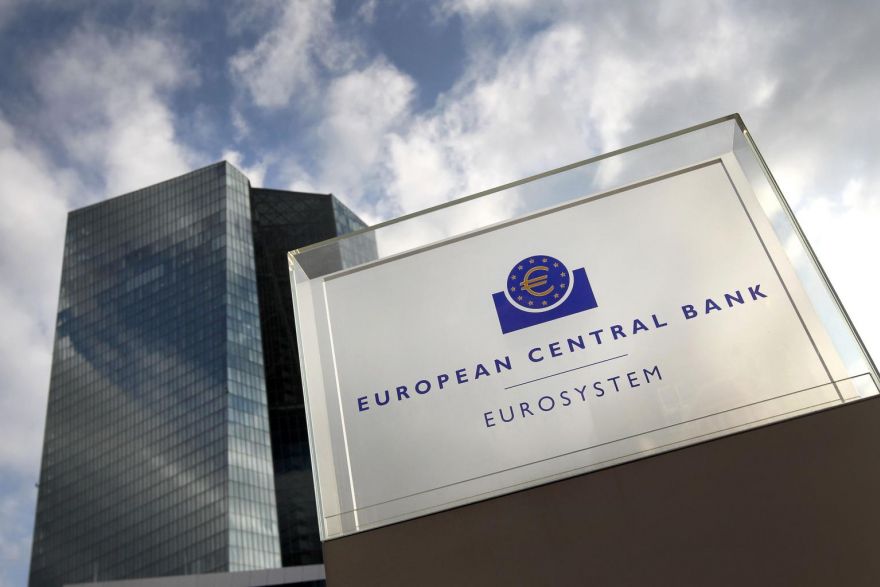
The European Central Bank has welcomed an initiative by some of Europe's top banks to explore the development of a rival payment system to challenge the dominance of Visa and Mastercard and the threat from Chinese and US Big Tech firms
The ECB has long-floated the idea of a home-grown cross-border scheme capable of taking on the big brands, but so far without success.
In a speech to a central bank summit in Brussels, ECB board member Benoît Cœuré, says: "The Eurosystem welcomes the strategic initiative of a number of major European banks to create a true pan-European retail payment solution that has the potential to meet the vision of our strategy. The proposed solution would be based on the Sepa credit transfer instant (SCT Inst) scheme, which is in our view the correct approach as it is future-oriented. And it could capitalise from day one on existing powerful and sophisticated infrastructures, such as the Eurosystem’s TIPS."
Cœuré calls on the banks backing the scheme to develop a clear roadmap "so that we can see tangible actions emerge soon".
He also hinted at public policy initiatives to help such private sector solutions along, for example by imposing legislation obliging payment service providers to adopt instant payments within a certain period if a critical mass has not been reached by, say, the end of 2020.
"For its part, the Eurosystem stands ready to provide additional technical assistance where useful and required," Cœuré adds. "For example, we will analyse how we could support the search for solutions that ensure that SCT Inst-compliant clearing mechanisms can be fully integrated. Current private solutions for the clearing of instant payments still have not addressed interoperability issues in a satisfactory manner. This requires further analysis and action."
He also suggests that central banks should step up their research into the development of digital currencies as demand cash for tails off.
"A central bank digital currency could ensure that citizens remain able to use central bank money even if cash is eventually no longer used," he says. "A digital currency of this sort could take a variety of forms, the benefits and costs of which the ECB and other central banks are currently investigating, being mindful of their broader consequences on financial intermediation."
- 09:00 am

Alchemy Global Payment Solutions Limited ("Alchemy"), a global cryptocurrency payment pioneer that powers businesses with Asia's first hybrid cryptocurrency and fiat payment solutions ("Hybrid Payment Solution"), has partnered with Tokyo-based ACD Inc. (a Joint-Venture Group Company of ANA Holdings, TSE:9202) ("ACD"), a company that provides cross-border e-commerce and global air cargo delivery, logistic services in Japan, to enable ACD tokens at both online and offline merchant networks of ACD and QFPay in Japan and across Asia.
Alchemy will provide their Hybrid Payment Solution to ACD e-commerce servicing platforms and retail merchants, enabling merchants to accept payments from customers paying with ACD tokens and other popular cryptocurrencies such as Bitcoin Cash, Bitcoin, Ethereum as well as their digital wallet of choice like Rakuten Pay, Alipay and WeChat Pay.
"The Hybrid Payment Solution is an intuitive application that enables merchants to accept fiat and cryptocurrencies with equal ease," said Mr. Patrick Ngan, Co-Founder and CEO of Alchemy. "This partnership is set to benefit the entire payment ecosystem, from payment partners to merchants and consumers including ACD token holders who can now use their tokens to purchase goods and services. We have recently launched our hybrid payment system at the iconic lifestyle restaurant Ce La Vi in Singapore and have received strong interest from customers who wish to pay with cryptocurrencies."
Commenting on the partnership, Mr.Yasuhiro Sonoda, CEO of ACD said "This partnership is an advanced alliance that maximizes the use of our online and offline resources and the resources of Alchemy and QFPay. It will also be the first step towards a more specific promotion for the ACD Coin Project and will be a more future-oriented alliance."
Ms. Angie Li, CEO of QFPay Japan, welcomed the global strategic partnership, said that "We are extremely honoured to partner with prestigious global partners like ANA and ACD, and we are thrilled to announce that ACD tokens will be accepted at QFPay's online and offline merchants as well as ACD's and their affiliated companies' merchants across Japan soon."
- 06:00 am

The Finnish Transport and Communications Agency Traficom has today launched a Cybersecurity label. The label guarantees to consumers that the labelled devices have basic information security features. The Cybersecurity label can be awarded to networking smart devices if the devices meet the certification criteria, which are based on EN 303 645. With the label, Traficom aims to raise consumer awareness of information security and the safe use of connected devices.
As smart homes are becoming increasingly common, more and more devices are connected to the internet and the data transmitted by these devices is used for various services. Because these devices also collect data on their users, their information security features play an increasingly important role. When smart TVs, smartphones, toys and other connected devices in the home network are secure, users can avoid the risk of data abuse, hacking or data leaks.
In autumn 2019, Traficom studied consumers’ attitudes and wishes related to the purchase and use of smart devices.* One of the key findings was that every other Finnish person is concerned about the information security in smart devices, and two in three find it very important that there is easy to understand information available on the information security of devices.
“The security level of devices in the market varies, and until now there has been no easy way for consumers to know which products are safe and which are not. The Cybersecurity label launched today is a tool that makes purchase decisions easier by helping consumers identify devices that are sufficiently secure,” says Director Jarkko Saarimäki from the National Cyber Security Centre Finland (NCSC-FI) at Traficom.
Pilot projects with Cozify, DNA and Polar
The active development of the Cybersecurity label began at the end of 2018. The label was developed in a pilot project led by the NCSC-FI in collaboration with Cozify Oy, DNA Plc and Polar Electro Oy. The first Cybersecurity labels have now been awarded to the products of these companies. The label was awarded in November to the Cozify Hub for smart homes, DNA’s Wattinen smart heating system and the Polar Ignite fitness smartwatch.
“We are promoting the Cybersecurity label in our campaign with the theme ‘buy smart, not blind’. We are hoping that consumers will learn to recognise the label and actively look for it when selecting products and services. At the same time, we will contribute to the increased availability of secure devices in the market. We hope that as many manufacturers as possible want to certify their products. Our goal is that in a few years most home electronics categories will include products with the Cybersecurity label,” Saarimäki says.
- 02:00 am
Wolters Kluwer’s Compliance Solutions business has launched Online Applications for Consumer Lending (CLA), a digital offering that enhances the online loan origination capabilities of U.S. community banks and credit unions. CLA allows consumers to begin a loan application from any digital device, at any time. It integrates seamlessly with Wolters Kluwer’s ComplianceOne® solution, an industry-leading loan documentation and processing system that helps lenders optimize their lending and document preparation processes in a secure, fast and cost-effective manner.
With just a few clicks from their device of choice, a prospective borrower can begin the process for obtaining a loan online, rather than visiting a branch to get started. With CLA, the borrower enters information such as the desired loan amount and terms, contact details, and collateral —and the lender can use that information without rekeying. The platform recognizes a wide range of collateralized and non-collateralized loans for consumer use—auto loans, signature loans, home equity lines of credit, and many other lending scenarios.
The new online platform is powered by Temenos Infinity, the digital front office product from banking software leader Temenos, which helps CLA deliver a frictionless, world-class digital customer experience. CLA is cloud-hosted and complements Wolters Kluwer’s introduction earlier this year of its Online Applications capability for mortgage lending.
“Until now, community banks and credit unions had few options available for providing online consumer loan applications, other than to build their own in-house functionality,” says Steven Meirink, Executive Vice President and General Manager, Wolters Kluwer Compliance Solutions. “CLA helps level the playing field with larger institutions and internet-only banks, delivering an appealing consumer design and high-tech experience without a heavy technology investment. Ultimately, it empowers smaller, regional lenders to compete in a compliant, convenient and efficient manner in today’s rapidly evolving financial marketplace.”
“The collaboration with Wolters Kluwer portends great things for our business, with excellent CLA adoption already demonstrated by their bank and credit union clients,” notes Derek Corcoran, Chief Experience Officer at Temenos. “Our well-established, digital customer acquisition product, applied to Wolters Kluwer’s deep understanding of community banks and credit unions, is giving those institutions a rapid boost to competitiveness and customer service.”
Wolters Kluwer Compliance Solutions, part of the company’s Governance, Risk & Compliance division, is a market leader and trusted provider of regulatory compliance solutions and services to more than 10,000 U.S. banks and credit unions. The business helps these financial institutions efficiently manage compliance obligations tied to loan and deposit origination transactions and workflows, and gain the insights needed to focus on better serving their customers and growing their business.
- 03:00 am

London-based Regtech firm Napier, specialists in AI for compliance and AML, announced today that it has been recognised in the 2020 edition of the annual RegTech 100 list of the world’s most innovative RegTech companies.
The RegTech 100 list acknowledges companies for their innovative use of technology to solve a significant industry problem, or to generate cost savings or efficiency improvements across the compliance function.
RegTech, a high growth subsector of the fintech industry has seen over $14bn of investment since 2016 as financial institutions have turned to cutting edge technology to meet the ever growing demands of regulators and to combat increasingly sophisticated bad actors.
This year’s process to identify the leading 100 companies in the sector was more competitive than ever. A panel of analysts and industry experts voted from a longlist of over 1,000 companies produced by RegTech Analyst. Fifty-three new companies entered the RegTech100 for 2020 and the finalists were recognized for ability to solve major industry challenges and drive new levels of efficiency.
“We are delighted to be part of the RegTech 100 list and to be recognised for our expertise in AI and compliance technology,” said Julian Dixon, CEO of Napier. “Napier is changing the way companies approach compliance – rapidly moving it from chore to competitive edge as our tools empower compliance teams to make better risk-based decisions with unprecedented speed and accuracy.”
“Employing RegTech solutions to modernize the compliance function is now mission-critical for financial institutions globally,” said Mariyan Dimitrov, head of research at RegTech Analyst. “And even though 51% of RegTech 100 companies are based within the UK or US, the spread of RegTech innovation has seen companies from another 23 countries make the list.”
- 02:00 am

Therese Tucker, CEO and founder of BlackLine, Inc. (Nasdaq: BL), was named ‘Entrepreneur of the Year’ at the 16th Annual Stevie Awards for Women in Business held earlier this month in New York City.
Ms. Tucker was recognised for building BlackLine into a market leader and becoming one of the first female tech company founders to take her company public – with nearly 2,900 global customers and almost 245,000 Finance & Accounting professionals around the world now relying on BlackLine to streamline and automate their financial close and other key accounting processes.
The Stevie® Awards for Women in Business are the world's premier business awards for female entrepreneurs, executives, employees and the organizations they run. This year’s Stevie Awards program received more than 1,500 entries from individuals and organizations in 25 nations.
- 01:00 am

Cardpay – global fintech provider and fast-growing payment processor is expanding into the eCommerce market of Mexico. Providing its payment solution to millions of unbanked customers and eCommerce businesses alike. Through Cardpay, businesses can take payments using local payment methods commonly accepted by popular retailers like Walmart, 7eleven, Superama and Extra.
Convenience and retail store sales are a big segment of Mexico’s broader economy; making up two thirds of all retail sales. And with a total of nearly 20,000 in Mexico, retail and convenience stores are essential for the country’s economy, and its millions of people.
“The convenience, department stores and supermarkets are the lifeblood of Mexico,” says Kirill Evstratov, CEO of Cardpay, “It stands to reason that we at Cardpay provide an avenue for businesses to really tap into a population of unbanked, but highly active consumers. There’s a distinct gap between offline consumers and online businesses. This is where we at CardPay come in; we’re working hard to bridge this gap, and bring the two sides together.”
According to studies by the World Bank, more than 63% of people in Mexico are considered ‘unbanked,’ with the majority relying on cash. Through the use of its payment platform Cardpay seeks to provide businesses and consumers with an innovative alternative.
Online merchants can connect to Cardpay’s platform via API and enable new payment methods for their customers in Mexico. As Cardpay has offices situated in Mexico City, it is looking to onboard international companies from the variety of sectors including Marketplaces, Travel, Transportation, IT & Technology.
CardPay was recently voted ‘Best Payment Service Provider’ during the Finance Magnates London Summit 2019 from a range of already well-established nominees. We believe that our eye on the international marketplace, and drive to take domestic businesses global with their payments is part of the reason for this success.








