
Published
- 02:00 am
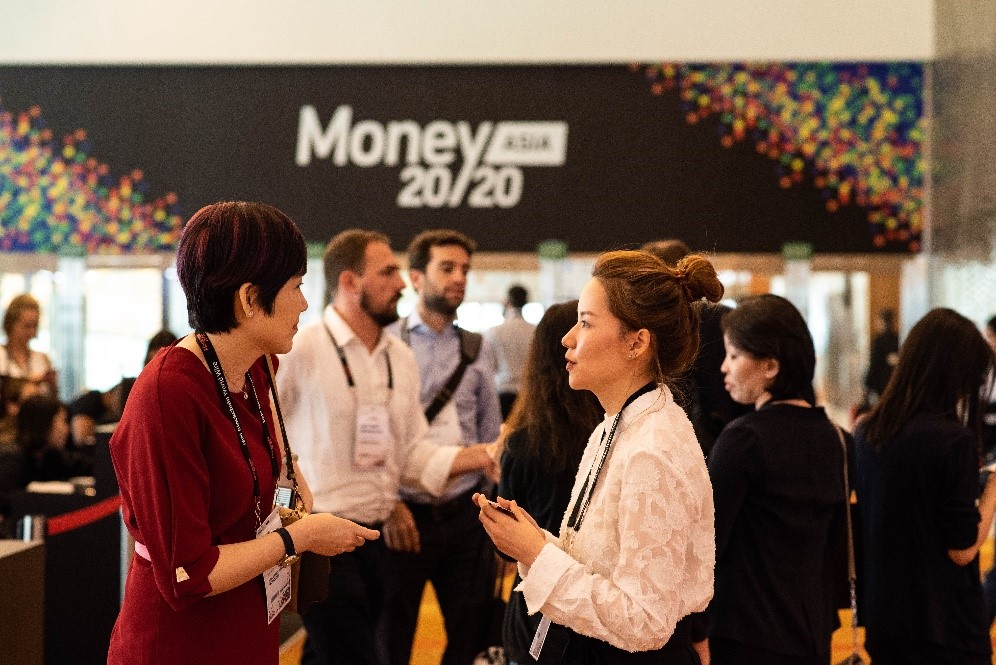
Disruptions that began with technological and business model innovations in other places are expressed in new ways in Asia. In banking, payments and retail, Asia is leading the wave of disruption.
In each case, these changing models, as well as unique situations, are enabling consumer choice, shifting profit margins and creating new opportunities.
Technology
Talking to people who need money and who have money to spend is easier than it ever has been. There are nearly 2 billion Asian social media users spread across WeChat, Douyin (TikTok, outside of China), Line and Kakao, as well as Whatsapp, Facebook, Twitter, Instagram, LinkedIn – and that’s not even the whole list.[1]
In practice, this means Asian customers have more choice for how and where they spend, save, manage, borrow, share and protect their money. New technology also means new products, services, even companies, can be created faster than ever before to meet people’s needs.
Business models
When Google launched Gmail in 2004, they made it free for users, with revenue coming from user data. 15 years later, user data is a major driver of profit in payments, banking and retail. As a result, the margins in all three of those sectors are changing, with many previously profitable businesses under threat.
To make money off of money, companies need to add value on top of the service they provide, much like Gmail in 2004.
Unique situations
Asia’s not like anywhere else.
The Philippines have 7,641 islands. Indonesia has 17,508. India has 1,635 mother tongues. Among the 48 countries the UN recognizes in Asia, there are democracies, constitutional monarchies, absolute monarchies, communist republics, and more. Asia has the 2nd, 3rd and 5th largest economies in the world, as well as the 129th, 198th and 206th.
Geographically, politically and economically, the challenges banks, retailers and payments companies face are just as unique. This means the opportunities are unlike anywhere else in the world as well: Creating a retail distribution network to access thousands of remote communities. Building a banking platform to give access to people with no financial history or formal ID. Linking up a payment network to allow people to pay in their currency, in another country, on a device of their choice.
Asia is leading the wave of disruption, and the problems we solve today will be guides for other markets to follow.
[1] Statista, Number of active mobile social media users in Asia Pacific from 2017 to 2019, Mar 20, 2019
- 09:00 am

A new report published today projects that establishing financial identities for the world’s financially excluded – or “unbanked” – population would add an extra USD $250 billion to global gross domestic product (GDP), mainly from developing nations in Asia and Latin America. This is the equivalent of bringing the productive potential of a country the size of Vietnam - a country of 95 million people - into the formal global economy.
The report, “The YES Economy: Giving the world financial identity”, was authored by independent global advisory firm Oxford Economics, on behalf of Juvo, the pioneer of Financial Identity as a Service (FiDaaS) technology. FiDaaS technology analyses alternative data using machine learning to build financial identities, allowing billions of unbanked and underbanked consumers to qualify for financial services, often for the first time.
Oxford Economics identified India (USD$7bn GDP uplift), Indonesia (USD$15bn), the Philippines (USD$15bn), Pakistan (USD$9bn) and Mexico (USD$31bn) as the stand-out markets for this growth.
More household credit, savings and insurance policies
For the forecast, Oxford Economics devised a FiDaaS enabled scenario to reflect a world in which mobile telecom operators have created a unique financial identity and credit score for their unbanked customers, allowing the provision of financial services to those that lack a credit history. This is an outcome that the report calls the “YES economy”. The name comes from financial service providers being able to say “yes” and extend their services for the first time to the globally unbanked, thanks to their new financial identity.
Mobile operators extend low-cost, low risk offers to their customers, such as airtime loans. Based on payback behaviour, consumers gradually build up to larger transactions: and then access other financial services, via partnerships between operators, financial service providers and merchants.
The analysis found that resolving the financial identity problem worldwide would deliver the following estimated results:
- A USD $250bn increase in global GDP
- A USD $408bn increase in global credit availability to households
- A USD $512bn increase in global household savings
- A six percent average increase in GDP per capita for low-income countries
- An average increase in GDP of USD $25 per person in South and Southeast Asia: and USD $108 per person in Latin America and the Caribbean (versus a global average of USD $33 per person).
“Establishing financial identities through mobile network operators could have profound implications for governments, financial institutions, and for the millions of unbanked (and underbanked) individuals around the world,” said Steve Polsky, CEO & founder of Juvo. “For governments, it represents a massive boost to economic development and progress. For financial institutions and the mobile telecom operators they partner with, it represents a multi-billion-dollar revenue opportunity. And for the unbanked, it opens up fair and equal access to useful financial services that wouldn’t otherwise be available to them.”
Anubhav Mohanty, Lead Econometrician at Oxford Economics added, “These numbers only capture a conservative estimate of this market’s true potential, since many more people are underbanked. The sheer scale, depth and value of this opportunity is far greater than we’ve been able to quantify here.”
Lack of financial identity for the globally unbanked
According to World Bank data, 3.9 billion people around the world (68% of adults worldwide) are locked out of the formal economy due to a lack of credit history. These adults are unable to provide the necessary information that would make up their “financial identity”, such as a formally recognised credit history.
By providing unbanked people with the means to have their own financial identity using the FiDaaS model, mobile operators can help unlock overlooked sources of cash to expand the global economy’s capital base.
“There’s a huge crossover between the unbanked and the world’s mobile phone users. With a financial profile in place, unbanked mobile users can tap into consumer financial services that wouldn’t have otherwise been available to them,” explained Steve Polsky, CEO of Juvo. “Once people are more active financially, they can incrementally improve their credit profiles, and access new services as well.”
- 05:00 am

FPL Technologies, a fintech startup focused on re-imagining credit and payments in India today announced its partnership with Visa to launch a mobile-first credit card in India. FPL will issue credit cards in partnership with banks and leverage Visa’s brand, technology and global acceptance footprint to make its credit card available for a wide range of use cases. The company recently raised US $4.5M from Matrix Partners, Sequoia Capital and other reputed angel investors.
FPL has created a proprietary full-stack technology platform to deliver a nex-gen credit card experience to its customers. Customers can use an intuitive mobile app along with their credit cards to manage every aspect of their credit life cycle. FPL launched the OneScore app in July this year to help customers understand and manage their credit score and behavior in a simple and secure way. The app has already acquired more than 400,000 users in the last 4 months.
“We believe existing credit cards need to be more digital, flexible, transparent, and personalized to end-consumers to build scale. From the process of researching for a product, acquiring it, using it on a day to day basis and finally handling exceptions, we have set out to re-imagine every aspect from first principles using modern technology,” said Anurag Sinha, Co-founder & CEO FPL Technologies.
T.R. Ramachandran, Group Country Manager, India and South Asia, Visa, said, “At Visa, we strongly believe Fintechs will play an important role in expanding the credit card market by innovating on propositions and leveraging technology to provide best-in-class user experience. We are delighted to partner with FPL to bring to the market a mobile-first credit card that is designed keeping the millennial consumer in mind.
With India being home to the world’s largest population of millennials, estimated to spend $330 billion annually by 2020, this presents a massive opportunity for solutions that address the consumption behaviour of the segment like the one FPL has created.”
- 08:00 am

SteelEye, the compliance technology and data analytics firm, has taken the next step in its international expansion plan with the opening of a new office in Paris.
Since its inception in 2017, SteelEye has acquired over 40 clients across 7 countries. This new office supports SteelEye’s rapid growth and positions the company closer to the regulated financial markets in France. The Paris location also brings SteelEye closer to the Benelux region, Switzerland and many of its existing clients.
SteelEye was developed to help reduce the cost and complexity of conforming to international regulation and has helped its global clientele successfully manage their regulatory obligations. With French firms coming under increased pressure by the European Securities and Markets Authority (ESMA) and French regulator, Autorité des Marchés Financiers (AMF), SteelEye has opened this new office to expand its reach and support these firms with its intelligent data platform and RegTech solutions.
“Many financial firms in France have struggled with the ever-increasing burden of domestic and international financial regulation. This new office puts us on the door-step of our French clients, enabling us to locally support our customer base and sales agenda,” says Matt Smith, CEO of SteelEye. “After a successful first two years’ operating out of the UK, we now want to enable more firms to realise the benefits of the SteelEye platform. We are therefore delighted to open this new French office.”
SteelEye supports a wide range of regulations and is the only RegTech provider to offer regulatory reporting, trade and communications surveillance, best execution, transaction cost analysis, record keeping and trade reconstruction through one comprehensive solution.
- 08:00 am

Consultants with cyber security provider F-Secure have discovered an exploitable design flaw with a smart lock that attackers can use to easily pick the device. The lock’s inability to receive firmware updates means the flaw cannot be fully fixed, highlighting the difficulties faced by manufacturers and consumers with securing the new internet-connected devices hitting the market.
KeyWe Smart Lock, a remote-controlled entry device primarily used in private dwellings, allows users to open and close doors with an app on their mobile phone. F-Secure Consulting found that they were able to exploit improperly designed communication protocols and intercept the secret passphrase that controls the lock while it’s exchanged between the physical device and the mobile app.
“The lock has several protection mechanisms. Unfortunately, the lock’s design makes bypassing these mechanisms to eavesdrop on messages exchanged by the lock and app fairly easy for attackers – leaving it open to a relatively simple attack. There’s no way to mitigate this, so accessing homes protected by the lock is a safe bet for burglars able to replicate the hack,” says F-Secure Consulting’s Krzysztof Marciniak, a cyber security consultant that helped develop the hack. “All attackers need is a little know-how, a device to help them capture traffic – which can be purchased from many consumer electronic stores for as little as 10 dollars – and a bit of time to find the lock owners.”
The attack is yet another demonstration of the security challenges facing manufacturers and consumers as internet of things devices (IoT) flood the market. One recent estimate suggests that there will be 125 billion devices connected to the internet by 2025.* But as these IoT devices spread, so will the security issues they bring.
The lock has several useful security features, including data encryption intended to prevent unauthorized parties from accessing system-critical information, such as the secret passphrase.
However, F-Secure Consulting found relatively easy ways to circumvent the system’s security measures. And since the device cannot receive firmware updates, the flaw exploited by the attack cannot be fixed, meaning lock owners will need to replace the lock or live with the risk.
Marciniak points out that security is only effective when properly implemented, which is a subtlety that IoT device vendors need to understand.
“Security isn’t one size fits all. It needs to be tailored to account for the user, environment, threat model, and more. Doing this isn’t easy, but if IoT device vendors are going to ship products that can’t receive updates, it’s important to build these devices to be secure from the ground up,” explains Marciniak.
Marciniak recommends individuals consider the security implications of internet-connectivity before replacing their offline devices with online versions, and recommends device vendors perform security assessments on their products as part of their design.
F-Secure Consulting operates on four continents from 11 different countries. It provides cyber security services tailored to fit the needs of banking, financial services, aviation, shipping, retail, insurance, and other organizations working in highly targeted sectors.
Due to the ease of the attack and the lack of effective mitigations available to end users, F-Secure Consulting has chosen to withhold crucial parts of the technical details needed to execute the attack. However, an advisory and a blog post with more information have been published on F-Secure Labs. Additional support and services for device vendors are available from F-Secure Consulting.
- 06:00 am

- 02:00 am

Ingenico Group, the global leader in seamless payment, saw a significant increase in online transactions throughout Europe as a result of this year’s Black Friday shopping period – sales came from a range of industries, not just the retail sector.
2019 ONLINE TRANSACTION DATA
Analysing data from its online transactions, Ingenico confirmed that the volume of Black Friday sales increased by 11% when compared with last year, totally 86% more transactions than an average Friday. The average transaction value (ATV) was also higher at 135€. Since ATV had previously been on the decrease since 2016, the new rise is an indicator of the growing popularity of the event across the region – a positive sign for European eCommerce businesses wanting to take part in the future.
The run up to Black Friday also saw increased transactions compared to last year. From Monday to Thursday, online transactions in Europe were up by 15% from sales in 2018. Now cemented as a week-long shopping festival, Ingenico advises online businesses to leverage the sales to boost profits before the end of the calendar year.
Benoit Boudier, Managing Director, SMB Online Europe from Ingenico, commented: “This Black Friday turned into a week-long event where we processed more transactions for our merchants than ever before. With so many purchases being made across the world, and so much at stake, it is crucial that our payment platform has 100% availability – meaning it is completely stable. The last thing merchants want is to lose their ability to process payments, even the loss of just one minute would mean thousands of transactions lost.
“Thanks to the strong Ingenico platform, which has been built to handle twice the amount of the highest recorded peak volume, and the hard work of our Operational and Service Delivery teams that monitor platform performance non-stop, we saw the most successful Black Friday across Europe to-date.”
Following the Black Friday rush, Ingenico also saw increased year-on-year sales during Cyber Monday, processing 15% more transactions than in 2018. At midday it was handling 28% more transactions than the same time last year, seeing highs of around 55% more transactions than an average Monday.
MERCHANT FINDINGS
With impressive growth seen across the region, Ingenico took a closer look at individual business performance to pinpoint the top trends and processes in play over the past week. Speaking with Matias Undurraga, Senior Technology Manager of Just Eat Switzerland, Eat.ch, highlighted the diverse range of industries that get involved in the event.
Matias commented: “We participated in Black Friday and Cyber Monday since we know that people get very hungry during their online shopping hours. We wanted to help out by providing our customers with an easy checkout and a 20% discount. We saw over 35% of our customers applied a discount, and overall Black Friday was one of our top 10 sales days ever.”
Discussing trends of the sales week, Matias said: “We had a trend of early morning customers buying and pre-ordering food for later in the day – and had our best ever day of food collection. Cyber Monday in comparison was slower, we kept our 20% discount but saw fewer redemptions compared to the Friday.”
Since Black Friday has become a worldwide event, wallpaper company, Graham & Brown, assessed its sales on a global level. Matthew Rabbitt, Web Operations Manager, commented: “In the UK we actually had a slightly slower build up to Black Friday, but the day itself was on par with our year-on-year achievements. We saw a really strong performance for all other markets – particularly North America – seeing significant growth in both Australia and Germany in comparison to last year, with a 30% increase in each market.”
However, Woodhouse Clothing (a menswear boutique), anticipated more transactions from the region. Imran Khan, Head of E-Commerce, stated: “November has been a successful trading month for us – we delivered growth during Black Friday week (like for like trading) despite aggressive offers across the industry. There was a spike in sales from non-UK markets during Black Friday – sales were almost doubled week on week – but the demand from European markets wasn’t as high as we expected.”
Results from both Woodhouse Clothing and Graham & Brown highlight how these peak sales periods are not just about discounts for European shoppers, but rather the quality of the product and the customer experience.
Imran noted that: “Customers were holding back on purchases until Black Friday weekend, even though most retailers had week-long Black Friday promotions. We had a clear message that we won’t lower our prices on Black Friday which resonated well with our customers, and we benefited with uplift in sales leading up to Black Friday itself. It is very important that retailers communicate simple and clear messages during this busy trading period.”
Matthew added: “We continue to see strong sales across our entire wallpaper range, with spikes in some more seasonal products around this time of year, such as our stag wall art and tartan wallpaper which is performing better than usual.”
Similar results were seen from Spain-based fancy dress business, Funidelia, which has a strong cross-border proposition. Chief Marketing Officer, Javier Ferraz Rives, said: “Black Friday went very well for us, we’ve had several days of very positive sales results – our best sellers were still La Casa de Papel and Ladybug costumes. We also had an increase in sales from Nordic countries (Denmark, Sweden, Norway and Finland).”
For Netherlands-based Lampenlicht (an international lighting company), it was the successful preparation of processes that was celebrated once the peak sales week came to an end. Lucas Verhagen, Chief Financial Officer, commented: “This year we did a Black Friday week for the first time to divide orders over the days. We made the right preparations with all departments, ready for the "Big Bang" that would come; so warehouse, customer service, IT and our IT partners were ready on full strength and standby. There were no hiccups on Black Friday – everything went well and sales increased in every market that we operate in.”
Merchant insights reveal how crucial it is to put in the research ahead of peak sales days. For businesses trading across borders, they need to know who their customer is, what they’re looking for and how they want to pay. With the help of a payments partner like Ingenico, a business can match those demands and use peak sales days as a strategy for genuine international growth.
- 03:00 am

Flywire, a provider of vertical payment and receivables solutions for businesses and institutions, today announced a new integration partnership with iSAMS, a 100% web-based school management and integrated accounting solution. Flywire will integrate its comprehensive payment and receivables platform for Education with the iSAMS iFinance solution, streamlining international payments for K-12 students and their families while simplifying reconciliation for schools.
iSAMS is a web-based management information system that serves school staff, students and student families. Its iFinance solution brings academic, well-being, admissions, administrative and fee billing capabilities together with a cloud-based accounting system, helping schools eliminate unnecessary duplication of work and reduce costly mistakes. Flywire’s platform is the industry standard for international education payments and receivables, offering students and families a transparent, convenient and secure payment experience – customized by business, country, and currency – while accelerating funds flow and streamlining operational processes for school finance and bursar offices.
The Flywire/iFinance integration offers iSAMS schools and student families a number of important advantages including:
- Seamless international payment options with local currency preferences in over 240 countries;
- Automated matching and posting of inbound bank transfers and payments;
- Elimination of surprise fees and under- and over-payments;
- 24/7 multilingual customer support and service around the world via chat, email and phone; and
- Robust fraud protection for both schools and students.
The integration solution is available in EMEA.
“We are very excited to extend our partnership with Flywire. As a globally recognised and trusted payment solutions provider, they’re renowned for solving complex payment challenges with their robust, fast and secure solution. Through this recent integration with them, we will enable our schools to confidently and seamlessly receive payments from international student families – all through an all-in-one, full integrated MIS and accounting solution.” said Rae Percy Jackson, Integrations Manager at iSAMS.
“iSAMS is a very well-respected solution within our client base and really the backbone for management and administration at many K-12 schools in the UK and across Europe,” said Sharon Butler, Executive Vice President, Global Education, at Flywire. “With our integration, users can leverage the full capabilities of both solutions to enable a seamless, end-to-end payment experience while streamlining the reconciliation process on the receiving end.”
- 05:00 am

Wirecard, the global innovation leader for digital financial technology, and Orange Bank are expanding their successful cooperation and now offering all Android users in France convenient mobile payment with Google Pay. Thanks to Wirecard, Orange Bank has already established itself as the market leader for mobile payments in France – 17% of such payments were made via the Orange Bank App in 2018. The addition of Google Pay should increase this figure enormously.
Google Pay is a mobile and secure payment method that can be used for contactless payment at the checkout, online shopping and payments within apps. Thanks to Wirecard’s technology, Orange Bank customers can now pay quickly and easily with any Android smartphone with NFC functionality. All they have to do in shops that offer Google Pay as a payment method is hold their mobile device to the POS terminal and unlock the screen of their device, without opening the app.
With Wirecard’s support, every Orange Bank customer now benefits from the advantages of cashless payment: even before the corresponding Orange Bank credit card arrives, customers can use the app to pay online or in-store. All it takes is a simple registration process. Thanks to innovative security functions, cashless payment via app is still possible even if the card is lost or stolen.
According to an eMarketer study, France is one of the leading nations in mobile banking with a mobile access rate to bank accounts of around 70 percent. In addition, about 6.6 million people or 15.6 percent of smartphone users in France pay at least once every six months with their mobile phone in stationary retail stores. Orange Bank recognized this trend early on and, together with Wirecard, developed an innovative mobile banking solution that enables, among other things, contactless payment by mobile phone, the dispatch of money by instant message or instant bank balances.
“We already had very good experiences with Wirecard when we first launched Orange Bank. We were therefore delighted to be able to count on the support of our experienced partner for this project as well. Every Orange Bank customer with a NFC smartphone can now benefit from the advantages of cashless payment, something they greatly appreciate along with checking their balance in real time and sending money by SMS,” said Stéphane Vallois, Deputy CEO at Orange Bank.
“Together with Orange Bank, we are continuing to make our vision of a cashless society a reality. France in particular is a very interesting market, as the adoption rate in the mobile banking sector is already very high there,” added Philippe Laranjeiro, Head of Sales, Digital & Telco at Wirecard.
- 06:00 am

FSS (Financial Software and Systems), a global payments products and solutions provider and payment processor, and Arab Financial Services (AFS), the leading payment solutions provider and FinTech enabler in the Middle East and Africa, have entered into an agreement to bring omni-channel payment acceptance solutions to banks in the region. The partnership combines FSS’ technology expertise in acquiring and payments, with AFS’ payments processing and hosted services capabilities to aid acquiring banks rapidly grow their merchant acceptance business.
FSS and AFS have successfully launched services in Oman and Bahrain and will soon expand into other markets. Within 9 months AFS has bought four financial institutions onto the platform.
The Middle East is at the threshold of a significant development phase in digital payments and commerce. According to Booz Allen Hamilton, the market is expected to grow 3X due to a large base of digitally empowered consumers and a favorable regulatory environment. Through this partnership banks would benefit from the ability to rapidly deploy omni-channel acceptance solutions, eliminating heavy upfront Capex investments as well as the complexity of integrating acceptance platforms with multiple interchanges. The complete business solution includes payment acceptance for in-store and online transactions as well as merchant onboarding, settlement, risk management and reporting.
Commenting on the partnership, Ram Chari, Chief Operating Officer, FSS, stated; “Leading acquirers like AFS are broadening their partnership with FSS to benefit from cutting-edge, omni-channel capabilities embedded in our Acquiring stack. We have an established track-record of delivering innovative commerce solutions and are excited to partner with AFS to support their ambitious growth plans. With our full-services Acquirer Stack, AFS brings industry-leading capabilities to deliver new commerce experiences, better serve merchants and accelerate the growth of digital payments in the region.”
Commenting on the partnership, B. Chandrashekar, Chief Executive Officer, AFS, stated, “We chose FSS as our payment services partner after thoughtfully considering all options. Their world class processing platform and ability to support product innovations helps us bring differentiated solutions that will materially increase the adoption of digital payments and effectively foster the creation of an inclusive digital economy.”
FSS Payment Gateway offers a scalable and reliable platform for ubiquitous payment acceptance, Scalable to process 4,000 transactions per second, the Gateway supports a wide range of payment options -- Wallets, cards, instant payment schemes, link payments -- sophisticated authentication and real-time fraud management capabilities as well as advanced insights for improved business decisioning.
FSS PoSability bundles card acceptance, value added services, transaction processing, back-office functions and analytics into a single offering to help acquirers grow and manage their merchant portfolio. Beyond basic acceptance services, FSS PoSability extends a host of added value services including dynamic currency conversion and data-driven insights to achieve market differentiation.
FSS Merchant, simplifies operations by consolidating critical merchant functions onto a single platform. This includes merchant onboarding, risk management, accounting and settlement across POS, Internet and mobile channels. The solution offers acquiring acquirers the flexibility to adopt a progressive approach and integrate with a single channel and seamlessly add-on channels to meet evolving business demands.








