
Published
- 04:00 am

Axyon AI, a leading AI provider for the asset management industry, has appointed Francesca Campanelli as its new Chief Commercial Officer (CCO). Axyon AI provides deep learning solutions that help asset managers deliver more efficient and innovative investment products. The company, which includes UniCredit S.p.A. and ING Bank N.V. among its investors, operates in close partnership with the renowned AI and computer sciences faculty at the University of Modena and Reggio Emilia.
Francesca Campanelli brings two decades of experience within the asset management industry to the Axyon AI leadership team. Francesca began her career in asset management as a Portfolio Manager with Allianz Global Investor, after which she worked with BlackRock, Muzinich & Co. Prior to joining Axyon AI, Francesca was Head of Product Development at Quaestio Capital Management.
Francesca Campanelli, CCO at Axyon AI, comments:
“This is a challenging time for the investment industry and with current market fluctuations, asset managers need solutions that can mitigate downside risk and create stronger investment strategies. Joining Axyon AI is an exciting opportunity to be part of the solution these firms need. I am looking forward to bringing Axyon’s innovative and market-leading technology to more organisations, partnering with them in a changing investment landscape.”
Daniele Grassi, CEO at Axyon AI says:
“Following the recent expansion of our advisory board and the appointment of Elena Bittante as an independent board member, we are continuing our growth within the asset management space as we welcome Francesca as our new CCO.
“Francesca’s experience, and her deep knowledge of asset management, will provide unique insights into the challenges asset managers are facing and will widen the reach of Axyon AI’s solutions as the answer to many of them. Francesca will play a key role in supporting our continued growth in this sector.”
- 06:00 am

SteelEye, the compliance technology and data analytics firm, today announced that it is offering financial firms the opportunity to use its Communications Surveillance service for free for up to 90 days as the market adapts to a new style of working.
As firms reopen their offices, reduced density rules are likely to prevail for some time, meaning a workforce that is spread between the office and home. Monitoring communications by staff working in multiple locations will require changes in compliance processes, which may prove challenging if access to on-premise technology is needed.
To help compliance teams adapt to more flexible working conditions, SteelEye’s Communications Surveillance service is being offered for up to 90, days and 50 monitored users, at no charge and with no obligation for future use. It includes monitoring MS Exchange email and Bloomberg chat, and can be seamlessly integrated to capture communications from staff working remotely.
“At SteelEye, we want to be supportive while financial firms are dealing with the COVID-19 disruption and adapting to the increased acceptance of flexible remote working. With workforces dispersed across various locations it is increasingly difficult, yet more important than ever, to monitor employee communications,” said Matt Smith, CEO of SteelEye. “In order to support financial compliance teams and to help demonstrate how our solutions enable remote workers to execute their roles whilst protecting their firms, we are providing them with the opportunity to use our surveillance service free of charge.”
He added, “Our technology platform is modern and cloud-based, meaning that it can be deployed quickly and easily. Importantly, onboarding clients for Communications Surveillance can be completed in 24 hours.”
SteelEye's Communications Surveillance is modular and enables firms to add communications data from a range of sources, as required. Its integrated platform enables financial firms to strengthen risk detection, improve oversight and continuously demonstrate compliance.
- 04:00 am

Since its foundation in 2015, Getsafe has grown up a lot. Now the company has renewed its brand image and sharpened its vision. With a new logo, a new design and a new voice, Getsafe is positioning itself as a digital insurance provider for a new generation of insurance customers throughout Europe.
"Our new brand stands out, catches the eye and perhaps even polarises. This is something completely new for the insurance world, which usually acts conservatively or plays on fear," explains Christian Wiens, CEO and founder of Getsafe. At the core of the new brand are freedom and self-determination, new perspectives on familiar problems and a positive attitude towards life for Getsafe's customers – in a world that is full of surprises right now. "Life happens. Misfortunes and accidents happen. Something breaks. Life will still be all about taking risks, but we help our customers to take the right ones and make better choices. We have a very clear vision: We empower people to live life to the fullest by covering them and their universe, no matter who and where they are.
Embracing life with all its risks – that is the underlying concept of the new brand. Even the logo itself includes an accident, with a “dent” in the letter G. A specially created, irregular font is used to place particular emphasis. The imagery changes perspective and shows the events from the perspective of the claim. The colour palette also represents the before and after of the accident; each colour is available in a positive, light variant and an enriched contrasting colour.
Getsafe wants to encourage people to get involved with insurance again. Insurance companies tend to have a bad reputation, often being perceived as as a necessary evil. The insurance companies themselves contribute to this bad image with lengthy, paper-based processes and incomprehensible products. But on the other hand, insurance companies offer a safety net that helps individuals balance opportunities and risks.
The new brand reflects this concept of being forward-looking and positive, but it does not stop at words and images. It symbolises the complete reorientation of insurance. Since its foundation, the Heidelberg-based company has been combining technology and insurance. Smart applications and sensors, real-time data analysis and more precise risk profiles will all help protect people and the things close to their hearts from potential risks. "Insurance in this sense is not there to regulate claims, but to allow people to do things that they might not otherwise do. It's about weighing up risks and living in the knowledge that you’ve got it covered in case anything happens" says Christian Wiens.
It was only at the beginning of this year that Getsafe applied for its own insurance licence and launched its digital contents insurance in the UK. The new brand embodies freedom – not only for customers. It is designed to grow and change, just as the company has since its foundation. In the long term, Getsafe wants to offer a holistic insurance solution in the lines of home, mobility, health and life and operate throughout Europe. "The past year was a year of growing up for Getsafe. We have become the best-selling German insurance brand among millennials and I am proud of the entire team," says CEO and founder Christian Wiens.
- 09:00 am

Acronis, announced today the global launch of Acronis Cyber Protect Cloud, the first and unique cyber protection solution that integrates backup, disaster recovery, next-generation anti-malware, anti-virus, cybersecurity and management tools all in one single console. It delivers AI-powered integration of data protection and cybersecurity, and empowers users to address modern cyber threats. This is the result of an effort from Acronis R&D centers (Schaffhausen, Sofia and Singapore): 500 developers and analysts.
Backup is Dead And we Cannot Survive Without Computers Anymore
“Traditional backup is dead because it is not secure enough, and traditional anti-viruses do not protect data from modern cyberthreats. Legacy solutions are no longer able to counteract the dangers businesses face,” said Acronis Founder and CEO Serguei “SB” Beloussov. Over the past decades, technology has developed and progressed at an incredible pace. What was impossible just ten years ago is now commonplace. Cyber Protect Cloud allows organisations to share highly sensitive data, and to protect conference call applications; a critical resource for most organisations worldwide these days. Technology, traditionally an enabler of industry competition and growth, is now key in the fight against the pandemic. It is also critical for organisations, in particular health systems, to secure their technology applications to minimize the risk posed by cyber threats such as ransomware and the associated human, data and financial losses.
How is Acronis Cyber Protect Cloud helpful against cyber threats?
It is a demonstration of the power of integration. It features one unified licensing model, one agent and backend, one management console, one user interface, and a high level of integration among services – sharing data and automating actions to greatly improve the security for endpoint and edge devices.
- For MSPs: the tool eliminates complexity and enables them to efficiently make security a focal point of their portfolios, and meet their clients’ expectations. It brings vendor consolidation and frees up time to focus on other business operations;
“The spike in remote workers is also creating an increased need for new, secure workloads,” explains Indresh Yadav, CEO VMotion IT. “Leveraging Acronis Cyber Cloud, we are also working with customers to offer secure file sharing options. Access control and permissions and the ability to set specific terms around URL sharing is key.”
- For enterprises and individuals: it allows them to monitor devices and automatically stop threats.
Features of Acronis Cyber Protect Cloud include:
- Protection of videoconferencing (examples: WebEx and Zoom)
- The system runs an automatic check, and notifies the user that the call is secured
- URL filtering / phishing protection
- The system notifies of the danger and stops the malicious site from accessing the device
- Remote Desktop connection
- IT administrators can access devices remotely via the web-based management console
- Patch Management
- Software patches can be applied remotely from the web based management console
- 04:00 am

Avaloq is enabling the Bank of the Philippine Islands (BPI), one of the Philippines’ biggest banks in terms of capitalization, with its Software as a Service (SaaS) solution to help improve customer experience and boost the efficiency of five business units and subsidiaries.
Pascal Foehn, Avaloq Executive Board Sponsor for Asia and Avaloq Group COO, said: “The Philippines is seen as a home market for Avaloq given our substantial operating presence as well as the high level of expertise and talent we have in the country, so we are absolutely delighted to announce this new relationship with BPI. We are very pleased that BPI is leveraging Avaloq’s strength of supporting multiple business units – ranging from private banking to asset management and investment banking – on a single platform. The bank has also chosen to use our leading SaaS solution, as we believe that cloud-based operating models will increasingly be seen as the platform of choice in a fast-digitizing financial services sector.”
BPI engaged Avaloq to help capitalize further on market opportunities and the ongoing need for efficient, digital-led service capabilities optimized through a cloud-based SaaS operating model. The Avaloq Banking Suite will allow the institution to bring all areas onto one consolidated platform, delivering powerful scale benefits and greater data analytics at better cost.
For BPI, utilizing best-in-class digital technologies and delivering convenient digitally enabled services to customers are fundamental to the bank and its long-term growth aspirations. The roll-out will help BPI to further strengthen its integrated business model around customer centricity, delivering a highly personalized level of service and richer set of products to wealth clients at a time of increased competition.
The deal with BPI, the first client for Avaloq in the Philippines, crowns a record year for new business wins and growth in the Asia Pacific region for the Swiss fintech. It also complements Avaloq’s significant operational presence in the Philippines: the firm has two offices in the country, including one of its three global research and development centres, and around 300 staff, with 200 in software development and 40 in application support.
BPI, founded in 1851 and the first bank in Southeast Asia, is the Philippines’ fourth-largest banking group by assets. The institution reported PHP2.21 trillion (USD43.4 billion) in total assets for FY2019, up 5.7% year-on-year. BPI has now embarked on the second phase of a comprehensive, multi-year digital transformation programme and is benefitting from strong demand for its digital channels: active users of BPI Online and BPI Mobile, for example, grew by 8% in 2019 to 1.9 million, more than 22% of the bank’s customer base.
In November 2019, Avaloq won the tender to manage Bank Mandiri’s wealth management business in Indonesia, while at the start of December 2019 it announced that Maybank Group, South East Asia’s fourth largest bank by assets, had adopted the Avaloq Banking Suite, to serve Maybank Premier clients in Singapore; other regional clients include DBS Bank and Kasikorn Bank in South East Asia, and Agricultural Bank of China, China Industrial Bank and China CITIC Bank International in North Asia.
- 06:00 am

Marqeta, the global modern card issuing platform, today released the findings of a survey of over 4,000 UK and US consumers, looking at their attitudes to, and experiences of, financial fraud. 96% of UK respondents report having concerns about fraud, but more than two fifths (42%) said they accept fraud as a cost of living in an increasingly digital economy. A further 35% reported that they accept being a victim of fraudulent transactions is ‘inevitable’, with 29% saying they believe the risk of fraud is a ‘fair trade-off’ for the convenience of a more seamless digital economy.
Marqeta’s survey showed that fraud is becoming an increasingly common fact of life for UK consumers; 38% reported having been the victim of financial fraud, with 1-in-5 falling victim in the last 12 months. The survey also showed that people are somewhat split in terms of who is responsible for preventing fraud; 57% of UK respondents think it’s their own responsibility to protect themselves from fraud, while 43% think it’s the banks’. Despite this, the data suggests UK citizens could be doing more:
- Over half of consumers (52%) admit they could be better at protecting personal financial information, while 1 in 20 UK consumers say they never think about it.
- Only 34% check online to see if their card details have been exposed following a major data breach – considerably lower than the 60% of US respondents that do the same.
- 76% believe shopping online puts them at a higher risk of fraud, with 50% regularly worrying about entering card information online – but 85% still made a purchase online in the last month (a figure that is likely to be even higher presently, with citizens in enforced lockdowns)
- 14% regularly lose their card (at least every year) with 1 in 20 admitting to losing their card every few months. While 85% always cancel their card when this happens, only 23% do so immediately – despite the fact 82% of those that have been defrauded said it happened within an hour of them losing their card.
“We are living in very unusual times, with most of the country under state-imposed lockdown to some degree. Against this backdrop, fraudsters are unfortunately thriving, and we have seen numerous warnings and scams being conducted by people who want to take advantage of the situation. So people need to be on guard even more than ever,” comments Ian Johnson, Managing Director (Europe) for Marqeta. “Yet this research shows that, while many people are taking steps to protect themselves, there is still a significant portion that are not. This may be because they have become resigned to the inevitability of fraud, but it may also be because they are often insulated from the consequences – as the survey also showed that 92% of people who had been defrauded had been able to get fraudulent transactions removed from their account. This means the banks are often carrying the financial burden of fraud.”
Almost two fifths (39%) of UK respondents said they had been proactively alerted to fraudulent activity on their account by their bank before they noticed themselves. A further 83% said they think their bank does a good job at alerting them to fraud, although 70% feel like banks could be more accurate when it comes to predicting fraud.
When disputing charges to an account, most people (53%) deal with the issue by calling customer services. However, almost one in five (19%) have opted to go into a physical branch to report it. Interestingly, this figure was higher than those that used their banking app (18%) or website (12%) to report fraud. This apparent aversion to technology extended to perceptions of risk around payment methods: 53% said the risk of fraud makes them less likely to try out new digital forms of payment, such as a mobile wallets, while 80% believe physical cards are more secure than mobile wallets.
“Despite people becoming increasingly tech-savvy, when it comes to fraud and security, we are often creatures of habit who prefer a more traditional approach,” Johnson continues. “People wrongly believe a physical card is more secure than a mobile wallet, for example – even though, logically, what are you more likely to notice has gone missing, a card or your phone? However, this research was conducted before the current coronavirus and subsequent measures had taken effect. Since restrictions on movement and shopping have been put in place, many have been pushed to change their habits and try new things. So it will be interesting to see the long-term impact on tech adoption and trust.”
“Ultimately, fraud is a sunk cost for banks, so preventing fraudulent transactions in real-time – before the money leaves the customer account – needs to be a priority. The best way to do this is through having cards that have the capacity to ‘think’ and use contextual data to make judgements on fraud during the transaction process, rather than after the fact. The only way to do this is through a modern payment platform.”
- 05:00 am
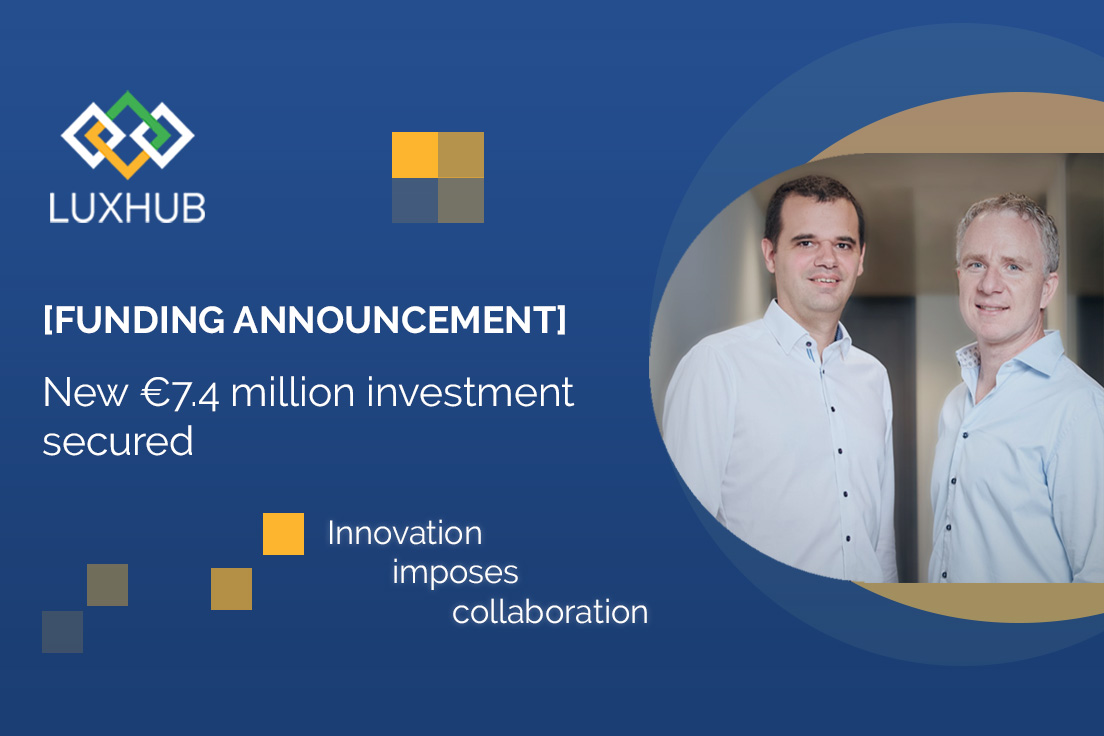
LUXHUB today announced that it has secured an additional €7.4 million in an internal funding round with its founder banks, Banque Raiffeisen, BGL BNP Paribas, POST Luxembourg and SPUERKEESS, cementing its position as one of Europe’s leading Open Banking FinTechs.
The Open Banking sector emerged at the end of 2015, with the adoption of the revised Payment Services Directive (PSD2) by the European Union. As well as providing end users with more control over their financial data, PSD2 also served to create a more competitive and secure playground for tech innovation within financial services.
“LUXHUB has rapidly emerged as a leader within Luxembourg’s new Open Banking ecosystem,” says Jacques Pütz, CEO LUXHUB. “But our ambitions have always been to have a strong Europe-wide presence, and it’s our progress in this respect that has been most impressive.”
This new round of funding will be used to accelerate the development of LUXHUB’s proprietary Open Banking and Open Finance products, and further catalyze their ambitious pan-European growth aspirations.
“We’re currently in a uniquely accelerated period of digital transformation, and LUXHUB is uniquely positioned to play a key role in this when it comes to financial institutions,” adds Jacques. “We have the firm commitment of our four founding shareholders, alongside a deep-rooted philosophical core of innovation and collaboration."
LUXHUB has, in just two years, grown from a mere four individuals into a diverse team of more than 30. Having successfully delivered PSD2 compliance to close to 40 financial institutions, innovation and collaboration are now quite clearly taking center stage.
This latest capital boost will serve to steepen the trajectory of the company’s growth and acts as a clear illustration of the high levels of confidence the four founder banks have in LUXHUB’s vision.
“The new investment comes largely as a result of the operational and technological success we have had with regards PSD2 compliance,” Claude Meurisse, LUXHUB’s COO, explains. “But, on top of this, it’s the opportunities we have created, and are creating, for a broad range of financial institutions beyond compliance that provides real enthusiasm about our future outlook.”

John Dobson
Chief Executive Officer at SmartSearch
At SmartSearch, we have made no secret of our view that electronic verification (EV) of customer ID should be made compulsory. see more
- 01:00 am

SmartSearch has added a new facial recognition feature to its award-winning digital anti-money-laundering (AML) platform, providing additional peace of mind to clients requiring visual confirmation of customer ID.
Due to the restrictions on travel currently in place in response to the Covid-19 outbreak, prospective new customers are unable to present ID documents and proof of address in person.
SmartSearch’s electronic verification (EV) platform provides a unique one-stop-shop solution, allowing clients to perform all the necessary Know Your Customer (KYC) and AML checks in a matter of seconds. Screening against global sanctions and politically-exposed persons (PEP) lists is included as standard, along with ongoing daily monitoring.
Because this can be done without any physical documents, the whole process can be carried out remotely, regardless of where staff are working. This means that new customers can be onboarded quickly, efficiently and with the minimum of fuss.
By incorporating facial recognition, SmartSearch now also provides the additional layer of assurance that comes from visual ID verification – a feature that SmartSearch expects to be highly popular with clients.
John Dobson, CEO at SmartSearch said, “We are here to make our clients’ lives easier, and give them peace of mind not only that they are meeting their due diligence responsibilities, but also guarding against unscrupulous criminals. The risk of a firm being targeted by money-launderers varies but the impact if it fails to detect and report any wrongdoing can be devastating.
“Electronic checks using credit reporting data will bring to light any discrepancies in a client’s personal history and clearly flag up where further action is required. Facial recognition is the icing on the cake, giving businesses that crucial extra reassurance that the person they are dealing with is on the level.
“With many elements of social distancing likely to remain in place for some time to come, doing this in person, face to face, is no longer possible. Our facial recognition feature means our clients can do everything remotely – protecting their businesses from fraudsters and their staff from exposure to Covid-19.”
- 04:00 am

For years, LeanDev has achieved great success with their cloud-based platform for banks and credit institutions. It has helped customers like Visma Finans, SevenDay Bank, OPR Finance and Erik Penser Bank, to quickly and easily launch new products and services. As the company expands outside the Nordic region, LeanDev is changing its name to Vilja.
The purpose is to streamline the business and clarify the message that Vilja delivers the best cloud-based core banking platform in the market.
They are taking their banking platform to the next level, by developing more products and services, ready for their planned international expansion. "Our strategy of building upon a standardized platform is to enable customers to quickly launch high-quality innovations and enable them to offer the best possible banking experience for their customers", says Fredrik Ulvenholm, CEO of Vilja.
"Vilja, is a name that expresses our core values, our will and commitment to do everything for our customers to be successful. We're investing heavily, and our customers will meet us through a brand-new website, new digital channels, and at a later stage, at different events," says Madeleine of Ugglas, CMO at Vilja.
A cloud-based banking solution from Vilja consists of market-ready solutions for Deposits, Lending and Financing. Their customers can start small with a loan service, and as they grow and expand their offering, quickly and easily add new business areas. In addition, the platform ensures compliance, automates internal flows and offers end-users a high level of customer service.
Vilja is a part of LeanDev AB.








