
Published
- 07:00 am
One of the largest banks in Russia, Ural Bank for Reconstruction and Development (UBRD), has become the latest financial institution to offer customers real-time P2P payments after joining the Russian Faster Payments System (FPS). UBRD customers can now instantly transfer money using just a mobile phone number to customers of other member banks.
UBRD drafted in its trusted partner Compass Plus to help it integrate its mobile banking app with the FPS, due to the reliability and professionalism that has been repeatedly demonstrated by the software provider’s team.
"We were delighted to provide our expert support and proven technologies to connect the Ural Bank for Reconstruction and Development to the FPS. This project has shown the high technological readiness of UBRD to implement the most innovative programs," said Irina Belova, Senior Sales and Account Manager at Compass Plus.
In the near future, the bank is planning to expand its offering by launching C2B payments within FPS. The new service will enable consumers to make transfers to merchants using QR codes.
“UBRD is constantly working to improve its remote service channels, so that even in today's difficult conditions, it is easy and convenient for customers to manage finances. The bank’s mobile application now allows you to instantly transfer money to relatives, friends, and acquaintances by phone number through banks participating in the Faster Payments System,” says Denis Dergachev, head of the UBRD transaction business.
During the 20 years of cooperation with UBRD, Compass Plus has repeatedly proved its reliability and expertise.
- 04:00 am

GoldenSource, the leading independent provider of Enterprise Data Management (EDM) and Master Data Management (MDM) solutions announced today that HESTA is live with the GoldenSource Nexus investment data management platform to support strategic investment decisions and the selective insourcing of funds management.
HESTA, a top 20 Australian superannuation fund serving over 860,000 members is using GoldenSource Nexus as the hub for its strategic investment data transformation program. And with the infrastructure supported by GoldenSource OnDemand hosting and applications services, HESTA will be able to focus on managing more investment in-house, delivering improved investment decisions and reporting, using a greater variety of data sources.
The new investment data management service, with phase 1 set up in under 6 months, will bring together seamlessly the data from HESTA’s middle and back office services and investment consulting providers, plus their 100+ external fund managers and multiple market data and internal sources. Key features, including management of complex fund structures and extensive drill through and look through capabilities will support asset allocation decision-making, portfolio/fund sector analysis, portfolio risk management, performance attribution reporting, expense management, reconciliations, NAV oversight and board reporting. GoldenSource underwent a rigorous selection process, beating out competitors due to its comprehensive flexible system and a history of successful delivery and support across the Australasia and APAC regions.
Gerard Brown, Executive Investment Execution at HESTA, said: “We look forward to working with GoldenSource to help us deliver outstanding execution and real time data to support investment decision making. We are growing rapidly and need a scalable system to provide timely data insights. Selecting GoldenSource is the first step in transforming and futureproofing our entire data infrastructure that helps to deliver strong, long-term investment performance for HESTA members.”
GoldenSource Nexus includes an operational data store for mastering security, entity and price data, plus a bi-temporal historical data store as a centralised reporting hub. With all data types managed centrally, data quality, consistency and availability will be improved for all business functions and responsibilities across the firm. Having data natively interlinked and cross referenced will also support future growth and support oversight and risk management functions.
John Eley, CEO at GoldenSource said: “Due to increased regulatory pressure and an industry-wide drive for automation and efficiency we are seeing a significant rise in the number of superannuation and investment funds looking for a full data management platform as a service, fit to support their growth and maturity. We are pleased to be working with HESTA to support them through their strategic transformation.”
The GoldenSource Nexus investment data management platform allows buy side firms to benefit from a single platform of interlinked data sets for all market, reference and reporting data. It enables efficient decision making by providing deeper insight into investment data and helps manage complex fund structures/policy trees. The fast time-to-value of GoldenSource Nexus is assured through out-of-the-box integration templates and exotic asset class templates, including alternatives, private markets and infrastructure assets.
- 02:00 am
BPC, the leading provider of digital payment solutions, shares pilot phase results from its new digital platform Safal Fasal, an SME Marketplace for small and marginal farmers in India. Through access to Farmers Producers Organisations (FPO), Safal Fasal has helped 75,000 Indian farmers access instant payment for the first time and increase their income. Crucially, it supports COVID-19-hit farmers to help the food and supply chain rolling, during and after the lockdown phase.
The first of its kind in India, Safal Fasal provides linkage to credit providers and also serves as a platform to access suppliers and trade with merchants and distributors, in an end-to-end ecosystem. With COVID-19 exposing new vulnerabilities in the agriculture sector impacting on crops and livestock prices, this ecosystem has helped farmers to create contingency plans.
Financially empowering farmers in India
Working with ICICI Bank, as well as microfinance institutions and P2P lenders, Safal Fasal provides FPOs and retailers with instant access to digital finance to support farmers previously excluded from the formal economy and immediately pay them for their produce. Over time, FPOs build a financial profile that enables more accurate credit scoring, improving the rate for them, while reducing the risk for the lender.
The closed-loop trading environment forges critical market linkages, by also serving as a digital trading platform for farmers to market their goods to local merchants and distributors. Access to credible advisors including Tanager, Bayer, Coromondal, Greaves and other reputed domestic and international players provides farmers with guidance and negotiating power to guarantee they can sell crops at the optimum price and repay their loans.
Support for farmers during COVID-19
COVID-19 and the lockdown in India has driven the demand for digital access to markets. “Our Marketplace model has proven to be a lifeline to help farmers digitise their services at a time when online purchasing and payments have accelerated,” said Debarshi Dutta, EVP and Global Head of Safal Fasal.
Safal Fasal has been focused on gathering all requirements for the next sowing season for inputs and preparing the ground for credit support, enabling Marketplace to weather the impact of the pandemic. It is also helping farmers to prepare for the post-confinement rise in demand, working with all ecosystem players to ensure an agile plan is in place to strategically deliver produce to its destination using multiple shipping methods and locations.
Bridging real life needs with digital platform
The SME Marketplace solution is built on BPC’s ‘phy-gital’ model. Safal Fasal blends a best-of-breed online Marketplace for tech-savvy farmers and FPOs, with a physical, on-field meeting approach that drives greater reach and inclusivity. Accelerating the use of digital solutions, BPC’s platform enables frictionless payment transactions between stakeholders in the ecosystem.
“Farmers form the backbone of India’s economy yet many of them – including women farmers – are invisible to banks, credit organisations and buyers, said Jane Loginova, COO at BPC. “The Safal Fasal Marketplace model puts farmers on a level playing field with the whole agricultural value chain, giving them a voice, negotiating power and financial access to the real economy.”
The future roadmap
The ambition for Safal Fasal’s is to geographically expand in India to 200,000 farmers and achieve US$33 million in Transaction Value in the financial year 2020-2021. Using BPC’s SME Marketplace solutions, the wider mission is to positively impact the lives of 10 million producers across the globe within the next five years.
BPC and Safal Fasal are calling for financial institutions, investors and partners to collaborate to gain new access to untapped markets in India and beyond.
- 04:00 am

FinecoBank today announces the launch of zero-commission trading, with no added spreads, on thousands of equity CFDs.
With the new business model, the European-headquartered bank is offering commission-free trading at a premium level in the UK market, reaching beyond existing platforms to cater for professional and serious traders. The offering will provide customers trading at the same price as the stock exchange, with no spread, commission or hidden costs.
This announcement follows record high results in executed orders and volumes by FinecoBank this year. Fineco enrolled 7,275 new clients in April, with total clients up over 4% year-on-year to over 1.36 million. The number of executed orders more than doubled from in the course of Q1 2020 to 6.2 million orders. Strikingly, the number of new FinecoBank customers who have started trading since March is 3 times the usual average we have seen in the pre-covid period. There has been an exceptional uptick in the number of new customers trading within the first two months of their FinecoBank relationship, indicating a strong performance by FinecoBank’s acquisition channel and reflecting no doubt that more clients are working from home and have extra time to start or expand their trading.
FinecoBank customers can now trade equity CFDs from a single multi-currency account without commission. This is part of the company’s integrated and multi-asset trading solution, which covers equities, ETFs, CFDs, FX options and futures. All products can be accessed in a single unified portfolio.
Paolo di Grazia, Deputy General Manager of FinecoBank said:
“As the number of traders increases – with more people looking to actively invest – the ability to trade equity CFDs for free is a vital advantage. In the market, there is always a catch, or a case of ‘zero-commission, but.’ I am pleased to be able to offer zero-commission trading for FinecoBank customers with no compromise. We have built on the fact that we are an established European bank and can continue to provide an unrivalled offering for those who are serious about trading and can benefit from our operative leverage.”
FinecoBank provides traders with the full power of a trading room with no hidden costs or minimum deposit. The workstation enables real time prices, advanced charts and professional features to buy and sell securities, currencies and futures across the world’s largest markets.
Find out more: https://finecobank.co.uk/public/
- 01:00 am

Fiskl, a UK-based software as a service company, joined hands with Salt Edge, a leader in offering open banking solutions, to deliver a seamless financial control experience to millions of small businesses globally.
Open banking genuinely transforms the way businesses manage their money. Fiskl is a software technology company which created an intelligent financial manager that helps micro-businesses manage their day to day business finances without the help of an in-house accountant. Driven by Salt Edge’s open banking and data enrichment solutions, Fiskl supports businesses globally with an automated solution packed with key tools to help manage their finances.
Fiskl integrates with Salt Edge to utilise advanced data aggregation capabilities and eliminate the need for manual data entry. Salt Edge solution tackles the pain point of financial paperwork by providing automated bank statement capture directly in Fiskl, thus enabling Fiskl to automatically reconcile revenue and expenses for its customers. Fiskl now gets instant access to categorised data from US and EU banks via the open banking channels. Salt Edge services enables Fiskl to skip the need to integrate with multiple banks and be able to expand its coverage by connecting to over 5000 financial institutions across the globe.
We believe that SMEs represent the fuel for worldwide economics and it’s exciting to collaborate with a company like Fiskl which aims to create accessible solutions to more than 350 million small businesses globally. At a time when SMEs need assistance, Salt Edge is happy to help Fiskl support SMEs digitising their businesses effortlessly and discovering a broad range of open banking benefits for growth, innovation, and diversity.
Jason O’Shaughnessy, Senior Vice President of Sales at Salt Edge
For Fiskl to better serve a global customer base, we need to work with global partners that help us compete in the market more effectively, enable us to achieve development efficiencies, and have a nimble and accelerated roadmap. As Fiskl is present in 120 countries, market coverage was one of the critical factors in our selection of Salt Edge as our data aggregation partner. The rapid additions of banks in new countries will enable Fiskl to reach deeper into those markets and to better serve local customers.
Alina Lapusneanu, Chief Executive Officer at Fiskl
- 06:00 am
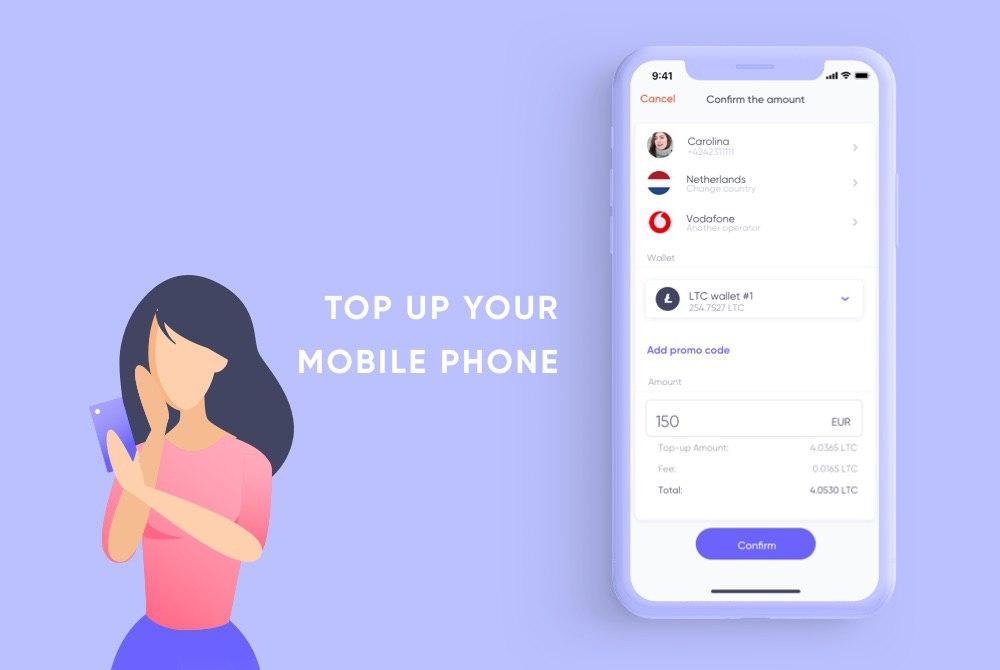
Quppy, a three-year-old European fintech project, has integrated instant mobile phone top-ups in over 140 countries. Recharging your mobile phone and those of your relatives and friends has never been that easy and fast. You simply have to fill in the number or chose it from your contact list and state the exact recharge amount.
The Quppy Team has decided to implement this service of a preliminary necessity at this time of world self-isolation to help its clients all around the world to stay in touch avoiding the human-to-human contact and being able to purchase their carriers from their place.
Another unique point of the Quppy new service that absolutely stands out is the possibility of topping up your mobile phone not only with your traditional funds but also with your digital ones. Both conversion and purchase are made instantly within the Quppy application interface without any additional actions from the user side needed or commissions being charged upon the local or international payment.
“Today we have to stand together for an efficient fight against world pandemic and a fast return to our normal lives. At Quppy we are privileging the provision of a better customer experience. Building a superapp that gathers all the necessary financial services within one interface, we have integrated mobile phone top-ups. It can be done for customers’ personal phones as far as for those of their relatives and friends all over the world in just two clicks. All of this using your digital and traditional funds managed and stored within the Quppy Wallet app.” – states Dmitry Nikiforov, the Quppy CEO and co-founder.
Quppy is a European fintech startup with over three years of impeccable financial expertise. The Quppy all-in-one contactless digital payment solution offers all kinds of financial services with traditional and digital funds. You can open a multicurrency IBAN account in Euro and British pounds in no more than 15 minutes using your mobile device only. Quppy supports instant SEPA operations. Quppy is currently working on prepaid cards launch, on gift cards purchase solution, recurrent bills payment.
- 09:00 am
The Global Legal Entity Identifier Foundation (GLEIF) and Evernym have piloted a solution which allows organizations to create and manage ‘organization wallets’, containing digital portable credentials that confirm an organization’s identity and verify the authority of employees and other representatives to act on behalf of the organization. These credentials can be used to securely identify authorized representatives when they execute an increasing number of digital business activities, such as approving business transactions and contracts, including client onboarding, transacting within import/export and supply chain business networks and submitting regulatory filings and reports.
Critically, a blockchain-based chain of trust secures these organization wallets and the verifiable credentials they contain, which connect a person’s name and job role to the organization’s legal entity identifier (LEI). This decentralized identity management model ensures the integrity and authenticity of the credentials, providing secure, trusted verifiable identity in a digital context. It also gives organizations a unique ability to secure both the content of the information exchanged and the interaction between the actors in a transparent trust chain. This provides a valuable point of differentiation from centralized identity management schemes based on information in databases. In addition, leveraging the LEI allows clear identification of the legal entity, using a global, consistent and open identifier.
The recent proof-of-concept completed by GLEIF and Evernym simulated a regulatory filing. It was secured by a verifiable credential rooted on the Sovrin Network, an open source project for a global public utility for self-sovereign identity. ‘Self-sovereign’ means the individual identity holder controls their credentials, using them whenever and however they please, without being forced to request permission from an intermediary. The workflow, and subsequent chain of trust, in the pilot was defined as follows:
- GLEIF registers its own public Decentralized Identifier (DID) on the Sovrin public ledger;
- GLEIF accredits each of its authorized LEI Issuers* with the capability to issue verifiable credentials to legal entities;
- The legal entity is validated by the LEI Issuer and receives an LEI;
- The legal entity requests a verifiable credential, alongside its LEI, to establish its digital identity;
- The LEI Issuer issues the verifiable credential to the legal entity;
- The legal entity uses this credential to issue verifiable credentials to its employees, which identify the official roles they play in the legal entity. These credentials are stored in the ‘organization wallet’ of the legal entity.
Thanks to this chain of trust, the regulators in this demonstration were able to verify the authenticity of the filings based on the credentials of the official entity representative, the entity itself, the LEI issuer and GLEIF.
The concept of leveraging the LEI in organization wallets could also deliver an unprecedented level of transparency on key organizational roles. The verifiable credentials issued by legal entities could be incorporated into the Global LEI Index, without the inclusion of personally identifiable information. Open access to the list of digital role credentials registered by legal entities in the Global LEI System could be of significant value for LEI data users worldwide, who could look up the published list of official roles that have been issued by a legal entity.
Stephan Wolf, GLEIF’s CEO, comments: “There is no precedent for the concept of organization wallets. This pilot was driven by the increasing digitalization of business activities and the need for enhanced transparency and trust to verify someone acting on an organization’s behalf. By partnering with Evernym, we have extended the idea of self-sovereign identity beyond individuals to legal entities for the first time. The process of cryptographically recording credentials, linked to an organization’s LEI in a chain of trust rooted on distributed ledger technology, gives organizations full control over the issuance and management of their own employee’s digital credentials. These credentials are not only strongly verifiable and transparent, but they can be updated or revoked at any time. Trust is delivered by the decentralized identity management process that eliminates a single point of failure while at the same time ensuring data privacy.”
“While we often focus on individuals when we think of identity, trusted organizational identity is also important to reduce the friction of interactions between businesses around the world,” adds Evernym’s CEO, Steve Havas. “Our pilot with GLEIF is an important step for enabling more trusted commerce and we look forward to seeing how companies adopt this technology to securely identify who is at the other end of each transaction.”
- 01:00 am

The latest edition of World Finance magazine is out now and has confirmed ICS Financial Systems (ICSFS) as Best Islamic Banking & Finance Technology Provider as part of its Islamic Finance Awards. The Islamic banking sector has been growing rapidly in recent times and it is certainly an area of the market that ICSFS has been supporting through its Shari’a compliant solutions.
One of the products that particularly caught the eye of theWorld Finance judges was ICS BANKS, a fully integrated banking application developed by ICSFS that enables banks to automate and streamline their services. ICS BANKS comes with a bespoke Islamic service that has helped financial institutions to achieve a competitive edge by offering a comprehensive suite of Islamic banking solutions. In an interview with World Finance, Robert Hazboun, Managing Director of ICSFS, explained why the platform is making such a difference to customers.
“ICS BANKS helps banks stay at the cutting-edge of technology through applications like cloud banking, APIs, open banking and blockchain,” Hazboun explained.“ICS BANKS’ customers can also enjoy a clear flow of information online using the platform’s reporting tools. This enables them to easily understand and analyse their status at any time, which can help inform their decisions regarding mergers and acquisitions. Lastly, ICS BANKS’ innovative technological tools future-proof banks and transform them into pioneers in their industry.”
Although the popularity of Islamic banking has grown significantly in recent times, the products and services available to customers often remain underdeveloped. The work being undertaken by ICSFS demonstrates that this is unlikely to remain the case for much longer.
- 09:00 am

OutSystems, the global leader in low-code application development, announced that Kara Wilson, strategic advisor for KKR within the technology practice, has joined its board of directors. This announcement comes at a time when global crisis is pushing digital transformation to the forefront for every company, with worldwide digital transformation technology investments expected to total more than $7.4 trillion* over the next four years.
“More apps will be developed in the next two years than in the entire history of the software industry. Through this incredible wave of innovation, a gap will develop between the organisations who can be agile and adapt quickly and those who can’t,” said Paulo Rosado, CEO of OutSystems. “The crisis is pushing the entire global economy to focus on digital transformation, and OutSystems is in a position to make a significant impact. Kara’s experience leading growth at scale will be a tremendous asset to OutSystems as we navigate through this important phase in our development.”
Wilson has over 25 years of experience in driving go-to-market strategies for both large and medium companies as well as hypergrowth start-ups. She has held marketing leadership roles with some of the technology industry’s most influential companies, including Okta, Cisco, SAP, FireEye, and Rubrik. Wilson is currently a strategic advisor for KKR and sits on the boards of Paychex, Epicor, Jitterbit, KnowBe4, Corel, and now OutSystems. Most recently, she was chief marketing officer for Rubrik, where she was responsible for the company's global marketing initiatives, including corporate, product and technical marketing, and global communications. Prior to Rubrik, Wilson was EVP and CMO for cybersecurity company FireEye, where she helped launch the most successful security IPO in market history. She is a graduate of the University of California, Berkeley.
“The cycle of disruption resulting from the current environment is fundamentally shifting paradigms around how organisations develop and deliver applications,” said Kara Wilson. “OutSystems is playing a critical role in this era of digital transformation, and I look forward to working with Paulo and his leadership team to continue to help accelerate the company’s next phase of growth as we democratise application development.”
*IDC Worldwide Digital Transformation Spending Guide, October 2019
- 04:00 am

The new lab, launched in partnership with the Government of Israel following a competitive tender held by the Israel Innovation Authority, will collaborate with start-ups to test and develop solutions in fintech and cybersecurity
Mastercard and Enel X are launching a new lab in Israel to advance innovations in financial technology and cybersecurity for the payments and energy ecosystem globally. The lab will partner with start-up companies to test and develop products and solutions, with a particular focus on digital security, fintech platforms, digital authentication and financial inclusion.
The lab is being established in partnership with the Government of Israel, following a competitive tender launched by the Israel Innovation Authority (IIA), which aims to advance innovations within the fintech and cyber sectors by accelerating growth of the country’s start-up ecosystem. The new lab will combine the strength of Israel’s start-up economy with the support of the lab’s technical infrastructure, knowledge and expertise.
“Today, as much as ever, organizations need to keep security at the forefront of all innovation,” said Ajay Bhalla, president, Cyber & Intelligence for Mastercard. “This new collaboration will allow us to draw from many partners and resources – including Israel’s renowned start-up economy – to help bring innovations to market even faster and reduce the growing threat and cost of cyberattacks.”
“The new lab gives us the unique opportunity to work with Israeli start-ups to bring innovative financial technologies to our millions of customers worldwide,” said Francesco Venturini, Head of Enel X. “By joining forces with an important partner like Mastercard, we will support these start-ups to develop and roll out best-in-class solutions in the fintech and cybersecurity sectors.”
The new lab will be established in the southern city of Be’er Sheva, a city designated by the Israeli government as the cyber and fintech capital of the world and home to many cyber R&D centers of top global technology companies. The lab will obtain a three-year license and approximately 3.7 million US dollars of public funding to cover the lab’s establishment, operational costs and proof of concept development with local start-ups.
This expansion is the latest in a series of investments by Mastercard in cyber security, reinforcing the company’s commitment to supporting innovation and talent development. The lab will complement Mastercard's Israeli headquarters in Tel Aviv, its award-winning global start-up engagement program Start Path, and its eight global technology centers in Arlington, Dublin, New York, Pune, St. Louis, Sydney, Vadodora and Vancouver. The lab builds on Mastercard and Enel’s record of collaboration in areas including financial inclusion products for the unbanked and digital wallet payments for electric vehicle charging stations.
Enel opened its first Innovation Hub in Tel Aviv in 2016 and since then has collaborated with 35 local start-ups in fields such as the Internet of Things, cybersecurity, e-mobility, energy storage and many more. In addition, Enel’s Infralab, an innovation lab dedicated to digitalization of infrastructure businesses, is today home to more than six lab companies and eight additional start-ups. The Hub and Infralab are part of the global network of 10 innovation hubs and 20 labs that Enel has around the world, including in Brazil, Chile, Italy, Russia, Spain and the US. Thanks to this global network, Enel has been working with about 300 start-ups from all over the world, boosting innovation in all of its global activities.








