Published
- 01:00 am

Families are still feeling the acute financial burden caused by increased costs and higher interest rates, and new research from Moneyhub reveals that over half of people regularly worry about their financial situation. The research also shows that UK savers believe their banks could be doing significantly more to help them get to grips with their finances
The middle-aged are the most likely generation to feel the pressure on their purse strings, with 63% of 45-54-year-olds indicating they are worried about their finances.
However, while a total of 31% of those surveyed admitted to putting off life goals – such as having children – due to not being able to afford it, this figure shot up to 48% for 18-34 year-olds.
The generational differences don’t stop there. Across the two-fifths of respondents who regularly finish the month with no money in their accounts or with an overdraft, this number jumped to 54% for those aged 25-33 years old and fell to 35% for 55-60-year-olds.
Following a difficult year for personal finances, which saw consumers grapple with high inflation and soaring costs, 44% of respondents said they had to dip into their savings in the past 12 months. A further 28% said that they are struggling to save, while 18% have an erratic approach to savings, with some months being better than others. Tellingly, only 15% of respondents said they can save a significant portion of their income each month.
Although the research nods to the difficulties presented by macroeconomic pressures, it also shows that banks and financial institutions could do more to help. Over a third (34%) of respondents said that banks and financial institutions don’t make it easy to understand finances, and 31% said that they would save more if they understood their finances better.
When asked what they think banks can do to make life easier, 16% said that they’d like nudges for when they could be saving money or switching to better savings rates. 13% would like access to free money management apps that allow them to see and understand all their finances, and 12% said they wanted easier methods to contact customer services.
Kim Jenkins, Managing Director of Moneyhub API said: “Our research makes it clear that there is an opportunity to help customers understand and manage their finances. By using the available technology, banks, and financial institutions would be able to help their customers properly understand their financial situation and provide smart nudges that would help them make better financial decisions.
Through Open Banking capability and easy-to-build solutions such as Moneyhub’s Smart Saver API Recipe, banks can provide a helping hand for their customers to budget and know precisely when they have excess to save. This will also enable them to deliver better customer outcomes.”
- 07:00 am
Flagright, a leader in AI-native Anti-Money Laundering (AML) compliance and fraud prevention solutions, is thrilled to announce its partnership with SALT, a pioneering financial platform designed to empower SMEs in India & Asia. This collaboration is a testament to the shared Y Combinator heritage, underlining both companies' commitment to leveraging technology for financial security and innovation.
SALT, recognized for its unique approach to providing SMEs with the financial tools they need to thrive, is set to integrate Flagright's advanced AML and fraud prevention technologies. This strategic move will bolster SALT's capabilities in offering secure, efficient, and innovative financial services to Indian & Asian businesses.
Ankit Parasher, Co-Founder at SALT, shared his enthusiasm about the partnership: "Joining forces with Flagright, a fellow YC alumni, is a significant milestone for SALT. It strengthens our mission to support SMEs with not just financial solutions but also unparalleled security. Flagright's technology will play a crucial role in protecting our platform and our customers from financial crimes, ensuring that SMEs can operate with confidence and security."
Flagright's sophisticated AI technology and intuitive, no-code interface will enable SALT to seamlessly integrate comprehensive compliance and fraud prevention measures, further securing the financial transactions of SMEs in the region. This partnership highlights the dedication of both companies to improving financial security and fostering innovation within the SME sector.
Baran Ozkan, Co-founder and CEO of Flagright commented on the collaboration, stating, "We are excited to partner with SALT and support their mission to empower SMEs. Our shared background as YC alumni strengthens our collaboration, as we both understand the importance of innovation and security in scaling businesses. We are eager to contribute to SALT's success with our robust security solutions."
- 08:00 am
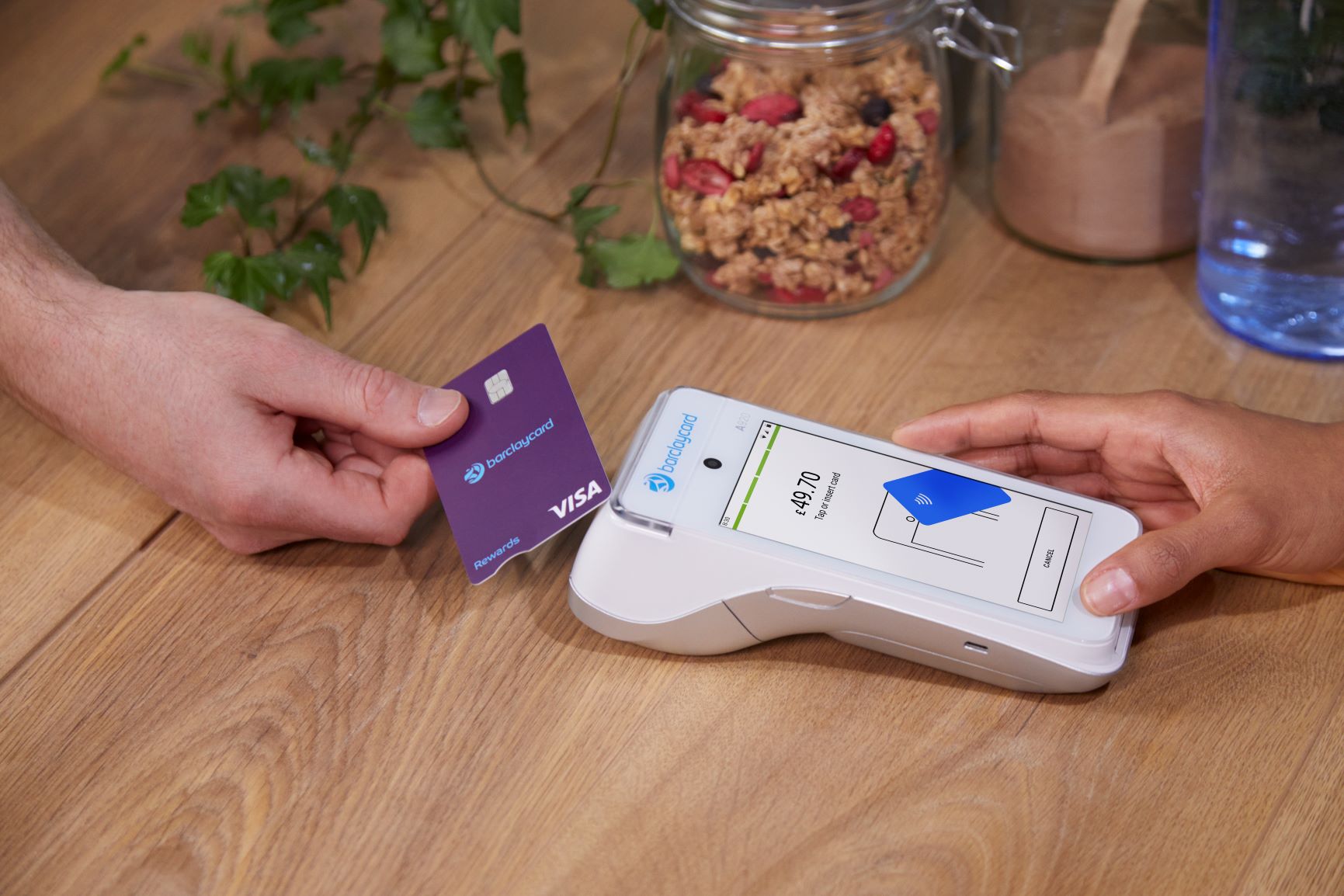
New Consumer Spend data from Barclays’ annual contactless trends report has revealed that 2023 was another record-breaking year for ‘touch and pay’, further cementing it as the UK’s most popular payment method, owing to its speed and convenience. Usage grew across all age demographics, and the gap between older and younger audiences continues to narrow, with the fastest growth among the over 65s for the third year running. Mobile wallets are also gaining ground, particularly with younger shoppers, while Chip PIN and cash are the preferences for purchases over £100.
Across the population as a whole, a record 93.4 percent of all in-store card transactions up to £100 were made using contactless in 2023, and in total there were 7.8 percent more ‘touch and go’ transactions than in 2022. On an individual level, the average user made more transactions (up from 220 to 231), on more expensive items (the average purchase cost £15.69 – up 3.8 percent), meaning that they spent more overall (£3,623 – up 8.9 percent).
For the second year running, the Friday just before Christmas (22 December 2023) was the single biggest day for contactless – spending was 87.6 percent higher compared to the daily average, as shoppers picked up last-minute gifts, or enjoyed a few drinks with friends as they clocked off for their festive break.
Silver Spenders tap into convenience
While contactless is still more popular among younger consumers, the gap between older and younger audiences continues to narrow. In 2023, the percentage of active users among 85–95-year-olds (80.1 percent) crossed 80 percent for the first time. More broadly, for the third year in a row, over-65s were the fastest growing segment for contactless usage, up 4.1 percent year-on-year.
However, there is still a division among contactless users when it comes to preferences for making contactless payments using a mobile wallet versus a physical card. Research from Barclays shows just 3 percent of over-75s prefer a mobile payment over using a physical card, whereas a quarter (25 percent) of 18-34-year-olds say they prefer to use their phone.
Wallets optional: younger consumers embrace mobile payments
The increasing popularity of mobile payments; which have no contactless upper limit via two-factor authentication; means some younger shoppers now opt to go cardless when leaving home. More than one in five (22 percent) of those aged 18-34 regularly leave their wallet behind when out shopping in favor of paying with their smartphone, in comparison to just 1 percent of those over 75.
As a consequence of increased ‘touch and go’ mobile spending, nearly one-fifth (18 percent) of Brits admit they also have trouble remembering their PIN when prompted. Fortunately, many banks, including Barclays, allow customers to check their PIN securely by logging in through their mobile banking app.
Table tech
When dining out, restaurant-goers continued to embrace contactless and digital payments in 2023. While overall restaurant spending was down -6.7 percent due to cost-of-living pressures, contactless spending fell only -2.9 percent; demonstrating the shift towards speed and convenience at the point of payment. In addition, 15 percent of those aged 18-34 now say they prefer to order and pay by scanning a QR code using their phone when the option is available, to avoid having to wait for the bill or card machine at the end of a meal.
A win for Chip and PIN
When it comes to buying items over £100, pre-contactless technologies remain the most popular way to pay. Four in five (78 percent) say that Chip and PIN is one of their top two choices, while one in four (23 percent) opts for cash. Contactless payments over £100 are possible using a mobile wallet – the limit of £100 applies to physical cards; mobile wallets while growing in usage, placed third chosen by one in five (19 percent).
Karen Johnson, Head of Retail at Barclays said: “Since we rolled out contactless payments to the UK in 2007, it has firmly cemented itself as the UK’s favourite payment method, thanks to its speed and convenience. Given the growing number of cashless businesses, I’m pleased to see that many older shoppers are embracing touch-and-go and that the gap in contactless usage between age demographics continues to narrow.
“In 2024, we expect to see a greater shift to payments using mobile wallets, as more bricks-and-mortar businesses integrate the technology into their customer experience. Many of our hospitality & leisure clients are finding success by giving customers the ability to order and pay from their table by scanning a QR code. Customers like it because they don’t have to wait for the bill, meaning they can squeeze in an extra round of drinks or a dessert before they need to leave, and the business frees up more capacity for waitstaff, boosting productivity.”
Category |
| Contactless Spend Growth in 2023 vs 2022 |
Overall Contactless Spend |
| 10.2% |
Retail |
| 9.7% |
Clothing |
| 6.2% |
Grocery |
| 10.4% |
Food & Drink Specialist |
| 9.3% |
Supermarkets |
| 10.6% |
Household |
| 11.1% |
Electronics |
| 19.8% |
Furniture Stores |
| 11.5% |
Home Improvements & DIY |
| 9.9% |
General Retailers |
| 8.9% |
General Retailers & Catalogues |
| 18.4% |
Department Stores |
| 9.9% |
Discount Stores |
| 2.1% |
Specialist Retailers |
| 8.4% |
Pharmacy, Health & Beauty |
| 9.2% |
Sports & Outdoor |
| 7.2% |
Other Specialist Retailers |
| 7.8% |
Hospitality & Leisure |
| 11.5% |
Eating & Drinking |
| 10.3% |
Bars, Pubs & Clubs |
| 8.9% |
Restaurants |
| -2.9% |
Takeaways and Fast Food |
| 14.9% |
Other Food & Drink |
| 11.5% |
Entertainment |
| 12.1% |
Hotels, Resorts & Accommodation |
| 17.6% |
Travel |
| 16.3% |
Public Transport |
| 11.4% |
Other Travel |
| 19.4% |
Other |
| 9.8% |
Fuel |
| 4.6% |
Motoring |
| 28.8% |
Other Services |
| 21.9% |
A brief history of contactless payments:
- 2007: Barclays pioneers contactless payments in the UK with the Barclaycard OnePulse card, which could be used to pay at c22,000 payment terminals across the TfL network and in c6,000 retailers. The spending limit per transaction is initially set at £10
- 2010: The Contactless payment limit increases from £10 to £15
- 2011: The first mobile payment device enters the UK as Barclaycard and Orange join forces to launch Quick Tap, which lets users make payments by tapping their phone on a contactless payment reader
- 2012: The contactless payment limit rises from £15 to £20. Barclays introduces PayBand, the UK’s first wearable payment device
- 2013: Annual contactless transactions reach £1bn for the first time
- 2014: Barclays works with TfL on the second phase of introducing contactless to London’s travel network by aiding the evolution of the yellow Oyster card readers to enable them to read contactless cards
- 2015: The spending limit per transaction rises from £20 to £30. Barclaycard creates the nation’s first payment fashion wearables.
- 2020: UK contactless limit increases from £45
- 2021: UK contactless limit increases to £100 on 15 October
- 2022: Contactless spending jumps 49.7 per cent, as Brits embrace the £100 limit
- 2023: Over 80 per cent of 85–95-year-olds now pay with contactless
- 01:00 am

A lack of information is putting people off from potentially saving for a better future, according to new research from award-winning Open Banking, Open Finance, and Payments provider Moneyhub.
Over two-fifths (42%) of consumers stated that they do not find it easy to interact with their provider, with one in four (25%) citing that the biggest reason for communication being difficult is their provider not having an app. The lack of an app was also rated as more important than the ability to ‘speak with someone.
This difficulty in communicating with providers could be leading to poor customer outcomes. The findings from Moneyhub show over a third (36%) of consumers aged 35-44 years said too little information is putting them off adding to their pension. And over 1 in 8 (13%) of consumers don’t even know who their provider is.
With the FCA’s Consumer Duty now in effect, demonstrating positive outcomes is more important than ever. However, when asked, only 19% (less than 1 in 5) of respondents felt that their provider had delivered on all four of the FCA’s Consumer Duty outcome areas.
One way for providers to do this is by using technology and solutions such as commercial pension dashboards and Open Finance. Alongside being able to find and view all their pension data, Moneyhub’s technology also allows consumers to connect to and see their bank accounts, credit cards, savings, property valuations, ISAs, loans, mortgages, and other financial products all in one place, allowing them to make better long-term financial decisions and embed healthier money habits.
Total percentage of consumers who think their provider has FAILED meeting the FCA’s Consumer Duty regulations to improve customer outcomes:
“Communications to make effective financial decisions” – 25%
“Good quality support and after-sales care” – 24%
“Transparent pricing and demonstrating value for money” – 18%
“Offering suitable products and services to meet your needs” – 16%
Mark Horwood-James, Managing Director at Moneyhub Personal Finance Technology said:
“Consumers are saying loud and clear that pension and investment providers can be doing more to help them make better financial decisions. It is also striking how in demand technology is from customers. Apps and specifically the use of Open Banking and Open Finance technology can contribute to better financial wellness and encourage positive outcomes. The ability for consumers to see a holistic picture of their finances enables them to make decisions that can improve their long-term financial health. Pension and investment providers could have a huge impact in this area, creating brighter futures for their customers and their businesses.
“The UK Government’s new Smart Data sharing laws (DPDI) and Pensions Dashboard announcement – alongside the continued emergence of Open Finance is accelerating the race to deliver customer-centric solutions. And the next few years will rapidly reveal who leads, and who gets left behind.”
Margaret Snowdon, OBE said:
“Consumers make financial decisions every day, whether buying a car or a TV and whether or not to use credit or even to get credit. Pensions are part of a wider universe in real life. Providers have a big role to play in expanding consumer financial understanding, either by targeted and easy-to-digest information when action is needed or better still, a continuous program of bite-sized information delivered in an eye-catching way, as early as possible. Nudges as part of a dashboard covering all of a consumer’s finances is the ideal.”
- 07:00 am
iwoca, one of Europe’s largest SME lenders, today announces a partnership with business account provider Countingup to make business finance available to almost 10,000 of Countingup's users at the touch of a button.
Building on Countingup’s suite of built-in finance, accounting, and tax management features, this new collaboration uses iwoca’s API to embed fast and flexible funding options into Countingup’s business account platform. This now means users can access finance seamlessly within minutes.
The integration will see iwoca’s Flexi-Loan for SMEs made available on the app and uses Countingup’s data and interface to streamline the loan application process, in a move to empower small businesses to take better control of their finances.
Yusupha Fatty, a Countingup customer and an agency nurse providing general nursing services to various NHS hospitals across the country, emphasised the significance of access to loans for his small business, explaining, "I was having major issues with my car as I do a lot of mileage travelling to different hospitals. Therefore, I needed to purchase a new car to get to and from work."
Describing his experience, Yusupha added, “It was one of the easiest and most straightforward applications I’ve ever come across.”
“I had been with another provider previously but found them quite slow to respond whenever I had a request. The process with Countingup and iwoca has been so much quicker.”
Initial data collected during a trial of the partnership found that 70% of Countingup’s first cohort of customers applying for finance with iwoca received a loan decision in under an hour.
Yusupha says the speed of the funding was crucial: “It had a massive impact - without it, I wouldn’t have been able to work”.
Harry Cranfield, iwoca Partner Channel Manager said: “Through our industry-leading API integrations for business lending, we've enabled over 30 partners to provide finance within their platforms. As we continue to innovate, we’re actively looking for new partners to expand our reach and make finance available to small businesses when and where they need it.
“Our latest collaboration with Countingup brings us another step closer to that reality. Access to fast and flexible finance not only enhances cash flow management for SMEs, but also fuels their ability to seize opportunities - making their business and the economy stronger as a whole.”
Rory Bocock, Head of Marketing at Countingup said: “Our collaboration with iwoca represents a big step forward in our mission to automate and simplify finances for the UK’s self-employed. The seamless integration of iwoca’s flexible business loans within our app complements our finance, accounting and tax features - empowering self-employed individuals to confidently run their business. We’re ensuring small business owners have continuous access to the vital financial resources they need to thrive.”

Katarina Pranjic
Head of Policy and Regulation at LexisNexis Risk Solutions
Industry expert Katarina Pranjic takes a look at why the costs of compliance, collaboration, perpetual KYC, and richer data could prove some of this year’s biggest tren see more
- 06:00 am
TD, America’s Most Convenient Bank®, today announced the launch of Tap to Pay on iPhone, enabling small and micro business owners across the U.S. to use their mobile phones for a seamless and secure point-of-sale (POS) experience.
With Tap to Pay and the TD Bank Mobile App, business owners can accept all types of in-person, contactless payments using only their iPhone – from contactless credit and debit cards to digital wallets or wearables, Tap to Pay eliminates the need for additional POS hardware.
Business owners can also use Tap to Pay on iPhone as a complementary solution to their storefront POS systems, allowing them to accept payments on the move. Whether setting up as a vendor at a local market, running a food truck or landscaping business, or operating a pop-up shop, Tap to Pay on TD Bank Mobile App allows businesses of all sizes to transact and accept payments on the go directly from their mobile phone.
"To support local economies, we often encourage consumers to 'shop small' – but we know there can be friction in the small and micro-business POS experience," said Chris Giamo, Head of Commercial Banking at TD Bank. "By equipping small businesses with modern conveniences and more technology through solutions like Tap to Pay on TD Bank Mobile App, we're helping small businesses have a seamless payment experience that's better aligned to customer expectations."
Customers Want: Easier, Better, Faster, Cheaper
TD recently conducted a survey on micro businesses – defined as having 25 or fewer employees with an annual revenue of less than $100,000 – to understand how today's smallest businesses are transacting and processing payments.
The survey revealed more than one-third (33%) of micro business owners (MBOs) are currently facing challenges in their day-to-day operations due to not having the necessary payment device or hardware to accept customers’ preferred payment method.
"We saw a massive consumer shift towards contactless payment adoption that started during the pandemic and continues through today," said Jo Jagadish, Head of Corporate Products & Services at TD Bank. "Tap to Pay on TD Bank Mobile App offers even the smallest businesses a flexible and convenient payment solution that also delivers on customer preferences, like convenience and ease. For today's small and micro businesses, every sale – at any dollar amount – matters. By leveraging a mobile app to increase payment options, MBOs can be sure they'll never miss a cashless sale."
With the majority (81%) of MBOs relying on their business as their primary source of income, TD's Tap to Pay on iPhone will meet a critical and direct need of business owners that will help improve the overall customer experience, while eliminating MBOs' need for costlier POS devices and software.
"TD is on the front lines of our Main Street economies," said Amy Dinkar-Patel, Head of Small Business & Commercial Distribution at TD Bank. "We hear small business customers' feedback and understand their pain points – which allows us to offer solutions that truly make their business stronger, more profitable and easier to run. With an offering like Tap to Pay on iPhone, we're improving the experience for our customer, and our customer's customer – it's a win all around."
Tap to Pay on iPhone, powered by Autobooks, is the latest addition to TD's growing fleet of payment solutions. TD Merchant Solutions offers a variety of in-person, mobile, eCommerce and POS solutions so business owners can get paid by accepting customer payments in ways that work best for their business.
The integration of Tap to Pay on iPhone into the TD Bank Mobile App expands TD’s partnership with Autobooks, Inc., the technology provider of TD Online Accounting. With TD Online Accounting, TD customers can send digital invoices, accept debit and credit card payments, and streamline the cash flow and accounting of their TD Small Business Checking account.
- 02:00 am
Repay Holdings Corporation, a leading provider of vertically integrated payment solutions, today announced a new partnership and technology integration with Maxyfi, a provider of collections and accounts receivables management software for lenders, collection agencies, and law firms. The collaboration enables Maxyfi clients to offer flexible payment methods that accommodate consumer preferences and improve the overall collection process.
REPAY’s integration enables businesses to utilize the Maxyfi software to streamline payment collections while optimizing internal workflows and reconciliation through real-time data exchange. The integration with REPAY also provides easily accessible and secure omnichannel payment methods, including online, text, mobile, and IVR, enhancing collection efforts by empowering consumers to pay through the method that is most convenient for them.
“When consumers can make payments through their preferred payment channel and method, the collections process improves significantly,” said Jake Moore, EVP, Consumer Payments, REPAY. “Our partnership with Maxyfi enhances operations for collectors and modernizes accounts receivable management for consumers by empowering both parties to manage transactions without the hassle of outdated processes.”
“Enhancing our clients' experiences with our platform is at the forefront of our priorities,” said Ashraf Ali, Co-Founder & CSO of Maxyfi. “By leveraging REPAY's payment expertise and our seamless integration with their platform, we look forward to further supporting our clients’ collections processes by simplifying payments.”
- 01:00 am

Saldo Bank, which is starting its operations in Sweden, offers an interest rate of as much as 5% for a year's deposit. "We want to increase fairness in fixed-term deposits," says Jarkko Mäensivu, the CEO of Saldo Bank.
The digital neobank with a Finnish background, Saldo Bank, will lift the interest rate competition of the fixed-term deposits to a new level in Sweden.
The bank will start operating in Sweden in February and offers interest rates of up to 5% on one year's fixed-term accounts. According to the comparison website Compricer, the next highest offer is 4.4 percent.
"We increase fairness in borrowing"
Saldo Bank is a modern digital bank operating in Sweden, Finland, and Lithuania. It aims to always provide one of the best borrowing rates in the country. When the bank started in Finland in October 2023, several banks had to raise their interest rates.
Jarkko Mäensivu, the CEO of Saldo Bank, believes that the same will also happen in Sweden. Other banks follow suit.
"In our opinion, the interest paid on the fixed-term accounts has been very low for a long time. Interest rates paid to customers should reflect at least market interest rates. We want to increase fairness in borrowing," he says.
The maximum amount of a fixed-term deposit is SEK 900,000 and the funds deposited in the fixed-term accounts are subject to deposit protection.
The funds will be used for growth in Sweden
Saldo Bank pays higher interest rates than others because it collects funds for its growth. Established in Lithuania in 2021, the bank opened its operations in Finland last year.
Mäensivu says that Sweden plays a key role in the company's plans. The deposits in Sweden will continue to benefit the Swedish business scaling.
"We want to grow in Sweden. We use local funds to grow our loan portfolio in Sweden," he says.
Saldo Bank is developing into a digital international bank that aims to provide digital banking services to consumers and, in the future, businesses.
Saldo Bank has a Finnish background. However, the core of the company's banking operations is in Lithuania and the operations are supervised by the Bank of Lithuania. In addition, Saldo Bank's technology development center is located in Vilnius.
Saldo Bank only operates online in Sweden. The bank has no intention of establishing a branch network in the country.
- 04:00 am

iDenfy, a globally renowned RegTech company offering ID verification and fraud prevention tools, announced collaborating with Rawcaster, a social media platform designed for influencers and their fans. This partnership will help automatically assess risks related to fraudulent accounts, ensuring that all Rawcaster’s influencers and other social media users are protected against fraudulent attacks.
Social media platforms not only offer a good experience for the users but also can provide a huge risk due to the popularity of scammers who can easily manufacture a fake persona, for example, by checking into people’s profiles and pretending to be them replicating the age, interests, past purchases costing financial frauds and giving unreliable media experience to its users. The Federal Trade Commission (FTC) found that one in four people who reported losing money to fraud claimed it started on social media. Reported losses to scams on social media during the same period hit $2.7 billion last year.
iDenfy claims that there’s still a high level of anonymity on social platforms, and it fosters criminal behavior when individuals can operate without providing their government-issued identity documents. According to the KYC company’s research throughout the years, users online tend to operate differently when they remain anonymous than when they have to undergo a proper identity verification process.
Certain industries, such as cryptocurrency or social media, have a stigma regarding KYC. iDenfy further explains that many people online want to remain anonymous because they do not have complete trust in the platform’s security standards or want to remain anonymous due to the platform’s nature, for example, when building a social media profile on a dating site. Rawcaster agrees that encouraging people to share personal information online can be challenging. As a result, the social media company understood that the only way to overcome this challenge was to find a reliable KYC partner with a proven track record.
To protect social media platforms against internet scammers, Rawcaster decided to partner with the identity solution provider iDenfy. When selecting a partner for identity verification, Rawcaster recognized iDenfy as a credible and secure platform capable of verifying influencers and media users globally. Currently, Rawcaster is best known for its social media platform that provides a comprehensive social media experience, serving as the ultimate hub for influencers and their followers. The platform offers features such as chat, virtual meetings, talk shows, and content posting across video, audio, and text formats. The platform aims to stand out as a unique place catering to diverse social media needs.
Right now, Rawcaster uses iDenfy's identity verification service as the main solution, ensuring a robust and secure process for verifying the identities of influencers on its platform. This partnership allows Rawcaster to reserve profile information for the correct influencers accurately, thereby enhancing the overall security and reliability of the media platform. iDenfy is committed to actively checking social media registration and including any new system to fight against the global scam snares. As influencers play an increasingly vital role in shaping online conversations, this collaboration aims to create a safer and more positive digital space for users globally.
"Our partnership with iDenfy is rooted in our commitment to providing a secure and trustworthy environment for influencers and their fans. iDenfy's global coverage and robust identity verification solution align perfectly with our vision for Rawcaster," said Edith Viviana Gad, the Co-Founder and President of Rawcaster.
"This partnership shows our commitment to elevating security standards in the social media landscape. At the same time, with our streamlined approach to identity verification, we can help Rawcaster build the simplest onboarding flow for its fast-growing customer base,” added Domantas Ciulde, the CEO of iDenfy.
It’s worth noting that Rawcaster’s future plans consist of creating an even more secure environment for its growing user base, which consists of different types of influencers, including religious leaders, athletes, politicians, actors, activists, and more, helping them connect more closely with their followers. iDenfy’s role in this goal will help the company scale faster in a secure, compliant manner.