
Published
- 06:00 am
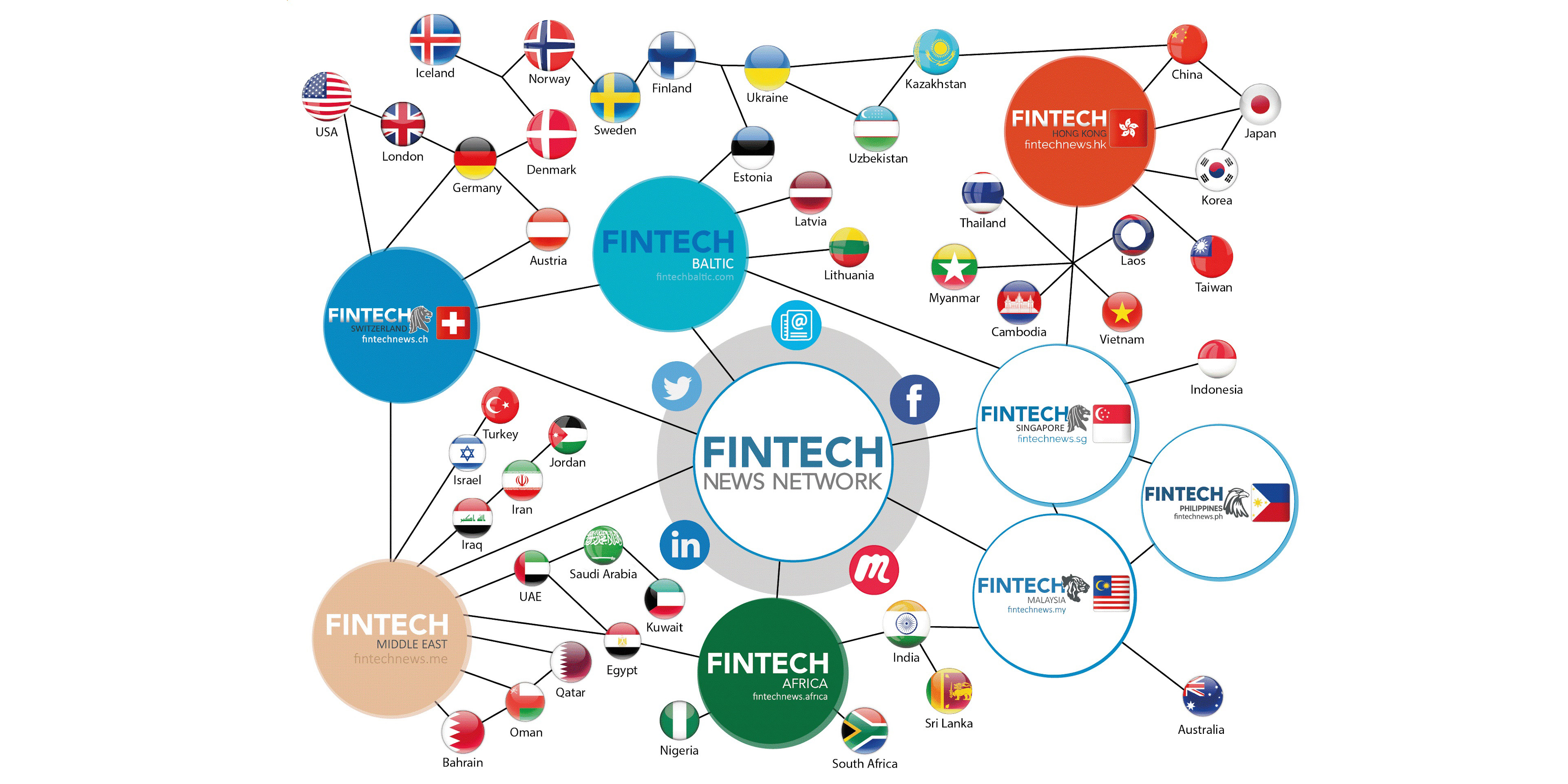
The Fintech News Network is pleased to announce the launch of our eighth publication: Fintech News Africa. The Fintech News Network is an industry publication covering fintech and digital news across the globe. Our readers are from established financial institutions as well as budding fintech startups. Eight publications are currently present in four continents, covering fintech news across 44 different countries.
The list of publications include; Fintech News Switzerland (soft launched end of 2014), Fintech News Singapore (2015), Fintech News Hong Kong (launched in 2016), Fintech News Middle East (launched in 2017), Fintech News Malaysia (launched in 2018), Fintech News Baltic (launched in 2018), Fintech News Philippines (launched in 2020) and now Fintech News Africa (launched in 2021).
While Fintech News has consistently provided fintech updates from the African continent on our Middle East site, we believe that the tremendous growth that the region has seen warrants its very own publication. Africa has been touted as the next up-and-coming fintech hub after China as it is currently home to about 600 fintech startups according to Disrupt Africa.
The region's growth is evidenced by fintech attracting the lion's share of Africa's tech funding in 2020. Fintech funding in Africa increased by a whopping 49.3% in 2020 to US$160 million. Fintech deal sizes also grew last year, rising from an average of US$1.3 million in 2019 to US$1.6 million in 2020. These positive developments are a strong indicator of the region's maturing and fast developing fintech ecosystem.
While South Africa, Nigeria and Kenya have historically been the fintech hubs of the vast continent, Ethiopia, Ghana and Rwanda are now quickly catching up to their predecessors.
Fintech News is excited to provide our readers with updates on these bustling hubs with the launch of Fintech News Africa (www.fintechnews.africa).
Christian Koenig, Founder of Fintech News Network said: "Fintech will be essential to the economic recovery of many African countries as the pandemic has inadvertently accelerated the digital transformation of the financial sector. Most of these institutions, incumbents and fintechs alike, have leveraged this opportunity to revolutionise their digital offerings to keep up with the market's needs."
Christian will be based in Addis Ababa, Ethiopia for the next few months to work on the new page and hire local staff.
- 08:00 am

R3, the enterprise blockchain software firm, today announced a partnership with Red Date Tech, a key infrastructure developer of China's Blockchain-based Service Network (BSN), to license Corda Enterprise for the development of a permissioned blockchain network in China and a free Corda-based Open Permissioned Chain on BSN China.
This collaboration also marks the first time BSN has acquired rights from an overseas blockchain provider like R3 to resell its enterprise blockchain platform in China—allowing local Chinese firms to benefit from the capabilities unique to Corda, including high performance, privacy, and security.
To develop the Corda-based blockchain network in China, the first step is to roll out an open permissioned version with Corda’s open-source nodes, allowing BSN developers to utilise Corda. All enterprise nodes will be added to the BSN network, connecting to the same notary nodes deployed on China UnionPay's Cloud. China UnionPay, as one of BSN’s founding members, will assist with the development of the China Corda-based blockchain Network by hosting the notary nodes on its cloud.
Amit Ghosh, Head of APAC of R3 said: "China understands the profound and transformative capabilities of blockchain technology—and has underpinned its position at the forefront of blockchain innovation through BSN. R3 is honoured to bring Corda Enterprise to the Chinese market, giving Chinese industry actors access to a permissioned blockchain platform that provides all the benefits of blockchain for businesses—addressing issues of cost, expediency, efficiency and profitability."
"Our partnership aligns with China's ultimate goal to drive greater collaboration, innovation, and development in the blockchain space as well as marking a major milestone for R3. This collaboration paves the way for greater adoption of Corda in the Chinese market—supporting the continued growth of numerous industries including trade finance, supply chain, capital markets, insurance, and financial services," Ghosh added.
Corda prioritises enterprise integration and presents businesses in China with a solution that is easily deployable and offers a seamless process—from setting up, to developing and operating blockchain solutions. To further facilitate and drive the adoption of Corda in China, Red Date will import selected existing CorDapps for Chinese customers—allowing businesses in China to experience Corda without the need to develop their own applications from scratch.
Yifan He, CEO of Red Date Tech and Executive Director of BSN Development Association said: “We're aware of R3's huge success outside China. We are thrilled that in just four months, Corda will go-live in China via BSN’s Open Permissioned Blockchain Initiative to offer Chinese developers’ low-cost access to Corda technology. Red Date will also help to drive Corda and CorDapps’ adoption among all Chinese banks—enabling Chinese financial companies to streamline their business processes and receive the profound benefits of enterprise blockchain.”
Corda Enterprise will be available to Chinese firms through the BSN public city nodes by the 2nd half of 2021.
- 06:00 am

The Depository Trust & Clearing Corporation (DTCC), the premier market infrastructure for the global financial services industry, today announced that DTCC’s ALERT, the industry’s largest and most compliant web-based global database for the maintenance and communication of account and standing settlement instructions (SSIs), has passed a key milestone with over ten million SSIs now included in the service— an increase of 12% in the past twelve months.
“SSIs represent a substantial pain point for firms, as missing or incomplete SSIs can lead to trade failures. The increased use of ALERT is confirmation of the financial service industry’s continued focus on automation and addressing this important area of the post-trade process,” said Moira Kiernan, DTCC Director, Product Management. “With ten million SSIs now in ALERT, the service has become the central SSI utility to reduce trade fails and increase operational efficiencies, creating significant benefits from the centralization and automation of high quality, golden source data.”
Of the ten million SSIs, thirty percent are now administered by data source providers through its custodian-managed model, Global Custodian Direct (GC Direct). Through the GC Direct workflow, custodian banks and prime brokers become the owner and manager of SSIs for their buy-side clients, further automating the maintenance of SSIs and driving the prevalence of reliable source data.
Increasing efficiencies and reducing touch points are high priorities for the financial services industry, further amplified by the COVID-19 pandemic and in anticipation of the Central Securities Depositories Regulation’s (CSDR) Settlement Discipline Regime to be implemented in February 2022, which introduces penalty fees for failing transactions. ALERT significantly reduces trade failure by enabling a community of investment managers, broker/dealers and custodian banks to share accurate account and SSI data automatically worldwide including automated enrichment of transactions within DTCC’s Margin Transit Utility (MTU) offering as well as within DTCC’s CTM central matching service through a rules-based engine called ALERT Key Auto Select (AKAS). With 3,325 clients, ALERT provides broad market coverage supporting all the depositories across the globe (150+ as published by SMPG) and more than 30 derivatives exchanges.
- 01:00 am

Sumsub, a startup that helps companies fight money laundering and online fraud, has invested over $1M in software development—aiming to deliver leading tech for over 1000 global clients. Its latest feature is “Prooface,” a refined liveness solution for ID verification and onboarding that is commonly used in digital banking industry.
Security and data privacy is one of the most discussed topics these days. As such, technologies that combat online fraud are in the spotlight. In average, an 85% of financial institutions experience fraud in the account opening process.[1] Liveness detection is no exception, however this technology has come with certain drawbacks. Blindspots, overburdening tasks, slow performance, and unfriendly UX experiences are just some of the issues that have hampered liveness solutions in the past. Refined Prooface is designed to eliminate these concerns while providing iBeta compliant protection against the most sophisticated fraud vectors—presentation attacks, replay attacks, API injection and deep fakes.
Rather than snapping a single photo, Prooface takes live selfies from different angles, which is a more secure and effective means of proving liveness. Performing face-scans at multiple angles, Prooface collects biometric data, encrypts it, and sends it to our backend for analysis. This is a secure and time-effective method that makes fraud attempts, such as replay attacks, impossible.
“Digital banking is constantly facing new fraud threats, and this demands continuous improvement of existing technologies. We felt the urge to resolve common conversion setbacks by developing our liveness technology in-house. Although we can’t promise 100% conversion, we can guarantee that our clients will reach new conversion heights.”—Jacob Sever, Co-founder & CPO.
The global identification market is expected to be worth $15.8 billion by 2025.[2] Additionally, the COVID-19 epidemic has accelerated digital trends like remote work and e-commerce. As such, there’s growing demand for faster and user-friendly ID checks across multiple industries, including digital banking, insurance, and finance. Therefore, the launch of Prooface comes at an appropriate time, as this global digital transformation is only expected to continue.
- 05:00 am

Goode Intelligence’s (www.goodeintelligence.com) latest research, Biometrics for Payments; Market and Technology Analysis, Adoption Strategies and Forecasts 2021-2026 – 3rd Edition, reveals that biometrics is now a must-have technology to secure payments across all payment channels – not just mobile – enabling convenient, secure and touchless payments in both physical and digital payment channels. The impact from the Covid-19 pandemic on the use of biometrics has been enormous with people increasingly using online services and many making payments online for the first time. Reservations about using shared PIN-PADs and POS devices in physical locations has resulted in an acceleration of mobile wallet usage and made biometric payment cards even more attractive to consumers. Consequently the decline in using cash has accelerated across the globe.
Alan Goode, founder and CEO of Goode Intelligence and author of the report, said “The future is contactless for physical, in-store payments. Mobile wallets powered by biometric authentication have been a success for both in-store and digital payments. Their growth has accelerated during the pandemic as they are both contactless and do not have spending limits versus current EMV contactless cards which do have limits. Going forward, we forecast that mobile wallets will split their market share with contactless biometric payment cards which offer similar benefits and convenience.
“Looking even further ahead, we predict that the future will be tokenless – no card, no phone, no watch – just you. With ever increasing improvements in performance of biometric systems they are likely to become good enough to be used on their own without a token to authenticate customers and approve payment transactions – enabling the ‘pay by me’ service to emerge.”
In addition to mobile, a number of emerging areas offering high-growth opportunities are identified in the report including:
- Biometric Payment Card
- Tokenless (naked) payments
- Hybrid scenarios where a Biometric Digital ID offers payment as one of its applications/use cases in combination with:
- Permission to travel (Fast lane border control)
- Ticketing
- Loyalty programs
- Automotive
- In-cabin payments
- Support ride-share and autonomous
Report forecasts
The 336 page report is the most detailed and comprehensive guide to the market for biometrics for payments published to date exploring the adoption of biometric technology for payments across all major payment channels – from traditional to emerging – delivered by the world’s leading biometrics analyst company. It investigates the current global adoption with market analysis including key drivers and barriers for adoption, interviews with leading stakeholders, technology analysis with review of key biometric technologies and profiles of companies supplying biometric systems for payments. It also includes regional and global market forecasts for users and revenue for the six-year period from 2021 to 2026.
The report reveals that a combination of technology challenges and the pandemic has delayed the large-scale rollout of biometric payment cards by two to three years. Alan Goode said, “We expect a maximum of 2.9m cards to be shipped during 2021. For 2026 however, we forecast that at least one fifth of all payment cards shipped that year will be biometric.”
The report further forecasts that:
- Global biometric payments to the value of $5.765 trillion will be made annually by 2026
- There will be over three billion biometric payment users by 2026
Further information about the Biometrics for Payments report can be found at https://www.goodeintelligence.com/report/biometrics-payments-market-technology-analysis-adoption-strategies-and-forecasts-2021-2026/
- 07:00 am

NYMBUS®, a leading provider of banking technology solutions, today introduced a new Credit Union Service Organization (CUSO), Nymbus CUSO. Founded to help credit unions meet industry challenges, its mission is to break through barriers to growth by connecting credit unions with trusted fintech offerings that enable opportunities for generating new revenue streams while deepening connections and value to members.
A passionate advocate for the credit union movement, John Janclaes has been named President of Nymbus CUSO, effective immediately. He previously served as President and Chief Executive Officer for Partners Federal Credit Union which, under his tenure, grew five-fold to more than $2.1 billion in assets and is ranked among the top one percent of credit unions nationwide. Leading Nymbus CUSO is a natural progression in a legendary 30-year career of innovation as John helps bridge foundational credit unions values of collaboration and member service with next-generation solutions for personalized experiences and growth.
“To thrive in the new digital age, credit unions have an immediate opportunity to leverage niche digital banking approaches to create new revenue streams and expand reach while continuing to deliver the personalized experiences and differentiated value they are known for,” said Janclaes. “I’m proud to lead Nymbus CUSO and continue my mission as a digital advocate for credit unions in their quest for growth and forward-thinking strategies.”
“Our CUSO signifies a commitment to credit unions by providing strategic partnerships and flexible technology that will create sustainable growth and loyal members,” said Jeffery Kendall, Chairman and CEO of Nymbus. “For those wanting to innovate, Nymbus CUSO moves past traditional vendor thinking to create supportive structures for credit unions ready to grow and reach new niche markets.”
For more information on Nymbus CUSO and how to get involved, visit www.nymbus/cuso.
About NYMBUS
Nymbus enables banks and credit unions of any size to grow and attract new market segments by delivering a full suite of banking technology, including Loan Origination, CRM and Digital, along with the operational resources to launch and run a new digital bank. Whichever growth path you choose, Nymbus buys back decades of lost time and accelerates your ability to engage and support the entire customer journey.
- 04:00 am

The FinTech industry is one of the fastest-growing industries despite the effects of COVID-19 slowing down its momentum. One of the more recent successes to come out of the FinTech industry is Robinhood Markets, Inc. or simply known as Robinhood. The company was founded in 2013 and officially launched its mobile-app that allowed investors to invest in commission-free trades of stocks and exchange-traded funds in 2015. Since then, according to data presented by Buyshares.co.za Robinhood’s order flow revenue experienced a 514% YoY increase reaching $682M in 2020.
Robinhood’s Revenue Increased By 514% YoY in 2020
In 2014, before the app was even launched, an estimated 340,000 people signed up to the app’s waitlist and a month before launch in March 2015, the app’s waitlist was 700,000 names long. Since then, Robinhood has gone from strength-to-strength, and 2020 was their biggest year yet.
In 2020, Robinhood’s order flow revenue was recorded at $682M a 514% YoY increase from 2019’s revenue of $111M. Robinhood’s value also greatly increased in 2020 to $11.7B from $7B in 2019 – an increase of over 67%. This figure is projected to grow by 71% to $20B in 2021.
Robinhood’s user base also continues to grow after first crossing the 1 million user mark in 2016. Robinhood added 3 million users in 2020 taking their total number of users to 13M.
Robinhood Helped Take Microinvesting Mainstream
Before apps like Robinhood, investing in stocks usually involved some sort of fee or commission structure. The founders of Robinhood Vladimir Tenev and Baiju Bhatt helped build these investment systems for large financial institutions and saw the potential in the very market that felt was being excluded unnecessarily by investment vehicles.
In developing Robinhood, Tenev and Bhatt aimed to break down the barriers to entry and tap into a potentially rich market. When the app was launched Batt said: “We are not setting any account minimums, which we think unlocks a market of investors who couldn’t do this before. We see Robinhood as unlocking the microinvestor market.”
Robinhood Caught In Crossfire Of GameStop’s Now Infamous Short Squeeze
The app received more national attention recently when it got involved in the recent GameStop short-squeeze that caused hedge funds billions of dollars in losses. A short squeeze occurs when a stock or asset’s value increases significantly in a short period of time, forcing investors that took short positions to buy back their shares at much higher prices.
Robinhood was criticized for its position to suspend trading on GameStop for a few days which caused a backlash among its user base and beyond. Critics saw the once champion of the small investor siding and defending large wall street hedge funds. Despite this recent controversy, Robinhood looks set to continue its rise in the FinTech world.
You can read more about the story with more statistics and information at: https://buyshares.co.za/blog/2021/03/30/robinhoods-revenue-increased-by-514-yoy-682m-in-2020/
- 01:00 am

A new survey from digital payments expert, PayPoint, confirms that today’s consumers are ready and waiting for immediate, transparent and flexible payment tools to help them manage their financial commitments. Email and SMS as a means of communication far outweigh the traditional ‘letter in the post’ or a phone call – and importantly, a regular, timely digital nudge from finance providers would be welcomed by the majority to ensure they keep on top of payments and avoid arrears.
76% of the 500 people surveyed by PayPoint said they would welcome an email reminder about upcoming payments and 61% for overdue payments. Similarly, SMS reminders would be positively embraced by 70% of those surveyed for upcoming payments and 60% for arrears. 1 in 3 of those who call for regular email and SMS reminders claim it would prompt them to make an immediate payment.
Traditional letters and unexpected telephone calls from providers are not in favour, with 64% saying “no thanks” to a call and 54% to a letter in the post.
Danny Vant, Client Services Director, PayPoint, comments: “Events of the last 12 months have accelerated the digital revolution in so many ways, across so many markets, from retail toutility payments, medical care to social interaction. In turn, this has created a new normal in terms of how people expect to be engaged with, and this includes their financial partners."
“Using mobile technology to manage their finances from the palm of their hand or the comfort of their sofa, crucially at a time that is convenient to them, is key. Our survey results confirm that those employing digital solutions to engage with people are likely to stimulate a positive response, with 35% of consumers surveyed saying they would be more likely to make an immediate payment as a result.”
Therefore, delivering the tools to help people assess their real-time financial situation and the ability to make an informed payment is crucial. 43% of people surveyed by PayPoint would welcome a digital platform that brings together all credit commitments in one place for easy review and financial decision making. Perhaps not surprisingly, 48% of survey respondents said they would embrace an App if it were available from their creditors, suggesting a shift away from websites and mobile enabled websites by adopters of the latest innovations.
- 08:00 am

Surecomp®, the leading provider of global trade finance and treasury solutions for banks and corporates, today announced that Banco Internacional has chosen to enhance its end-to-end trade finance process by deploying Surecomp’s cloud-based Trade Finance as-a-Service (TFaaS).
In a move replicating a bank-wide transition to the cloud, the fifth largest bank in Ecuador has decided to undertake a trade finance process transformation to minimize friction, become API-enabled and to future-proof it ready for upcoming industry changes including the SWIFT SR2021 messaging standard transition.
Trade Finance as-a-Service (TFaaS) is a cost-effective, scalable and holistic, digital experience supporting the full portfolio of instruments, allowing customers to apply, track, finance and collaborate throughout the entire trade finance transaction processing lifecycle. Easy to onboard and highly configurable, it minimizes reliance on internal IT infrastructures and reduces cost of ownership.
“The decision to upgrade our trade finance process integrates it firmly with our overall cloud-first strategy,” explains Luis Orbe, Vice President of Trade Finance at Banco Internacional. “This change helps reinforce our continued position as a leading trade finance provider in the country.”
“It is fantastic to see Banco Internacional making this transition,” says Yaron Hupert, Surecomp’s Senior Vice President of Account Management. “While corporates have been cloud-friendly for a while, banks have been slower to open up; but now we are seeing more and more customers ready to move to the cloud, as regulators support the shift, and IT departments welcome the relief from expensive, labour-intensive upgrades and support reliance.”
- 03:00 am

Tata Consultancy Services (TCS) (BSE: 532540, NSE: TCS), a leading global IT services, consulting and business solutions organization, announced that it has renewed its strategic partnership and services footprint with Nationwide Building Society, the world’s largest building society and one of the largest savings and mortgage providers in the UK, to help strengthen the latter’s enterprise agility and operational resilience.
Over the past 10 years, TCS has been collaborating with Nationwide in the transformation of its core technology stack to help drive faster innovation, newer services, and superior experiences for its members. Through the continued partnership, Nationwide will be able to more fully leverage TCS’ complete range of services to transform its strategic applications and IT infrastructure. Additionally, TCS will support the Building Society’s move to new Agile ways of working, with DevSecOps at its heart, as it embraces newer technologies.
During the decade-long relationship with Nationwide, TCS has executed many successful programs including strategic initiatives such as regional brand integration, consolidation and simplification of its data centre operations and more lately has supported its resiliency agenda. Nationwide was also one of the early adopters of TCS’ award-winning product ignio™ AIOps.
“The new agreement reaffirms our confidence in the decade long partnership with TCS and we look forward to continuing to work together to deliver Nationwide’s IT strategy,”said Gary Delooze, Chief Information Officer, Nationwide Building Society. “Our continued technology investments will simplify our IT estate and create the platforms and services necessary to meet the future needs of our members. The partnership with TCS will help us meet these challenges while prioritising the security and resilience our members expect every day.”
“We look forward to strengthening our long-standing strategic partnership with Nationwide and supporting their push towards being a purpose-driven, resilient and adaptable organization. Our deep contextual knowledge, digital expertise, agile practices, and new ways of working will meet Nationwide’s growing business needs and ensure future resiliency,” said Satya Mishra, Business Unit Head, BFSI UK and Ireland, TCS.








