Published
- 03:00 am

ekko, an innovative new app, debit card and ecosystem that turns the tide on climate change, has today launched in the UK with a strategic partnership with Mastercard. The launch comes as new research from Mastercard shows two in five Brits (43%) see reducing their carbon footprint more important now than pre-pandemic.
In a first of its kind proposition, ekko has taken existing business models and transformed them into a driver for good by combining fintech, marketplace, open banking and retail into one transformative app that makes it effortless to make a tangible difference to climate change, without the consumer needing to do anything different.
ekko customers can go about their daily lives as they usually would, shopping, buying a coffee or paying bills and their good vibes will echo around the world. Using the iconic ekko debit card, every 5 transactions a customer makes will pay for one plastic bottle being collected before it enters our oceans and every 50 transactions will pay for a tree to be planted by the customer.
Customers can track their own personal forest, how many bottles they’ve collected and even monitor their own personalised carbon footprint using their Carbonmeter in the ekko app. It also gives customers access to a curated list of sustainable partners, offering climate-friendly goods and services as part of the wider ‘enviroconomy’.
ekko have partnered with Mastercard to launch the debit card and will become the first UK fintech to join the Mastercard Priceless Planet Coalition, launched last year with a commitment to plant 100 million trees by 2025.
The team have big ambitions and together aim for ekko customers to plant over 50m trees and prevent over 500m bottles entering our ocean over the next 5 years.
The waitlist is now open, with ekko issuing its first cards in June on a first come first serve basis. Potential customers can join the waitlist at ekko.earth
Oli Cook, co-founder and CEO of ekko said “We’re excited about launching ekko today. We knew that to make a difference we needed to re-write existing models and build a new eco-system that made it effortless to make a real and tangible difference. We needed to create something where every one of our customers can see what they themselves are doing to help climate change, without actually needing to do anything different."
“With Mastercard’s support, we’re positive about the future and the impact our customers can have on the world.”
Scott Abrahams, Senior Vice President, Business Development, Mastercard UK & Ireland added “At Mastercard we are focused on building a future that is both more inclusive and more sustainable, and we are thrilled to have been chosen by ekko to partner with them as they make it easier for people to make a difference to the environment while going about their everyday lives. By embedding sustainability into every transaction, we can empower even more consumers to better understand the impact of their purchases and turn that into meaningful action for the planet.”
The ekko card will be issued by fintech and regulated e-money services provider Paynetics.
- 02:00 am

Mollie, one of the fastest-growing payment service providers in Europe, has appointed Eli Leenaars, Vice-Chairman of Global Wealth Management at UBS as its new chairman and Muz Ashraf, Principal at TCV as a new member of its supervisory board. Leenaars will step down from his UBS role on 31 May 2021.
In late 2020, Mollie raised a 90 million Euro Series B round, valuing the company as a unicorn. The round was led by TCV, which also invests in Airbnb, Revolut and WorldRemit. So far in 2021 Mollie, with the vision to be the most loved payments service provider in Europe, has expanded into the UK and appointed Shane Happach as CEO.
Leenaars was on the board of ING Bank for more than a decade prior to joining UBS in 2015 and has also been a member of the board at Capital One since 2019. Ashraf has been with TCV for more than five years, overseeing investments in companies such as Klarna, Mambu and Spryker.
“I am very excited to be supporting the future development of Mollie,” comments Leenaars. “Founded by Adriaan Mol and with an uncompromising focus on driving innovation in online payments, Mollie enables merchants to grow faster and offers consumers seamless check-out experiences. This has been recognized by smart investors like TCV, world-class talent like Shane Happach and more than 110,000 merchants. I am proud to be on this team.”
“Mollie’s supervisory board includes some incredible fintech talent, and that’s critical as we scale across Europe,” says Shane Happach, CEO, Mollie. “In Eli, we have a truly accomplished board member who has overseen incredible growth at some notable companies. Muz brings an astounding fintech pedigree, which will serve Mollie well as we evolve our product offering. We’re building a stellar leadership team which will not only support Mollie’s growth, but the growth of our 110,000+ merchant customers.”
Leenaars and Ashraf join Miriam van Dongen (Vice Chair), Koen Köppen (CTO, Klarna) and Teun van Rappard (Partner, Imker Capital Partners) on Mollie’s supervisory board.
- 09:00 am

Arrow Electronics has extended its relationship with Bitdefender in EMEA by adding its comprehensive portfolio of Managed Service Provider (MSP) security and threat intelligence solutions to ArrowSphere, Arrow’s award-winning cloud management platform.
Bitdefender MSP Security empowers managed service providers with an extensive set of threat prevention, detection and response capabilities, machine learning and behavioural technologies. This [set of capabilities and technologies] enables the MSPs to offer an award-winning solution to protect against and mitigate cyber threats and help harden environments on-premises or in the cloud.
The addition of this comprehensive portfolio of cybersecurity products to ArrowSphere's line card, which includes Bitdefender's Managed Detection and Response solution, gives MSPs instant access and fully automated provisioning of subscription-based, on-demand advanced security services.
ArrowSphere delivers end-to-end cloud lifecycle management with features that include streamlined quoting and ordering, automated provisioning, and comprehensive billing integration. It allows users to build and scale their business through world-class analytics, integrated DevOps and customisable storefronts to manage their own transactions.
Alexis Brabant, vice president sales of Arrow’s enterprise computing solutions business in EMEA said, “With the addition of Bitdefender’s security solutions to our cloud management platform, ArrowSphere is significantly extending our distribution agreement signed late last year. Bitdefender has an impressive track record of developing high-quality technology and cybersecurity solutions to help counter the ever-changing threat landscape, which complements our portfolio of solutions aimed at MSPs.”
Jason Eberhardt, global vice president cloud and MSP at Bitdefender said, "MSPs are under continuous pressure from customers to keep pace with the latest malware, zero-day vulnerabilities and adversaries who are adept at concealing malicious activities. We are excited to announce this expanded collaboration with Arrow. Our broader collaboration, leveraging the ArrowSphere platform, enables MSPs across EMEA to deliver leading-edge threat prevention, detection and response solutions and managed services on-demand. The result is truly powerful.”
For more information about cybersecurity solutions offered through Arrow and Bitdefender visit https://www.arrow.com/ecs/uk/products/bitdefender/.
About Arrow Electronics
Arrow Electronics guides innovation forward for over 180,000 leading technology manufacturers and service providers. With 2020 sales of $29 billion, Arrow develops technology solutions that improve business and daily life. Learn more at fiveyearsout.com.
- 08:00 am
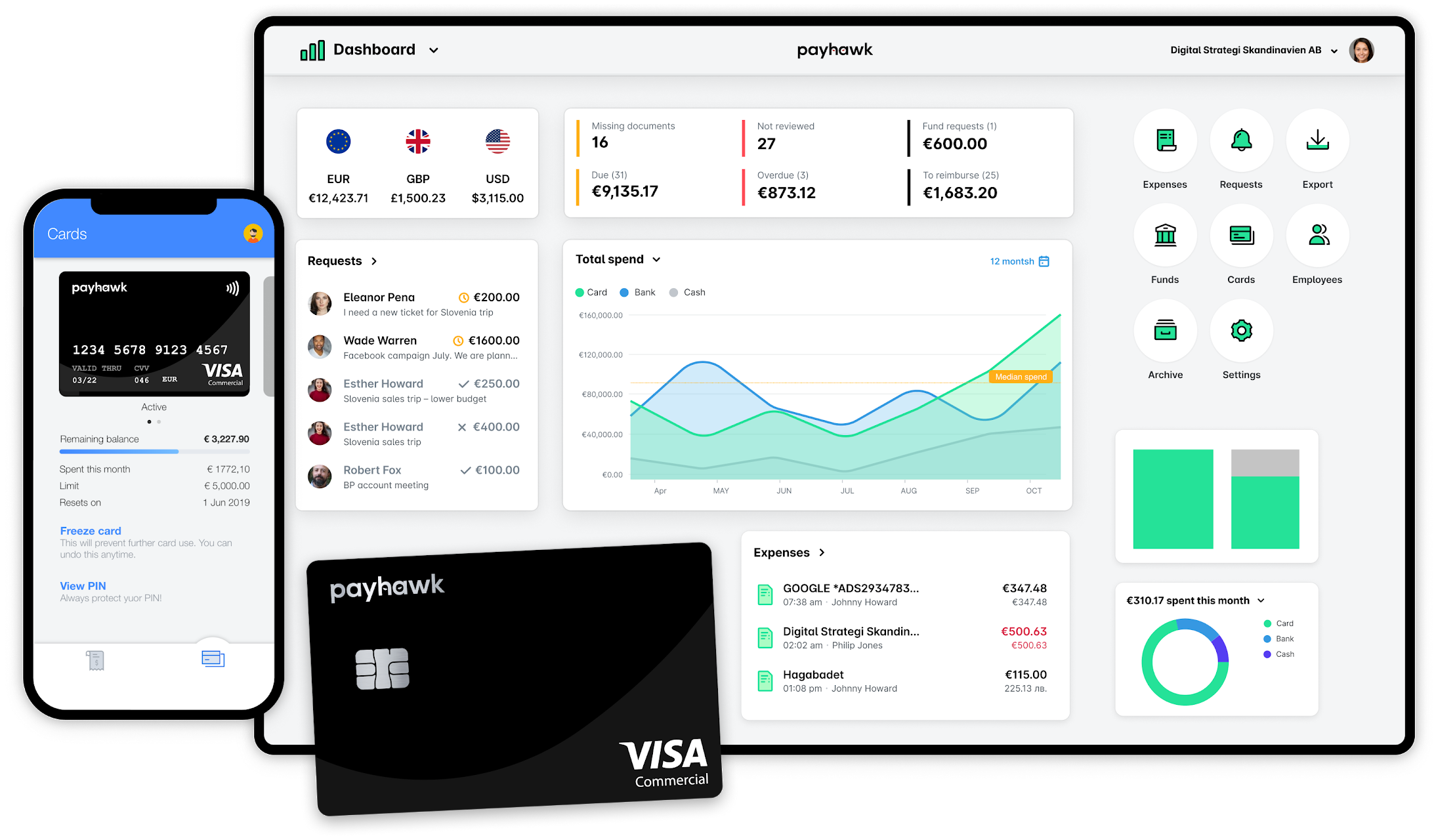
Payhawk, the platform for payments and expense management, has raised $20 million. The Series A round is led by the US-based fund QED Investors, which has a strong track record of investing in 18 fintech unicorns, including Klarna and Nubank. Existing investor Earlybird Digital East, who led the $3.6 million seed round in March 2020, is also contributing fresh capital. Yusuf Ozdalga will join the Payhawk board alongside existing investors Mehmet Atici from Earlybird Digital East and Vassil Terziev from Eleven Ventures.
Currently, finance teams use multiple disconnected tools for payments, invoices and expense management. Payhawk acts as a one-stop-shop, combining these key elements, and closing the gap between banks and ERP (Enterprise Resource Planning) systems. As a result, Payhawk empowers finance teams to reduce manual work, keep tight control of budgets in real-time, and fully automate spend across every payment method. Instead of using 5-6 tools across multiple markets, Payhawk delivers a single solution for finance teams that can serve their businesses in 30 countries.
The company has posted 10x growth in 2020, and doubled its revenue in Q1 of 2021. Its customer base consists of a mix of fast-growing and multinational companies including LuxAir, Lotto24, Viking Life, ATU, Gtmhub, MacPaw and By Miles.
The fundraise will enable Payhawk to further expand its product offering and grow its team. The company will expand coverage for businesses outside the EU and UK; add new payment products including credit cards; and support additional currencies with industry leading FX rates. Payhawk will also work to streamline the cash flow from existing bank accounts to Payhawk to provide unlimited spending capabilities for finance teams. The company will also accelerate its use of AI and machine learning, in order to introduce smart workflows, and to reduce the need for manual review and approval. The company plans to triple its marketing and sales team in 2021, in order to increase presence in the UK, Germany and Spain.
Yusuf Ozdalga, QED Investors says, “We are delighted to invest in Payhawk. The company is growing at a phenomenal rate. The company’s product fundamentals are exceptionally strong, and industry trends are working in the company’s favour too. As budgets are more typically managed online by remote teams, there is unprecedented demand for cost-effective finance solutions. We look forward to working with Hristo and the team”
Payhawk CEO and founder Hristo Borisov says, “We have huge ambitions for the year ahead. Over the next year, we are keen to provide great support to finance teams across 30+ countries to manage company cards, invoices and payments in a unified and efficient way. We plan to significantly expand our integrations to existing ERP systems, and also easily connect on top of every business bank account across Europe and beyond. To do this, we need to invest in building the right setup and team to scale further, and the new funding round will enable us to do this”
- 01:00 am

The Consumer Financial Protection Bureau (CFPB) today issued an interim final rule in support of the Centers for Disease Control and Prevention (CDC)’s eviction moratorium. The CFPB’s rule requires debt collectors to provide written notice to tenants of their rights under the eviction moratorium and prohibits debt collectors from misrepresenting tenants’ eligibility for protection from eviction under the moratorium. The CDC has established the eviction moratorium to protect the public health and reduce the spread of the virus. Debt collectors who evict tenants who may have rights under the moratorium without providing notice of the moratorium or who misrepresent tenants’ rights under the moratorium can be prosecuted by federal agencies and state attorneys general for violations of the Fair Debt Collection Practices Act (FDCPA) and are also subject to private lawsuits by tenants.
“With COVID-19 killing hundreds of Americans every day, kicking families out into the street during this pandemic may literally be a death sentence,” said CFPB Acting Director Dave Uejio. “No one should be evicted from their home without understanding their rights, and we will hold accountable those debt collectors who move forward with illegal evictions. We encourage debt collectors to work with tenants and landlords to find solutions that work for everyone.”
Nearly 9 million households are behind on their rental payments. Tens of thousands of renters are being evicted every week, often without being told of their rights under the CDC moratorium. As the CDC has found, tenants who are evicted may end up homeless or in crowded or shared living settings, increasing their vulnerability to COVID-19 and the risk of the disease spreading throughout communities. Such evictions can have long-term health, financial, and social consequences for families and children.
CDC Moratorium
A temporary eviction moratorium ordered by the CDC has been extended through June 30, 2021. The CDC order generally prohibits landlords from evicting tenants for non-payment of rent, if the tenant submits a written declaration that they are unable to afford full rental payments and would likely become homeless or have to move into a shared living setting. This prohibition applies to an agent or attorney acting as a debt collector on behalf of a landlord or owner of the residential property.
Tens of thousands of tenants and families are evicted every week, many of whom would have had a right to stay in their homes if they had given their landlord a completed CDC eviction moratorium declaration. According to a recent Government Accountability Office report, tenants facing eviction may be unaware of the moratorium or may not understand the steps they must take to act on its protections. Declarations can be submitted in languages other than English, and alternative forms are available online.
New Tenant Protections
Under the FDCPA interim final rule, debt collectors, including attorneys, seeking to evict tenants for non-payment of rent must provide tenants who may have rights under the CDC order with clear and conspicuous written notice of those rights. The notice must be provided on the same date as the eviction notice, or, if no eviction notice is required by law, on the date that the eviction action is filed.
Debt collectors must provide the notice in writing. Phone calls or electronic notice such as text messages or emails are not sufficient. The CFPB is providing debt collectors with sample language to satisfy the rule’s disclosure requirements.
Failure to provide the required notice to tenants is a violation of the FDCPA. The FDCPA provides a private right of action against debt collectors, and violators can be held liable for actual damages, statutory damages, and attorney’s fees. Class actions may be brought under the FDCPA.
Some states and localities have adopted their own eviction moratoria. Debt collectors may also be required to provide notice of these moratoria. The CFPB’s rule does not preempt more protective state law.
There are additional resources available to help struggling renters impacted by COVID-19. Congress has created the Emergency Rental Assistance Program, administered by the U.S. Department of Treasury. This program provides assistance through state and local government to help tenants catch up on missed payments to avoid eviction. Applicants must apply through their local programs.
The National Low Income Housing Coalition has a directory of state and local rental assistance programs that renters can use to find their local programs. Landlords may also be eligible for funds under the Emergency Rental Assistance Program. The pandemic’s health and economic crises threaten families and communities across the nation. According to the CFPB’s analysis and other data:
- Millions of families are at risk of being evicted: In December 2020 about 18 percent of renter households were behind on their rent, which means nearly 9 million households at risk of eviction. In a typical year, there are about 900,000 evictions nationwide. Over 27 percent of households with annual income under $25,000 were behind on their rent.
- Stopping evictions saves lives: Research shows that COVID-19 infection rates and mortality rates were higher when eviction moratoria were removed. The CFPB’s rule will help ensure that more renters are able to take advantage of their protections and avoid eviction.
- Evictions increase racial inequality: Black and Hispanic households are more than twice as likely to be tenants than white households, and they are also twice as likely to be behind on rental payments as of December 2020, according to a March CFPB report. Evictions impose substantial costs on individuals, families, and children, and having an eviction on your record can make it much harder to find a new rental property. Even an eviction filing can make it impossible for a family to locate new housing.
The CFPB has authority under the FDCPA to “prescribe rules with respect to the collection of debts by debt collectors.” Attorneys who engage in eviction proceedings on behalf of landlords or residential property owners to collect unpaid residential rent may be “debt collectors” as defined by the FDCPA. Given the urgency of the pandemic crisis, the Interim Final Rule will take effect on May 3, 2021. The CFPB believes this will give debt collectors time to come into full compliance. Debt collectors may begin complying with the rule before the compliance date.
- 01:00 am

Already named as the UK’s number one automotive franchise and sixth best opportunity overall for 2021, Snap-on Tools now adds another award to its already impressive collection. The ‘HSBC Elite Franchise Exceptional Performance Award 2021’ was presented at a virtual ceremony in March.
All 100 franchise brands that made the now prominent ‘EF100’ list were eligible for the award. But demonstrating over a century of success, dedication to its franchise network and continued commitment to innovation, Snap-on stood out to the judges.
“We’re incredibly proud to have Snap-on Tools as the first ever recipient of the Exceptional Performance Award,” said Andrew Brattesani, Head of UK Franchising at HSBC. “We chose Snap-on as a business that has been exceptional for so long and one that is still demonstrating strong innovation and support for its franchisees to enable them to be successful operators. And this really has come to the fore in the current crisis. Massive congratulations to the whole team.”
The EF100, established in 2017 in association with HSBC, is the franchising list to watch. It recognises the sector’s brightest businesses and ranks them according to a broad range of criteria; from their financial performance and heritage, to their contribution to the community and the way they embrace innovation.
The franchise industry contributes over £17billion to the UK economy and more than 700,000 people are employed in franchising across the country. Despite a difficult economic climate, the last 12 months has seen franchise brands like Snap-on Tools survive and thrive thanks to their robust infrastructures and proven business models.
“This award truly demonstrates that Snap-on Tools has performed exceptionally and has shone out amongst any other brand in HSBC's eyes,” said Scott English, Brand Director of Elite Franchise.
Snap-on UK Franchise Manager, Lisa Law, took delivery of the prestigious award at the brand’s UK head office in Kettering. “In the last few months, we’ve been named Franchisor of the Year by the British Franchise Association and number one automotive and van-based franchise in the EF100. This latest award really does show that the effort and passion we channel into supporting our franchisees is industry-leading and makes a difference. The award isn’t down to any one person, it’s an absolute team effort and we couldn’t be prouder.”
In the first quarter of 2021 alone, Snap-on welcomed seven new franchisees into its already 400-strong UK network. In response to the global pandemic, the brand moved its US training to a dedicated, covid-secure location in the UK and new franchisees are currently averaging healthy sales each week. Thanks to ongoing marketing and support initiatives, sales to customers for the UK franchise network as a whole are up for Q1.
For more information about the Snap-on Tools multi-award-winning franchise opportunity, visit www.snaponfranchise.co.uk.
- 06:00 am
The leading FinTech-powered commodities trade enabler TradeFlow Capital Management (TradeFlow) have incorporated the eBL solution from Bolero’s newest technology platform, Galileo, into its suite of digital trade solutions, future-proofing their digital trade services.
TradeFlow leverage Galileo as the platform delivers greater functionality and seamless integration with banks and other third-party systems, providing end-to-end visibility to corporate clients and banks, and supports the world’s largest, carriers, corporates and financial institutions.
Collaborating with Bolero on the Galileo platform has allowed industry-leading firms like TradeFlow Capital Management (TradeFlow) to offer access to a broader range of shipping and trade counterparts for the SME Commodity firms TradeFlow supports via its innovative trade enabling fund solution and to meet its ESG goals more effectively and efficiently.
Andrew Raymond, CEO of Bolero says: “TradeFlow has been a valuable partner to Bolero over the years with our shared goals of optimizing trade through digitisation, reducing processing times whilst increasing clarity for end-users. TradeFlow have been a key advocate of Bolero’s solution in the SME market as they continue to promote the tangible benefits brought forth by trade finance digitisation.”
Says Tom James, CEO and CIO of TradeFlow: “ Since our USD Trade Flow Fund’s executed the world’s first floating storage Diesel cargo transaction on the platform in November 2018, utilising Bolero’s electronic Bill of Lading solution, TradeFlow has supported hundreds of SME clients globally, transacting in over 26 types of commodities with over US$500m dollars of trade, with all the benefits of digitisation, including a lower carbon footprint in effecting these trades. TradeFlow is proud to be one of the fore-runners leveraging on Digitalisation for our industry in partnership with Bolero.”
John Collis, CRO of TradeFlow adds: “It’s all about the network effect; it is important for TradeFlow to offer as much connectivity as possible to shippers and counterparts. SMEs are a sector particularly affected by the COVID-19 crisis. TradeFlow is pleased that we can provide our SME customers more and more access to Digitalised trade solutions that help increase trade and reduce economic hardships brought about by higher-risk systems.”
- 04:00 am

Daniel Carpenter, Head of regulation at Meritsoft, a Cognizant company:
“The Treasury’s proposals are very positive for the UK’s finance and banking industry. With exciting, bold, and innovative measures outlined, there’s a real opportunity for leaders in capital markets to direct this creative energy to some of the areas where innovation has traditionally lagged behind – in post-trade, for example. Whether it’s the low-tech and costly processes associated with onboarding and KYC, brokerage fees, trade settlement failures or transaction taxes, under investment has left a legacy of expensive inefficiencies in post-trade which are in need of attention.”
“We’ve seen an uptick in interest in blockchain as a solution to reduce the number of settlement fails – in particular after the GameStop incident. The proposed financial market infrastructure sandbox for digital innovation could go a long way to developing this and other technology-driven solutions, such as cloud and data digitisation and AI, to resolve a range of post-trade challenges. The UK financial services and banking industry has a chance to lead the way on improvements to global standards in post-trade processes but boards must prioritise this to avoid post-trade being left behind the front office and those operating in the primary markets.”
- 05:00 am
Legal professionals say the estates administration process is ‘slow and inefficient’ and is causing stress and frustration for them and their clients and they want to find a solution – that is according to the latest research from digital probate platform Exizent.
The vast majority of legal professionals (88%) say the probate process is ‘slow and complicated’ while more than half (52%) admit the time it takes to complete probate is unreasonable. Almost eight in ten (78%) say waiting on asset information from financial institutions is a major cause of delay, with 31% saying this is the single main cause; most (53%) have to wait at least four weeks for asset and liability providers to respond. It is also the number one cause of client stress.
Almost two thirds (64%) say their clients become stressed by the probate process with many needing emotional support from someone within the firm. When asked for the top cause of client stress, almost two thirds (64%) said delays from financial institutions and asset holders - twice as many as who said family disputes and almost three times the number who said unexpected costs.
Frustrated by archaic practices
While one in four legal firms are resigned to the fact the estates administration process doesn’t work as efficiently as well as it should, 75% think there are things that could be done to improve it.
When asked what they think would make the process easier for themselves and their clients, 44% of law firms said better communication and relationships with financial institutions, 49% said an easier asset discovery process and 41% said better technology.
However, just 15% of law firms use dedicated probate software. But, this is more down to a lack of awareness than a lack of willing, as most of those that don’t have software (and don’t outsource probate work), said it was either because they were not aware of any dedicated solutions or they had ‘not thought about it before’. All firms surveyed said investment in tech is one of their top 5 priorities for the next 12 months, with 22% saying tech is their number one priority and almost two thirds (64%) of said they would consider a dedicated platform for managing their probate.
Nick Cousins, Founder and CEO of Exizent said:“Communication between executors, financial institutions and law firms is a vital part of the probate process but has been overlooked for some time. The Bereavement Index re-enforces this, with 44% of firms highlighting that better communication would improve their day-to-day work. We believe the administrative tasks facing families after the death of a loved one should be far easier, and that modern technology solutions and services can make this a reality.”
Exizent is building the first ever platform that connects data, services and the network of people involved when someone passes away, making it easier for legal services firms and institutions to work together, making their own processes more efficient and removing the burden from the bereaved.
Cousins continues: “We also believe in the power of platforms to connect people better and perform repeatable tasks efficiently, quickly and securely at scale. That is why we have created a dedicated platform for probate professionals, to help them make their processes more efficient which will ultimately relieve the emotional and financial burden that administering estate has on the bereaved.”
- 02:00 am

The West Midlands has today (Monday 19 April 2021) cemented its place as a strategically significant hub for levelling up FinTech in the UK with its appointment to the FinTech National Network – the UK’s first network connecting FinTech hubs and supporting nationwide financial innovation.
The FinTech National Network brings together regional clusters up and down the country to encourage collaboration and amplify the collective voice of the UK’s FinTech sector. The network facilitates mutually beneficial initiatives across skills, talent, capital and investment, as key enablers for growing the UK’s FinTech capabilities.
Spearheading the West Midlands’ presence on the Network is SuperTech – the UK’s first professional services technology (ProfTech) supercluster designed to showcase the talent, innovation, and investment potential of the West Midlands’ rapidly emerging expertise in FinTech, LegalTech, PropTech and InsurTech.
Charlotte Crosswell, CEO at Innovate Finance – the body behind the Network – said:
“We are delighted that SuperTech is joining the FinTech National Network and look forward to working with the West Midlands, alongside the other Network members, to drive the domestic FinTech agenda in the UK."
“The UK is a global FinTech leader and a highly attractive destination for investment, but in order to retain its position, it is important to leverage the collaboration between the various centres of excellence that are thriving across the country.”
The membership builds on recent recognition of the region’s FinTech scene at a national policy level in the independent Kalifa Review, which highlighted how regional hubs – including the West Midlands – could ‘level up’ the UK’s FinTech economy to preserve the country’s reputation as a global financial powerhouse.
The region’s eligibility to rebalance and advance the sector is already evident, with high-profile institutions from the UK’s traditional financial heartland in the capital attracted to explore the benefits of coworking with West Midlands industry leaders.
March 2021 saw the City of London Corporation join forces with SuperTech to harness the rising potential of modern services innovation underway in the region, of which FinTech is an integral element.
The agreement will see the two bodies work closely to promote West Midlands professional, financial and technology firms on a national and global scale, to ensure that the UK remains the FinTech capital of the world.
Hilary Smyth-Allen, Executive Lead at SuperTech, said:
“We launched SuperTech in January 2021 with the sole purpose of shining a spotlight on the strength of the West Midlands’ burgeoning community of tech-led professional and financial services expertise, as the exemplar of how UK regions hold the key to unlocking emerging sectors vital to the country’s economic future.
“We are eagerly awaiting a formal response from Whitehall outlining the industry’s future policy direction, and in the meantime continue to champion our region’s ProfTech potential as clear evidence of ‘levelling up’ in practice.”
In response to the Kalifa Review, SuperTech has called on Government to enact the recommendations made in the report, which strongly advocated for “a UK FinTech landscape where the whole is greater than the sum of its parts”. Signatories from financial advisors Wesleyan and startup incubator MillionLabs – both SuperTech’s FinTech leads – alongside the Greater Birmingham & Solihull Local Enterprise Partnership (GBSLEP) and the West Midlands Growth Company, have written to Treasury offering the region’s collective support to shape the sector’s future policy agenda.
The West Midlands’ growing influence is swiftly gaining momentum, turning heads of typically London-centric financial heavyweights.
Significantly, prestigious global investment bank Goldman Sachs announced earlier in April 2021 its plans to establish a major new tech function in Birmingham – it’s largest office investment outside of London creating several hundred jobs.
The investment bank’s decision was the result of a rigorous site selection process, which favoured the city as a strategic location for expansion because of its deep-rooted talent pool and strong leadership in technology and related industries. Proximity to London was an additional advantage.
Neil Rami, Chief Executive of the West Midlands Growth Company – the region’s official promotion agency - said:
“Goldman Sachs’ investment undoubtedly cements the West Midlands’ prominence on a global scale; it is powerful affirmation of our region’s appeal to the aspirations of the world’s most iconic, multinational financial services brands and the talent they seek to attract. As the outcome of a meticulous review of the UK’s digital employment base, it is another resounding endorsement of our best-in-class talent from the technology and finance sectors.”
The West Midlands is the metropolis for Business, Professional and Financial Services activity (BPFS) activity outside the capital, contributing £27.8 billion GVA annually to the UK economy and employing 358,200 people. FinTech alone is worth £411.7 million per annum to the local economy and boasts a collective workforce of 7,375 people across 122 companies, within a wider ecosystem of over 12,500 tech and digital organisations.
Among the region’s FinTech residents is the leading mobile payment specialist, PM Connect – an award-winning provider of in-demand content monetised through Direct Carrier Billing (DCB).
Founded in Birmingham in 2012, PM Connect has grown to process over 10 million payments a month, with a reach of one billion consumers around the world. February 2021 saw the company expand into the increasingly popular cloud gaming market, launching a ground-breaking partnership with gaming provider RemoteMyApp to offer subscribers using its streaming platform, Vortex, access to over 165 top tier hi-spec games on their mobile phones, without a console.
Initially partnering the product with Mobile Network Operators (MNOs) in France, Belgium, Spain and South Africa, the subscription package marks the first mobile deal of its kind within these territories and has the potential to be rolled out with other carriers across the globe.
CEO James MacFarlane, who started the Birmingham business straight out of university, said:
“As we continue on our ambitious growth journey, we are proud to be carving out PM Connect as a Birmingham-based global business.
“PM Connect is now active in 40+ territories, processing 10 million payments every month, with five offices around the world but the West Midlands remains the best location for us to be headquartered – offering both the tech talent to support planned growth and a vibrant place to work for our dynamic, driven team.”
Also counted among the region’s FinTech community is pension administration technology provider Delta Financial Systems, accountTech leader BlackLine and Parisian Artificial Intelligence order-to-cash firm Sidetrade, which last year opened a new Tech Hub in Birmingham’s City Centre and announced £12 million in R&D investment over a 24-month period, supporting around 100 engineers.
Find out more about FinTech in the West Midlands: https://investwm.co.uk/sectors/tech-creative-services/fintech-companies/