
Published
- 03:00 am

Cohesity, a leader in AI-powered data security and management, today announced that Indra Nooyi, Jim Snabe, Ken Denman, and Tami Erwin have joined a newly formed CEO Advisory Council. This group of well-respected and deeply connected industry leaders will help guide Cohesity’s CEO and executive staff, as Cohesity expands its ambitions as a leader in AI-powered data security and data management. As strategic advisors, they will offer business insights to the CEO of Cohesity that inform and influence the company’s strategy and success.
“I am honoured and humbled that these incredible leaders have agreed to provide their strategic expertise, as we scale Cohesity to new heights,” said Sanjay Poonen, president and CEO, Cohesity. “I have had deep respect for all of these leaders over the many years I have known them, as friends and mentors to me. They are some of the best leaders in the industry. Today, data is a uniquely valuable resource that can be a significant advantage. Protecting our customer’s data, and providing insights into it, is our core mission, with a set of ground-breaking technologies in AI, Security, and Cloud. I believe the advice and insight provided by Indra, Jim, Ken, and Tami will help us advance our strategies and scale our business globally.”
The newly formed Cohesity CEO Advisory Council will advise the Cohesity CEO and executive team on trends and emerging opportunities - providing thoughtful insights on driving innovation and engaging with enterprise customers and industry leaders.
The council is comprised of the following leading industry experts/The council comprises the following leading industry experts:
- Indra Nooyi: Former Chair and CEO of PepsiCo. Current Board Director at Amazon, Philips, and the International Cricket Council. Named in the Top 10 of the Fortune Most Powerful Women List, for several years.
- Jim Snabe: Chairman at Siemens and Northvolt. Current Board Director at C3.ai. Former Co-CEO of SAP. Member of Board of Trustees of World Economic Forum.
- Ken Denman: General Partner at Sway Ventures. Current Board Director at Costco, VMware, and Motorola Solutions. Former CEO of iPass, Openwave, and Emotient.
- Tami Erwin: Former CEO & EVP of Verizon Business. Current Board Director at John Deere and York Space Systems, a member of Aptiv’s Strategic and Technology Advisory Council, and an Operating Partner at Digital Gravity. Named in Fortune's Most Powerful Women List.
“All enterprise organisations survive and thrive on their ability to manage, secure, and understand data. Anything that compromises that ability can not only limit opportunities for expansion and growth, but can also thwart a thriving economy,” said Nooyi. “I’ve had a growing friendship with Sanjay Poonen, and believe in his vision, and as such, I’m excited to join Cohesity’s CEO Advisory Council, as the company continues to grow its AI-powered data-security and management platform.”
Cohesity has a unique position in a market with incredible growth potential, as security, cloud, and AI have become mission-critical imperatives in nearly every board room and organisation. Industries worldwide must secure and manage data in a world of increasing cyberattacks, including ransomware, and at the same time business leaders require faster and deeper insights into data that help them make better decisions.
IDC ranked Cohesity the fastest growing of the Top 25 players in their latest Worldwide Data Replication and Protection Software Market Shares Report, July 2023. Also, CRN®, a brand of The Channel Company, named Sanjay Poonen to its exclusive 2023 Top 25 Innovators list, an annual list that honours the passionate and hard-working technology executives who are supporting, growing, and redefining the IT channel, while also demonstrating their commitment to drive innovation for technology products, solutions and services.
- 05:00 am

Montonio, a fast-growing online payment solutions provider, celebrated its 18-month milestone in Poland, amidst plans to expand its local team, reflecting its commitment to the burgeoning Polish e-commerce sector. Since its successful launch in Poland in March 2022, Montonio has become a trusted choice for merchants, owing to its innovative payment solutions and unparalleled service quality.
“In less than two years since we launched we have experienced an overwhelming interest in Montonio’s services, with an impressive uptick in Polish merchants integrating our platform,” shared Andrzej Bagiński, Montonio’s Poland Country Manager. “Moreover, our localized customer support, along with our competitive pricing structure, further bolsters our appeal in the Polish market. The decision to expand our team as we hit 18 months in the country is a logical step in our business growth strategy and speaks to the successes we’ve already attained in Poland.”
A testimonial from a Polish publisher reinforces Montonio’s impact. Rafał Hatlaś commented: “Thanks to Montonio, our store checkout conversion increased by 28%, and our transaction costs have dropped by 50%. Integration with Montonio enabled us to add BLIK payments as a separate method to our checkout, increasing BLIK usage by over 25%.”
Montonio’s milestones in Poland are noteworthy, with the addition of BLIK, Apple and Google Pay onto its platform standing out as pivotal achievements. Furthermore, one of Montonio’s distinguishing strengths is its high payment conversion rate. For well-established brands with optimized stores, Montonio has facilitated payment conversion rates of up to 97%.
Bagiński added, “Our growth in Poland is a reflection of our broader vision to revolutionize the e-commerce payment landscape. We’re excited about our future endeavors and are confident that our team expansion will further solidify our position in the region.”
As Montonio continues to ascend in the fintech space, the company is gearing up for further announcements, promising to bring unparalleled value to merchants and consumers alike.
- 25.10.2023 -- 11:49 am
Other Videos
- 08:00 am

Room Zero, the provider of specialist software to the asset management industry, has signed a five-year deal with Jupiter Asset Management to consolidate assets under management and flow information into a single dataset.
Assets under management and flow data are typically managed separately by multiple teams in an asset management business. Room Zero’s cloud-based software eliminates duplication of effort and silos, allowing multiple departments across a single firm to work and process common information.
Richard Warrington, co-founder at Room Zero, said:
“We have consolidated over 30 databases into one. Jupiter is now handling data feeds covering mutual funds, hedge funds and segregated accounts on our software. As a result of the work with Jupiter, our software now accommodates sophisticated retail clients, as well as institutional asset managers. It’s great to work with industry innovators like Jupiter.”
Maximilian Guenzl, Co-Head of the Client Group at Jupiter Asset Management, said:
“We recognize that technology is a crucial and differentiating factor in an asset manager’s ability to deliver a seamless and high-quality experience for clients. This is particularly important as the needs of wholesale and institutional clients converge. As we continue to develop our business to better serve our clients’ evolving needs, we welcome Room Zero as a partner.”
- 06:00 am

With all eyes on the future of open banking, merchants, banks and payment providers are convinced that Variable Recurring Payments (VRPs) will unlock widespread benefits, provided the industry works together to create the market conditions that are needed for success. These are the findings detailed in a new survey report published today by leading account-to-account (A2A) payment infrastructure provider, Token.io, and Open Banking Expo.
The results of ‘The future of Dynamic and Variable Recurring Payments’ research point to an industry that is now fully cognisant of the benefits of commercial VRPs (often called non-sweeping or premium APIs). Indeed, when asked to compare the benefits and disadvantages of commercial VRPs against other payment types, respondents said commercial VRPs come out on top in virtually every category. Frictionless user experience is believed to be a key driver of consumer adoption. The element of control is another important factor, with respondents saying the ability for users to set a maximum individual payment amount is the most useful parameter.
For merchants, appetite and enthusiasm are picking up as 60% said they will actively seek to convert card payments to VRPs, with faster settlement of funds and greater reliability seen as key benefits. Merchants also noted the potential for lower cost of processing than cards. 33% of merchants said they want to convert Direct Debits to VRP, although a common concern was that costs could be higher, given the relatively low cost of Direct Debit.
The report does, however, highlight a potential stumbling block to adoption. While virtually all banks surveyed believe they are likely to benefit commercially by offering VRPs, in reality there is still very limited bank coverage (with the exception of NatWest, who Token.io announced a VRP partnership with last October). The belief in VRP’s potential must, therefore, be translated into reality through accelerated bank commitment to test and then scale VRP. While a comprehensive multilateral framework or agreement may be developed in future, it is crucial that commercial VRPs be first tested and proven across all of the UK’s large retail banks through pilot exercises.
“Our research reinforces our conviction that commercial VRPs are seen as a faster, more secure, convenient, and cost-effective alternative for recurring payments. Banks believe they will benefit commercially by offering VRPs, and merchants are planning to add VRP as an alternative to card payments,” comments Todd Clyde, CEO of Token.io. “But clearly work is needed to incentivise further adoption and create the market conditions needed for VRP to become a reality. Our report, and the conversations we heard at Open Banking Expo last week, all point to the need for greater bank coverage to allow merchants and PSPs to offer their customers a superior form of payment.”
An overwhelming 90% of survey respondents said they think contractual frameworks should be standardised for commercial VRPs, and a further 70% believe that a fee structure should be introduced. There was also consensus that the UK requires a similar approach to Europe’s SEPA Payment Account Access (SPAA) scheme.
“What has kept VRP firmly in the spotlight is regulation,” comments Ellie Duncan, Head of Editorial and Broadcast at Open Banking Expo. “The JROC VRP Working Group is now working on a blueprint for a scalable implementation of commercial VRP, with pilots expected to begin next year. Once this is underway, I’d like to think the pace of adoption will pick up.”
When asked which use case the JROC pilot should prioritise, the industry firmly believes e-commerce payments offer the most potential. This sentiment was echoed during a panel debate at Open Banking Expo with representatives from the Payment System Regulator, Financial Conduct Authority, NatWest, Tink and Token.io.
“We see a huge amount of interest in VRP for e-commerce from both merchants and payment providers,” said Charles Damen, Chief Product Officer at Token.io during the panel discussion. “As the JROC VRP WG continues its work to build a vision and plan that will, ultimately, help the industry scale commercial VRP, I would like to see TPPs, banks and merchants collaborate and iterate to get VRP pilots off the ground before the second half of next year.”
“Other jurisdictions are already developing similar capabilities and schemes for premium APIs,” adds Clyde. “In Europe, for example, the introduction of the European Payment Council’s SPAA scheme is creating a foundation for banks and other players in Europe to go beyond the broad directives outlined in PSD2 and create ‘premium’ open banking services, such as Dynamic Recurring Payments, which are analogous to VRP. Such developments could put the UK at risk of losing its position as a leader in open banking and payments innovation, so it’s important the industry acts now to unlock the opportunities that are ready to be realised.”
- 06:00 am

Higher loan rejections and limited traditional affordability checks are impacting Brits’ ability to access credit to help make ends meet, according to new research from Tink, the market leader in open banking.
Findings from a survey of 1,000 UK borrowers - those who hold either a mortgage or loan - suggest that a significant number of Brits today need to find a way to bridge the gap between income and expenditure each month.
With nearly one in three (29%) respondents running out of money before the end of each month, many are using credit (25%), instalment or delayed payment options (23%), and loans (16%) to cover essential costs.
Lenders seeing defaults rise as consumers struggle with cost of living
However, Tink’s accompanying survey of 200 UK lenders, including mainstream banks, shows a continued squeeze on consumers’ finances. While many people are turning to credit to make ends meet, more people are finding it difficult to qualify for loans, with 58% of lenders surveyed noting a greater number of rejected applications due to people not meeting the affordability criteria.
This means that some struggling consumers, who may desperately need access to loans, are going to greater lengths to try to secure borrowing.
● More than one in ten (12%) say that when refused a loan, they have reapplied with a different lender.
● An estimated one in ten (9%) borrowers say they have exaggerated their income in their application.
● 9% say they have underreported their monthly outgoings when applying for finance.
● 8% have sought a loan from an unregulated lender because they couldn't secure a loan elsewhere.
● 35% of lenders have seen a rise in application documents being edited.
Tasha Chouhan, UK Head of Banking and Lending at Tink, said: “With many traditional credit checks making it difficult for people to gain access to loans, those who most need financial support are resorting to desperate measures. By prioritising investments in data-driven lending models, lenders can make more informed credit decisions to widen credit access to those who can afford it, while protecting struggling borrowers from getting into financial distress.
Lenders prioritising robust affordability checks
Perhaps as a result, an estimated 82% of lenders believe the cost-of-living crisis makes affordability checks more important than ever and 77% acknowledge the need to improve their risk decisioning models to give the most accurate view of people's finances.
Data driven tools key to helping lenders manage affordability and fraud issues
Data-driven risk assessment models give financial services providers, with consumer consent, the ability to view transaction data in peoples’ bank accounts. This enables
a holistic approach to gathering insights on income and spending behaviours to inform creditworthiness and affordability – increasing financial inclusion and access, while removing unfair barriers to lending encountered by certain consumer cohorts such as those who have irregular income from multiple sources.
Traditional credit checks combined with onerous, often paper-based processes to provide evidence of expenditure and income levels can be time consuming, out of date and end in higher abandonment or rejection rates.
Encouragingly, the vast majority of lenders (84%) surveyed recognise that data-driven risk assessments are key to ensuring they can accurately assess a borrower's ability to afford repayments.
And many lenders are already investing in new data-driven digital tools to enhance their lending models. For example:
Use case | Already upgraded | Currently upgrading |
Data-driven affordability checks to analyse how a loan will fit into the consumer's budget | 47% | 42% |
Digital income checks based on the applicant's bank transactions data | 43% | 42% |
Anti-fraud checks | 49% | 39% |
Enhanced insights on the applicant's risk exposure to predict default earlier in the process | 40% | 44% |
Enhanced tools that allow them to see particular expenditures such as rent, loans, BNPL, credit cards, which may not be reflected in credit bureau records | 44% | 40% |
Fintech partnerships overcome barriers to adoption of data-driven technologies
An estimated two-thirds (68%) of lenders believe that third-party support is essential to improve their lending models.
And as it stands today, an estimated 43% of lenders are already investing more in fintech partnerships to enhance digital affordability checks as part of their credit underwriting process, while 36% are investing more in fintech partnerships to enhance open banking.
Tasha Chouhan continued: “With squeezed budgets and limited internal resources, partnering with a trusted fintech offers lenders a reliable and cost-effective way to make important upgrades to their processes. By embracing data-driven technologies, lenders can ensure they are protecting themselves and their customers today, while future-proofing their models. And we’re seeing this happening now all across Europe. We’ve already helped lenders make better and faster decisions on more than 7 million consumer loan applications in the last year, and we expect to see this double in the next six months.”
- 03:00 am

The share of "mixed" P2P platforms accounts for 55% of the European market. While consumer lending and business are leading the way by segment, agricultural platforms are actively gaining traction.
The segmental structure of the European P2P market has changed slightly from 2017 to the present, but the key roles have held their ground.
The “mixed” P2P platforms covering consumer, business and real estate sectors remain leaders*. However, compared to 2017, their investment volumes decreased by 12%.
The consumer and business segments round out the top three. “Business segment is predominantly featured by the highest volumes, but it is prone to large fluctuations. This is most likely caused by the seasonality factor”. - Robocash analysts comment.
In terms of average monthly growth, the agriculture & farming segment is developing quite steadily. In October 2020, it reached the maximum historical growth rate of over 300% compared to the previous month. "Overall volumes don't look impressive yet. P2P platforms, for the most part, tend to diversify to expand their investment opportunities. But it's definitely the beginning of an interesting path for the development of P2P lending in general". - specialists add.
* The study included 55 P2P platforms of Consumer Loans, Business Loans, Agriculture & Farming, and Real Estate Loans types with available statistics.
- 09:00 am

Tradeweb Markets Inc., a leading, global operator of electronic marketplaces for rates, credit, equities and money markets, and FTSE Russell, an LSEG business, today announced a strategic partnership to develop the next generation of fixed income index pricing and index trading products.
Expanded Benchmark Pricing. The firms aim to provide next-generation pricing across a broader range of fixed income securities, which will be administered by FTSE Russell as benchmarks. Expanding their existing collaboration on benchmark pricing for UK Gilt and European Government bonds, the objective is to deliver robust, algorithmic, and reliable pricing. The closing prices amalgamate trading activity from Tradeweb’s electronic platform, enabling closer alignment with actual trading levels and intraday pricing. These prices are administered in accordance with the EU and UK Benchmark Regulation and the IOSCO Principles for Financial Benchmarks and can be used as reference rates for a broad range of use cases including trade-at-close transactions and derivatives contracts.
Broad Index Inclusion. In the coming months, Tradeweb and FTSE Russell will continue to collaborate on fixed income pricing sets to extend coverage across multiple regions and fixed income asset classes. Over time, FTSE Russell will explore incorporating Tradeweb pricing into FTSE Fixed Income indices, starting with FTSE World Government Bond Index (WGBI), a flagship index comprised of sovereign debt from over 20 countries and denominated in a variety of currencies.
Enhanced Trading Functionality. Tradeweb seeks to expand and enhance electronic trading functionality for FTSE Russell Fixed Income indices and customized baskets through tools and protocols such as RFQ (request-for-quote), AiEX (Automated Intelligent Execution tool) and Portfolio Trading, offering trade-at-market close, trade-at-month-end and other features conducive to index rebalancing trades. For clients seeking to efficiently express a view on FTSE Russell indices and baskets, providing enhanced trading functionality can help efficiently manage what are often their largest and most critical trades.
Lisa Schirf, Global Head of Data & Analytics at Tradeweb, said: “Tradeweb’s collaboration with FTSE Russell will provide clients with verified benchmarks they can use as reliable closing prices for their end-of-day trading strategies and other purposes. The Tradeweb FTSE closing prices will create a foundation across global Fixed Income markets for consistent end-of-day and intraday prices and is another way we are investing in the electronification of the markets.”
Scott Harman, Head of Fixed Income Indices at FTSE Russell, said: “With our comprehensive suite of sophisticated Fixed Income Indices and a growing need for innovative pricing solutions from our clients, our deeper collaboration with Tradeweb will enable us to bring to market greater tractability and tradability of our indices. We are very excited by the opportunity this relationship will bring and how it has the potential to fundamentally change the Fixed Income ecosystem.”
Trusted reference price data is critical for financial firms to manage investment portfolios, evaluate the fair value of securities, perform compliance, and satisfy general accounting standards. Tradeweb and FTSE recently launched benchmark closing prices for European Government Bonds in May 2023, expanding on Tradeweb’s well-established UK Gilt Closing Prices. Administered in accordance with the EU and UK Benchmark Regulation and the IOSCO Principles for Financial Benchmarks, Tradeweb FTSE Euro Government Bond Closing Prices are available from Tradeweb and provide end-of-day reference prices for Euro-denominated nominal bonds issued by Austria, Belgium, Finland, European Union, France, Germany, Greece, Ireland, Italy, Netherlands, Portugal and Spain.
- 09:00 am

Bud Financial (Bud), a leading AI-powered data intelligence platform for the financial services and banking industry, announces its partnership with the student financial wellbeing platform Blackbullion.
Using Bud’s Assess and Engage solutions, Blackbullion will make it easier and faster for students in need to apply for additional funding, including support funds, scholarships and grants from their place of study and third-party organisations, through the Blackbullion platform. Blackbullion will also integrate Bud’s deep financial insights into the first financial literacy and wellbeing app built for students, to equip students with the money management skills they need to gain control of their financial lives.
Partnering with over 60 universities and colleges across the UK, Ireland, New Zealand, Australia and South Africa, Blackbullion is the financial wellbeing platform and app equipping students with money skills for life. The platform also houses the UK’s largest hub of support funds, scholarships and grants for students. For those of Blackbullion’s partners using the Funds Management System (FMS) to manage an unlimited number of support funds, eligible students can apply for these directly through the Blackbullion platform. This process, however, often requires students to submit bank statement-related evidence, as proof of their eligibility, which has historically required long and laborious manual downloading of bank transactions, which are both time-consuming and limiting, and can often mean students wait months to receive funds, adding significant pressure to students who are already feeling stressed by their financial situation.
Using Bud’s Assess solution, Blackbullion is giving students the option to connect their bank account to their application so this evidence can be automatically pulled in. This saves the student significant stress and time – meaning they can now provide this evidence in just three to five minutes, whereas it was previously taking an average of 40 minutes per bank account. It also saves Blackbullion’s staff time by reducing the need for back-and-forth communication with students if something is missing from this evidence being provided manually. So far, nine in ten students who have been offered the option to use Bud’s Open Banking to provide this evidence automatically have chosen to do so.
In addition, Bud is also supporting Blackbullion to drive efficiency in its personal finance app designed specifically for students. The Blackbullion app is a personalised budgeting tool designed to help students put their financial skills into practice and make their money last until the end of the term. It uses Bud’s open banking and transactional AI solution to project students’ future finances based on their current trajectory. It also provides real-time insights into their spending and suggests areas where they can save. This brings a more proactive approach to supporting students' financial wellbeing in the long term, and it can also significantly reduce the pressure students face, as they navigate the uncertainties of financial independence during university.
According to Blackbullion’s Student Money & Wellbeing Report for 2023, two in five students are worried that money is negatively impacting their optimism about the future – the biggest concern being the rising cost of living, with 78% of students showing grave concern. Blackbullion is now embedding Bud’s advanced AI and data enrichment capabilities to generate superior and more accurate spending insights, encouraging students to build financial literacy and resilience.
Blackbullion works with some of the UK’s leading universities, such as the London School of Economics, Imperial College, the University of Reading, and Liverpool John Moores, supporting both their staff and their students.
“Through our research we know that the current cost of living crisis has made students more concerned about their financial wellbeing than ever. That’s why we’re thrilled to partner with Bud to support students’ financial wellbeing, whether that be via consistent financial education through our newly launched app, or when applying for additional funding through our financial wellbeing platform. Ultimately, this partnership will enable faster, easier, and more accurate funding application processes – making sure students can access funds when it matters.”, says Vivi Friedgut, Founder and CEO of Blackbullion.
“One of our core focuses here at Bud is to improve the financial wellbeing of individuals, and what better place to start than with young people and university students embarking on their journey of financial independence. That’s why we’re incredibly excited to work with Blackbullion and deploy our data intelligence and advanced AI capabilities to spark financial resilience and financial success for tomorrow’s workforce. We generate a multitude of customer insights and dynamic financial breakdowns that equip universities, colleges and higher education providers with the right tools to make processing financial applications faster, fairer and just easier”, says Ed Maslaveckas, Co-Founder and CEO of Bud Financial.
- 02:00 am
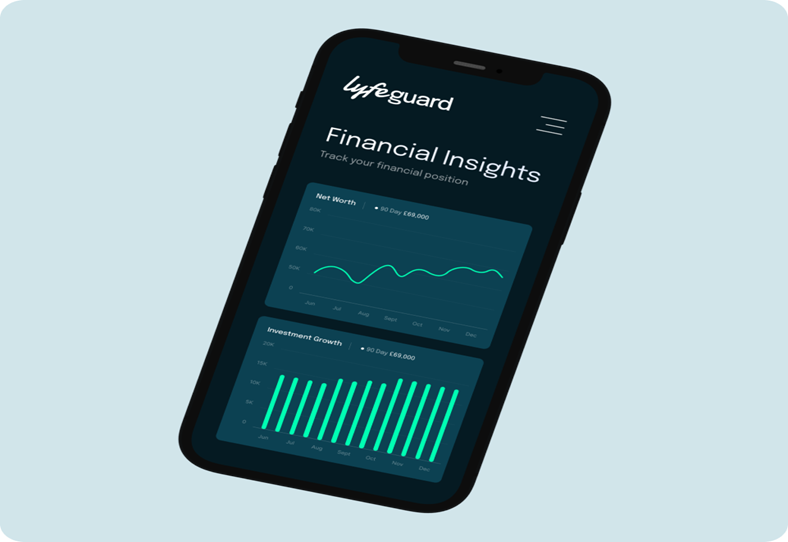
Lyfeguard, the leading digital platform for comprehensive life planning, has partnered with Moneyhub, a data & intelligence platform, to deliver a 360-degree, real-time view of personal and financial information.
The partnership leverages Moneyhub's expertise in open finance, covering banks, loans, mortgages, and more, to automate information entry on the Lyfeguard platform. For individual users, this means a full view of their life and financial situation in an instant.
For Independent Financial Advisers (IFAs), the integration offers a full view of their clients' financial landscapes, enabling more informed decision-making and tailored advisory services. This dual approach ensures that both individuals and their financial advisers benefit from a seamless and comprehensive life planning experience.
The partnership will bolster Lyfeguard’s ability to consolidate personal information and enable end-of-life preparations, tailored for both individuals and financial advisers.
Fraser Stewart, Chief Commercial Officer at Lyfeguard, commented: “Our partnership with Moneyhub is a testament to our commitment to serving both individual users and the financial advisory community. By streamlining information entry and offering real-time insights, we're ensuring that everyone, whether planning for themselves or assisting clients, has access to the most relevant and up-to-date information.”
Kim Jenkins, MD – API at Moneyhub, said: “Lyfeguard's vision resonates with ours. Their dedication to both individual life planning and empowering financial advisers aligns seamlessly with our open finance capabilities. This collaboration is set to redefine how life planning is approached.”








