
Published
- 02:00 am

Insurance company RESO-Garantia, a partner of AXA Group in Russia, is digitalizing auto insurance using AI-driven OCR technologies developed by Smart Engines. The precise automatic scanning via Smart ID Engine is applied for processing insurance policies online. The software product captures data from ID, driver’s license and vehicle registration certificate to help the insurance company provide its customers with fast and secure remote onboarding.
To apply for insurance policy online the clients may sign up on the insurance company’s website by entering their personal data. To purchase a third party insurance or a comprehensive coverage it is also required to enter data about the insured and the object of insurance by uploading images of the relevant documents. It can be both scans and photos.
Smart ID Engine ensures secure working with personal data. Scanning software is installed on-premise and processes photos without transferring images or data to any services. The high-performance solution detects the type of document and extracts all the necessary data. Then, the data is automatically entered in the corresponding fields of the quote that significantly reduces client service time. After registration, customers can buy or renew the insurance policies and download it easily from the website.
“In spite of the fact that such solutions for document recognition appeared a long time ago, they did not then fully meet the requirements of online procedures and business processes when working with document photos and recognition speed. For our customers, we chose a software product of Smart Engines, which enables us to extract data in less than 1 second and works with confidence with photos taken on a mobile phone,” said Dmitry Gorchilin, Chief of the Information Technology Department of RESO-Garantia.
“Remote customer service is crucial for a modern insurance company focused on car insurance business development/growth. We are glad that today our AI-powered proprietary technologies for document scanning enable millions of customers to effortlessly buy insurance policies online,” said Nikita Arlazarov, Chief Financial Officer of Smart Engines.
- 02:00 am

A research report from financial performance management and business intelligence consultancy, MHR Analytics shows that finance teams want to be in control of their own digital and data futures, rather than being led by IT or external consultants. This desire to boost digital literacy comes as the pandemic has highlighted the need for finance to be able to respond more quickly in a crisis to minimise business risk and make the most of new opportunities.
The research with senior finance professionals shows that 85% of respondents are keen to drive digital transformation and data literacy in their departments to help them successfully navigate business change with just over a quarter of respondents admitting they wouldn’t be able to respond quickly enough to a significant event. It also showed processes such as budgeting, planning, and forecasting, and accounts receivable were impacted the most by the pandemic for almost 70% of respondents, thereby shining a light on the need for agility and resilience when faced with a challenging business environment.
Respondents also acknowledged that reluctance or delays to embracing digital change may have a negative impact on the finance team, with strategic insight and productivity levels hindered the most. Reporting delays, data accuracy issues and not being able to retain and attract new talent were also cited as issues which will continue to cause problems for finance if it’s slow to adapt and drive forward digital transformation initiatives.
Nick Felton, Chief Sales Officer, MHR said: “The finance team has often been accused of lagging behind other business functions when it comes to digital transformation and identifying and quantifying the business case for change is no easy task. However, as our research shows, finance has acknowledged that standing still really isn’t an option.
“These research findings highlight finance’s ambition to own its own digital change and finance systems, including data analytics. Finance is best placed to lead the charge for transforming slow and laborious processes, as the events of the past 18 months have shown the importance of being able to make quick decisions, based on the availability of real time and accurate data.
“Adopting a digital first approach and learning new data and tools skills all take time, but it’s refreshing to see that finance is keen to progress change themselves, without relying on the support of IT or external third parties. It’s crucial that finance continues to progress its adoption of digital technologies and ensure it’s leveraging the full functionality of the tools it already uses, to achieve better business insights and to help the case for wider transformative technology adoption in the future.”
The research also reveals the technologies most widely adopted by finance to help them boost visibility on costs and business performance, including tools to support extended planning and analytics (xP&A) strategies and Business Intelligence/analytics software. Other growth areas include wider adoption of financial consolidation and financial close software as teams look to boost productivity. Robotic Process Automation (RPA) also continues to grow in popularity with finance, and this technology trend looks set to continue.
This research commissioned by MHR, comes from a quarterly annual survey of finance professionals, in association with GENCFO.
- 05:00 am

Gilded, a new-age wealth-tech app offering long-term savings through fractional investment was launched today. Gilded makes it easier for users to start small by purchasing as little as 1 gram of gold through the app. Gilded will offer its Indian customers savings of up to 7-10% when compared to published Indian gold prices, by cutting out the middlemen and sourcing gold directly from Swiss refineries and storing it in Swiss vaults. Gilded will be available to download for free in India, and is also being launched in the UAE, on both Android and iOS via Google Play Store and Apple App Store.
Gilded provides numerous benefits over other local gold investment options, such as the gold being fully insured, fractional ownership, ethical sourcing, easy 24/7 accessibility, convenience of sending the digital gold worldwide, low costs to sell, ease of receiving funds after a sale, proof of gold authenticity, exclusively Swiss refined and stored gold, and safety from financial system risk.
The Gilded app, previously known as Digital Swiss Gold (DSG), is updated and incorporates improvements based on thousands of users’ feedback over the past six months received via the Digital Swiss Gold app. As the Indian market becomes more comfortable with the benefits of digital gold, such as ease of use, savings, and security, Gilded will be able to cater to the millions of Indians who are interested in gold.
Gilded provides transparent pricing, safety, security, quality, and trust. Free storage is included for the Gilded gold consumer. All gold purchases are legally the property of the client, stored in fully insured vaults, independently audited, and recorded permanently on a private permissioned blockchain to establish immutable title. All clients are issued a proof of ownership in the form of a digital warehouse receipt, which contains vital information such as their gold holding’s account number, bar serial number, blockchain reference and vault location. A picture of the buyer’s gold bar and a certificate of authenticity is also provided on the app. All gold purchased through the Gilded app meets the highest standards, with the gold being Swiss refined and of 0.9999 fineness. All gold holdings are independently audited.
Ashraf Rizvi, Founder and CEO of Gilded and Digital Swiss Gold, said on the launch, “Indians have always had an affinity towards gold as an investment asset as it acts as a hedge against inflation. The need for wealth protecting investment assets has increased since the pandemic and investors are looking for options that are not only profitable in the long run but will also help safeguard their invested money. Digital gold has increasingly caught the eye of investors as it offers all the benefits of gold along with ease of trading and transactions in smaller denominations. With the launch of our new and improved Gilded app, we aim to leverage all our learnings from our Digital Swiss Gold app to provide Indian and UAE consumers a better way to access gold investment and all the benefits of gold ownership through today’s leading technologies.”
The new Gilded app, like the Digital Swiss Gold app, provides a convenient way to buy, sell and hold physical gold stored in fully insured non-bank vaults in Switzerland. Gilded will now allow users to send and receive digital gold as a gift to their loved ones through the mobile app. Users will have the option to choose from a variety of virtual gift wrappings and will be able to add personalized messages. With Gilded’s growing international presence, this is an innovative way of exchanging gifts on special occasions in different countries covered by Gilded and even for sending remittances in the form of digital gold without any additional charges.
- 06:00 am
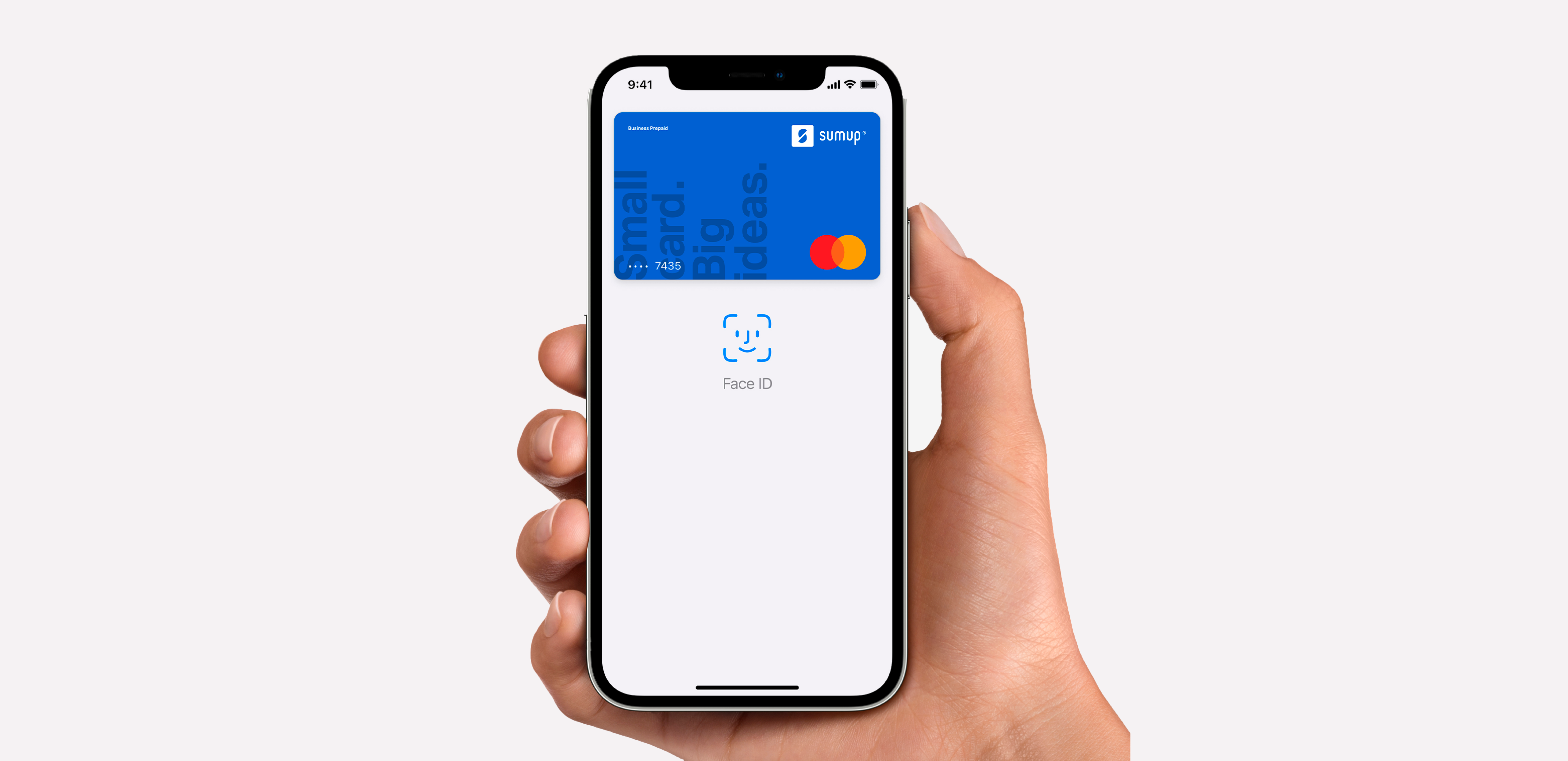
A safer, more secure and private way to pay with iPhone and Apple Watch
Global payments service provider SumUp today brings its UK-based customers Apple Pay, a safer, more secure and private way to pay that helps SumUp merchants avoid handing their payment card to someone else, touching physical buttons or exchanging cash — and uses the power of iPhone to protect every transaction.
SumUp merchant card holders simply hold their iPhone or Apple Watch near a payment terminal to make a contactless payment. Every Apple Pay purchase is secure because it is authenticated with Face ID, Touch ID, or device passcode, as well as a one-time unique dynamic security code. Apple Pay is accepted in grocery stores, pharmacies, taxis, restaurants, coffee shops, retail stores, and many more places.
SumUp merchant card holders can also use Apple Pay on iPhone, iPad, and Mac to make faster and more convenient purchases in apps or on the web in Safari without having to create accounts or repeatedly type in shipping and billing information. Apple Pay makes it easier to pay for food and grocery deliveries, online shopping, transportation, and parking, among other things. Apple Pay can also be used to make payments in apps on Apple Watch.
Security and privacy are at the core of Apple Pay. When SumUp merchants use a SumUp Card with Apple Pay, the actual card numbers are not stored on the device, nor on Apple servers. Instead, a
unique Device Account Number is assigned, encrypted, and securely stored in the Secure Element,
an industry-standard, certified chip designed to store the payment information safely on the device.
Apple Pay is easy to set up. On iPhone, simply open the Wallet app, tap +, and follow the steps to
add the SumUp Card. Once a merchant adds a card to iPhone, Apple Watch, iPad, and Mac, they can start using Apple Pay on that device right away. Merchant card holders will continue to receive all of the rewards and benefits offered by the SumUp Card.
For more information on Apple Pay, visit: http://www.apple.com/apple-pay/
For more information on SumUp, please visit https://sumup.co.uk/features/apple-pay/
- 04:00 am

Today every business must be a digital business. The pandemic has accelerated technology investments as companies seek to find new ways to thrive in the digital economy, which now runs on personalised customer connections.
To provide its executive customers with additional perspectives from industry leaders, Adobe launched its International Advisory Board earlier in 2021 and today announced its expansion with the appointment of Caroline Silver, an Advisory Partner at global independent investment bank, Moelis & Company. The Adobe International Advisory Board brings together a team of highly respected and internationally focused leaders, with proven track-records in navigating disruption and leading digital transformation across the private and public sectors.
Chaired by Paul Robson, President International at Adobe, the International Advisory Board’s mission is to support the company’s customers as they develop and implement their own transformation strategies to succeed in the digital economy.
With more than 30 years’ experience in international investment banking, as well as extensive experience in advising clients and regulators across Europe, Caroline Silver brings a global perspective to help Adobe customers adapt and thrive in a digital-first world. Caroline previously served as Vice Chairman of EMEA Investment Banking at Bank of America Merrill Lynch and as Global Vice Chairman of Investment Banking at Morgan Stanley. She currently holds board positions at BUPA, PZ Cussons, Meggitt PLC and Intercontinental Exchange, Inc. where she is also director of the board of directors at its subsidiary, ICE Clear Europe.
Paul Robson, President International, Adobe commented: “Today’s most successful businesses are innovating with new partnerships and technologies, and they’re increasingly looking to their peers, new entrants and leaders from other industries for inspiration to drive meaningful and relevant customer connections. For those in financial services, they are rapidly evolving their digital strategies to deliver superior customer experiences, whilst having to comply with governance and regulatory requirements. Caroline’s experience and reputation as an internationally renowned investment banker will prove hugely valuable for our customers in helping them lay the foundations for future business models.”
Adobe customers include some of the world’s largest companies, including leading financial institutions such as TSB, Santander, HSBC, NatWest, The Co-operative Bank, Legal & General, Banque Pictet, CaixaBank, Standard Chartered, CSS Versicherung, Westpac Bank, HESTA and Sony Bank.
Commenting on her appointment, Caroline said: “The past 12 months have brought the need for a long-term digital strategy into sharp focus for every business, none more so than financial services companies. The expectations of customers are higher than ever, and innovative new entrants are raising the bar for digital experiences. Adobe already provides the foundation for many of the world’s biggest banks and businesses and I’m looking forward to supporting them in devising strategies for growth and thriving in the digital economy.”
The members of the Adobe International Advisory Board are:
- Barbara Kux, Member of the Supervisory Board at Henkel and Grosvenor Group, Vice-Chair of the Board at Firmenich. Former Member of the Managing Board of Siemens.
- Baudouin Prot, Chairman of the Board at BNP Paribas, Board Member of Kering, Finastra and Alstom. Senior Advisor to Boston Consulting Group.
- Caroline Silver, Advisory Partner at Moelis & Company, former Vice Chairman of EMEA Investment Banking at Bank of America Merrill Lynch and Global Vice Chairman of Investment Banking at Morgan Stanley.
- Dr. Dieter Zetsche, Chairman of the Supervisory Board of TUI AG, former Chairman of the Board of Management of Daimler AG and Head of Mercedes-Benz Cars.
- Professor Heizo Takenaka, Economist and Professor at Keio University, Director of the Global Security Research Institute and Chairman of Pasona Group, Inc. Former Minister of Economic and Fiscal Policy for Japan.
- Nigel Hinshelwood, Senior Independent Director of Lloyds Bank Plc and Bank of Scotland Plc, Non-Executive Director of Nordea Bank and member of Lloyd’s of London Technology and Transformation Committee. Former Head of HSBC UK and Deputy CEO of HSBC Bank plc.
- Patrick Allaway, Chairman of the Bank of Queensland and Non-Executive Director of Dexus Funds Management Ltd and Allianz Australia.
The Adobe International Advisory Board launched in March 2021. More information can be found here.
- 05:00 am
Colt Technology Services has today announced it will collaborate with IBM to help customers adopt an edge computing strategy designed to enable them to move data and applications seamlessly across hybrid cloud environments, from private data centres to the edge. Colt, a leading provider of high bandwidth and on demand connectivity solutions, plans to work with IBM to jointly explore innovative use cases using IBM Cloud Satellite and Edge Application Manager, designed to benefit enterprise customers globally across 29,000 enterprise buildings.
Organisations are adopting new cloud technologies designed to address their business challenges but managing this new distributed infrastructure paradigm is not simple. In particular, when these applications have stringent location-dependent requirements like low latency, regional data compliance and resiliency. Colt and IBM’s collaboration, in a lab setting, has shown how deploying IBM Cloud Satellite on Colt’s edge platform can be simplified for customers. IBM Cloud Satellite is IBM’s hybrid cloud offering, built on Red Hat OpenShift, that allows customers to deploy secure and open IBM Cloud services anywhere they choose –on-premises, on any public cloud, or at the edge. Virtual machines for IBM Cloud Satellite can be instantiated and configured using a management and orchestration tool with zero-touch provisioning. Furthermore, Colt’s on-demand networking capabilities are designed to help critical connectivity be provisioned in near real- time to help enable distributed cloud deployments with IBM Edge Application Manager for its customers (in industries such as retail and healthcare) across 29,000 enterprise buildings.
A recent IBM Institute for Business Value report, “Why organisations are betting on edge computing: Insights from the edge,” revealed that 91% of the 1,500 executives surveyed indicated that their organisations plan to implement edge computing strategies within five years. IBM Edge Application Manager, an autonomous management solution that runs on Red Hat OpenShift, enables the secured deployment, continuous operations and remote management of AI, analytics, and IoT enterprise workloads to deliver real-time analysis and insights at scale. The introduction of Intel® Secure Device Onboard (SDO) made available as open source through the Linux Foundation, provides zero-touch provisioning of edge nodes, and enables multi-tenant support for enterprises to manage up to 40,000 edge devices simultaneously per edge hub. IBM Edge Application Manager is the industry’s first solution powered by the open-source project, Linux Foundation Open Horizon.
“We look forward to collaborating with Colt to help customers deploy, operate and manage thousands of endpoints throughout their operations with IBM Cloud Satellite and IBM Edge Application Manager,” said Evaristus Mainsah, GM, IBM Hybrid Cloud and Edge Ecosystem. “Together, we can help enterprises accelerate their digital transformation by acting on insights closer to where their data is being created, at the edge.”
“Colt and IBM have been working together for many years across multiple markets and verticals with a focus on accelerating digital transformation. As we see an increasing demand for multi and distributed cloud environments, we will collaborate on how we can serve our joint customers,“ said Mark Hollman, VP Partner Development and Success. “We’re exploring now how to combine our Colt IQ Network with IBM’s hybrid cloud platform, to help deliver innovative solutions designed to help accelerate digital transformation for our enterprise customers.’’
Colt is part of IBM’s partner ecosystem, collaborating with more than 30 equipment manufacturers, networking, IT & software providers to implement open standards-based cloud-native solutions that can autonomously manage edge applications at scale. IBM’s partner ecosystem fuels hybrid cloud environments by helping customers manage and modernize workloads from bare-metal to multi-cloud and everything in between with Red Hat OpenShift, the industry's leading enterprise Kubernetes platform.
- 07:00 am

ikigai, the first UK app to bring together everyday banking and wealth management, today brings its customers Apple Pay, a safer, more secure and private way to pay that helps customers avoid handing their payment card to someone else, touching physical buttons or exchanging cash — and uses the power of iPhone to protect every transaction.
Customers simply hold their iPhone or Apple Watch near a payment terminal to make a contactless payment. Every Apple Pay purchase is secure because it is authenticated with Face ID, Touch ID, or device passcode, as well as a one-time unique dynamic security code. Apple Pay is accepted in grocery stores, pharmacies, taxis, restaurants, coffee shops, retail stores, and many more places.
Customers can also use Apple Pay on iPhone, iPad, and Mac to make faster and more convenient purchases in apps or on the web in Safari without having to create accounts or repeatedly type in shipping and billing information. Apple Pay makes it easier to pay for food and grocery deliveries, online shopping, transportation, and parking, among other things. Apple Pay can also be used to make payments in apps on Apple Watch.
Security and privacy are at the core of Apple Pay. When customers use a credit or debit card with Apple Pay, the actual card numbers are not stored on the device, nor on Apple servers. Instead, a unique Device Account Number is assigned, encrypted, and securely stored in the Secure Element, an industry-standard, certified chip designed to store the payment information safely on the device.
Apple Pay is easy to set up. On iPhone, simply open the Wallet app, tap +, and follow the steps to add ikigai’s Visa debit card. Once a customer adds a card to iPhone, Apple Watch, iPad, and Mac, they can start using Apple Pay on that device right away. Customers will continue to receive all of the rewards and benefits offered by ikigai’s cards.
For more information on Apple Pay, visit: http://www.apple.com/apple-pay/ For more information on ikigai, please visit http://ikigai.money/
- 05:00 am
- Nearly four fifths (78%) of UK compliance professionals predict more anti-money laundering (AML) regulation is on the way as a direct result of leaving the EU
- UK firms overwhelmingly support opting out of 6MLD, but are taking it as a sign the UK plans to diverge and create its own AML regulatory framework
Nearly four fifths (78%) of compliance professionals across the UK’s regulated industries predict more anti-money laundering (AML) regulation is on the way as a result of the UK’s exit from the European Union, according to new research released today by LexisNexis® Risk Solutions, the global data and analytics provider.
Based on a survey of over 875 compliance professionals across banks, lenders, wealth management, accounting, gambling, legal and real estate, today’s figures are the first to reveal predictions from all corners of regulated industries regarding future UK AML regulation following Brexit.
The UK recently decided to opt out of transposing the EU’s 6th Anti-Money Laundering Directive (6MLD) due to many of its requirements being already covered by existing UK law. This decision has overwhelming support from the industry, with 81% of those surveyed agreeing it was the right decision. However, as our research shows, firms are taking it as a signal that the UK is seeking to diverge further from EU AML regulations, and create its own.
Nina Kerkez, Director of UK&I Consulting at LexisNexis® Risk Solutions, comments:
“As a result of Brexit, we have seen the regulator increase powers to implement more effective regulation which is well suited to the changing needs of the UK, and it’s encouraging to see support from the regulated industries as we diverge from the EU’s approach to AML regulations.
We are likely to see increased regulation on the horizon as the regulator flexes its new-found muscles and this autonomy will allow the regulator to tailor controls to the UK’s specific needs when it comes to tackling money laundering. However, they cannot ignore recent revelations that professionals are already struggling to keep up with what is expected of them when it comes to AML regulatory compliance.”
Compliance professionals across banks, lenders, wealth management, accounting, gambling, legal and real estate recently revealed that they’re on average only 60% of the way through their 5MLD implementation plans, despite the regulation coming into force on January 2020.
With a majority of firms already struggling to meet current AML requirements, predictions of regulatory obligations increasing following Brexit, combined with an apparent step-up in regulatory clampdowns seen recently, are likely to be highly concerning for regulated businesses across the country.
Nina Kerkez, concluded:
“This combination of the increasing regulatory burden, a heightened threat of regulator action, and a majority of firms struggling with implementing effective AML controls is a perfect storm of issues that could threaten to further hamper efforts to prevent money laundering to pervade through the UK financial system.”
“We know that the majority of firms (66%) share the belief that 5MLD will have a positive impact, but almost all firms (92%) say they need more guidance on how to implement more effective, risk-based AML controls. This needs to be a rallying call for UK regulators and supervisors to combine their efforts and work together with the industry to ensure they have the right processes, tools and technology in place to stand a chance of effectively detecting and deterring money laundering in all its forms. As part of this, there needs to be a deliberate move away from manual processes, towards automating those due diligence checks that can be automated and focussing experienced staff on real risk-based analysis.”
- 05:00 am

Specialist RegTech provider Shield today announces a new and enhanced version of its powerful end-to-end communications compliance platform. The new version provides powerful enhancements including additional Alert Transparency information, additional management options, and a new Segregation of Duty layer.
The new features are designed to deliver greater flexibility, control and visibility of alerts to compliance teams, as Nicole Aviv, Head of Product at Shield commented, “We have introduced a raft of new and enhanced features which provide real-world benefits to firms. Greater transparency of data enables the compliance officer to make an informed choice and better understand what needs further attention.”
On the same theme of providing more power to the compliance officer, the additional model management and Alert Scoring options enable users to customize and have further autonomy on their use of the Shield platform, fine tuning the configuration to ensure it fits the specific needs of business operations, internal policies, and the requirements/practices of applicable regulators.
Nicole added, “Our new Segregation of Duty layer enables the firm to better control access to sensitive data. This works across a variety of different criteria, depending upon data privacy restrictions and specific requirements of the business.”
Featuring improved transcript capabilities and support for additional third-party sources, the latest upgrade ensures the Shield platform always has access to the most appropriate data, and therefore generates the most accurate results.
Enhancements to the new version also ensure that the Shield platform always performs its own checks, rather than relying on the data source to give this reassurance, whilst providing a full view of every step of the ingestion process. The enhancements to the Shield platform are rounded off with an updated language filter, based upon feedback from Shield’s customers.
The new version of the Shield platform is just the latest stage in its continued evolution, as Nicole concluded, “As financial sector working practices and regulations continue to evolve in the new normal, it is vital that our platform continues to reliably anticipate and alert on ongoing and potential threats and issues. The new version’s refinements and additions are designed to ensure our clients have all the tools necessary to ensure their business remains compliant, and customers remain fully protected.”
- 05:00 am
- £1.14bn worth of convertible loans completed for 1,190 companies
- 41% of funding to companies outside London worth £463.7m
- 78% of funding to mixed gender senior management teams
- 56% of funding to Black, Asian or Other Ethnic Minority background & White senior management teams
- 34% of funding to technology and IP-based businesses
Today the British Business Bank publishes data that gives a final comprehensive picture of how the Future Fund has supported businesses during the pandemic. The data shows that 1,190 companies have had their applications completed to access £1.14bn (£1136.7m) worth of Convertible Loan Agreements funded by the Future Fund since the scheme was launched in May 2020. There have been 1,851 applications in total since the scheme was launched and the scheme closed to new applications on 31 January 2021.
This final release of data shows where companies are based across the UK and the composition of the senior management teams by gender and ethnicity. This data is self-reported by the companies applying to the Future Fund.
It also gives an overall sector breakdown of investment and the size range of investments.
Data by region
The data reveals, 41% of completed funding through Convertible Loan Agreements worth £463.7m have their headquarters located outside of London. Of the total amount of £1,136.7m, 14% is to companies headquartered in the South (South East and South West), 11% in the North (North West, North East and Yorkshire and the Humber), 8% in the East of England, 4% in the Midlands (East Midlands and West Midlands) and 3% in the Devolved Nations (Scotland, Wales and Northern Ireland). London accounts for 59% of companies, in-line with the wider market trends for equity investments. The British Business Bank’s 2020/21 Small Business Finance Markets report showed that companies outside London received 44% of equity investment by value in 2020.
Data by gender mix of senior management team
Data by ethnicity of senior management team
Senior management teams consisting solely of team members from a Black, Asian or Other Ethnic Minority background and those with team members from a Black, Asian or Other Ethnic Minority background and White team members account for 61.6% of funding received through Convertible Loan Agreements, amounting to £646.5m.
Data by sector
Of the 1,190 companies that have completed their Convertible Loan Agreements, 38% are technology and IP-based businesses with a value of £382.8m (34%) in funding and 35% are Business and Professional services firms with a value of £471.1m (41%).
Data by size of investment
Over 50% of convertible loan agreements were valued between £125, 000 and £500,000.
Future Fund data by gender of company senior management team (self-reported by applicant)[1]
Management Team | No. of | Value of completed |
All female team | 16 | £15.1m |
All male team | 314 | £219.1m |
Mixed gender team | 811 | £850.2m |
Chose not to provide data | 49 | £52.2m |
Total | 1190 | £1136.7m |
Future Fund data by ethnicity of company senior management team (self-reported by applicant)
Management | No. of convertible loans completed | Value of convertible loans completed |
Solely from Black, Asian or Other Ethnic Minority background | 62 | £55.7m |
All White team | 481 | £403.7m |
Black, Asian or Other Ethnic Minority background & White team | 553 | £590.8m |
Chose not to provide data | 94 | £86.5m |
Total | 1190 | £1136.7m |
Future Fund data by location of company receiving convertible loan
| No. of convertible loans completed | Value of convertible loans completed |
East Midlands | 18 | £17.1m |
East of England | 89 | £95.7m |
London | 660 | £673.0m |
North East | 31 | £28.0m |
North West | 84 | £61.6m |
Northern Ireland | 13 | £11.6m |
Scotland | 23 | £8.3m |
South East | 132 | £125.7m |
South West | 47 | £30.8m |
Wales | 25 | £18.7m |
West Midlands | 33 | £27.2m |
Yorkshire and the Humber | 35 | £39.0m |
Total | 1190 | £1136.7m |
Future Fund sector breakdown compared to the wider market[2]
| Sector split by CLA number | Sector split by CLA investment amount | ||
| Wider Market | Future Fund | Wider Market | Future Fund |
Technology/ IP-based businesses | 40% | 38% | 46% | 34% |
Business and Professional services | 24% | 35% | 29% | 41% |
Industrials | 16% | 11% | 10% | 9% |
Leisure and Entertainment | 5% | 3% | 2% | 4% |
Retail | 3% | 5% | 2% | 4% |
Personal Services | 4% | 5% | 2% | 4% |
Media | 3% | 2% | 2% | 2% |
Other | 6% | 1% | 6% | 1% |
Future Fund sector breakdown
| No. of convertible loans completed | Value of convertible loans completed | |||
Technology/ IP-based businesses | 452 | £382.9m | |||
Business and Professional services | 414 | £471.1m | |||
Industrials | 129 | £107.9m | |||
Leisure and Entertainment | 32 | £43.0m | |||
Retail | 60 | £48.7m | |||
Personal services | 60 | £48.3m | |||
Media | 26 | £19.8m | |||
Other | 17 | £15.1m | |||
Total | 1,190 | £1,136.7m |
Future Fund breakdown by size of Convertible Loan Agreement (Future Fund amount)
Investment Range |
| No of companies | |||
£125,000 - £500,000 |
| 600 | |||
£500,001 - £1,000,000 |
| 260 | |||
£1,000,001 - £2,500,00 |
| 190 | |||
£2,500,001 - £5,000,000 |
| 140 | |||
Total |
| 1,190 |








