
Published
- 06:00 am

- Anne-Sophie joins from Crédit du Nord Group and will lead Ebury’s activities in France
- Appointment reflects Ebu2ry’s ambitions in the French market following its partnership with La Banque Postale, and continued international expansion
Ebury, a leading global FinTech, has announced the appointment of Anne-Sophie Matthieu as the new Country Manager of its French division.
Anne-Sophie began her career at BNP Paribas working for its M&A unit in London before moving into the private banking division in Paris.
She joined the Société Générale group in 2007 in the trading room on foreign exchange products, then the Crédit du Nord group in November 2011 as Head of Sales of the trading room. Moving into the position of Head of Client Market Solutions in 2018, she became a member of the Supervisory Board of Banque Courtois in 2016, then of the Crédit du Nord Group Management Committee in February 2021.
Anne-Sophie will be charged with executing Ebury’s international strategy by accelerating the company’s growth in France, drawing on her experience and knowledge of the international banking system.
Ebury recently announced that it has joined forces with a French bank, La Banque Postale, to support French SMEs in their international activities.
The partnership gave the bank’s customers access to Ebury’s services to open a foreign currency account, carry out spot foreign exchange transactions in 140 currencies and make international transfers from a secure, dedicated platform, 24 hours a day, 7 days a week.
Ebury executes transactions totalling more than $21bn annually and is located across 25 global offices.
Anne-Sophie Mathieu, Country Manager of France, commented: “I am honoured and happy to join the Ebury team. I am determined to accelerate the development of Ebury’s activity in France with passion, determination and enthusiasm.
“Foreign exchange solutions are vital for SMEs in France to conduct business internationally with activities ranging from making payments to securing trade finance. Ebury’s dedicated and expert team streamlines this process and offers a secure platform to transact. Building off the partnership with La Banque Postale, I am excited at the opportunity in France and look forward to realising Ebury’s ambitious growth strategy in the region.”
Fernando Pierri, Chief Commercial Officer at Ebury commented: “Ebury is a business built on the best and brightest talent out there, and Anne Sophie fits this perfectly. I am delighted to welcome her to Ebury and we are all excited to see her and our French team continue to offer our clients an excellent service.”
- 03:00 am
The ability to adapt to higher levels of supply chain uncertainty is now essential for global companies and their suppliers
The supply chain challenges seen throughout the world in recent months, from the pandemic to the Suez Canal blockage and now the ongoing closure of the Yantian terminal in Shenzhen, can no longer be considered shocks, according to Taulia, the leading fintech provider of working capital solutions. In a new paper, Taulia has outlined the numerous issues over the past 18 months that have highlighted the fragility of global supply chains, and their impact.
Uncertainty in managing inventory had been growing even before the pandemic, as geopolitical tensions affected trade between the US and China. The US has also faced trucking strikes, while Brexit has caused transportation shortages and increased costs for UK and European firms. The recent Suez Canal blockage created yet another supply shock, costing around $9 billion each day, while the semiconductor chip shortage has wreaked further havoc for many industries.
Taulia predicts that higher levels of demand, inflation and interest rates in the near future will only add further pressure and complexity for companies already struggling with supply shortages, depleted stock, increased shipping costs, supplier financial pressures and greater uncertainty.
Erik Wanberg, Head of Inventory Management at Taulia, commented: “These problems now need to be treated as a new normal in supply chain and inventory management. There is simply too much at stake for companies to continue attributing them to outlier events and not taking appropriate forward-looking action. Investors generally reward companies who have the agility to react quickly to negative events with minimal impact to their performance relative to their peers.”
Taulia believes this ‘perfect storm’ has created an urgent need for companies to adapt to higher levels of supply chain uncertainty and costs in shipping and international trade. It has made agile supply chain management more critical than ever. While many firms have begun adapting by holding higher levels of safety stocks, this increases inventory and storage costs, tying up valuable capital that could be put to better use elsewhere in the organization.
Wanberg added: “Today, balancing the competing priorities of holding just enough inventory to avoid production outages while reducing inefficient capital and storage costs is a crucial part of supply chain management and one that shouldn’t be overlooked. By reducing the working capital tied up in inventory, while maintaining the same level of sales, companies can drive a higher return on capital. But in order to do this, companies need new solutions that can both increase their visibility through better data and bring improved access to efficient capital. As with many things, technology will provide the greatest opportunity for supply chain transformation and competitive advantage”.
Taulia’s ‘Profitability through Inventory Management’ white paper can be downloaded here: https://taulia.com/resources/profitability-through-inventory-management-a-new-approach/
- 09:00 am
- New partnerships with WellnessLiving and Tevalis will allow merchants to take payments through a trusted, secure and compliant platform
- This will also help businesses deliver seamless online and in-store checkout experiences, which is critical as the economy reopens
- In addition, Barclaycard Payments extends its partnership with BigCommerce, to offer a faster, digital on-boarding service to small and medium-sized businesses
Barclaycard Payments, which processes almost £1 in every £3 spent in the UK, has announced a trio of new partnership agreements to boost its offering to e-commerce, leisure and hospitality merchants.
The new partnerships with WellnessLiving and Tevalis will provide specialist payments expertise for customers with an online presence and with physical stores, across the leisure and hospitality sectors. As non-essential stores reopen for business, and pubs and restaurants return to serving food and drink indoors, being able to offer customers a seamless payment experience is critical to success.
WellnessLiving and Tevalis’ leisure and hospitality customers, such as gyms, pubs, bars and restaurants, will now have the opportunity to access Barclaycard’s payments platform and select Barclaycard as a new payment provider, benefiting from a trusted and secure payment gateway through which to process transactions.
WellnessLiving – a cloud-based solution for the fitness, health and wellness industry supporting 5,000 businesses worldwide, will see the full integration of Barclaycard’s Smartpay Fuse gateway into its booking management solution to provide a safe and frictionless checkout experience when taking payment for classes, appointments memberships or repeat services.
The integration with Barclaycard Payments allows a customer to see availability online, select a session and make payment all on the same page seamlessly. There is no need to go into a gym, spa or salon and personally set up a direct debit – instead, the customer can complete the whole process online. A new customer’s account ID can be set up, as well as the option to hold card details and schedule payments online, though a secure and trusted payment provider.
With the pandemic limiting face-to face interaction, WellnessLiving gives customers the ability to host live and on-demand fitness classes online, for their clients. This is made even easier thanks to the partnership with Barclaycard Payments, because clients can book and pay for the entire experience simply and securely, giving them more time to focus on their fitness and wellbeing.
As eating and dining out becomes part of daily life once more, Tevalis – a leading electronic point-of-sale technology provider – has been making the transition easier for the hospitality industry. Tevalis supports over 2,000 UK hospitality businesses of all sizes, including pubs, bars, restaurants and hotels. The integration of Tevalis’ systems with Barclaycard terminals means the average sale processing time is reduced, helping to improve speed-of-service, customer satisfaction and productivity.
The integration will also reduce human error, because staff will no longer type the payment amount into their card machine by hand, which means that customers won’t be accidentally over or under-charged. Reconciliation is fully automated, meaning there is no need to cross-check figures against end-of-day reports when completing the final settlement, saving staff valuable time.
Furthermore, with customers favouring fast and simple ordering methods, Tevalis’ new order and pay app allows customers to scan a QR code, prompting the free app to be downloaded. This then allows the customer to order their favourite dishes to their table and the integration with Barclaycard means customers can make payments seamlessly.
In addition to these two new agreements, Barclaycard Payments is also extending its partnership with BigCommerce, the e-commerce platform catering to more than 60,000 customers worldwide – from large corporates to small and medium sized businesses. The partnership will now offer digital on-boarding in the UK, meaning smaller businesses can set up their online payments quickly and seamlessly. This will allow them to start trading faster, maximising sales, without compromising on security.
Nicole Olbe, Managing Director of Partnerships at Barclaycard Payments, said: “The past year has been very challenging for SMEs, in particular those in the retail, leisure and hospitality sectors. Strengthening our e-commerce capabilities with BigCommerce will speed up the process for smaller businesses wanting to go online allowing businesses to increase sales and maximise profit. In addition, partnering with WellnessLiving and Tevalis has given us the ability to deliver an equally seamless online and in-store payment experience across specialist businesses in the leisure and hospitality sectors.
With the reopening up of non-essential stores and the wider economy, retailers are tasked with drawing back their physical customer base as well as continuing to drive growth online, in order to be successful. Thanks to these new partnerships, merchants will benefit from having a market-leading, trusted and secure payments platform, giving them peace of mind, and the head space to really focus on what they do best – driving growth.”
- 01:00 am
Intelligence Squared launches a special series of debates titled “Intelligence Squared Crypto: Debates Within Cryptocurrency”, in partnership with EQONEX Group, the Nasdaq-listed digital asset financial services company.
Intelligence Squared, the global media company known as one of the world's leading forums for live debate, today launches a new series seeking to urgently address the key issues in the world of cryptocurrency. The series will bring together some of the world's best speakers to debate the key issues and opportunities faced by the crypto industry, beginning with a debate between Anthony Scaramucci and Peter Schiff on the merits of Bitcoin vs Gold (register here). Given their scarce nature and anti-inflationary properties, both assets have been seen as a resilient store of value, with strong and vociferous supporters on both sides. The series will be hosted by Anne McElvoy senior editor and director of podcasts at The Economist newspaper.
Through the series, Intelligence Squared intends to make the sometimes polarizing world of cryptocurrency, and more specifically Bitcoin, more understandable. The series will allow a broad audience access to the biggest names in crypto who will share their views on the most important issues impacting the world of crypto. Audience members can ask questions of the speakers and can also vote on the motion set out at the beginning of each event.
Other issues to be debated will include the environmental impact of crypto with Lyn Alden Schwarzer; Bitcoin's potential threat to the U.S. Dollar as a global reserve currency; and whether cryptocurrencies can help to 'bank the unbanked' in developing nations, with Peter McCormack.
Intelligence Squared has partnered with the newly rebranded EQONEX, (previously known as Diginex), the first digital asset ecosystem with a cryptocurrency exchange to be listed on the Nasdaq stock exchange, making it the ideal partner given its focus on fair, transparent and compliant markets for crypto. EQONEX has funded the launch of Intelligence Squared Crypto with bitcoin, which is being held on the company’s balance sheet and stored securely by EQONEX's FCA registered digital asset custodian, Digivault.
The events will be free to attend. The audio will become episodes on Intelligence Squared’s podcast network.
Intelligence Squared is the world’s leading platform for high-level debate and discussion. It has a network of podcasts, a YouTube subscriber base of more than 430,000, a digital subscription service called Intelligence Squared+ for its live events and will be staging in-person events in London in the autumn. It has featured on its stage many of the world’s top business leaders and thinkers including Satya Nadella, Tom Friedman, Sheryl Sandberg, Eric Schmidt, Yuval Noah Harari, Kate Raworth, Michael Lewis, Mariana Mazzucato and Reid Hoffman.
Matt McAllester, CEO of Intelligence Squared, said: “We’re excited to be launching Intelligence Squared Crypto, which will bring robust and equitable debate around cryptocurrency to our audience. In building this offering, we felt that EQONEX would be the perfect partner given the values they stand for around strong corporate governance as well as fair and transparent markets for crypto. This alignment with the Intelligence Squared mission – to be a global platform for debate – made it a natural fit for our organizations.”
Richard Byworth, CEO at EQONEX, said: “For crypto to become mainstream it is vital for healthy debate to be held about all aspects of its utility, sustainability credentials and challenges. This partnership with Intelligence Squared is expected to bring rigorous but balanced debate around crypto, and educate a wider audience, a crucial step for the increased adoption of this rapidly evolving industry.”
- 09:00 am
Fintech industry veterans join a growing team as global payment provider opens new regional headquarters
Today MultiPay Global Solutions is announcing the latest phase of its global expansion with the appointments of its new Nordic CTO, Anders Jacobsen and Sales Director, Jakob Dige. The appointment of Anders and Jakob will also see MultiPay’s couture service and unique payment technology extended to support customers in Norway from its new Denmark-based Nordic office.
The appointments of Anders and Jakob come at a crucial time for MultiPay as it looks to broaden its presence across the region. Working closely with co-founders CEO, David Maisey and COO, Delia Pedersoli, Anders, and Jakob will aid the growth of MultiPay’s customer base while also providing local partners and customers with additional advice and support.
“Anders and Jakob bring a wealth of knowledge and experience that will be invaluable to our Nordic customers and partners, and we are so pleased to have them join our team,” said David Maisey, CEO of MultiPay Global Solutions. “Across the world, the payment landscape is changing. Cash is rapidly disappearing, and newer ways to pay like mobile and contactless solutions are growing. Having Anders and Jakob’s expertise on hand will mean we can better support businesses as they look to update and improve their payment infrastructure.”
Anders Jacobsen arrives with nearly 20 years of experience in the payments and retail sectors, where he helped and guided businesses in making critical decisions about their technology infrastructure. He will be supported by payment industry veteran Jakob Dige who brings over 25 years of experience. Jakob will also be working closely with MultiPay’s regional partners to enable more businesses in Denmark, Sweden, and Norway to accept any payment, anywhere.
“For the next phase of our Nordic expansion it was important that we got the right people in place,” said Delia Pedersoli, COO at MultiPay Global Solutions. “Anders and Jakob’s knowledge and expertise of the Nordic payment landscape enables us to better assist customers with local support backed up by the power of our full global team. As a result, businesses across the region have greater access to our class-leading technology and couture customer experience.”
Further underlining MultiPay’s commitment to the Nordics, is the news of the opening of its new Nordic office. Located in Denmark, the new regional office will provide a base for sales and support teams to assist customers with their growth and expansion.
Anders commented: “MultiPay’s focus on the Nordics is well-timed. Like many regions across the globe, payments technology and trends are changing at a rapid pace. Whether in a physical store, restaurant or even online, consumers expect to be able to pay with their preferred method. Businesses that fail to offer this, or add in unnecessary steps, damage the customer experience, and risk high levels of customer churn. MultiPay’s unique technology means that business can simplify their payment infrastructure and offer a premium service to their customers.”
“It is really exciting to be joining MultiPay as it expands its Nordic presence. I’m looking forward to working not only with MultiPay’s experienced and passionate team but also its incredible set of partners too. As we look to grow across Denmark, Sweden, and Norway, we want to ensure that we continue to work closely with and support our partners too.”
“The continued expansion of MultiPay’s presence in the Nordic region is great news for businesses that are looking to grow and expand into new territories,” said Karsten Knudsen, CCO at ONLINEPOS. “It’s ability to support any payment anywhere through a single API means it can quickly and easily scale to other countries without needing to work around payment technologies, currencies or location. For ambitious businesses, it is the perfect payment solution.”
Now available across Denmark, Sweden, and Norway, MultiPay is ready to help businesses access the payment experiences their customers now expect.
- 08:00 am

- Southeast Asia is the fastest growing region for mobile wallets in the world with 25.5% CAGR and overall growth of 311% in the next five years
- Latin America and Africa & Middle East are the second and third fastest growing regions, set to expand by 166% and 147% respectively by 2025
- Between 2020 and 2025 the number of mobile wallets transacting over USD $1 billion per year will increase by 27% creating a growing acceptance challenge for merchants
Today, the biggest report into the growth of mobile wallets ever published, projects that one in two people will use a mobile wallet by 2025. At the end of 2020, there were over 2.8 billion mobile wallets in use. That number is projected to increase by nearly 74% to reach 4.8 billion mobile wallets in use by the end of 2025 – nearly 60% of the world’s population. The fastest growing markets are Southeast Asia, Latin America, and Africa & Middle East where mobile wallets are displacing cash and cards for more convenient digital payments.
Boku, a fintech pioneering the world’s first global mobile payments network, has released their 2021 Mobile Wallets Report in partnership with digital technology analyst house Juniper Research, which provides insight into mobile wallet adoption and use in leading markets across the globe. In 2019, mobile wallets overtook credit cards to become the most widely used payment type globally and the shift to online driven by the pandemic has accelerated adoption. Mobile wallets use is growing rapidly across the world with emerging markets leading the way.
| Mobile Wallets in Use (in millions) by Region (2020-2025) | |||
| 2020 | 2025 | CAGR | |
| North America | 184.7 | 275.4 | 8.3% |
| Latin America | 227.3 | 605.7 | 21.7% |
| West Europe | 200.1 | 331.9 | 10.7% |
| Central & East Europe | 76.3 | 248.9 | 26.7% |
| Asia Pacific | 1,343.40 | 1,541.40 | 2.8% |
| Indian Subcontinent | 269.2 | 550.4 | 15.4% |
| Rest of Asia Pacific | 179.7 | 520.7 | 23.7% |
| Africa & Middle East | 322.9 | 798.2 | 19.8% |
| Global | 2,803.70 | 4,872.70 | 11.7% |
Key findings
- Southeast Asia is the fastest growing mobile wallet region - Mobile wallet use will grow by 311% between 2020 – 2025, reaching up 439.7 million wallets in use across Indonesia, Malaysia, the Philippines, Singapore, Thailand and Vietnam from 141.1 million in 2020. The rise in e-Commerce and dominance of super-apps like Grab and Gojek, particularly in markets like the Philippines and Indonesia, is driving accelerated mobile wallet adoption.
- China reaches maturity while Japan, Korea and Taiwan set for hyper-growth – The Far East and China continues to be the largest mobile wallet region in the world with 1.34bn users in 2020. Market saturation is resulting in slowing growth in China, with a CAGR of just 2.2% per year. Meanwhile, markets including Japan, Korea and Taiwan will continue to see accelerated adoption of mobile wallets with 98.4% market penetration by 2025.
- Africa & Middle East is the second biggest mobile wallet market – The second biggest mobile wallet market is set to grow by 147% between 2020 – 2025. This is driven by expanded usage of mobile money services such as M-Pesa which are increasingly offering additional services such as access to eCommerce.
- Latin American growth is being supercharged by eCommerce – This region is set to increase mobile wallet use by 166% between 2020 – 2025. Long held back by consumers’ preference for cash-based payments and comparatively lower smartphone penetration, this is fast changing, and the region’s eCommerce growth is supercharging mobile wallet use.
- Slow growth in Western Europe and North America – With 65% growth in Western Europe and 50% in North America by 2025, these regions will see the least amount of mobile wallet growth in the next five years. However, markets such as the UK are seeing a rise in card-based mobile wallets due to the adoption of contactless spurred on by the pandemic and shift towards cashlessness.
“While mobile wallets are being used on a global basis, we see two distinct types being used today. One is card-based mobile wallets, like Apple Pay and Google Pay, which provide an easier way to pay with cards people already have. The other is stored value mobile wallets, like AliPay and GrabPay, that enable consumers to transact with digital cash and are popular in emerging markets with fast growing eCommerce sectors,” said Adam Lee, Chief Product Officer at Boku. “The markets that are set to grow the fastest are those with the lowest levels of card penetration, stored value wallets are thriving. In North America and Western Europe, which are dominated by card-based mobile wallets, we are seeing the slowest growth in mobile wallet adoption, as the technology provides merely incremental benefit.”
“We are seeing clear bifurcation in the market between card-based mobile wallets in developed markets and stored value mobile wallets that are ubiquitous in Asia and rapidly growing in all emerging markets,” concluded Lee.
The growth and bifurcation of mobile wallet use presents both an opportunity and challenge for merchants. The number of mobile wallets transacting over $1 billion per year is set to grow by 27% from 54 wallets in 2020 to 69 wallets by 2025. This provides a lucrative opportunity for merchants looking to acquire valuable customers, many of whom only use mobile wallets. However, not only are consumers using mobile wallets more, they are using more mobile wallets. Consumers in high growth markets such as India and Indonesia use an average of 2.74 wallets. This means that not only do merchants need to accept wallets but they need to ensure broad coverage across each target market.
“We are witnessing a paradigm shift in payments driven by mobile wallets. Mobile wallets have lowered the barrier to making digital payments and in parallel ushered billions of new consumers into eCommerce. These consumers are not in North America or Western Europe, they are in emerging markets, and while they don’t have credit cards, they overwhelmingly have mobile wallets,” said Jon Prideaux, CEO at Boku. “For global merchants, mobile payment acceptance is not about accepting one type of mobile wallet or another, but ensuring that consumers in every market will have the required selection on payment types in order to monetize transactions.”
To download the 2021 Mobile Wallets Report please visit: http://boku.mobilewallet.report/
Graphs, data visualisations and other assets can be found in our media kit here.
- 05:00 am
LiquidShare, a fintech leveraging blockchain technology to develop solutions for post-market players and its partners, AXA Investment Managers, BNP Paribas Securities Services, Caceis Bank, Caisse des Dépôts, CIC Market Solutions, Crédit Agricole Titres, EUROCLEAR, EURONEXT, Kriptown, La Banque Postale, ODDO BHF, ODDO BHF AM, OFI AM and Société Générale Securities Services successfully completed the experiment on the use of central bank digital currency (CBDC) for interbank settlement purposes.
The consortium formed around LiquidShare covered 2 use cases: delivery versus payment for both listed and non-listed securities on the blockchain.
The tests span across the entire life cycle of securities, from issuance and registration in the blockchain to secondary market operations’ settlement. It allowed to validate all processes throughout the day with, among others, the functions of creation, control and destruction of CBDC tokens vested to the Banque de France.
All operations were carried out in strict line with the expected deadlines and scenarios.
As a whole, 15 entities and more than 45 participants, representing the entire ecosystem: investors, Euronext as marketplace, Euroclear France as Central Securities Depository, brokers, custodians (retail and institutional clients), interacted during two days and were able to validate the benefits offered by the blockchain (access to the same immutable source of information, real-time information sharing, modelization of business logic thanks to smart contracts…).
The success of the experiment also best prepares the development of post-market solutions for digital assets, securities or cash.
According to Jean-Marc Eyssautier, CEO of LiquidShare “We are delighted to have been able to demonstrate with the Banque de France and all our partners our ability to appropriate new technologies and to have all market infrastructures work together. This is a new demonstration of the Place de Paris players' capacity to mobilize and cooperate for an innovative project in close collaboration with the authorities and infrastructures.”
- 05:00 am
- A small ‘reverse loan’ will help boost small business’s Experian credit scores by making regular, small payments
- Credit score increases will help small businesses borrow to invest in post-pandemic growth
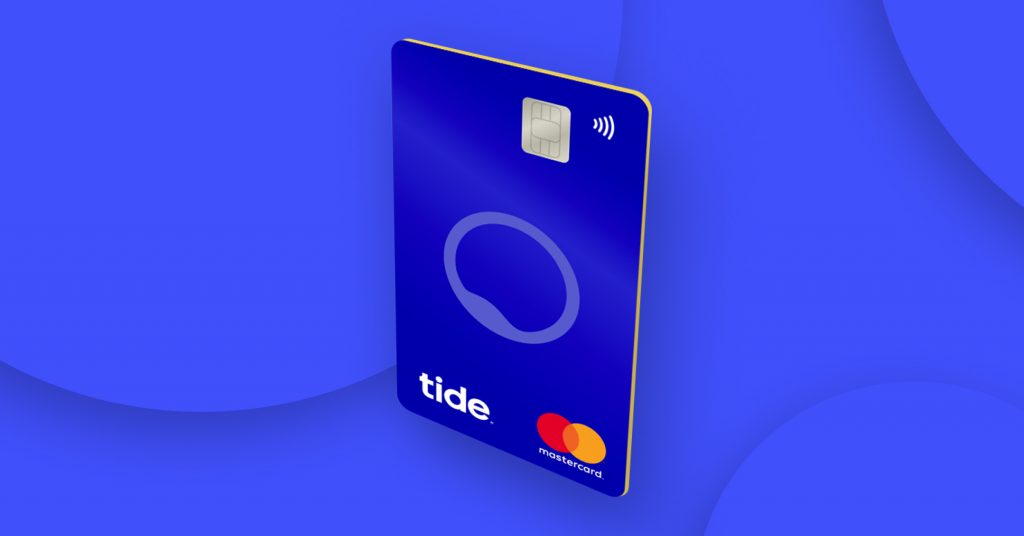
Tide, the UK’s leading business financial platform[1] has launched Tide Credit Builder to help small businesses build up their Experian credit score to be able to borrow to grow.
Small businesses, particularly those that are newly formed, often struggle to borrow money from financial institutions to invest in their growth because they either don’t have a credit score or don’t have a good enough score. This is often due to just starting out in business or not having borrowed in the past. As a result Tide has found that around 87% of its small business owners have a credit score below 80.
Tide will help its members build their creditworthiness by giving them a micro ‘reverse loan’ of £240. The business makes ‘repayments’ of around £23 per month to Tide, once 12 monthly payments have been made, the business will receive £240 back. By making these small payments on time every month, the business will be able to prove their ability to repay, increasing their credit score over the 12 months. The product has been developed with the support of Experian.
Amit Kahana, VP of Tide Credit Services said: “As we emerge from the COVID-19 pandemic, small businesses are working hard to get back on their feet and make up for the toughest year and a half they have seen. Investing in growth is high on the list of priorities for many of these businesses but a poor or non-existent credit score is often a barrier to accessing credit options.
“We hope that by offering a simple way for businesses to boost their credit score they will see a wider array of credit products opening up to them, helping to fuel sustainable growth.”
By using Tide Credit Builder, small business owners will also be able to access credit services more quickly, gain additional advice on how to improve their credit score, and understand how they can access better rates on future credit products, by having a better credit score.
Oliver Prill, Tide CEO said: “Tide is about helping our members manage and grow their business. Access to credit is important to many of them. I am grateful to Experian for supporting us to provide our members with the ability to build the credit history so vital to provide them with funding in the future. Tide members tend to be relatively new businesses that haven’t yet been able to build up a credit score. We are pleased to be able to offer them a service that enables them to fasttrack that process and put them in a position where they can start to use credit products that suit them to grow their businesses.”
- 04:00 am

- New service enables real-time payment validation to reduce errors, exceptions and costs caused by wrong or missing beneficiary information
- Removes a key area of friction in cross-border payments, supporting SWIFT’s strategy for seamless, instant account-to-account transactions
- 05:00 am
BetterCommerce has launched its eCommerce subscription engine, solving one of the biggest current challenges for eCommerce businesses. It is a comprehensive suite of software comprising various modules, each aimed at helping companies grow with subscriptions.
Before we learn more about the development, let’s understand the market and the current need!
The market of Subscriptions
The world of eCommerce has been evolving with the speed of light, with new trends that force existing players to up their game.
The most recent and one of the most prominent ones is the subscription model, which has taken the industry by a storm. To give you an example,
“As per a report by the Royal Mail, by 2022 alone, The UK subscription box market is expected to grow by 72%”
The market size also resonates with the interest of eCommerce companies as UK residents spend about £2 billion every year on subscription box services.
Amidst all this growth and demand, mid-sized eCommerce retailers are looking for solutions to integrate subscription models with their existing businesses.
Aligned to the current needs, BetterCommerce has completed and launched a robust subscription model. BetterCommerce has been helping major brands take their business to the next level with state-of-the-art technology that powers the business’s growth.
Why have a Subscription Model on your Online store?
Subscription models are the present and future for retail businesses
“In fact, as per a study, 75% of DTC businesses will offer subscription-based models in their stores.”
Consumers have started expecting and preferring such models because of the linked benefits.
Subscription models offer the perfect revenue boost to businesses and help them build superior certainty in their cash flows compared to other models.
Winning loyal Customers
Various Studies stress on the high conversion rates with past customers compared to new prospects. It is common for businesses to focus on new customers while ignoring the treasure of past customer data, which can be turned into a regular revenue stream with subscription models.
Numerous companies started focusing on subscription models, and with time, their revenue from subscriptions surpassed the income from one-time monthly sales.
How to win with Subscription models?
The complexity involved in integrating and managing subscription models is as high as the rewards you get with successful implementation.
BetterCommerce’s platform has made it simple for businesses to integrate subscription models into their online and even offline stores. They have taken care of granular details and have given a lot of power in the hands of companies to customise and market these models.
Here are some of the top ways and features helping brands:
● Build personalised subscriptions
One of the best ways is to allow the customers to pick and choose the products/services that they’d like to subscribe. More flexibility equals lesser friction towards completing the purchase. BetterCommerce’s software allows the customers to do just that!
● Offer signup discounts or offer discounts on any month
Offers are key in promoting your offerings. You can select and create specific promotions to lure the customers into choosing the subscription box. This can include promotions like the 1st month free or for that matter any month free, an added gift or others.
You must test the different promotions you use and identify the one that performs the best.
● Attractive Pricing
It is crucial for you to give the customers more than 1 reason to choose the subscription box over buying the products individually. There should be a significant discount associated with choosing a recurring subscription model.
BetterCommerce gives you the complete ecosystem which is built around the most successful subscription models.
● Flexible payment models
Offer complete flexibility in terms of payment models – fixed fee, term based or unit-based pricing – whatever works for your business. Offer one-time payment option or monthly payments to customers as per their preference.
● Capturing and Analysing Data
Every activity associated with your subscription model is stored in BetterCommerce’s platform, which you can leverage to your benefit. The software also equips you with resources to capture feedback on unsubscribers, so you can work on addressing the concerns.
You can analyse the data to identify the top-performing offers and A/B test features to increase your conversion rate.
● Offer flexibility in subscription periods
Another method of reducing the friction in subscription models is giving the customers an option to choose the time periods. Most of the brands can easily choose to have 3,6 and 12 months plans.
It is common for people to be receptive to shorter periods before building trust and likings for your products/services. This can be countered by making the 12 months plan lucrative with the best price point.
Conclusion
BetterCommerce is here with a platform that is helping address the most significant need of online stores: running subscription models.
This is sure to give birth to successful subscription models in the UK and abroad.
Are you someone looking to leverage this model for your business and feel limited with your current technology?
Check out BetterCommerce.io to know how you can leverage their platform for your growth.








