
Published
- 08:00 am

Check Point Research (CPR) discovers cyber attacks on users of PIX, the instant payment system managed by the Brazilian Central Bank. Cyber criminals tricked users into transferring their entire account balances into another bank account, by distributing two malicious applications on Google’s Play Store.
- Attackers lure victims into installing fake malicious mobile applications
- Malicious mobile applications trick victims into granting accessibility permissions
- Once granted, attackers can access the PIX payment system and proceed to steal money
- The app has since been removed from Google’s Play Store
- Check Point recommends users remove the malicious apps from their mobile phones immediately
Check Point Research (CPR) detected cyber attacks against the users of PIX, the instant payment solution created and managed by the Brazilian Central Bank. The attackers distributed two different variants of banking malware, named PixStealer and MalRhino, through two separate malicious applications on Google’s Play Store to carry out their attacks. Both malicious applications were designed to steal money of victims through user interaction and the original PIX application.
PIX is considered the number one payment solution in Brazil, processing over 40 million transactions a day and moving 4.7 billion dollars a week.
PixStealer Funnels Entire Account Balances to Attacker Accounts
The first variant is dubbed PixStealer. Presented in what CPR calls a “slim” form, the attackers designed PixStealer with only one capability: transfer a victim's funds to an actor-controlled account. PixStealer’s “slim” presentation is a reference to the variant’s ability to operate without connection to a command and control (C&C) server, fostering ability to go undetected. CPR ultimately found PixStealer being distributed on Google’s Play Store as a fake PagBank Cashback service, targeting only the Brazilian PagBank.
When a user opens their PIX bank application, Pixstealer shows the victim an overlay window, where user can’t see the attacker’s moves. Behind the overlay window, the attacker retrieves the available amount of money and transfers the money, often the entire account balance, to another account.
MalRhino Hijacks Banking Applications Entirely
CPR went onto find a more advanced banking malware variant, capable of hijacking the entire PIX mobile application and other bank applications. Dubbed MalRhino, CPR found the more advanced malware variant in a fake iToken app for Brazilian Inter Bank – also distributed via Google’s Play Store. MalRhino displays a message to its victim attempting to convince them to grant Accessibility permission. Once granted, MalRhino can:
- Collect the installed application and send the list to the C&C server together with the victim's device info
- Run banks applications
- Retrieve pin from the Nubank application
Lotem Finkelsteen, Head of Threat Intelligence at Check Point Software Technologies:
“We live in a time where cyber criminals do not need to hack a bank to steal money. All a cybercriminal needs to do is understand the platforms that banks use and their respective pitfalls. There’s a growing trend where cyber criminals are going after the applications of institutional banks. This time, we found cyber attacks against the users of Brazil’s number one banking application. The attack involved two malicious apps, that at some point could be found on Google Play Store, but no longer. The attackers presented a slim version, which ran an overlay when using the legit application, and a full blown version that has capabilities to hijacking the entire banking application, eventually. We believe these cyber attacks to be a strong sign that cyber criminals are trending their activities around android banking malware, with the goal to transfer funds of victims to their own accounts. In a world where everything is done remotely due to coronavirus, We recommend users remove the malicious apps from their mobile phones immediately. I also strongly urge all users of bank applications to watch out for banking malware laced into mobile applications. CPR will continue to monitor the latest technological trends and how cyber criminals are taking advantage of them.”
- 04:00 am

RegTech company, Napier, provider of advanced anti-financial crime compliance solutions, has announced that Simplex, the largest fiat infrastructure for the crypto industry, has opted for Napier’s Transaction Monitoring tool as part of an upgrade to its anti-money laundering (AML) defences.
Napier’s Transaction Monitoring will give Simplex a systematic, intelligent review of its transactions and allow it to identify suspicious patterns of behaviour quickly and easily that would be otherwise difficult to spot amongst high volumes of data.
Based in Israel and founded in 2014, Simplex is an EU-licensed financial institution that processes and guarantees secure fiat-to-crypto payments. The platform already supports over 50 government-issued currencies and has a growing number of crypto-partners all over the world, facilitating a wide range of payment methods including Visa, MasterCard, Apple Pay, SEPA and SWIFT.
Simona Jovaisaite, Compliance Officer at Simplex, said: “It’s our ongoing mission to make the purchasing process for crypto-currencies accessible and secure worldwide and we’re putting every system in place to ensure rigid compliance to international regulations.
"In recent years as cryptocurrencies have become more widely adopted, we have seen significant business growth, but as we have expanded our existing tools for monitoring suspicious behaviour proved too inflexible, so it was time for an upgrade. Napier’s solution now helps futureproof what is an essential part of our promise to provide a market-leading, secure platform by ensuring that Simplex is fully compliant in preventing money laundering activities.”
Simplex joins a growing list of companies around the world that have partnered with Napier to deliver anti-financial crime compliance, including tier one banks, payment services, FX, crypto and other financial services. The London-headquartered RegTech has also been expanding its global footprint with office openings in the Middle East and APAC, while its executive leadership team boasts backgrounds of senior roles at HSBC, Deutsche Bank and IBM, among others.
Julian Dixon, founder and CEO of Napier, said: “By harnessing artificial intelligence and machine learning, our technology massively reduces the pressure on compliance teams. It will help Simplex to spot unusual transactions, reduce false positives and identify risk easily and quickly, aligning with its goal to stay ahead of financial criminals operating in the crypto space.”
- 02:00 am

Bluebird Network, a communications infrastructure provider, utilizes their robust fiber network, two data centers and dedicated employees to keep businesses and organizations connected, while providing their clients with unparalleled customer service. Bluebird understands the customer’s successes are the company’s successes, and they strive to help each customer succeed every day. One such customer is Dan Brewer, Vice President of IT at Wilson Logistics – a family-owned trucking company founded in 1980, located in Springfield, MO. Recently, Dan voluntarily discussed the essential impact of the services his company receives from Bluebird’s fiber network and the Bluebird Underground Data Center, and why these services are imperative to his company’s day-to-day operations. According to Brewer, “Wilson Logistics is a multi-line trucking company, about 1,000 trucks with seven facilities west of the Mississippi. Believe it or not, trucking involves a lot of analytics and data reporting. Without the data, everyone’s running blind, and we don’t have the ability to evaluate the analytics into our trucks.” Brewer understands the value of a data center partner, having leveraged business colocation services since 2007. Wilson Logistics teamed up with Bluebird in 2019, largely in part to the facility’s reliability. Brewer continued, “I’ve worked with other data centers. But the reason I switched to Bluebird Underground was it was a little more of just a set it and forget it type data center. This is one aspect of our infrastructure that we, just quite frankly, don’t have to worry about.” Brewer says Wilson Logistics uses more than just data center services: “We're also using Bluebird’s broadband fiber services, not only in the data center, but also at some of our facilities. The best thing I like about Bluebird fiber is just the reliability. We have not seen downtime with that. And the performance has been beyond what we expected.” Pivoting back to the data center, Brewer says, “One of the reasons I like Bluebird Underground so much is because here in the Midwest, we tend to have tornadoes and large storms. With this data center being underground, they can take stormy weather across the top, and it never affects any of our facilities or any of the runtime. After being in an underground facility and experiencing the comfort level when a storm rolls by, I cannot imagine having my equipment above ground ever again.” Brewer also mentions that he continues to use the Bluebird Underground Data Center to house his infrastructure because of the space and diligent security. Brewer shared, “In the previous data center I used, all the customers were grouped together on one big data floor. Here, everything is divided up, so I don’t have nearly as many neighbors around me, which gives me a little more comfort of who’s walking by my data center equipment as they come and go. Similarly, Brewer mentioned that for Bluebird Underground, “There’s not a single door that you don’t have to scan or have some kind of security measure or an alarm if you don’t do something right.” While the data center’s technological benefits and physicality impress Brewer, he notes Bluebird’s customer service is wonderfully dedicated and willing to go the extra distance in providing him what his company needs, including accommodating Brewer for an after-hours data center request. He further explains by saying, “Reliability here at Bluebird is not just technical, it’s also the people running it are invested in what we’re doing.” Brewer continues, “They connect the dots of if we’re successful, they’re successful. Even though they’re a world class facility, it’s still a personable group that truly cares about me and how they can help grow our business.” When it comes to growth, Brewer feels confident in Bluebird’s capabilities to keep pace with his company. He goes on to say, “Wilson Logistics is one of the top 10 fastest growing companies in southwest Missouri. One of the things that gives us comfort is knowing that as fast as we grow and expand, Bluebird Underground is going to continue to provide us the services and accommodations that we need for that growth.” In a concluding statement Brewer said, “So, if a peer or someone else that was in my position asked me why they should use Bluebird Underground, I would ask, why would you not?” |
- 01:00 am

Tickeron, the quant-sourced marketplace for AI stock trading tools, adds a new set of AI Robots to be used by active traders.
Tickeron, Trading experts, and quants developed “AI Robots,” which are automated bots that generate buy and sell signals. Tickeron has a set of customizable neural networks to create AI Robots that specialize in particular trading algorithms.
AI Robots are valuable tools for traders of all levels. For example, in Real-time, traders may see how the AI Robots select equities, enter, and exit in paper trades. In addition, traders can adjust their selection of tickers from the given list by editing the expected number of trades per day alongside other statistics.
The main feature of Swing Traders is the use of trailing stops to exit positions. The goal of the Swing Trader AI Robots is to increase average profit and decrease average loss. Trailing stops are helpful for traders who want to limit losses on long positions by setting the maximum percent they are willing to lose before entering a trade. For short positions, traders set an upper limit for the stock’s price, also available in percentages. If the stock moves favorably, the trailing stop adjusts accordingly.
The Entry Points (Buy signals for long positions and Short Sell signals for Short positions) are based on Real Time Patterns (RTP) Neural Network Engine. Trade ideas are then filtered using Stochastic, TSV, MA, and other proprietary algorithms. The Exit Points (Sell signals for long positions and Cover signals for short positions) are based on short-term breaks of trends.
“We see the global demand for automated stock trading bots is growing. As a result, Tickeron finds experts who contribute to creating products for our marketplace. Swing traders often buy trends, so we provide creators with the opportunity to use our neural networks to develop new swing trading robots.” said Sergey Savastiouk, CEO and Founder of Tickeron.
- 01:00 am

New research of 2,000 UK consumers from emerchantpay found that 13% do not feel loyal to any brands in any retail verticals, with this rising to nearly a quarter (23%) amongst baby boomers and almost one-in-three (31%) in over 75s.
However, pre-and-post pandemic, the grocery, food and drink sector saw a surge in customer loyalty, with nearly half (49%) saying they felt more loyal to these brands, including 57% Baby Boomers.
Top drivers of brand loyalty are price (57%), perceived quality (44%), product reviews (26%), speed and time it takes for the product to be delivered (25%) and shopping from a brand they’ve already bought from and trust (21%).
Aligned payments strategies are crucial, with consumers’ top three in-store priorities being simplicity and speed (66%), earning rewards and benefits (18%) and privacy and anonymity (11%).
The use of debit cards looks set to drop by a non-negligible 5% while credit cards will dwindle by 1%
Today, leading global payment service provider, emerchantpay, publishes its Loyalty Paradox report which examines customer loyalty in a post-pandemic world. Findings from the report suggest that retailers are missing out on wooing large groups of consumers and no longer understand what is driving customers to switch brands. Ahead of the busy Christmas period and into 2022, retailers need to rethink their strategies to capture consumers’ attention and ensure ongoing customer lifetime value via successful customer loyalty.
Redefining loyalty programmes in a post-pandemic world
emerchantpay’s research surveyed 2,000 UK consumers to understand the brand loyalty landscape in retail. Consumers across all age groups were most likely to be loyal to brands in the grocery, food, drink and supermarket industry (49%) and within this sector, Baby Boomers were the most likely to be loyal (57%). Gen Z respondents broke the trend as they were more likely to stay loyal to technology and gadgets brands (48%), with fashion, clothing and accessories brands coming in at a close second (47%) and grocery, food, drink and supermarkets at only 42%. However, aside from their loyalty to food, drink and grocery, Baby Boomers were one of the least likely to be loyal to any brands, with nearly a quarter (23%) stating they didn’t feel loyalty to any brands - the group was only surpassed by over 75s, where this number rose to nearly a third (31%). For context, only 9% millennials and 7% Gen X consumers did not feel loyal to any brands.
Additionally, respondents shared what drove their decisions to switch brands. The top drivers were price (57%), followed by perceived quality (44%), product reviews (26%), speed and time it takes for the product to be delivered (25%) and shopping from a trusted brand they’ve already bought from (21%). Intriguingly, more than 1 in 10 (13%) consumers claimed not to be loyal to any brands.
Reimagining loyalty as a loop
Customer loyalty should be perceived as a loop rather than part of a linear customer journey. What happens post-sale becomes more critical than ever because this experience can build brand allegiance and repeat custom for consumers.
During a busy shopping period such as Christmas, ease of purchase, customer service pre- and post-purchase, quality of goods and the ability to return, exchange, receive a refund and add complementary items are crucial. Adopting a unified commerce strategy can help retailers craft a more value-adding loyalty strategy. When sales channels are supported by a single platform, retailers get a single view of their customers’ data across all channels and touchpoints. That rings especially true today when more shoppers than ever are using services such as click and collect or are buying online and returning in-store.
Paid loyalty programmes
For certain brand categories and industries such as fashion and groceries, paid loyalty programmes (PLPs) have the potential to outweigh free loyalty programmes because they can drive higher purchase frequency, basket size and brand affinity.
Once subscribed to a PLP, members are 60% more likely to spend more on a brand, whereas members of free loyalty programmes are only 30% more likely. What’s more, emerchantpay’s research found that 55% of consumers are willing to pay more for a product if delivery is free, with 25% willing to pay up to 5% and a third (30%) willing to pay between 5-20% more.
Payments as a key driver of loyalty
In a world of constant disruption, retailers must align their organisational goals with their payments strategy, not only to secure long-term profitability, but equally, to drive loyalty. The report highlighted that just 14% of payment leaders – individuals responsible for payments within their respective companies – have personal and team KPIs that are fully aligned with the KPIs of the wider business and broader commercial objectives.
Retailers can no longer afford to view the payment stage as their end objective, particularly as in-store and eCommerce shopping continues to increase in a post-pandemic environment. Instead, they should look at it as the beginning of a long and nurturing relationship between brand and customer.
Svetlio Todorov, Managing Director at emerchantpay, said: “The busy Q4 shopping period is a great time to attract new customers. However, to increase the lifetime value of a customer, establishing brand loyalty is paramount. If there’s one thing that the pandemic has highlighted, it’s the need for retailers to listen to their customers and understand how they want to interact with brands. Consumers have become accustomed to being able to do practically anything from their couch at home. The ‘couched consumer’ is well-informed, looking for a bargain, impatient and armed with the latest technology. Payments are essential to this frictionless customer experience, and some retailers are failing to see them as part of their loyalty strategies. Retailers are under even greater pressure to listen to their customers and understand how they want to pay. All of this means that customer loyalty will lie with the retailer that makes shopping quick, easy and intuitive whilst delivering a seamless buying experience.”
- 01:00 am

Cohesity has announced the appointment of Kevin Delane as chief revenue officer. He brings more than 30 years of relevant experience working for high-growth technology companies. Delane has a strong track record in business development, go-to-market, sales operations, international sales, strategic alliances, and partner management. Delane will leverage his vast experience in these areas to oversee the sales and partner functions worldwide at Cohesity.
Prior to joining Cohesity, Delane was vice president of worldwide sales at Pure Storage, where he was responsible for the company’s global go-to-market strategy, including sales, field sales, sales operations, and systems engineering, and he was also instrumental in preparing the company for its IPO. Additionally, Delane spent more than 18 years at EMC in a variety of sales leadership roles, including senior vice president of business operations, Isilon Division.
“This was an opportunity I simply could not pass up,” said Delane. “The company has amazing leaders, culture, a partner-first mentality, a great international team, and a focus on innovation that’s helping customers win the war against ransomware. It’s no wonder the company has recently announced record-breaking fiscal year 2021 results. I look forward to working with customers and partners globally to help them advance their business and do more with data.”
“Kevin has proven success in advancing global go-to-market strategies and consistently delivering strong results,” said Mohit Aron, founder and CEO, Cohesity. “With an extensive knowledge of the technology industry, strong partner and international expertise, and a management approach that puts culture first, Kevin will play a key role in accelerating our global momentum. We are thrilled to welcome Kevin to the Cohesity executive leadership team at this exhilarating time.”
- 05:00 am
Fusion Phoenix will enable FNBM to enhance efficiencies, streamline processes and delight its customers with data-driven insights
Finastra today announced that First National Bank of Manchester (FNBM) has selected Fusion Phoenix as its new core banking solution to best serve its account holders and grow the bank. The decision represents an upgrade from its previous core, also from Finastra.
“A bank’s success is dependent on providing superior service to current clients, while attracting a younger generation of account holders who demand an authentic multi-channel experience which can only be delivered with modern banking services,” said Jacob Greer, Chief Technology Officer, First National Bank of Manchester. “We believe that with Fusion Phoenix, we will not only have a deeper view into our account holder relationships but will have the insight and agility to best serve those account holders with the financial tools they demand. We selected Finastra’s core to carry us beyond that status quo offered by others’ cores in the market.”
Fusion Phoenix will serve as a differentiator and engine for growth for FNBM. As a modern core built entirely on Microsoft technology, residing in the Microsoft Azure cloud, Fusion Phoenix will enable FNBM to quickly integrate new technologies. Finastra’s FusionFabric.cloud open developer platform and FusionStore, will give the bank the ability to add innovative services from third party fintechs, allowing FNBM to take advantage of trends and opportunities quickly and efficiently.
The open core integrates seamlessly with other Finastra solutions already used by the bank, including Fusion Digital Banking, Fusion LaserPro, Fusion CreditQuest and others. Because of this, it provides a 360-degree view of the customer, including account holder exposure, contact history, loan balances, account alerts and more, so that FNBM can serve its customers with bespoke service and custom-tailored products.
“It was an honor to be selected by First National Bank of Manchester when it looked to upgrade its core, in order to better serve its evolving customer base and grow into the future,” said Chris Zingo, SVP and GM of Americas Field Operations, Finastra. “Over the past several years, Finastra has made bold moves to ensure that financial institutions can future-proof their technology investments, while being able to overcome industry challenges and take advantage of opportunities presented by today’s fast changing market.”

Clifford Bennett
Chief Economist ACY Securities at ACY
Can stocks manage a soft landing? see more
- 07:00 am

Corporate Travel Community to Benefit with UATP Acceptance in Uber Wallet
UATP and Uber for Business (NYSE: UBER) announced today a strategic partnership in which UATP will be integrated into Uber Wallet, enabling travelers to use UATP accounts for rides with Uber as well as orders through Uber Eats. These features will be available in the coming weeks.
“For businesses around the world, the way work gets done looks different these days. Yet, the fundamental goals have remained the same – continue building great products, while uncovering new ways to not just fulfill customer demand, but delight customers and keep them happy,” said Susan Anderson, Global Head of Uber for Business. “That’s why we’re proud to partner with UATP, allowing UATP corporate account holders to expense rides and meals with Uber easily and efficiently. We look forward to working with UATP to help provide a frictionless customer journey from the booking process all the way through to payment and reconciliation, while creating an intuitive way for companies to improve their operations.”
The Uber app is available in 71 countries and over 10,000 cities, with over 16 million trips completed worldwide. UATP account holders will now have access to Uber’s on-demand network and have ride and meal information supplied on statements. Uber is the first rideshare platform company to connect with the UATP network.
“It’s fantastic that this partnership lets UATP corporate travelers pay for rides and meals for Uber with UATP,” said Ralph Kaiser, president and CEO, UATP. “With the added pressures in today’s business travel, it is imperative to place as much ease on the traveler as possible. UATP acceptance for Uber for Business does that and fulfills a strategic vision for both companies.”
The collaboration between the two companies enables Uber for Business to have a new source of global traveler for Uber usage and UATP to have expanded Network volume. The corporate traveler gets an additional portion of the trip centralised within one payment stream. It’s a true win-win-win solution.
- 06:00 am
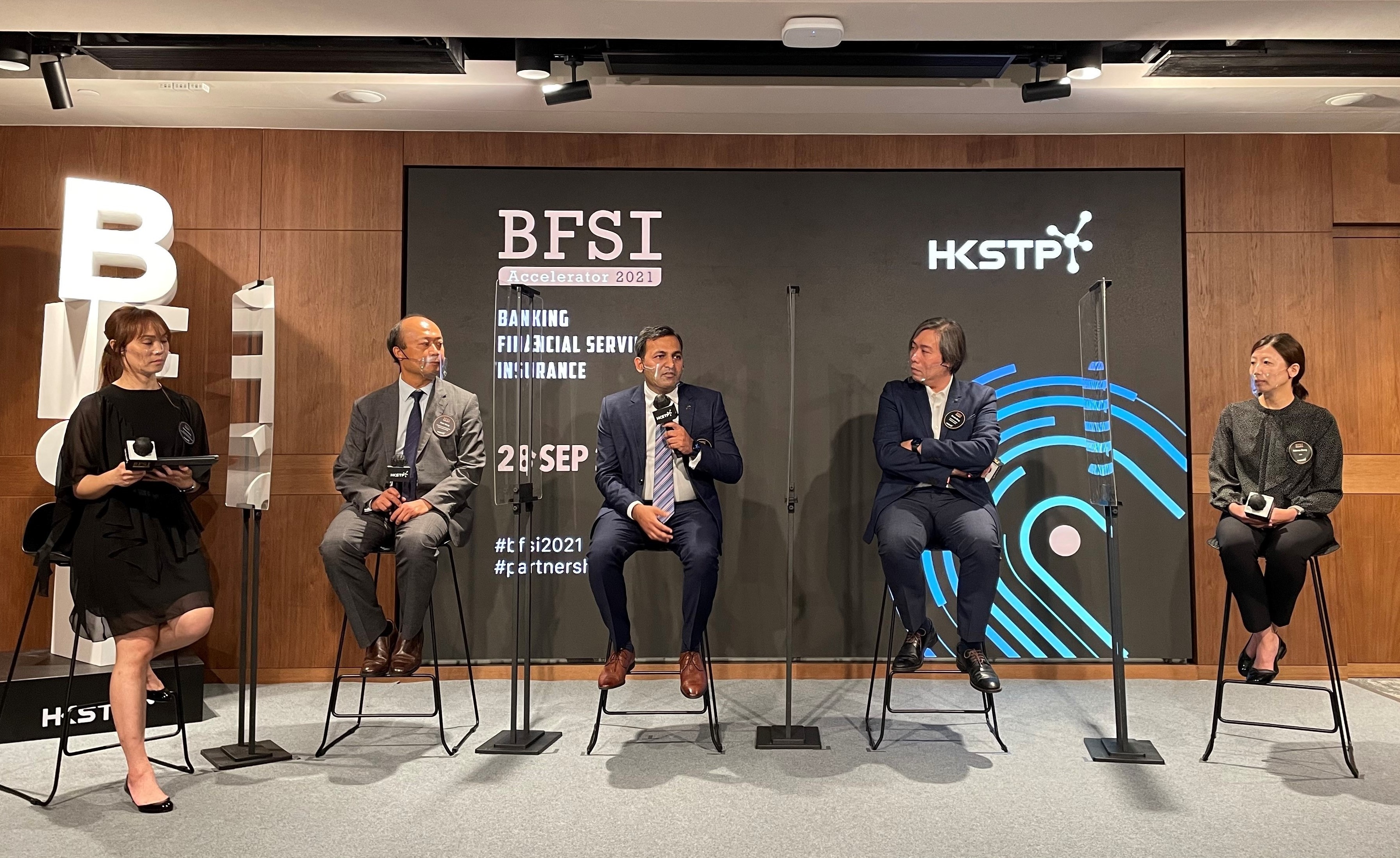
Citibank Hong Kong earlier partnered the Hong Kong Science and Technology Parks Corporation (HKSTP) to participate in its Banking, Financial Services and Insurance (BFSI) Accelerator 2021. The programme allows us to enhance our connection and exchange with local and overseas tech ventures, accelerating the digital transformation for banking services. It also serves a platform for us to create synergies with industry players, sparking innovation through co-creation to achieve viable solutions, nurturing FinTech talents and fostering the ecosystem. Mr Nailesh Shah, Head of Digital Channels and Experience, Citibank Hong Kong attended the Partner Sharing Session at the Demo Day yesterday and shared with event participants the insights and experience of collaborating with local and overseas tech ventures.








