
Published
- 06:00 am

Equifax® is launching a real-time, Know Your Business (KYB) online Business Verification Solution offering to help U.S. lenders and businesses of all sizes make faster, more informed decisions before onboarding new accounts or vendors.
New business applications in the United States have been growing at an unprecedented rate, with five million applications submitted per year since 2021. This growth in the small business marketplace creates a need for both lenders and business service providers to gain visibility into the legitimacy of a business earlier in the application process. This is critically important to internet and phone service providers, financial institutions, lenders, insurance carriers and others, to help identify potential risks – like fraud – before solidifying new business relationships.
"Businesses, both large and small, help drive economic growth – which in turn impacts the communities where they operate," said Sal Hazday, Senior Vice President and General Manager of the Equifax U.S. Information Solutions Commercial Business. "Equifax continues to develop solutions and resources to help provide businesses of all sizes with the information they need to make informed decisions, and our new Business Verification Solution is designed to help companies gain visibility into who they are working with before the relationship is formed."
The Equifax Business Verification Solution leverages industry-leading data and analytical models, providing an easy-to-read, combined report that provides a more complete view of the business applicant and the principal. The solution's robust verification process is based on a comprehensive risk model and allows customers to evaluate multiple aspects of a small business, including:
- Business verification and fraud alert score – These scores help to analyze the business and identify the potential for fraud.
- Principal owner information – Provides the name of the business principal, guarantor, or both, along with address and tax ID.
- Associated businesses – List of other businesses potentially associated with the business owner and/or principal.
- Updates to public records – Identifies adverse business events, such as bankruptcies, judgements and liens, as well as potential discrepancies between the inquiry information and correlated data.
- Credit summary report – Summarizes recent credit-seeking activity conducted on behalf of the business.
- Company profile – Includes information that most closely matches the inquiry information, including business name, legal name, address, firmographics, and more.
- Office of Foreign Assets Controls (OFAC) screening – Screens businesses and the business owner(s) and/or principal(s) against OFAC lists.
Equifax is committed to helping small businesses thrive through innovative products like the new Business Verification Solution and the OneScore for Commercial credit score. OneScore for Commercial launched in May 2023 and helps lenders and service providers score as many as 50% more applications through the power of Equifax commercial data, helping to increase the predictability of default on commercial accounts.
- 04:00 am

Alloy, the identity risk management company behind nearly 600 leading banks and fintech companies, today announced Alloy for Embedded Finance, a new product custom-designed for sponsor banks, BaaS providers, and their fintech partners to collaboratively manage identity risk and stay ahead of regulatory requirements.
Oftentimes, sponsor banks have not had sufficient oversight or control over whether their fintech partners have adhered to the banks’ government-mandated compliance requirements. Alternatively, in models where sponsor banks have taken on all compliance responsibilities, they have often forced their fintech partners into a one-size-fits-all approach to compliance that doesn’t suit fintechs’ evolving risk needs and often adds unnecessary friction to their user experiences.
Alloy for Embedded Finance solves these challenges. The new product leverages the strength of Alloy’s existing platform while introducing a new parent/child account configuration. Sponsor banks (or ‘parent accounts’) have the ability to designate different levels of autonomy and guardrails for each of their fintech partners (or ‘child accounts’), depending on how mature the fintech is, how much of the process the fintech wishes to own, and the risk appetites of both parties. With this construct, sponsor banks can seamlessly build compliance policies, then issue and enforce them to each of their fintech partners all at once. More mature or ‘autonomous’ fintechs can customize their controls on top of these baseline policies, giving them the flexibility to tailor risk measures that don’t add unnecessary friction for end users. Regardless of the autonomy level a fintech partner has, their sponsor bank retains total oversight of their policies to ensure they are fully compliant.
“Sponsor banks can’t operate without controlling the CIP/KYC and AML/BSA policies of the fintechs in their program—recent enforcement actions make this clear,” said Tommy Nicholas, CEO and Co-founder at Alloy. “At the same time, risk programs that are ‘one size fits all’ result in terrible user experiences for fintechs that pride themselves on providing a frictionless interface. Alloy for Embedded Finance solves both sides of this problem.”
Alloy for Embedded Finance arrives during a period of massive potential for the embedded finance industry: Ernst & Young predicts that the global embedded finance market across the entire value chain will grow to $606B by 2025. However, the industry has been plagued by compliance challenges, with regulators increasing pressure on sponsor banks to ensure their third-party partners meet compliance requirements. According to data from advisory firm Klaros Group, sponsor banks drew one-third of all formal enforcement orders by federal banking agencies in the fourth quarter of 2023. With regulatory attention unlikely to slow down, it is more critical than ever for sponsor banks and their fintech partners to work collaboratively to meet compliance requirements so they can truly capture the full potential of the embedded finance market. Alloy already works with many of the leading sponsor banks, BaaS providers, and fintechs in this space, including Grasshopper, Evolve Bank & Trust, Liberis, Treasury Prime, and Marqeta.
- 08:00 am

Checkbook, an all-in-one payments platform, announced a multi-year collaboration with Visa aimed at expediting disbursements to businesses, institutions, and individuals across millions of endpoints around the country.
This announcement builds on Visa and Checkbook’s incremental collaboration with Checkbook having participated in the Visa FastTrack program in 2021 and their Virtual Card program enabled by Visa. The latest collaboration, this time involving Checkbook’s implementation of Visa Direct, further strengthens the relationship and expands the solutions Checkbook is offering to businesses looking to disburse fast and seamless payments to individuals and other businesses.
“Our goal at Checkbook has always been to offer our customers a comprehensive suite of modern payment options with a single API,” says PJ Gupta, CEO and Founder of Checkbook. “By offering real-time payments through Visa Direct, we are enhancing our customers’ ability to send and receive fast payments seamlessly.”
“In today’s ‘always on’ world, businesses and consumers demand quick and convenient access to cash flow – whether paying insurance claims, disbursing wages, tips or rebates – speed and efficiency have become the name of the game,” said Yanilsa Gonzalez-Ore, North America Head, Visa Direct. “We’re proud to collaborate with companies like Checkbook that are helping to streamline global money movement and disburse funds quickly and securely with Visa Direct.”
Fast payments optimize the way businesses send money to their customers and to each other. Examples include paying insurance claims, vendors and contractors, wages, tips and rebates amongst others. However, most organizations encounter unexpected complications and overhead in facilitating these payments. With Checkbook’s payments platform, creating and sending real-time payments directly to customers’ bank accounts through eligible cards is done via one simple API call. Checkbook also offers a broad feature set that helps make managing the payments lifecycle painless. Businesses can track payment status and monitor account activity from their dashboard or via Checkbook’s robust API. All these pieces contribute to the success of Checkbook’s product – a payment infrastructure tailored to meet customers’ payment needs when and how they need it.
Visa Direct provides a single point of access and reach to 8.5B+ endpoints, helping transform global money movement by facilitating the delivery of funds to 3B+ eligible cards, 3B+ bank accounts and 2.5B+ wallets2 around the world. In Visa’s FY23 alone, Visa Direct surpassed 7.5 billion transactions. Checkbook customers are part of that, which helps save them time and resources.
- 08:00 am

In a move towards greater transparency and responsible credit reporting in the buy now, pay later (BNPL) industry, Experian® today announced it will now include “pay-in-4” BNPL loan information from Apple Pay Later on consumers’ credit reports, making Apple the first major BNPL provider to fully furnish “pay-in-4” loan information and payment history directly to the credit reporting agency.
Experian is committed to driving transparency in the BNPL industry and doing so in a way that doesn’t inadvertently negatively impact consumers. Given this, Apple Pay Later loans borrowed today onward will appear on a consumer’s Experian credit report with a BNPL designation starting March 1. While consumers will be able to see their Apple Pay Later loan information on their Experian credit report, the information won’t be factored into existing traditional credit scores but may in the future as new credit scoring models are developed.
When BNPL account information becomes more widely reported to Experian by additional BNPL providers, a consumer’s BNPL history will be visible to lenders who request an Experian credit report — enabling lenders to make more informed decisions when determining whether to extend credit offers.
“We designed Apple Pay Later with our users’ financial health in mind, and an important part of this is ensuring that their loans are reflected in their overall financial profiles,” said Jennifer Bailey, Apple’s vice president of Apple Pay and Apple Wallet. “By reporting Apple Pay Later loans to Experian, we aim to help promote greater transparency and responsible lending for both the borrower and the lender, while providing users with the opportunity to further build their credit.”
Experian’s role as the first credit bureau receiving Apple Pay Later loan information underscores the company’s commitment to drive industry transparency while protecting consumers. Experian has a longstanding history of working with leading BNPL providers and is in active conversations to expand the reporting of BNPL information on consumer credit reports.
“Experian has long supported the use of expanded data sources, including BNPL information, to help consumers build their credit profile and improve their financial health,” said Jennifer Schulz, CEO of Experian North America. "We applaud Apple for taking this meaningful first step and look forward to working with other leading BNPL providers to drive greater transparency that will benefit lenders and consumers alike."
- 09:00 am

Marqeta, the global modern card issuing platform that enables embedded finance solutions for the world’s innovators, today announced that its platform processed more than $1 billion in volume in a single day for the first time, a significant new milestone for the company. This announcement comes shortly after Marqeta’s Q4 and Full Year 2023 earnings, where it announced that it had exceeded $200 billion in annual TPV only two years after it reached $100 billion, representing the unparalleled scalability and resilience of its modern platform.
“This milestone showcases the remarkable strength of our platform and steadfast ability to expand with our customers and help them grow," said Simon Khalaf, Marqeta’s Chief Executive Officer. “As more brands look to embed financial products into their offerings, our proven experience and knowledge of what it takes to deliver exceptional user experiences and operate card programs at scale make us ready to meet the demands of this growing market.”
Marqeta celebrates this milestone following a transformational 2023, marked by the expansion of its credit card platform to serve both consumer and commercial needs with full-scale processing and program management capabilities. Marqeta also outlined its path to profitability, renewing the majority of its customer volume and optimizing operational efficiency.
- 07:00 am

Moneyhub, the leading provider of Open Banking, Open Finance and Financial Wellness solutions to the Pensions and Investment industry has today submitted its response to the Financial Conduct Authority’s (FCA’s) Advice Guidance Boundary Review proposals (DP23/5).
The FCA’s proposals seek to bridge the ‘Advice Gap’ which has resulted in just 8% of adults* reportedly taking financial advice, leaving millions of people unsure where to get help with decisions about investments, savings, pensions or retirement planning.
Open Banking, Consumer Duty and Pensions Dashboards unlock consumers’ access to their data whilst putting customers’ needs at the heart of every financial services business. The Advice and Guidance Boundary Review can unite these regulatory initiatives so that, when it comes to managing their money, consumers can quickly and easily see both what they have and what to do next. The Data Protection and Information Bill will enable new Smart Data schemes and enable consumers to control their data like never before.
Sam Seaton, CEO of Moneyhub said:
“The FCA's proposals are a game-changer which Moneyhub supports. We know consumers are missing out on potentially higher returns on their money because products are too complicated; They don't know who to trust and advice is too expensive. Data is the answer for making advice accessible and implementing the new proposals.
“Targeted support, simplified guidance and holistic advice will co-exist using the same underlying ‘open data rails’ with an appropriate regulatory framework over the top.
“Matching consumers who have defined objectives, needs and characteristics with suitable products, using data sharing and automated ‘nudges’, is a logical extension of the use of consumers’ data. Our financial wellness platform is already helping consumers to become more aware and informed, combined with our technology firms can now deliver targeted support and simplified guidance to millions of consumers”.
Vaughan Jenkins, Managing Director of Partnerships at Moneyhub said:
“Moneyhub supports the Government and the FCA's desire to build a framework which consumers can trust, recognising the complexity faced by consumers in making financial decisions. We believe that Open Finance, within the emerging Smart Data environment, will play a significant part in the realisation of these ambitions.
“We urge regulators and policymakers to orchestrate Open Finance, Consumer Duty and the Advice and Guidance Boundary Review into a single coherent and comprehensive agenda for sustainable change.
“Product manufacturers should be required to publish Open APIs that support customers’ access to their data and enable them to share data by their consent. This is the key to improving competition in favour of consumers”
- 04:00 am
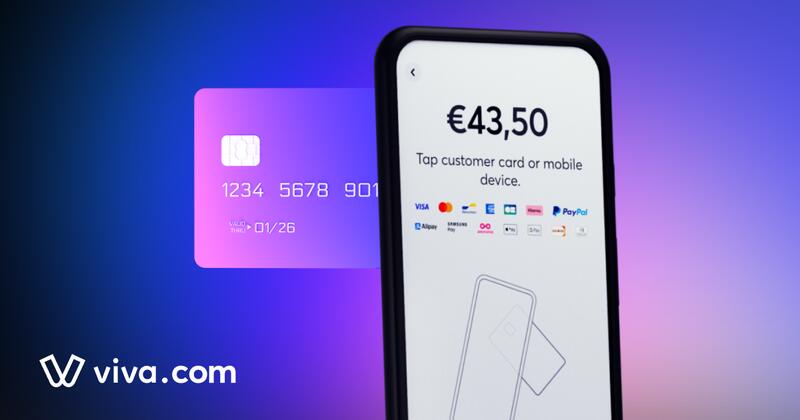
Viva.com proudly stands as the first among other acquirers such as Adyen, Banque Populaire, Caisse d’Epargne, and BNP Paribas, to activate Cartes Bancaires on Tap to Pay on iPhone.
In a groundbreaking move, Viva.com has announced CB, the leading card and mobile payment and withdrawal system in the French market, can be used with Tap to Pay on iPhone with the viva.com | Terminal app - allowing businesses to take contactless payments from a potential pool of nearly 76 million card or mobile holders with the CB scheme, with just an iPhone and the viva.com | Terminal app.
Tap to Pay on iPhone with the viva.com | Terminal iOS app is yet another step towards liberating merchants from cumbersome legacy payment terminals, offering convenience, flexibility, streamlining payments and simplifying daily operations.
With just an iPhone and the user-friendly viva.com | Terminal app, any French business, no matter how big or small, or what industry they are in, can now accept CB cards with Tap to Pay on iPhone; from cafes, restaurants, and retailers, to hotels, taxis, and solo traders, letting customers pay on the spot or on the go.
How It Works:
To start accepting CB cards with Tap to Pay on iPhone, merchants are required to download the viva.com | Terminal app on the App Store - on iPhone XS or later running the latest version of iOS. At checkout, the merchant will simply present their iPhone to the customer, who will tap or hold their contactless payment card or device for digital wallets near the merchant’s iPhone. Tap to Pay on iPhone uses the built-in security and privacy features of iPhone to help keep businesses and customer's data private and secure. When a payment is processed, Apple does not store card numbers on the device or on Apple servers.
- 04:00 am

Jayne Sibley, who created Sibstar, a debit card and mobile app that helps people living with dementia and their families to safely manage everyday spending, has secured £125K from BBC Dragons’ Den investors, Sara Davies and Deborah Meaden, to further drive financial inclusion and equality.
Southampton-based Jayne, who came up with the concept for Sibstar whilst caring for both of her parents with dementia, appeared on the show on 29th February alongside her life and business partner, Martin Orton, impressing both Sara and Deborah with her unique solution to a problem faced by many families living with the condition. The Dragons were particularly interested to hear about the success Jayne had already achieved with the business since it launched in March 2023 - despite having no previous professional experience in financial services.
Third-party investment has been critical in bringing Jayne’s life-changing brand to market, so when the opportunity to appear on Dragons’ Den came up, she jumped at the chance to secure significant financial and strategic input from the famous entrepreneurs.
Jayne says: “Going into the Dragons’ Den was a hugely emotional experience. I founded the business after experiencing my own parents’ struggles with money as their cognitive abilities declined. I had to open up about some very difficult times, but the Dragons were very supportive and empathetic.
“Securing investment from both Sara and Deborah means the world to me. Not only have two of the most successful female entrepreneurs in the country recognised the potential in my company, but their input and endorsement can only serve to make financial services more accessible for underserved groups in our society.”
Deborah Meaden comments: “Jayne’s idea is so simple, but has the ability to transform lives. I was impressed by how she’d taken her own lived experience and channeled it into making an impressive financial services product that’s already secured a foothold in a sector in which it's notoriously difficult to achieve cut-through. I’m looking forward to being involved in the next stage of Sibstar’s exciting journey. Sibstar is the best kind of investment, one that has the an important reason to be and makes a big difference to people’s lives.”
Sara Davies adds: "In the coming years, sadly, more and more families will be affected by dementia and it’s critical that the business community gears up to serve a wider variety of needs. I think many families out there are going to be extremely grateful to Jayne for addressing a common challenge for people with dementia, and I’m excited to offer the benefit of my experience to help those affected live independently for longer.”
- 09:00 am
OTP Bank, a listed retail and corporate bank based in Budapest, Hungary, has selected Iliad Solutions as its payment testing provider in a new multi-year deal.
OTP Group currently operates in 12 countries located in the Central and Eastern Europe (CEE) region, namely Albania, Bulgaria, Croatia, Hungary, Moldova, Montenegro, Romania, Russia, Serbia, Slovenia, Ukraine, and in the Middle Asia region Uzbekistan, OTP Bank Hungary being the parent company.
OTP Bank will licence t3, Iliad’s flagship enterprise-grade, browser-based digital payments testing platform providing cutting-edge, automated testing options helping drive OTP’s payment capabilities and its position as a leading financial institution.
Ábel Bagaméry, Director, Card payments, OTP Bank said: “Effective payment testing is key to our future success and expansion. Using cutting-edge testing technology helps us achieve this. t3 is one of the most advanced payment testing platforms in the world, we value the opportunity to access its capabilities through this new partnership.”
Anthony Walton, Iliad Solutions CEO commented “We are delighted that OTP Bank has chosen Iliad’s t3 solution as its strategic testing platform to support its next phase of modernisation and digital development. We look forward to working with OTP in a fruitful relationship across the bank’s markets. It’s great to be doing new business in the CEE region.”
Removing friction from the complex process of getting new payment initiatives to market quickly, efficiently and at a reasonable cost has never been more important. t3 helps facilitate a dynamic adoption of digital payments through a simplified and automated testing process to the benefit of all.
Iliad’s products and services are used by leading financial institutions around the globe helping to minimise risk when deploying new payments technology, reducing the costs associated with testing and improving the speed of launching new systems.
Sophisticated controls can be applied to projects at every level, with real-time data available via intuitive dashboard views. t3 allows the testing of complex transactions simply and effectively - tests are fully automated and can run at up to 15,000 transactions per second.
- 04:00 am
The Consumer Financial Protection Bureau (CFPB) today issued a circular to law enforcement agencies and regulators explaining how companies operating comparison-shopping tools can break the law when they steer consumers to certain products or lenders because of kickbacks. Consumers use comparison-shopping tools to evaluate the costs, features, and terms of many financial products, including credit cards, loans, and bank accounts. However, consumers often encounter manipulated results or digital dark patterns, fueled by behind-the-scenes incentive payments from lenders. The circular explains how these practices may violate federal law and highlights examples of illegal arrangements.
“Americans turn to online comparison tools to find the credit card with the lowest interest rates or best rewards,” said CFPB Director Rohit Chopra. “The CFPB is working to ensure that digital advertisements for financial products are not disguised as unbiased and objective advice.”
Digital comparison-shopping tools are widely used in many product categories, from retail goods to travel and financial products. By allowing consumers to compare a variety of competing products quickly and efficiently, these tools have the potential to benefit individual consumers and drive competition across the larger market.
Comparison-shopping tools can help consumers evaluate and find financial products, especially credit cards and mortgages. Consumers often rely on the tools to navigate difficult financial decisions. However, some tool operators take advantage of that reliance and manipulate results. For example, some operators might accept financial kickbacks, sometimes referred to as “bounties” within the industry, to manipulate lists of results displayed to shoppers.
The CFPB previously issued guidance on how real estate and mortgage laws apply to mortgage comparison-shopping. In today’s circular, the CFPB provides guidance on how consumer financial protection laws apply to comparison shopping for other financial products. Comparison-shopping tools can heavily influence a consumer's selection of a financial product. Many digital comparison-shopping tools hold themselves out as providing unbiased and objective advice. The guidance discusses how regulators and law enforcement agencies can evaluate operators of comparison-shopping tools that accept payments from financial firms to manipulate results or suppress options that may better fit the consumer's stated preferences.
Dark Patterns in Comparison Shopping
Dark patterns are a common tool used to manipulate consumers. Operators of comparison-shopping tools may deceive consumers with user experiences and user interfaces that lead people to believe they are the beneficiaries of competition. However, if consumers are being tricked into paying higher prices or selecting inferior products, the comparison-shopping company and the company paying-to-play may be the only ones benefiting from the façade of competition.
The CFPB has warned that dark patterns can violate consumer financial protection laws, and the agency has taken enforcement actions against violators. The CFPB sued ACTIVE Network for illegally cramming consumers with junk membership fees, and sued TransUnion for using dark patterns to make it difficult for consumers to cancel certain subscription services. The Federal Trade Commission has also taken action, including a lawsuit against Credit Karma for tricking consumers with deceptive “Pre-Approved” credit offers.
Increasing Competition in Credit Cards and Other Markets
The CFPB has found evidence of practices that may imply anti-competitive behavior in the consumer credit card market, as well as high levels of concentration in the industry. A recent CFPB report showed that large banks are offering worse credit card terms and interest rates than small banks and credit unions, regardless of credit risk. The difference in interest rates can translate to $400 to $500 in additional annual interest for the average cardholder. The CFPB has also published research showing how the largest issuers have increased their interest rate margins over the past decade, resulting in about $25 billion in additional interest charges in 2023 alone.
To help foster greater competition in this important market, the CFPB is developing a consumer-facing tool that, once finished, will bring more price transparency to credit card comparison-shopping. Consumers shopping for a credit card will have an unbiased way to compare credit card terms and interest rates.
Today’s circular is part of a broader effort to level the playing field too often tilted against consumers across many different markets for consumer financial products and services. The guidance follows an advisory opinion to protect mortgage borrowers from pay-to-play digital comparison-shopping platforms. It also follows efforts to level marketplaces through actions on hard to cancel subscription services, fake review fraud, pay-to-pay fees, and hidden junk fees.








