
Published
- 08:00 am

Designed to be a robust price for Bitcoin and Ethereum in AUD across major exchanges
MV Index Solutions GmbH (MVIS®) in partnership with CryptoCompare, the global leader in digital asset data, today announced the launch of the MVIS CryptoCompare Global Bitcoin Benchmark Rate (AUD) (ticker: GBBRA) and the MVIS CryptoCompare Global Ethereum Benchmark Rate (AUD) (ticker: GEBRA).
The indices serve as a reference rate for funds, asset managers and exchanges who wish to build financial products, such as derivatives and ETPs, on Ethereum and Bitcoin.
"We are pleased to launch another two digital assets indices building on the success of the North America focused MVIS CryptoCompare Bitcoin Benchmark Rate and the MVIS CryptoCompare Ethereum Benchmark Rate. With these indices, we offer a more global concept in this framework, and our first digital assets indices in AUD," said Thomas Kettner, COO of MV Index Solutions.
“We are delighted to continue our ongoing partnership with MVIS with the launch of our first AUD digital asset indices, which expand on the framework of our highly successful North American Benchmark Rate. These indices will play an important role in helping a wider scope of global investors gain exposure to digital assets,” said Charles Hayter, CEO and Co-Founder of CryptoCompare.
- 03:00 am

Open Future World have announced Open Banking World Congress 2022 will be taking place May 24th - May 25th 2022 in Marbella, Spain.
The Congress, the largest gathering of open banking/finance leaders and interested onlookers from around the world, will return as an in-person event. However, following the success of the virtual format of the last two years, there will also continue to be a free virtual ticket in order to reach previous attendees numbering 4,500+ from 110 countries.
One leading partner of the Congress, leading API specialist Sensedia, said: “We at Sensedia believe the Open Banking World Congress is one of the most important events of 2022 and we are proud to be a leading partner of such a prestigious Congress, with an international mindset to exchange the top challenges in the industry."
Open Future World’s Marie Walker said “As always our topic focuses will centre around value creation - for beneficiaries, businesses and economies, with each presentation also designed to provide maximum value to the audience. We are particularly looking forward to the exceptional and varied networking opportunities our 2022 venue will facilitate.”
More details, including the significant networking opportunities planned, will be released in January.
- 07:00 am
The Temenos Exchange will help Fintechs to develop, validate and monetize
new banking solutions on top of Temenos’ Open Banking Platform
Temenos, the banking software company, today announced Temenos Exchange, a new Fintech marketplace to bring open banking innovation to market faster, and at scale. The new marketplace will offer pre-integrated and certified Fintech solutions that can be easily deployed within the Temenos Banking Cloud, enabling banks to accelerate the creation of new financial services, while reducing the costs of development. The Temenos Exchange is the core element within the recently announced Temenos Scale Developer Program to promote and monetize new financial solutions.
This comes as the banking industry moves towards open innovation and platforms and trends such as embedded finance are gaining traction. According to a recent Economist Intelligence Unit survey of global banking executives, almost half (47%) expect their businesses to evolve into ecosystems over the next two years, offering their own and third-party products and services to customers as well as other financial organizations.
Martin Bailey, Director of Innovation and Ecosystems, Temenos, said: “Temenos Exchange is all about collaboration and co-innovation, unlocking the enormous potential to create and sell solutions that transform consumer experiences and change the DNA of how banks operate. It makes it easier for banks to quickly integrate new fintech solutions while helping developers accelerate innovation and get new ideas in front of the widest possible banking audience.”
For Fintechs and software developers, Temenos Exchange will act as an accelerator, helping them develop, validate and monetize new banking solutions. Joining Temenos Exchange means they can write once and sell their solution across a vast banking audience of more than 3,000 clients in 150 countries. Collectively, this community serves the banking needs of 1.2 billion people worldwide.
Temenos Exchange is supported by a new developer program, SCALE, which gives participants access to an API portal, shared and dedicated multi-product sandboxes to develop and validate ideas and improved tooling to speed up development. Temenos will also provide business expertise and support to early-stage fintechs, including proof of concept testing, to bring new ideas to reality.
One of the newest Fintechs to join Temenos Exchange is Greenomy, an EU Taxonomy/SFDR Solution that enables the redirection of funds towards sustainable activities, speeding up the transition to a carbon-neutral economy in line with the European Commission’s Green Deal.
Alexander Stevens, CEO, Greenomy, said: “The new EU Sustainable Finance legislation presents complex challenges for banks. Integrating Greenomy with Temenos and accessible on Temenos Exchange enables thousands of banks to instantly deploy the advanced software tools and capabilities needed to deliver compliant sustainability reporting. With first reports due in January 2022, banks need to act fast and the collaboration with Temenos is an accelerator in extending the reach of our solution across the banking sector.”
The launch of Temenos Exchange and SCALE program will serve the growing appetite from banks to access innovations, even before they have achieved widespread market adoption. Over the next few years, Temenos expects the number of fintechs on Temenos Exchange to increase from around 50 today to more than 200 and is significantly expanding its integrations team to ensure all solutions are thoroughly tested, secure and bank-ready.
- 06:00 am
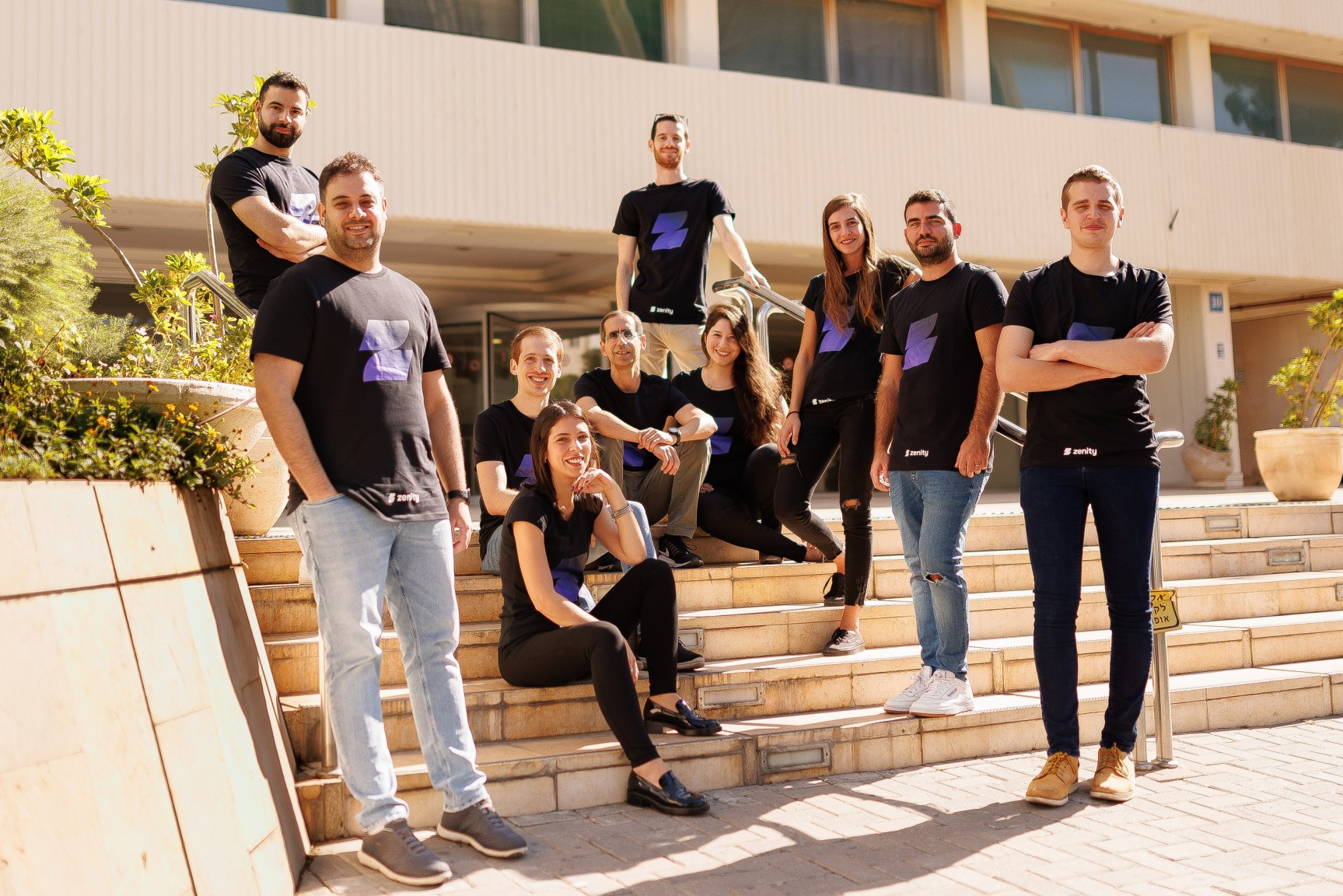
Microsoft and IDF unit 8200 veterans established the only company to secure Low-Code/No-Code applications. “Zenity enables governance and security principles, accelerating citizen development growth,” said Ben Kliger, co-founder and CEO of Zenity.
Zenity, the only governance and cybersecurity platform for Low-Code/No-Code applications, exited stealth mode with a $5 million seed funding round, led by Vertex Ventures and UpWest, and backed by top executives such as the former CISO of Google, Gerhard Eschelbeck, and former CIO of SuccessFactors, Tom Fisher. With Zenity, businesses can promote citizen development and adopt Low-Code/No-Code platforms while avoiding critical data exfiltration or disruption to business continuity.
Today’s digital revolution is powered by platforms that democratize application development and enable rapid quality deliverables. Traditionally, IT and development teams developed applications. Now, teams utilize Low-Code/No-Code platforms such as Salesforce, Microsoft Power Platform, and others to develop applications in minutes. With this new employee independence, CIOs, CISOs, and relevant stakeholders are looking to ensure that business units and citizen developers are free to improve productivity without compromising security. Without governance and security practices, organizations are unintentionally vulnerable to exfiltrating sensitive data or exposing the organization to breaches and ransomware attacks.
“Companies are heavily adopting Low-Code/No-Code, without realizing the risks it employs nor their part in the shared responsibility model,” said Zenity co-founder & CEO Ben Kliger. “We empower CIOs and CISOs to seamlessly govern their Low-Code/No-Code applications and prevent unintentional data leaks, disturbance to business continuity, compliance risks or malicious breaches.”
To provide governance and security for such applications, teams must assess the business logic, security configuration, permissions model, and data flows. Already working with Fortune 500 companies using their platform, Zenity continuously scans every application component identifying security policy violations. This can include vulnerabilities, such as risky 3rd-party components and exfiltration and manipulation threats, including supply chain attacks.
“The challenge is mitigating the risks and security threats associated with Low-Code/No-Code solutions without disturbing the business,” said Tom Fisher, Zenity advisor and former CIO of Oracle, Qualcomm, CTO of eBay. “Zenity provides the perfect combination of governance and security tools with a pro-business approach that helps business developers build with confidence.”
Ben Kliger and Michael Bargury worked at Microsoft on the Azure and cloud security teams. Michael Bargury, co-founder and CTO of the company, said, “Low-code brings huge ROIs to Fortune 500 companies by democratizing application development and aligning development with the business. However, it also bypasses existing security approaches, making it easy to store sensitive CRM data on personal accounts, share credentials, and execute arbitrary code, allowing attackers to remain hidden while maintaining full control”
These funds will allow them to expand R&D, product, marketing operation, and customer acquisition activities while allowing businesses to experience unprecedented growth, made available by today’s digital revolution.

Vince Graziani
CEO at IDEX Biometrics ASA
Challenger banks have shaken up the payment ecosystem in the last decade. see more
- 05:00 am
Trulioo’s automated identity verification solution receives a positive assessment as an age verification system (AVS) concept in telemedia
Trulioo, the global identity verification leader, today announced that the Kommission für Jugendmedienschutz (KJM) or the Commission for the Protection of Minors in the Media, has certified its solutions can be implemented in the German market to verify the ages of end users trying to access age-restricted content.
After a robust assessment, the KJM concluded that Trulioo’s identity verification solution complies with both the legal and technical requirements of the Interstate Treaty on the Protection of Minors in the Media (JMStV).
By enforcing age verification checks, it becomes difficult for youth and children to access age-restricted content in telemedia.
“Trulioo’s age verification solution provides a straightforward and seamless user experience for age-appropriate users while ensuring minors don’t engage in potentially harmful content,” said Steve Munford, Trulioo CEO. “By turning to Trulioo’s solutions, media providers and businesses can perform age checks that adhere to compliance measures while upholding a privacy-centric approach in handling this sensitive data.”
Trulioo GlobalGateway provides secure access to reliable data sources to verify a person’s age in real-time. Media providers and businesses have flexibility in setting minimum age parameters, ensuring age-appropriate visitors can access content while minors are kept out. The identity data provided by the visitor is checked against independent databases to see if the information positively matches. GlobalGateway provides access to over 400 data sources to reliably and securely verify the identities of over 5 billion individuals around the world through one API.
Learn more about how Trulioo helps organizations comply with age verification checks here.
- 07:00 am

Fintech’s Greatest Contribution Isn’t Innovation but Access to Information
Fintech has revolutionised and redefined countless areas of modern life. From savings accounts and investments to the very concept of value exchange through innovations such as blockchains, technology has changed the game in multiple ways. However, for all the clever products and mechanisms fintech has brought to the fore, the sector’s greatest achievement is opening up the financial world. Today, through a combination of access and education, more people are aware of how to earn, invest and save in the best ways possible. That’s due, in part, to digital products breaking down barriers and making the average person more aware of what’s possible.
New ideas and new takes on established ideas
Indeed, it’s possible to go to a single extreme to prove this point. Prior to the advent of Bitcoin, few people outside of the financial world knew about, let alone understood, the concept of centralised currencies. However, as Bitcoin et al have grown in popularity and blockchains have become more familiar, people are becoming aware of decentralised finance (DeFi). The average person on the street might not be able to explain the nuances of DeFi. However, they may have a broad understanding of it and, in turn, know that there’s a difference between centralised and decentralised finance. That’s progress. It might be a small amount of progress, but it’s progress, nonetheless.
Bringing it back to more tangible examples, fintech has made more people aware of the ways in which money can be used as a tool. In other words, money saved doesn’t have to be idle. For instance, using a comprehensive online knowledge base, anyone can learn about the basics of a self-invested personal pension (SIPP). SIPPs are tax-efficient accounts that allow individuals to invest in stocks, bonds, and ETFs. As long as the individual stays within their annual investment allowance (£40,000 in 2021-2022), any profits their investments yield will be free from capital gain tax. What’s more, the government will apply tax relief based on the contributions made and the individual’s income tax band.
Digital tech has increased everyone’s financial IQ
In addition to learning about the basics of SIPPs, people can use online knowledge hubs to check they’ve got the right product. They can also use calculators to ascertain how much, theoretically, they need for retirement. Importantly, it’s not just knowledge that people can take advantage of. The rise of online investment platforms has lowered the barriers to entry. Because the market is becoming increasingly competitive, investment companies now offer incentives, such as fee-free trades, low monthly fees, fractional shares and welcome bonuses. Again, what we can see here is digital technology making financial matters easier to understand and easier to access.

Source: Pixabay
Fintech, as an industry, has created a variety of impressive innovations. Big data and artificial intelligence are helping financial institutions assess customers more efficiently and, in turn, combat fraud. Blockchains have brought a new dimension to value exchange. Biometrics have facilitated the creation of Face ID logins which have made mobile banking safer. All of these things are the result of fintech. However, perhaps the industry’s greatest achievement is opening up the financial world. By making more things accessible to more people, fintech has increased the average person’s financial IQ and that can only be seen as a positive.
- 06:00 am

Azimo, Europe’s leading digital money transfer service, has partnered with open banking payment provider Trustly to meet growing demand for cross-border payments in Europe. The partnership will let customers pay in a fast, simple, and secure way and is yet another sign of the shift towards digital remittances.
“Many of our customers, particularly in the Nordics, prefer paying directly from their online bank,” says Dora Ziambra, Chief Operating Officer at Azimo. “By offering Trustly, we help customers send money to their loved ones even more quickly – with even less friction.”
Trustly is available to all Azimo customers sending from the Nordics, the Baltics, Germany, Austria and Poland. Unlike traditional payment methods, customers don’t need to enter card numbers or bank details manually. All they have to do is log into their online bank and approve the payment.
Open banking payment solutions like Trustly are becoming increasingly popular among digital money transfer providers because of the simplicity and security they offer to migrant workers.
Innovation in the payments industry throughout the pandemic has accelerated this shift. In fact, Juniper Research expects us to see 2,800% growth in open banking in the next five years. According to the 2021 study, global payments facilitated by open banking will exceed $116bn by 2026.
Digital remittances too have exploded over the course of the pandemic, as migrant workers become increasingly comfortable with online transactions for cross-border transfers.
If migrant workers are to access more affordable sending solutions, digital money transfer service providers like Azimo must continue to adopt new technologies that benefit senders and receivers. The adoption of open banking is just one example.
Luca Giannone, Director of Financial Services at Trustly, says: “Open banking is on the rise, and people across Europe increasingly prefer to pay directly from their bank accounts. Azimo is keenly focused on offering the best customer experience possible, and we’re proud that Trustly’s open banking payments are now a part of that.”
- 03:00 am
Contis, a leading Banking-as-a-service (BaaS) provider in Europe, has today announced the expansion of its offering in Germany following its partnership with NAGA.
Contis and NAGA are revolutionizing investment companies’ capabilities in the region. Via Contis’ Buffer solution, users of NAGA’s platform will be able to link and access funds held directly in their payments and brokerage wallets. NAGA will also gain access to the UK and EEA payment rails, as well as adding a globally recognised VISA Debit Card to its offering, accepted at over 140 million merchants worldwide.
This partnership represents an important milestone in the rollout of Contis’ holistic, trusted, and scalable BaaS offering to the wider German market. In turn, enabling fintechs, banks, and businesses in the region the opportunity to offer innovative financial products and services to their customers, without the burden of complex compliance and payments processing headaches.
Following the company’s decision to join forces with Solarisbank in July 2021 this announcement marks the latest step in Contis’ expansive strategic growth plans, building on its existing network of clients and partners across central Europe (including the likes of Austria’s Bitpanda) to cement its presence in the region.
Peter Cox, Co-Founder and Chairman at Contis, comments: “Ten years ago, “fintech” was still a buzzword in Germany. Today, the country is increasingly becoming one of Europe’s leading fintech hubs. As payments technology innovation continues to disrupt traditional banking models across Europe, market players of all size are seeking new ways to bring competitive solutions to their customers. Our decision to expand our German presence aligns with our vision to bring about a future wherein anyone can easily and seamlessly transfer any payment value, anywhere, anytime, whilst meeting consumer demand for next generation products and services in a marketplace ripe for digital transformation.”
Now a member of Visa-Ready (the elite certification for fintechs) and live on Mastercard – the leading and most widely accepted card schemes in Germany – Contis is set to make launching innovative payments solutions easier, faster, and more secure for businesses in the region. The firm’s Buffer solution, which converts assets to fiat currency at point of sale, means that consumers can now benefit from digital assets as investments or a form of everyday spending. In response to Mastercard’s recent announcement that any bank or merchant on its vast network can soon offer payments via Bitcoin and other crypto services, Contis is seeing growing interest in its cutting-edge Buffer technology across the region.
“Digital assets are dictating the direction of travel in fintech. Consumers are demanding alternative payment methods, and the payment networks are listening. As a European leader in embedded finance and digital asset payments solutions, we will bring an added layer of functionality and simplicity when it comes to everyday spending for the German consumer,” adds Cox.
In the wake of Brexit, the ability for German banks, fintechs, and corporates to maintain access to the full European market will be vital. Contis’ partners and clients in the region will notably be able to continue to passport their services across the EU and into the UK.
- 03:00 am

The agony of being on the brink of completing a home purchase, only to find that the chain has broken, is distressingly common.
Latest figures show that up to 39 per cent of UK property sales fall through, as a result of buyers making a lower offer or pulling out of a purchase altogether, or from a chain breaking down.
In the hectic post-Covid market, with hundreds of thousands of buyers rushing back into the market, a new dynamic appeared: sales falling through when buyers over-promised and found themselves unable to meet an inflated price. “Many properties are going under offer within hours of going on the market, and buyers are often offering above asking price to try to beat the competition,” said Danny Luke of Quick Move Now. “The problem is that the pressure can lead to impulse offers, that buyers later withdraw.”
Withdrawn offers mean broken purchase chains, with the lives of many others potentially disrupted, together with additional financing and administrative costs. It can prove disastrous for some buyers, if they are operating on slim margins, with survey costs and arrangement fees running into thousands of pounds.
Deals fall through more often in a volatile market: when prices are rising sharply, sellers may feel they can achieve a higher valuation by inviting new offers, while buyers are more willing to out-bid one another or to ‘gazump’ an existing offer. By contrast, in a falling market, buyers may submit lower offers, hoping that sellers are sufficiently desperate to accept, while sellers may take their properties off the market and wait for better conditions to return. Sometimes an unsatisfactory survey can delay or halt the process.
Volatility extends to financing options: The Times newspaper reported that in 2021 banks have been overwhelmed by mortgage applications, leading to lengthy delays in approvals and to purchases falling through when finance has been refused, after borrowers believed they would receive it.
Climate of uncertainty
Adding to the climate of uncertainty, Covid has pushed and pulled home buyers in conflicting directions. Some have leapt at the opportunity to move out of crowded cities and into the countryside, lured by the option of working from home and gaining more space. Yet as companies return to their offices and the potential disadvantages of countryside living become clear (poor mobile and internet connections, lack of entertainment, difficult transport connections), the flow has started to reverse. Cue further chaos in the property sales market, with buyers and sellers changing their minds as conditions evolve.
Conducting business remotely has caused multiple delays to the property market, compounding other troubles: it’s impossible to do a proper home survey remotely, for example. Restrictions on travel have made it hard for some buyers even to view properties they’re interested in buying. Job losses and people falling ill with Covid itself have been a factor in some deals falling through.
These are historic conditions, according to property professionals. Popular website Rightmove announced that the first six months of 2021 had been its busiest in 20 years, with property values jumping by £21,389 (6.7 per cent) between January and June to reach an average of £338,447. The expiration of the stamp duty holiday at the end of June did little to damped demand, said Rightmove: “High activity levels are continuing,” it confirmed.
In mid-November 2021, the first signs of rising inflation began to appear, with experts forecasting levels of 5 per cent or more in 2022. This itself could add further pressure to the housing market, as prices are likely to rise more quickly, whereas lending will become more expensive. Some buyers will be priced out of the market – causing sales to fall through – while sellers’ eyes will light up at the prospect of higher valuations.
With upwards of 700,000 sales progressing in late 2021 and into 2022, the potential for broken chains, for all of the reasons listed above, remains extremely high. The simple fact of high activity levels is itself a cause of sales falling through: the more buyers there are, the longer chains are likely to become (and the more likely they are to fail).
An affordable solution
For an increasing number of buyers, a bridging loan offers an affordable solution to these problems. In the final months of 2020 and into 2021, applications for bridging loans jumped by more than 39 per cent compared with pre-Covid levels, according to the Association of Short-Term Lenders (ASTL).
Whereas mainstream mortgage lenders can typically take three months to arrange a deal, buyers may not be able to wait this long if they want to secure a sought-after property. Bridging loans, by contrast, can be arranged far more quickly, allowing a purchase to complete, while giving the buyer time to finalise the sale of their existing property or to arrange long-term financing.
According to Stephen Clark at bridging loan broker Finbri: “In many property sales, speed is of the essence. If a buyer isn’t able to move quickly, sellers lose patience and look elsewhere, especially in a heated market such as this. The risk of a sale falling through, with all the consequent heartache and expense, means that bridging loans are an increasingly attractive option for many.”
The advantages of a bridging loan extend beyond securing, or salvaging, a property deal. The buyer may avoid or reduce the cost of renting a property while they wait for a transaction to complete. They can save themselves the expense of extra surveys, financing arrangement costs and legal fees. And perhaps most importantly, they can gain the peace of mind that a property transaction brings, especially in such a chaotic climate.
“Bridging finance helps buyers to complete the purchase of their new home, solving many of their problems at a stroke,” says Clark. “Typically, residential bridging loans are only for a few months, with repayment from the sale of an existing property. They are quick and simple to arrange and take the pain out of this notoriously difficult process.”








