
Published
- 06:00 am

What is a Fintech Visa and will it help UK fintech businesses? Read on to find out more…
January 2020 marked the end of the UK’s 47-year membership with the European Union, in a move which left a lot of UK business owners feeling unsettled; particularly within the fintech industry. Little did they know that, in just a couple of short months, a global pandemic would add further challenges into the mix.
The UK’s departure from the European Union (or Brexit, as it’s commonly known), posed significant problems for fintech businesses hiring - or looking to hire - EU professionals. London immigration lawyers found themselves inundated with enquiries as a large number of fintech professionals faced an uncertain future in the United Kingdom. This was an incredibly worrying time; particularly for those who had built a life in Great Britain which included jobs, homes and families.
In this article, we’re going to explore how Brexit has affected immigration, and the solutions the government are implementing for the tech industry…

How Has Brexit Affected UK Immigration?
In the wake of Brexit, EU professionals living in the United Kingdom were required to apply to the UK Settlement Scheme for ‘settled status’ or ‘pre settled status’. As a result, over 200,000 EU employees left the UK - some of which would have been able to gain permission to stay, and others whose applications were declined, putting considerable pressure on fintech businesses who found themselves dangerously short staffed. The UK Government responded to this problem with plans for a ‘Fintech ‘Visa’ - but will it work?
What is the Fintech Visa?
The Fintech Visa or - to give it it’s fancier name - the Global Business Mobility Visa, is a kind of fast-track scheme for EU professionals who have received an offer of employment from a fintech business in the UK. The visa will allow EU professionals to live and work in the United Kingdom without having to find thirty party recommendations or sponsorships, thus making the process faster and considerably less complicated.
The introduction of the fintech visa came on the back of a Kalifa Review - an independent review on the UK fintech industry, conducted by Ron Kalifa, OBE. It highlighted urgency of the staffing issues within the UK fintech industry.
Will the Fintech Visa Work?

This is, of course, the million dollar (or pound, or Euro) question. A lot has happened since January 2020, including the COVID-19 pandemic, The Great Resignation, and considerable unrest within the UK Government; all of which has added up to a great deal of uncertainty:
The good news
Untangling the process of living and working in the UK will undoubtedly help some fintech companies to retain and attract the talent that they so desperately need. Michael Kent, Chairman of fintech firm, Azimo, says, ‘We welcome the budget’s announcement of a UK visa scheme to help fintech firms attract more global talent following Brexit. Executed well, this will assist in widening the pool of digital human capital we need to help rebuild our economy and to help maintain the robustness of our multi-billion pound fintech sector’.
Many business owners, including Michael Kent, feel that the Fintech will be vital in helping them to remain competitive with similar businesses within the European Union, as well as giving them access to top fintech talent.
The bad news

While there are those, like Michael Kent, who welcome the fintech visa, there are others who feel that this simply doesn’t go far enough. During the Brexit process, a great many of the EU professionals who fled the UK have since settled in competing countries and may be reluctant to up sticks and relocate once again to the UK. Many of these professionals feel that their relationship with Great Britain was soured by the fact that Brexit made them feel unwelcome - sometimes after living and working in the UK for many years.
A significant number of business owners, including Jed Rose, EMA Manager at Ainwallex, believe that, in light of the Kalifa Review, much more should be done to assist the fintech industry in the UK. Jed says, ‘the budget should have had an even greater focus on its fintech initiatives. The government needs to act quickly to develop a unified strategy for the fintech community to appeal to fast growth companies. At a time when Brexit and COVID-19 have drastically altered the business landscape, the UK does not want to lose its position in the market’.
Although the Fintech Visa will most likely help with staffing, UK fintech companies still face considerable challenges in terms contracts, KYC and GDPR management. Many businesses feel that more assistance should be offered in these areas.
What’s the Future of the Fintech Industry Following Brexit?
Although some fintech business owners are optimistic about the Fintech Visa, there remains a level of uncertainty. The scheme is set to launch in spring 2022 and, yet, some details remain unclear - namely, whether or not a threshold will be kept at RQF Level 6, which is the existing requirement for ‘Intra Company Transfer’ (ICT) routes, which relate to employment roles which typically require a level of formal education, such as a degree, or if it will be opened up to a Skilled Worker threshold.
It’s clear that, in order for fintech businesses to have the confidence to back the scheme, there are a number of questions which will need answers in the very near future. One thing that is clear is that London Immigration Lawyers are likely to have their work cut out for them in the coming months in order to untangle the rules and regulations of the Global Mobility Visa.
- 08:00 am

Reports 820% rise in customers during the Republic Day Sale
Buyhatke launched ‘UseMyCards’, World’s first and only credit/debit card sharing platform. During the Republic Day Sale on leading e-commerce platforms such as Amazon, Flipkart, Myntra etc. UseMyCards witnessed a whopping 820% rise in customers shopping through its website. The number of online transactions also saw a sharp rise of 1060% during the same period.
UseMyCards is an innovative concept introduced in India for the first time by the Founders of Bitbns, country’s leading cryptocurrency exchange. It allows debit / credit card holders to offer best of the deals available on their cards to interested online shoppers.
UseMyCards is a win-win scenario for both buyers and card holders wherein buyers get superior deals available on select cards whereas cardholders earn points and rewards on their unutilized or underutilized cards. Usemycards is completely safe as the cardholders never need to give any of their card details and the money is held in escrow till the product is delivered to the buyer. It’s instantly settled to the cardholder once the buyer confirms the receipt.
For example: Say there is 15000 phone and 10% discount on Axis bank card. You as a buyer do not have Axis bank card. You can pair with someone who has an Axis card and he would order it for you. You save 1500 INR. The cardholder also earns the reward point on purchase through the card.
UseMyCards has many categories like e-commerce, food delivery, utility bills, ticket purchase etc. The platform’s superior technological infrastructure enables seamless transactions with utmost safety and security. Within a short span of its launch, UseMyCards has achieved a GMV growth of 1200% during the republic sale.
Prashant Singh, Founder and CTO, UseMyCards, said, “We are here to redefine consumerism in India. UseMyCards does away with the requirement of consumers having to own multiple cards to avail the best deals. I believe, sharing economy is the future and the massive surge in our consumer base during the ongoing sale is a testimony to the fact that Indian buyers are appreciating this innovative concept. Best deals and discounts captivate online shopping and together with our price comparison website, Buyhatke, UseMyCards is here to make shopping experience more memorable for customers.”
Top three product categories bought by UseMyCards’ customers during the Republic Day Sale are mobiles, fashion and home appliances. The average value of transactions on the platform is Rs. 5400.
- 07:00 am

Tier-2 and Tier-3 cities cozy up to digital transactions with total transaction volumes seeing a significant average growth of almost 50% in 2021
India is becoming healthier with fitness related transactions growing by 611% in 2021
Further to RBI guidelines, the subscription economy in India is booming with E-mandates growing by 225% in 2021
If the pandemic hastened the adoption of digital payments in 2020, then 2021 was the year that digital payments went truly mainstream. Online payments more than doubled in 2021 growing by 104%. Virtually every sector witnessed growth with Food & Beverages being the top contributing sector with 18.08%. This and more of some interesting insights about digital payments in India in the last 2 years was launched by Razorpay, the Leading Full-stack Financial Solutions Company, in its 10th edition of ‘The (Covid) Era of Rising Fintech (ERF)’ Report.
Harshil Mathur, CEO and Co-founder of Razorpay said, “Among many disruptions we have seen since the pandemic, the rise of the digital economy has been the most significant one and it is changing the way online payments are happening in India. On one hand, consumers are spending more with the help of user-friendly financial products like BNPL while on the other, they are also saving through investing in mutual funds and indulging in active trading. While the first wave saw digital penetration among the first layer of businesses like D2C brands, the second wave drove more traditional offline businesses to adopt digital modes of transaction. I believe such a transformation of the financial landscape will have profound implications for business, society and government. Today, India is outpacing the world in digital payments.”
The report is based on online transactions held on the Razorpay platform from January to December, 2020 & 2021, it provides a detailed view of the evolving FinTech ecosystem, the digital spending patterns of consumers and an analysis of how different sectors and payment modes performed during 2020 to 2021.
Digital transactions are becoming a popular choice in everyday households. Transactions relating to Telecom and Electricity bills saw a soaring growth of 3640% and 2353% respectively, from 2020 to 2021.
Lifestyle and Fashion were the highest contributors of E-commerce transactions in 2020, however, it has been overtaken by Groceries in 2021 which saw a growth of 233%.
More and more people became health conscious in 2021 as fitness related transactions saw growth of 611%.
As expected, almost one-third of all E-commerce transactions took place during the festive season (Sep’21 - Nov’21).
Growth in Metros and Tier 2 & 3 cities: Delhi pulled ahead of Karnataka in digital transaction volumes, contributed to 18.69% of all online transactions and grew by 208.82% from 2020 to 2021. For the first time, Goa and Jammu & Kashmir warmed up to digital transactions with 162.54% and 161.44% growth rates respectively in 2021. This could possibly be a result of revived tourism in these states. Further, Tier-2 cities and Tier-3 cities recorded a significant average growth of almost 50% in transaction volumes, from 2020 to 2021.
Top Contributing Sectors: Food and Beverages and Financial Services sectors were top contributors of the total transactions, followed by Games, Utilities, and E-commerce.
With more people opting for freelancing, Services saw the highest growth of 769.86% in transaction volumes as compared to 2020.
Housing and Real Estate was the second fastest-growing sector in 2021. It saw a whopping growth of 315.65% and had 4 times the transactions it did in 2020.
With remote/hybrid work becoming the norm, professionals are perhaps settling in their hometowns as this sector in Tier-2 and Tier-3 cities saw an average growth of over 210% as compared to 2020.
Online food orders continued to gain popularity, growing by 284.89% in the last one year.
While E-commerce was mostly consumer led in 2020, Wholesale E-commerce grew by over 1500% in 2021 indicating the rise of digital adoption among businesses.
The increase in usage in the Games sector is from the increasing popularity of Fantasy League and Esports. With an increased demand for games among consumers, game developer tools were in demand, with transaction volume for the sub-sector growing by 365.83% in 2021. Interestingly, tier-3 cities saw the highest growth in online gaming with transaction volumes growing by 45.56%.
Buy Now Pay Later (BNPL) has grown to become among the favourite payment methods, having grown by 637.27% in 2021, as compared to the 569% growth observed in 2020. This indicates that BNPL (Buy Now Pay Later) is perhaps making credit mainstream with easier and faster access.
The subscription economy is booming with recurring payments seeing a significant growth of 225.31% in 2021. Other payment methods also contributed significantly to total transactions in 2021, such as UPI (63.02%) and Card (25.92%). Interestingly, bank transfers took a whopping hit in transaction volumes declining by 51.77%.
- 05:00 am

Just by shopping online, users gain assets with Crypto Back from the SocialGood App, which has now reached a total of 1,615,104 users (as of Jan. 12, 2022). Social Good Foundation Inc. aims to build the world’s largest global platform and to provide financial freedom to all people worldwide through their SocialGood App.
The SocialGood Team’s mission is to build the world’s largest global platform and to provide financial freedom to all people worldwide through the SocialGood App. Users earn more assets the more they shop through the app, available on iOS and Android. The app has partnered with over 1,800 major shopping websites worldwide including AliExpress, eBay, Walmart, Lazada, Nike* so that users can earn up to 100% of their online spending back as SocialGood (SG) cryptocurrency when they purchase through the SocialGood App. SG can be traded at any time into other currencies such as Bitcoin and USDT (the stablecoin that mirrors U.S. dollars). SG is listed on major crypto exchanges such as Uniswap, Bittrex, and more. The SG market cap* recorded an all-time high of $1.48 billion USD on Jan. 18, 2020.
Users who hold their SG crypto within the SocialGood app can earn interest (staking bonus) every 6 hours, at up to 15% APY. SG can be withdrawn whenever the user needs to do so, and in the future Social Good Foundation Inc. plans to work with partnering companies so that users can make purchases using their SG crypto.
Social Good Foundation Inc. has registered over 68* patents, including their patented Crypto Back system, patented credit-card-linked crypto returns mechanism, patented algorithm optimization for multiple online stores, and more. These patents prove the unique creativity and innovation behind the SocialGood App.
From its start in Japan in 2018, SocialGood has been designed for worldwide use. Since the release of the app in September 2020, users have joined from 161 countries worldwide, primarily the U.S. and U.K. In 2021, partnerships with major companies including Walmart, eBay, Booking.com, Nike, and other popular websites led to a huge spike in users, surpassing 600,000 in December 2021, and by Jan. 12, 2022, there were 1,615,104 users.*
In addition to the English version, the app added Chinese and Hindi to the available languages at the start of January 2022. More languages will continue to be added, as the goal is to reach 10 million users worldwide by the end of 2022.
The SocialGood App aims to become the most-used mobile app in the world, and it will continue to increase partnerships with major companies from all over the world and make the app even more useful.
Details: SocialGood App Website: https://socialgood.inc/
*“SocialGood” and the SocialGood logo are registered or pending trademarks in Japan, the U.S. and the E.U.
*The available partner shopping sites will be different depending on the user’s country.
*The fully diluted market cap is calculated as the maximum supply multiplied by the current market price.
*The staking bonus is a service to reward users with additional SG crypto in return for holding their SG in the app. The more SG that users hold in the app, the more they will receive in SG as a bonus. This is not a financial service.
*Number of patents refers to the patent claims in Japan only.
*Total of all registered users on the iOS/Android app and web version.
The Story Behind the SocialGood App
Official Concept Video: https://www.youtube.com/watch?v=kk_wCQ_29ms
Our mission is to build the world’s largest global platform and to provide financial freedom to all people worldwide.
The majority of people worldwide do not have any assets, valuable resources that can provide future benefit. They continue to lose money every day by buying their daily necessities and therefore are in no position to build up assets for the future. On the other hand, asset owners, the shareholders of companies who are profiting from consumers, increase the value of their assets over the long term through dividends from the companies and the rise in value of their stock holdings. For example, global stocks are increasing in value at an average rate of 6.2% every year, so it could be calculated that an investment grows by about 6.1 times its original value over a 30-year span.*
In this way, capitalism works to further increase the economic gap between the few wealthy people who already have assets and most people who are struggling and unable to own assets. Experts have recognized that the automatically-expanding economic gap between most people and the wealthy few is a serious problem faced by societies worldwide. (e.g. World Economic Forum: Stakeholders for a Cohesive and Sustainable World, Davos, Switzerland, Jan. 21-24, 2019)
The SocialGood App was created to solve these societal problems and update the way that capitalism works. That is why it is a service to allow consumers to gain assets from their usual shopping, instead of just losing their money with each purchase.
By expanding the use of SocialGood App globally, we aim to make the economic gap smaller worldwide and improve society. In the future, we plan to automatically donate a portion of the SocialGood App’s Gross Merchandise Value (GMV) to organizations worldwide that have a positive impact on society and the environment.
Our Patents for Crypto Back Services
The global market size of cashback services (including reward points) amounts to $108 billion U.S. dollars.*
Unlike reward point systems of the past, digital assets (cryptocurrency) do not expire or become invalid. Users can easily convert the crypto into the currency of their choice using crypto exchanges and other platforms. The total value of all crypto transactions daily is calculated to be $100 billion USD, and this is predicted to continue to increase even higher in the future.*
When looking at the value of the assets, the ease of conversion, and the international usability, consumers will find many advantages in using digital assets instead of past point systems. So, it can be predicted that cashback services (including loyalty programs, point services, and reward services) using global digital cryptocurrency will become common worldwide.
Our company, Social Good Foundation Inc., has registered multiple business-model patents in Japan for our services providing cashback, rewards, and point rewards through cryptocurrency (a “token economy”). We have also completed the application process for these patents in the U.S., China, the E.U., India, and other regions worldwide. The SocialGood App is one example of our patented business model in use.
- 02:00 am

Rebrands and Expands Executive Team As Well
Ledgible, the leading professional-first platform for tax and accounting of crypto assets formerly aligned under the Verady brand name, announced the company’s comprehensive crypto tax management and reporting solution is now unified under the Ledgible Platform to connect traditional finance and accounting with the new realm of cryptocurrency and Decentralized Finance (DeFi). Crypto continues to grow in popularity and is going mainstream because of massive increases and adoption by investors, consumers, and financial institutions. The market cap for all cryptoassets is in the trillions meaning that tax and accounting professionals need a tax solution that is made for the blockchain.
This announcement comes alongside the news of Ledgible Crypto's full integration into the top professional tax software solutions in the world. These integrated tax platforms are used by tax professionals to file over half of all the tax returns in the United States. With over 50 million Americans owning cryptoassets, Ledgible Crypto’s ability to enable these financial advisors to accurately assist their clients in handling this new asset class for reporting and planning is critical.
“With the start of tax season this week, we want to make Ledgible available to all the hard working tax professionals who are discovering they have clients with crypto when filing 2021 tax returns. The first question on the 1040 form is now asking if the filer has crypto,” said Kell Canty, CEO of Ledgible. “Our goal at Ledgible is to help empower tax professionals to serve their clients' crypto needs. The Ledgible Crypto Platform automatically identifies taxable crypto transactions and calculates the gain/loss in the necessary reporting format for both individuals and tax preparation firms.”
One of the biggest challenges for crypto holders and tax professionals is to account, track, and manage all the crypto data across multiple wallets and exchanges to calculate gains/losses and income. Holders do not receive monthly statements and this process is time-consuming and difficult to do manually. While many transactions, like selling crypto for US dollars or other traditional currencies are widely understood, there are several nuances unique to crypto including, NFTs, swapping, hard forks, airdrops and making a purchase in crypto as well as income from mining, staking and other DeFi activities.
The Ledgible Crypto Platform is the bridge between cryptoassets and traditional financial accounting and the most advanced platform available for determining crypto tax liabilities and delivering that data to the tax filing systems used by professionals. Ledgible Crypto Tax is a SOC 1 & 2 Audited platform that features client and team management, collaboration driven workflow, and advanced crypto tax features for tax professionals. The platform produces IRS Form 8949 and other reporting formats that are directly importable to filing systems with all major tax and accounting solutions. The Ledgible Platform supports a wide range of integrations across major blockchains, cryptocurrency exchanges, and wallets.
Along with the Ledgible brand unification, the Company added two new executives. Trevor English is VP of Marketing where he is implementing SaaS brand strategy to accelerate the company’s growth and generate awareness around crypto tax obligations. Joe Stephens also joined as CFO where he oversees financial operations planning and reporting.
- 03:00 am

- 40+ new recruits tabled for the next 12-18 months
- 6x increase in software users by 2025
- 162% revenue growth in 2021
Cloud accounting solution business iplicit has appointed six new employees as part of its continued growth trajectory, and it aims to bring a further 40-50 staff on board over the next 12-18 months.
The news follows on from the firm’s recorded 162% year-on-year revenue growth and 11 appointments in 2021 and now brings the company’s total headcount up to 34.
The brainchild of the founders of finance solution Exchequer Software Ltd, London-headquartered iplicit was established in 2019 and has strengthened its support, product implementation, and administration divisions by welcoming the sextet of newcomers.
Arturs Opikovs, Stephen Holdnall, Asad Zahoor, and Irfan Chaudhary have all come on board as implementation consultants and are responsible for getting under the skin of iplicit’s clients – understanding their needs and objectives and helping them to get the most out of their technology investment, as they scale their own operations.
Currently supporting 5,000 users from over 350 organisations globally, the accounting software specialist aims to increase this sixfold by 2025 – seeing 2,000 mid-market organisations plug in its platform – and the recent workforce growth is a key element in helping achieve this.
Two of the six recruits – Irfan Chaudhary and Asad Zahoor – both join the organisation having worked at Sage as senior functional and finance consultants. Arturs Opikovs brings a wealth of technical IT implementation and support knowledge, while Stephen Holdnall comes from a HR software implementation and support background.
Following on from his role as support engineer at Flowbird Transport, Dan Moore will also be working in the support team and helping customers with any client queries, and Brita Carter will be joining as an executive assistant, respectively.
Commenting on the appointments, Rob Steele, iplicit’s CEO, said: “We’re keen to continue the momentum of last year’s impressive growth, and this is a pivotal milestone for the business.
“This recruitment plays a key part in helping us to succeed in becoming the international provider of leading-edge Enterprise Resource Planning (ERP) software.
“And while demand for accounting solutions has always been present, the pandemic has undoubtedly exacerbated the need for organisations to further invest in intuitive true cloud software. We’re here to help expanding businesses that have outgrown entry-level cloud solutions, and our latest additions to the team are an integral piece in further bolstering our customer relationships, enhancing the user experience, and accomplishing our ambitious strategy plans.”
Irfan Chaudhary added: “During the interview process, it was clear to see the passion the team had for iplicit and how proud they were of its accelerated growth over the last two years. The focus on providing a highly customer-focused product and service really resonated with me and I’m incredibly excited to be a part of fuelling this passion, expertise, and expansion as we look ahead to the coming year.”
The news follows closely behind iplicit’s opening of a second office in Bournemouth, plus the launch of new software features and reseller service.
- 05:00 am

Surecomp® today announced that Rabobank, the second largest Dutch bank, is fully operational with its integrated back and front-office digital trade finance solutions DOKA-NG™ and allNETT™. The bank has also deployed one of its Marketplace partner solutions - the digital adoption platform Walkme™, which is a no-code solution embedded within the front-office solution that enables it to track, measure, drive and guide its customer behavior and use of allNETT™.
Headquartered in Utrecht, Rabobank is a global leader in food and agriculture financing and sustainability-oriented banking. It decided to embark on the trade finance digitization journey to support its growing transaction volume both domestically and internationally. Following a rigorous selection process, the bank chose to partner with Surecomp based on it meeting both current and future functional needs. Surecomp’s strong heritage, stability, agility and the seamless integration of its back and front-office solutions for streamlined transaction processing, allows Rabobank to exercise innovative digital trade finance.
“We are very happy with the Surecomp partnership and how Rabobank worked closely together with Surecomp to get the job done,” explains Bart Schouten, Road Manager at Rabobank. “We are already seeing business benefits in terms of enhanced operational efficiencies and improved performance of deal processing volumes.”
“Innovation is a high priority for Rabobank, demonstrated in many areas across the business and further epitomized in its digitization of trade finance,” says Surecomp’s SVP of Account Management, Yaron Hupert. “Our collaboration with the bank has facilitated enhanced customer-centricity, so by fostering innovation with - and for its customers - it is driving optimized customer communication, engagement and satisfaction.”
- 03:00 am

Brokers that reversed the research brain drain in 2021 are reaping the rewards
Substantive Research, the research discovery and research spend analytics provider for the buy-side, today published findings of its latest equity Analyst Mapping study showing that the brain drain in investment research has stabilised.
In its first Analyst Mapping report published at the end of 2020, Substantive Research found that since MiFID II came into effect, in proportionate terms, European brokers had shrunk their analyst teams at least three times more than their US counterparts. There had been a 12% loss of analysts in Europe vs a 4% loss in the US, as buy side budgets and research pricing decreased globally but more significantly in Europe.
In March 2021 Substantive Research released its second Analyst Mapping study, covering the movements in experience levels amongst sell side equity research analyst teams, from Jan 2018 - Dec 2020. The results painted a clear picture of a market that had undergone significant retrenchment in tenure, with nearly 7,500 years of net analyst experience lost to the market during that time period.
Substantive Research’s latest Analyst Mapping Report covers data spanning the first three quarters of 2021 to verify if these trends have continued, and a number of clear messages have come from the data:
- The brain drain in investment research has rapidly decelerated in 2021, with only 296 years of net experience lost to the supply side of the market globally, compared with almost 7,500 over the previous 3 years
- In terms of analyst headcount, Europe has now stabilized with an increase of 1% in 2021, coupled with net 45 years of experience lost.
- In the US, analyst team headcount decreased by 1%, with a net loss of 251 years of experience in the market.
- The devil is in the detail - whilst the post-MiFID II shock initially hit all providers similarly in terms of lower research payments, this is now a fragmented market where each broker is having its own unique experience in terms of its pricing power and ability to commit to quality and coverage from a cost perspective.
- The buy side’s research valuation processes are more rigorous now, and their remuneration for external research is much more sensitive to changes in quality and resourcing by brokers.
Brokers that have ridden out this deflationary period, stuck to robust pricing structures and taken the opportunity to grow teams with quality analysts are now seeing the rewards in terms of market share. Investment in attracting and retaining senior analysts has never been so correlated to broker market share, and Jefferies is a clear example of this:
- Jefferies actually increased analyst headcount in 2019 and 2020 against the overall market trend, and kept experience levels flat across analyst teams.
- In 2021 Jefferies has increased experience by a net 73 years, versus an industry average of a net loss of 31 years.
- Accordingly, Jefferies jumped into the top 10 research brokers by market share in payments during 2020, and rose to 7th position during 2021 despite strong competition and significant market churn around them.
Mike Carrodus, CEO of Substantive Research, said:
“In 2021 we saw broker research cost-cutting stablising overall. This has been driven by a subset of brokers retaining and hiring senior, quality analysts which has offset continued cuts among other sell side firms. The buy side’s research valuation processes have matured in the last three years and now ensure that payments quickly reflect changes in quality and breadth of coverage. They are tracking and rewarding broker commitment to investing in the sector coverage they care about most within each broker.”
Carrodus added: “What is also clear, is that brokers that increase both their analyst headcount and average experience levels in their teams are guaranteed to increase market share from their previous positions. However, increasing headcount without an accompanying rise in experience is not correlated with larger payments from clients.”
The study above covers 50 firms with AUM between 30 - 800 billion USD. These firms are split 70% Europe/UK and 30% US, 80% Long Only and 20% Hedge Fund.
Europe vs US Changes in Analyst Headcount per year:


- 05:00 am
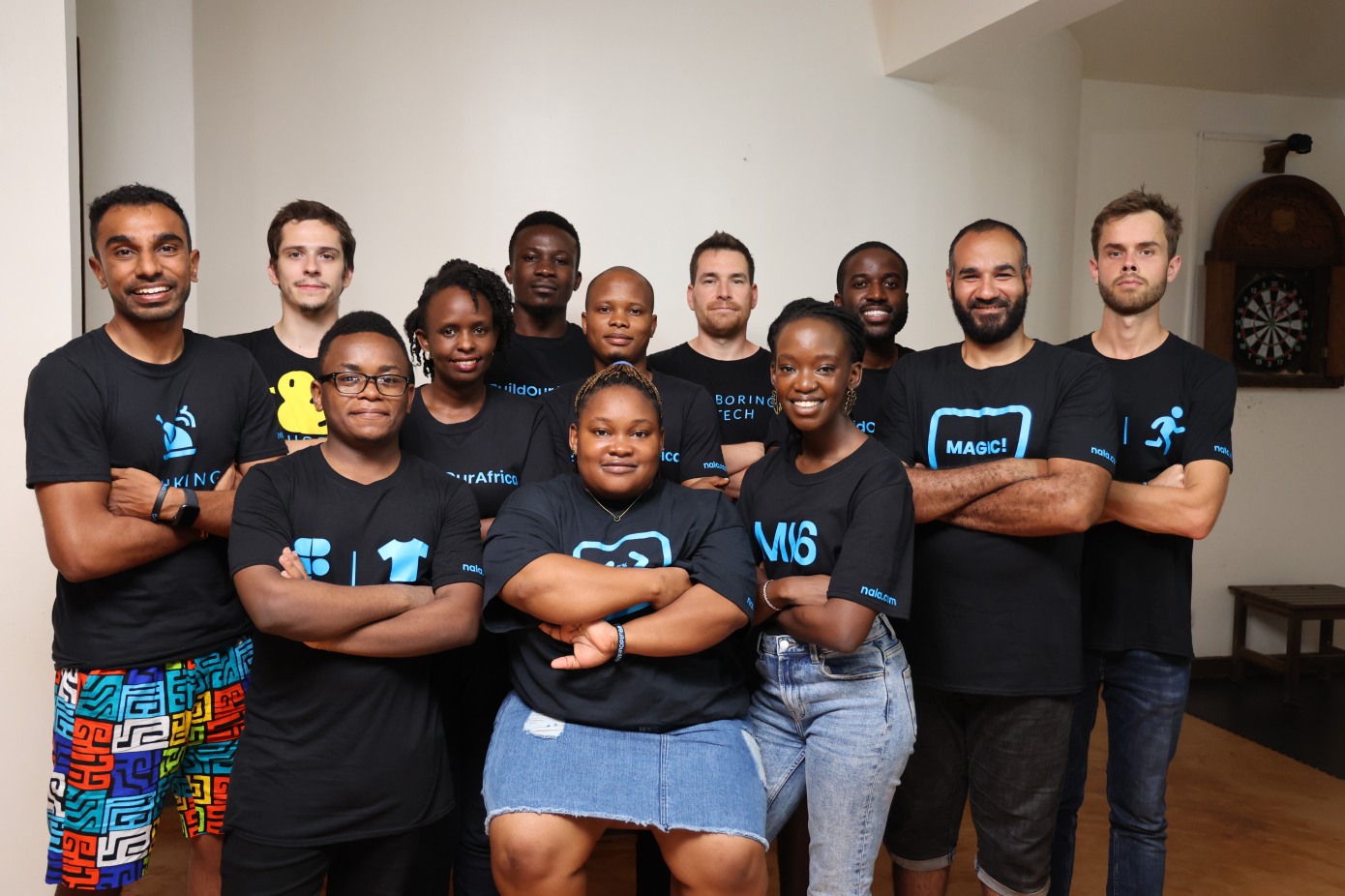
NALA, a Tanzanian cross-border payments company that recently pivoted from local to international money transfers, said Thursday it has raised $10 million in a new fundraising round.
The seed round is coming almost three years after NALA secured a seven-figure pre-seed round led by Accel in 2019. In that time, NALA built a mobile money service in East Africa and scaled it to more than 250,000 users. But in 2021, NALA started testing international money transfers after some users expressed interest in moving money from the U.K. to East African countries (Kenya, Uganda and Tanzania), thus ushering the Tanzanian fintech into the remittance business.
The business opportunity for remittance is lucrative despite digital lenders vying for less than 20% of the international money market dominated by traditional offline players.
With Africa being the most expensive region to send money to, with 10.6% in average transaction fees, digital senders like NALA pitch themselves to customers as platforms with the best rates and lowest prices.
Other players in the space facilitating transfer from the U.K. to select African countries include unicorn Chipper Cash, Lemonade Finance, Zazuu and Sendwave. Their collective bet is that their market will grow over time and eat into traditional incumbents’ share. Whether that’ll happen remains to be seen.
That said, NALA has achieved considerable growth since testing out the product last year. The platform allows payments from the U.K. to Tanzania, Kenya, Uganda, Rwanda and Ghana. And in the past six months, more than 8,000 customers have moved over eight figures in transaction volume to Africa, the company said.
“Our core customer base is the diaspora right now who live in the U.K. This is the customer we’re currently serving today as we speak,” founder and CEO Benjamin Fernandes told TechCrunch in an interview. “We also got our license approvals to go live in the U.S. and the E.U., which will be going live in a month and a half in at least one other E.U. country, probably France.”
The chief executive also said NALA, currently present in Tanzania, Kenya, Uganda, Rwanda, Ghana and South Africa, plans to be live in 12 African countries by the end of the year, including Nigeria.
Remittance is NALA’s low-hanging fruit. According to Fernandes, NALA has more offerings in its pipeline that can be likened to Revolut’s when it first launched in the U.K. The European fintech unicorn, now a financial super app of some sorts, started off providing multi-currency bank accounts, fee-free currency exchange, peer-to-peer payments and a feature for businesses.
Similarly, NALA, in addition to enabling cross-border payments from the U.K. (and the U.S. and the E.U.) to Africa, is privately beta testing multi-currency accounts that will allow the African diaspora to store local African currencies when abroad. It is also currently piloting NALA for Businesses enabling people who run businesses in the diaspora to make payments to Africa.
Away from Revolut’s playbook, Fernandes says the Tanzanian fintech will be building out infrastructure to enable money transfers from Africa to the U.S. and the U.K.
“We’re scaling that up, not just being in Tanzania and Kenya and Uganda as a consumer-facing product. But in the long run, we want to build infrastructure across the continent where we can do outbound from the continent and allow people to send money back. We’ve submitted our remittance license application in Kenya, as well as Uganda, for us to be able to do this the other way around,” said the founder.
The company has hired Subuola Abraham, ex-Citi U.K. MLRO and former group chief compliance officer at pan-African bank Guaranty Trust Bank, to lead its compliance efforts. It also struck a deal with Citi Bank Global to manage their F.X. and fast-track growth across multiple regions, one of the few African tech companies with this deal.
As part of its user acquisition and retention efforts, NALA will be launching a crowdfunding campaign this year where its first users will get access to own some shares in the company, said Fernandes. It’s a move similar companies facilitating money transfer in Africa, such as Eversend, have made in recent years.
NALA’s executive team includes Nicolas Esteves (CTO) and Nicolai Eddy (COO), who have experience at Monzo, Osper and Morningstar.
This new financing round includes lead investor Amplo, Accel and Bessemer Partners, including local investors like DFS Lab.
NALA also received funds from an impressive group of angel investors — Jonas Templestein, co-founder and CTO of Monzo; Vladimir Tenev, Robinhood co-founder and CEO; Deel founder Alex Bouaziz; Laura Spiekerman, co-founder of Alloy; Peeyush Ranjan, the head of Google Payments and early employees at Revolut and TransferWise.
Sheel Tyle, the founder and general partner at Amplo, will join NALA’s board, the company said in a statement.
The investment will allow NALA to hire more talent and foster growth efforts in the U.K., U.S. and Europe, build payment rails in Africa and expand to new countries.
“We don’t want to be compared to a regular remittance company, and people will do that naturally. But we think remittance is just the starting point for what we’re going to build,” said Fernandes. “My take is that payments across the continent is 1% built, and there’s a lot of infrastructure and software that needs to be built deeply. That’s where we want to sit and this $10 million round is going to do a lot of that.”
- 01:00 am
The partnership will provide a seamless, fast, granular, and secure access to Segmint’s Merchant Payment Cleansing solution for financial institutions.
Segmint, the global leader in transaction cleansing and analytics for financial institutions (FIs), announced a partnership with Snowflake, the Data Cloud company, which can revolutionize the way financial institutions understand and serve their account holders through the granular enrichment of transaction data.
Snowflake delivers an integrated, unified experience that spans across clouds and regions, empowering clients like Segmint to seamlessly collaborate on data with financial institutions.
Financial institutions, which have traditionally struggled to easily cleanse and categorize transaction data because of the tremendous gaps created by the payment process, can now access Segmint’s Merchant Payment Cleansing solution through cloud share from Snowflake. What makes this pacesetting in the industry is the data can now be processed without it being moved between the vendor’s platform and then back to the client; the data remains in the customer’s environment. The function to “call” the data within Snowflake to access the Merchant Payment Cleansing solution makes it simple, fast, granular, accurate, secure and compliant around the rules within the cloud.
“This process will transform the way the industry leverages payment transaction data to inform business decisions. It’s nothing short of a game-changer. The power of this partnership allows FI’s in near real-time to best understand their transaction data natively within the Snowflake environment,” said Rob Heiser, Co-founder of Segmint.
Transaction cleansing is a critical tool that allows financial institutions to better understand customer transaction behavior and model spend patterns. The content of merchant payment transactions is often cryptic and non-descript, with a significant number of transaction variants for a single merchant, making it difficult to distill into a merchant name. The detailed transaction knowledge base and rules library are the key inputs to a machine learning and AI infrastructure that can accurately cleanse and enrich millions of transactions a day. Segmint’s technology takes each new raw transaction received and matches it to the most relevant human-verified entry in the knowledge base. This ensures, even at tremendous speed and scale, a human touch is part of every single enrichment.
“We are very excited about our partnership with Segmint to deliver detailed transaction classification that can enable customers to refine marketing, sales, product positioning and overall business strategy,” said Matt Glickman, VP Financial Services at Snowflake. “Together, Segmint and Snowflake will help financial services customers to streamline their data delivery in the cloud and transform their go-to-market motions.”








