Published
- 02:00 am

Survey of 3,000 office workers also highlights difference in US / UK age-group training focus
Almost two thirds of US office workers and almost half of UK office workers would be tempted to work for another employer if they offer better apps to make their working lives easier, according to a new transatlantic survey commissioned by enterprise productivity operating system provider OpenFin.
The fully-weighted survey of 3,000 office workers (1,500 in the US and 1,500 in the UK), conducted by OnePoll, found that 61% of US respondents and 46% of British respondents would consider making the leap to a new job if employers provided better apps or software systems for employees.
The research also reveals that more than one in ten (13% in the US and 12% in the UK) were not happy with the apps provided by employers to do their jobs and collaborate with colleagues during the pandemic lockdowns.
The survey highlights a lack of training from employers during lockdown in both the US and UK. A fifth (21%) of US respondents said that their employer had not provided them with more training since working from home during the pandemic and 5% said they had received less training since working from home.
The situation is even more dire in the UK, with almost half (48%) of respondents stating that their employer had not provided them with more training since working from home during the pandemic and 11% said they had received less training since working from home.
There is also a major difference between the US and UK in the age groups upon which they focus training efforts. In the US, employers are prioritizing training millennials (aged 25-40) over any other age group, the survey reveals. 75% of millennials received more training during lockdown, compared with 58% of Gen Z office workers (aged 18-24), and 56% of baby boomers (aged 57-75). The youngest office workers, Gen-x respondents aged 41-56, got the least training (55%).
Whereas in the UK, employers are prioritizing training the youngest members of staff rather than experienced team members, with 83% of Gen Z office workers (aged 18-24) saying their employers had given them more training during lockdown compared with far fewer millennials (25-40) at 45%, baby boomers (57-75) at 35% and the lowest figure for Gen-x respondents (41-56) at 33%.
The research adds weight to concerns about a “Great Resignation”. The number of American workers quitting their jobs hit record highs in November, with 4.5 million people leaving their position, according to the latest Bureau of Labor Statistics report released last month (January). In Britain almost a quarter of workers are actively planning to change employers in the coming months, according to a separate survey of 6,000 workers by recruitment firm Randstad UK.
Adam Toms, CEO-Europe at OpenFin, said: “The great resignation is a wake-up call for employers in both the US and UK, and this research indicates that the software and tech tools provided to employees are at the heart of both staff retention and productivity.
“Now that there is potential light at the end of the pandemic tunnel, and with many employees likely to work on a hybrid basis going forward, it is an important moment to invest in our people. This means considering the application, software and training needs of staff, supercharging employees with the right data in their workflows and decision making to make them more efficient, more effective and much happier.”
The vast majority of those surveyed (86% in both the US and UK) said that the apps, tools and tech provided by employers to do their jobs are important, while one third of US (31%) and one in five UK (18%) respondents chose "being provided the right apps and tech tools to succeed in my job" in the top three most important factors impacting job satisfaction.
Despite the major concerns expressed by some about the quality of apps, many are happy with the software support provided by their employers during lockdown.
Of the 59% of US office workers who said their employer invested in new apps, tools or technology during the pandemic, 81% of them agreed that the apps helped improve their productivity and 79% said that they made the job easier. Results were similar in the UK, where of the 50% of UK office workers who said their employer invested in new apps, tools or technology during the pandemic, 87% agreed that the apps helped improve their productivity and 80% said this made their jobs easier.
The research also reveals that working from home during the pandemic lockdown had a positive effect on working relationships, with 69% of US and 48% of UK respondents stating their working relationships improved while working from home during the pandemic, 14% of US and 12% UK respondents saying they got worse, and 16% of US and 37% of UK saying they remained the same.
Toms added: “These statistics clearly demonstrate the resilience and positive spirit of both American and British office workers through adversity, however it is also clear that many are resigning because they increasingly value flexible working and employers who are willing to invest in them.”
- 04:00 am

With latest acquisition, Chargebee helps recurring revenue businesses better manage their “money-in” with automated accounts receivable workflows
Chargebee, the leading subscription management platform, announced it has acquired collections management platform numberz and launched Chargebee Receivables. Subscription businesses will now be able to smartly automate their entire receivables process from purchase to payment, in addition to managing subscription products and invoices, leading to better data collections and insights for more confident decision-making.
“Over the last year, we have focused on strategic acquisitions that grow our platform and solve a wide range of customer problems by building a unified solution that connects data points from all aspects of the business,” said Krish Subramanian, CEO and co-founder of Chargebee. “With the acquisition of numberz, we are focused on solving bottlenecks that often occur due to clunky Accounts Receivable systems that leave collections delayed and bills unpaid. When businesses are growing at a fast rate, it’s critical that decision-makers have full visibility into receivables so they have clarity into available working capital needed for growth.”
Chargebee Receivables helps finance leaders reimagine this critical workflow. Integrating with the existing ERP and accounting solutions, Chargebee Receivables will also provide finance leaders better visibility and control of their receivables and improve their own customer experience.
“Implementing Receivables has created a lot of visibility and efficiency within the system. The coverage of each credit controller has increased by roughly 33% – they are able to serve more customers, more effectively. The increase in efficiency of our teams is also helping us run the department operations profitably without increasing the team size,” said Nitin Gupta, CFO of Konica Minolta.
On average, it takes about 72 days for the world’s fastest-growing SaaS companies to get paid on their invoices according to internal analysis of the Cloud Index Report. This is particularly significant in comparison to an average US company, getting paid in 45 days. Contrary to popular perception, the biggest reasons for late payments are neither customer intent nor the customer’s own cash flow issues. These challenges arise due to the seller’s internal process inefficiencies that persist despite the usage of ERPs or Accounting solutions, which account for as high as 50-60% of the delays.
With the addition of numberz, Chargebee Receivables ensures that customers are billed on time, with total accuracy, all while keeping customers engaged and informed by offering incentives for them to quickly and easily pay on time. Working together, users can manage the entire order-to-cash process with minimal effort, freeing up energy to focus on reporting and exceptional customer service.
"We are excited to be a part of Chargebee and to add Accounts Receivable Management capabilities that help finance leaders better manage their entire order-to-cash cycle, aid business growth and unlock massive value,” said Aditya Tulsian, Co-Founder and CEO of numberz. “The shared vision, values and the people-first approach of Chargebee made this an ideal ‘home’ – not just for the business but for the entire team,” added Rajeev Chari, co-founder and COO of numberz.
The numberz team joins Chargebee in various offices and remotely across India, including the addition of executive team members to Chargebee’s leadership team. The acquisition comes directly on the heels of the recent additions of Brightback and RevLock to Chargebee, and a new round of funding co-led by Sequoia and Tiger Global, signalling rapid product and talent growth for growing global startup Chargebee.
To learn more, visit https://www.chargebee.com/receivables
- 06:00 am

Fresh from being named as the world’s fastest growing fraud prevention company, SEON is excited to launch an original new web series alongside András Arató, the man depicted in the famous ‘Hide the Pain Harold’ meme.
Online fraud fighters, SEON has partnered with fellow Hungarian compatriot, András Arató, the man featured in the hugely popular ‘Hide the Pain Harold’ memes, to create three engaging new videos. The original pieces of content have been shot and directed by the company’s new Creative Director, Video & Audio, Michael Beddoes and demonstrate SEON’s innovative approach to marketing within the fraud prevention sector and beyond.
At first glance, András Arató and SEON may seem like an unorthodox pairing but dig a little deeper and you’ll see the two have a lot in common. With shared beginnings in Budapest, the Hungarian natives have gone on to reach millions of people in the last few years, via the internet. In fact, it could be argued they are their nation’s two biggest exports to the web. Now, they are coming together to embark on a truly out-of-the-box media campaign.
The web series, entitled ‘Behind The Pain’, takes the form of a mockumentary. It follows Harold as he explains how his life has been impacted by being globally famous online. The short videos, which have been put forward for this year’s Webby Awards and the Shorty Awards strike a comedic tone, while also highlighting the importance of protecting one’s identity online, as well as the negative effects of not doing so. The first episode from the series has already received over 100,000 views on YouTube.
Spearheading the exciting campaign is SEON’s new Creative Director, Video & Audio, Michael Beddoes. An experienced creative, writer and producer, with skills in comedy and commercial directing, Michael has over a decade of experience overseeing the creation of award winning films, content for internationally recognised brands and documentaries for the likes of ASOS, Deliveroo and Netflix. Moving forward, he will head up in-house creative and production for SEON, dealing with everything from new concept ideation, script writing and production oversight.
Speaking on the publication of the videos, Michael Beddoes, Creative Director, Video & Audio commented: "It's a pleasure to work for SEON and to contribute my skills to their mission of creating a fraud free world. I think the sweet spot for content is when you can entertain and inform at the same time. The 'Behind The Pain' series is a fantastic example of this and showcases the company's forward thinking approach to creative content.”
"There is an excitement within SEON about doing things differently. The company wants to maximise the creativity within its output and build a reputation as thought leaders within the fraud fighting game. From a marketing perspective, the company is breaking new ground in the sector. We want people to come on a journey with us and our content. I genuinely can't wait to see what we put together next."
To watch the ‘Behind The Pain’ series, please visit: https://www.youtube.com/playlist?list=PLXBRKOfNqa7Nbp8wI8luYx26ng2d4jzVD
- 07:00 am

Fairo, an innovative financial app for freelancers, joined hands with Salt Edge, a leader in providing open banking solutions, to enable Fairo customers to keep track of their business banking transactions in the app and to automate the management of administrative tasks.
Since the start of the pandemic, the freelance economy has grown while the widespread adoption of remote work has fueled the shift in the job landscape. Millions of independent freelance professionals boosted the demand for a cost-effective and comprehensive tool to save time by effectively managing business finances and administration including invoicing, accounting and tax reporting. Fairo app was created to answer such growing demand. Built by the Austrian startup Creative Dock, with the support of Raiffeisen Bank International, Fairo app was launched on the Romanian market in August 2021.
Leveraging Salt Edge Account Information solution, the Fairo team launched the FairoSync feature. With it, Fairo enables customers to get split-second access to a full overview of their banking transactions in the app compliantly, without needing its own PSD2 licence. Fairo customers simply connect their bank account to the app and can securely track their business income and expenses directly in Fairo. Much more, combining Salt Edge Account Information solution with Fairo’s invoice-payment pairing technology, Fairo customers can forget about tracking the status of their invoices manually in Excel sheets. Fairo now automatically tracks if client invoices are paid, overdue or outstanding.
FairoSync was built to drive automation while at the same time ensuring the highest level of financial data security for its users. Fairo partnered up with Salt Edge, a global bank data integration specialist, to offer best-in-class security solutions to protect user data. FairoSync’s security aspects ensure that the API service used has no capability to move money or make withdrawals from connected user accounts.
Our mission is to help freelancers regain freedom to follow their passions as we simplify the management of their business finances and administrative tasks. To build FairoSync, we’ve been looking for a bank data integration specialist that can deliver reliable services and provide the highest levels of financial data security possible for our customers in Romania. Salt Edge understands and meets all our needs, and helps to obtain a successful collaboration from technical and business perspectives.
Igor Prerovsky, CEO Creative Dock Austria
Our companies’ joint efforts will help push the automatisation of major invoicing and accounting processes fuelled by PSD2 even further and will pave the way for open banking possibilities in Romania. Both Salt Edge and Fairo solutions enable SMEs and freelancers to save time and resources, as we are sure there are plenty of tasks that can run perfectly well without human intervention.
Erica Virlan, Open Banking Expert at Salt Edge
- 09:00 am

TIBCO has announced its ongoing partnership with the recently crowned eight-time FIA Formula One World Constructors’ Champions, the Mercedes-AMG Petronas Formula One Team. Over the past season, the F1 team expanded its use of TIBCO Spotfire in race simulations that influence up-to-the-minute car setup and configuration decisions. The team also expanded its use of the TIBCO Cost Visualiser Tool for detailed cost-value analysis across engineering and finance data sources to comply with FIA cost cap regulations. Both technologies play key roles in the design, development, and engineering behind the all-new Mercedes-AMG F1 W13 EQ Performance vehicle.
“It was a challenging year for all teams, with a host of COVID protocols, new regulations, a series of new circuits, and a packed calendar that placed enormous pressure on everyone. As the season came down to the wire, the team’s use of digital twins and race simulations played a critical role in optimising car performance, and securing crucial championship points in a highly competitive environment,” said Michael O’Connell, chief analytics officer, TIBCO. “The entire TIBCO team would like to congratulate the Mercedes-AMG Petronas Formula One Team for an incredible season and clinching its eighth consecutive FIA Formula One World Constructors' Championship.”
The companies forged an ongoing partnership in innovation on and off the track, with TIBCO Spotfire continuing to enable the Mercedes-AMG Petronas Formula One Team’s understanding of the factors affecting car performance, and enabling car configuration updates throughout the race weekend. With new and modified circuits, the digital-twin-based simulations played a crucial role in the team's success. The team used Spotfire to analyse the simulations and assess the effects of tunable car configuration parameters, including suspension, rear and front wings, and aerodynamics, on car performance. Working with digital twins of the cars, the team ran millions of simulations, using combinations of the tunable parameters to assess the cars’ performance at the tracks. The simulation results were then used to set up the cars and to configure them throughout the race weekend. This evolving car setup and configuration was of central importance to car performance, especially in the last set of races in the Americas and the Middle East, in a highly competitive battle for the championship.
“Racing has become so much more than just the car. We need to provide our drivers with all the information they need to get the best out of the car on that day, that circuit, and in those conditions, which all comes from data,” said Michael Taylor, IT director, Mercedes-AMG Petronas Formula One Team. “Our partnership with TIBCO has become even more important as we use data to create a better view of each race through simulations. The TIBCO Cost Visualiser Tool also offers insights into the value and cost from design to manufacturing to on-track performance, giving us an overall edge when it comes to planning and execution for each race, and across the season.”
- 03:00 am
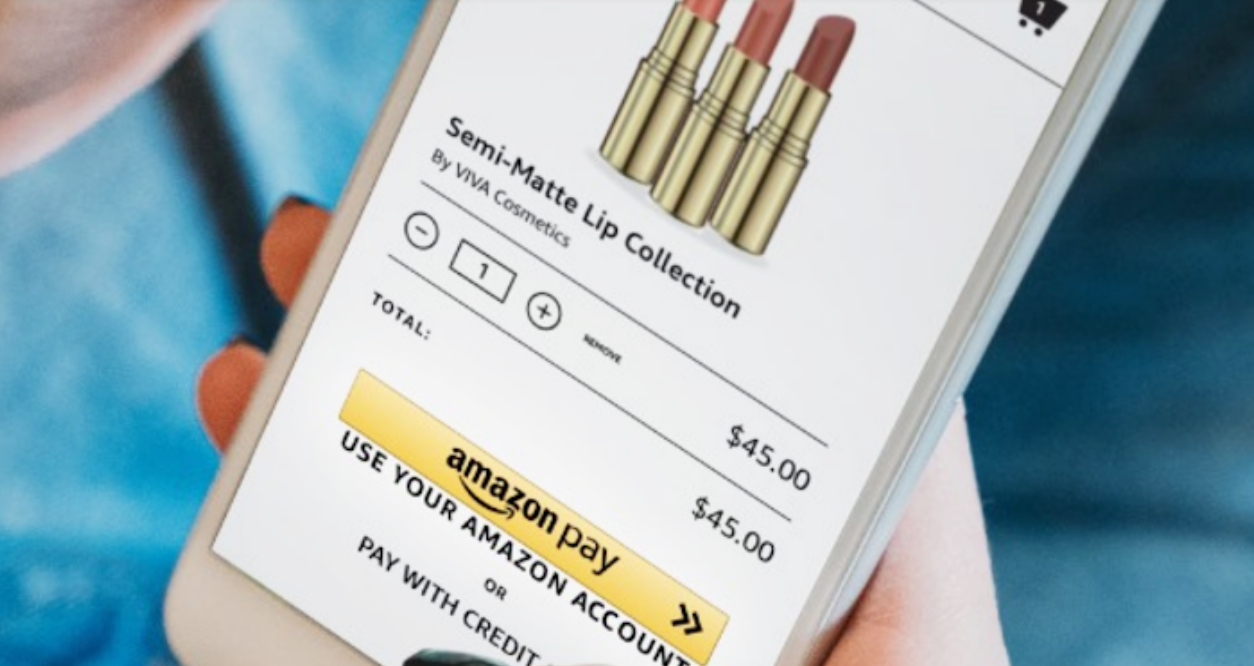
Online merchants who process their payments via Computop Paygate can now offer their customers a faster checkout via Amazon Pay. Compared to the previous connection, the new CV2 interface is characterised by simple integration into the online shop, optimized user guidance and a correspondingly higher order conversion rate.
FOR AMAZON SHOPPERS IN EUROPE, USA AND JAPAN
The new version of Amazon Pay is available for merchants in many European countries as well as the USA and Japan. By integrating this payment method, online shops not only receive access to validated address data from the Amazon data pool for new and existing contacts as always, but also benefit from further optimised user guidance. This leads to an improved purchase completion rate compared to the classic Amazon Pay solution.
Computop customers will also benefit from future functional enhancements as many steps in the payment process take place directly in Amazon Pay, so improvements can be incorporated without any maintenance effort for the merchants. As with the classic solution, the button for quick checkout will be integrated at item or shopping basket level. In addition, a new button is also available for additional integration into the payment method selection, with which the payment method stored with Amazon is used without using the Amazon shipping address.
In the case of rejected payments, the new version automatically takes over the redirection to a new payment method selection. The entire checkout workflow via Amazon Pay works within the active browser window so that the payment process can be completed even with very restrictive security settings. Amazon Pay thus fits ideally into Computop’s services for optimising the conversion rate.
Stephan Kück, CEO Computop, emphasizes: "We are pleased to be able to add another innovative service to our long-standing partnership with Amazon Pay. The smooth checkout is an important building block for high conversion rates through our payment platform, Computop Paygate."
- 07:00 am

What Is the FinTech Industry itself?
When you hear the term "FinTech", you might be surprised to learn that it refers to an industry that uses technology to improve activities in the finance industry. However, this industry is much more than just the latest gadgets and software. It can also be a source of job opportunities for people who are into finance. Let's take a closer look at this emerging field.
First of all, FinTech isn't just about charts and crypto. It's also about a new way of doing business. It allows small players to compete with the big banks and financial institutions. Many of these startups are providing services that traditional financial institutions can't. These companies can provide more personalized services, and they're often cheaper than the traditional financial providers.
This industry is transforming traditional banking. For example, robo-advisors offer low-cost financial consulting and automated portfolio management. Other examples of fintech companies include cryptocurrency exchanges and insurance platforms. And, with millions of users, the industry is changing the way we do business. It's also redefining traditional industries, including banking. And, most important, it's a great opportunity for anyone interested in the financial industry.
As an example, we will choose Forex to explain unique solutions that you can use to develop your own fintech business at low cost.
What is White label in Forex?
A white label Forex brokerage is a popular way to gain access to the fast growing market such as Forex, without making a large financial commitment. The underlying idea is simple. With the support of a third-party provider, you can buy a turnkey brokerage that includes trading platforms, software, and experience. That way you don't have to build it from scratch and spend a lot of money. It is vital, however, to do a first analysis of the white label provider's operational structure and business model. Additionally, a Forex broker cannot operate a full-fledged business on their own, which is why they require a staff of marketing, customer service, account management, and information technology professionals.
How Do White Label Technologies Work in FinTech?
As we said before, white label brokerage lets non-financial firms offer their own financial services without incurring high costs. By integrating the services into an existing platform, the companies can open up new payment and service possibilities and reduce overheads. There are also many benefits of white label solutions, which include low upfront costs and flexible pricing. Let’s discuss more about it below.
The concept of white-label technology is based on API platforms. By utilizing APIs from leading service providers, white-label fintech firms can provide their own financial services to consumers. Private labeling is actually older than many people might think. It was a business model that was first used by the Great Atlantic and Pacific Tea Company in the nineteenth century.
In the modern-day, fintech companies are turning to white-label banking to provide customers with online financial services. These solutions can use existing APIs from banks and other white label service providers such as B2Broker, as well as custom applications, to create their final, branded financial product.
White-label solutions enable fintech firms to rebrand their financial products and services without incurring significant development costs. With a white-label service, a business may provide the same quality of customer support as big-name competitors without incurring the same expenses and complexities. Additionally, businesses may avoid the delays associated with establishing their own system. This is a significant benefit for small fintech firms and can aid in their growth and development.
As the fintech industry continues to evolve, white-label solutions are becoming increasingly important to success. For example, channel partners may want to white-label their own products to boost their own business. Similarly, they may want to partner with companies in the financial industry and offer the same solutions as their own. But, they might be more profitable if they are able to make their own money.
Verdict
In the financial services industry, white-label solutions are a great way to differentiate your brand. By offering your own financial services through a white-label solution, you can increase your profits. It is possible to get the same benefits as a major bank by offering a lower-cost version. This solution is customized for a wide range of online banking and eCommerce needs and not only for this.
- 05:00 am

The digital payment expert partners with local authorities to reach struggling community members through access to its ‘Cash Out’ solution and retail network
Since the start of the pandemic, digital payment expert, PayPoint, has aided local government in its support of vulnerable people by dispensing more than 3.5m emergency fund vouchers, worth £166.5m. Issued under a range of government campaigns, including the Free School Meals and Winter Hardship schemes, the vouchers were distributed by local authorities across the UK and redeemed by consumers throughout PayPoint’s nationwide network of 28,000 stores.
In total, 36% of all vouchers were redeemed outside typical working hours* demonstrating the success of PayPoint’s Cash Out service in providing immediate financial support at the hour it is most needed. The highest redemption rates were on the weekend, where 60% of transactions took place outside typical working hours on Saturday and 100% on Sunday. From Monday to Friday, the rates of redemption outside of normal hours sat between 28% and 30%.
Regionally, Motherwell in Scotland saw the highest volume of vouchers redeemed - 464,163 vouchers to the value of £11.5m. Glasgow was second with £16.5m worth in 403,619 vouchers and Cardiff was the third highest city with £9.7m in 158,861 vouchers.
In England, the place where the most vouchers were dispersed and redeemed at PayPoint stores was Liverpool, where 105,246 vouchers provided £5.6m of funds.
Danny Vant, Client Services Director at PayPoint, said: “Our analysis proves that convenience is crucial when providing emergency support to those that need it. Those making use of government vouchers must have access to a range of local redemption points that are accessible early in the morning, later into the evening and at the weekend. If the only options available to the vulnerable are businesses that operate between 9am and 5pm and have extremely limited or no weekend coverage, then the benefit of the financial aid is severely impacted.
“We also need to consider location. In many rural areas, residents find they have more convenient access to PayPoint stores than they do other venues for voucher redemption. Over 99% of urban households are within one mile of a PayPoint location, and 98.3% of rural households within five miles. Throughout the pandemic, the pairing of our Cash Out solution and far-reaching retail network have helped local authorities across the country to support the people who need it most.”
Cash Out works in real-time to seamlessly enable eligible households to receive vouchers via email, letter or SMS to then be presented to obtain cash or energy credit payments at one of PayPoint’s 28,000 retailers. These include Sainsburys, Asda, The Co-op, Spar, and One-Stop, as well as more conveniently placed local shops. Demonstrating the speed at which people can benefit from the service, a PayPoint Cash Out voucher was recorded as having been presented to obtain cash just over a minute from receipt.
*9am to 5pm on Monday to Friday, 9am to 1pm on Saturday, and closed on Sunday
PayPoint has dispensed £166m in cash through its retailer network since March 2020 | |
Volume | 3,525,740 |
Value | £166,512,962 |
A top 10 around the UK by location where this has been used by volume | ||||
Rank | Postcode Area | Area Name | Volume | Value |
1 | ML | Motherwell | 464,163 | £11,496,711 |
2 | G | Glasgow | 403,619 | £16,501,906 |
3 | CF | Cardiff | 158,861 | £9,697,830 |
4 | EH | Edinburgh | 134,892 | £8,359,628 |
5 | L | Liverpool | 105,246 | £5,572,441 |
6 | NE | Newcastle upon Tyne | 101,692 | £4,860,111 |
7 | BN | Brighton | 91,745 | £1,513,723 |
8 | IV | Inverness | 88,935 | £5,429,400 |
9 | KY | Kirkcaldy | 75,560 | £5,370,430 |
10 | SA | Swansea | 69,303 | £4,363,200 |
A time-of-day analysis to show how many transactions are done when banks are shut. | |
Day | Outside Working Hours |
Mon | 29% |
Tue | 30% |
Wed | 29% |
Thu | 29% |
Fri | 28% |
Sat | 60% |
Sun | 100% |
Total | 36% |
*Typical hours = 09:00 - 17:00 Mon-Fri, 09:00 - 13:00 Sat, & closed Sunday | |
- 09:00 am
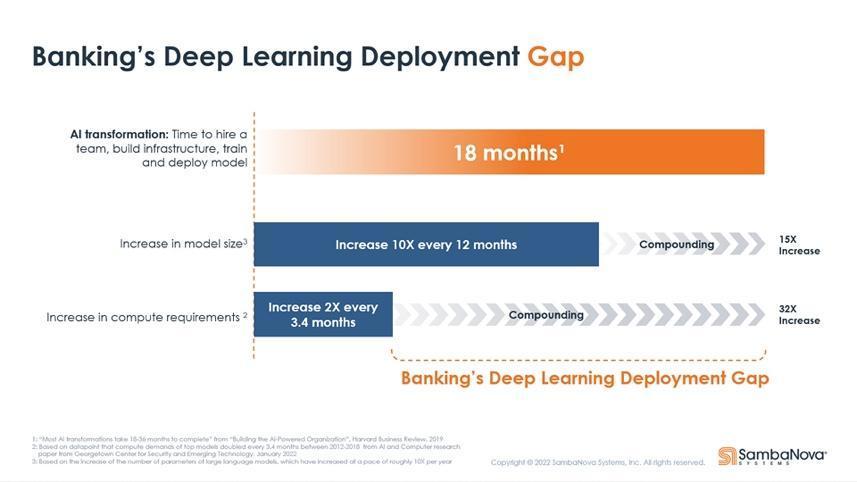
SambNova’s GPT for Banking and Financial Services enables banks to close the deep learning deployment gap
SambaNova Systems, the company delivering the industry’s only comprehensive software, hardware, and solutions platform to run AI and Deep Learning applications, announces SambaNova GPT Banking, the first solution purpose-built for the financial services industry, enabling banks to create clear market separation in AI by jump-starting their deep learning language capabilities in weeks, not years.
“GPT Banking has the potential to transform nearly every aspect of banking, from improving operations to managing risk and compliance,” states Rodrigo Liang, CEO and co-founder of SambaNova. “Customers tell me they’re most excited about GPT Banking’s ability to truly personalize the customer experience, with richer insights that enable them to understand customers' evolving needs.”
There is a deep learning deployment gap in banking resulting in financial services companies not being able to build and deploy AI models fast enough to meet their business needs — SambaNova GPT Banking has solved that problem: “On average, it takes banks 18 months to hire a skilled data science team, build the infrastructure, train and deploy a large language model. By the time they are ready to deploy, the institution's model is out of date — as the base model size will have increased by 10X within the year and the compute requirements will have changed dramatically,” stated Marshall Choy, SVP of Product at SambaNova Systems. “
“We built GPT Banking to improve bank's competitiveness and efficiency while accelerating their digital transformation,” stated Liang. “AI is the quickest and most cost-efficient tool to do that today and our service can be deployed and delivering value in weeks.”
GPT Banking is built for banks’ large language models and is offered as a subscription service to simplify the process of deploying the most advanced language models in a fraction of the time.
Banks can leverage the technology to perform:
- Sentiment analysis: scan social media, press and blogs to understand market, investor and stakeholder sentiment.
- Entity recognition: reduce human error, classify documents and reduce manual/repetitive work.
- Language generation: process, transcribe and prioritize claims, extract necessary information and create documents to improve customer satisfaction.
- Language translation: language translation to expand customer base.
- 04:00 am

Susannah Streeter, senior investment and markets analyst, Hargreaves Lansdown
‘Moscow’s bullying tactics have turned into a full scale assault, with Ukraine’s worst fears materialised as Russian forces have begun a major attack on the country. This is a devastating turn of events for citizens in Ukraine who had waited in vain for a diplomatic resolution. Already the invasion has caused shockwaves across the world’s financial markets as cities in Ukraine have come under fire. The FTSE 100 has dropped by 2.6% on the open, and France’s CAC 40 and Germany’s DAX are down 4%, following Asian markets deep into the red. The threat of war had already been hanging over investors, and the shock of the invasion sent the price of oil hurtling up by more than 7% way above $100 a barrel, reaching more $103 before falling back a notch. Oil and gas prices are likely to stay highly elevated with hard hitting sanctions set to be imposed by the international community Market volatility has increased since the beginning of the year, stoked by rising interest rates, and today’s news has added fuel to the market turbulence.
With Ukrainian airspace shut, and fears that renewed optimism of the travelling public will be severely dented with war underway, that’s led to a big slide in airlines and travel sector stocks. International Consolidated Airlines Group, the owner of British Airways has dropped by around 5% while Wizz Air with its extensive operations across Eastern Europe in particular nosedived by around 8% in early trade. Rolls Royce, so highly reliant on commercial air travel, was among the biggest fallers on the FTSE 100 given it’s highly reliant on commercial air travel.
Russia exposed stocks like Evraz, the mining and metals company which Roman Abramovich owns a stake in has plunged by around 18%, and Polymetal International with mining operations across Russia has also dropped by 7%. With tough incoming sanctions expected, their businesses are likely to take a major hit with little respite in sight given the seriousness of the situation. Stocks with Russian exposure also include BP, via an 19.75% shareholding in Rosneft, and BP also fell on the open, despite the higher oil price which helped push up Shell’s share price. The risers in the FTSE 100 were few and far between with Bae Systems among them with expectations that defence budgets may be boosted in the face of Russian aggression.
With this rocket flare in international tensions, the rush towards safe havens is underway, and already the US dollar, Japanese Yen and the Swiss franc have been in demand, while the Russian rouble has tumbled to a fresh record low. Bonds are generally seen as the most reliable assets in a time of emergency, even though this war is also set to fan the flames of inflation. Gold miner Fresnilllo jumped 4% with expectations there will be a further demand for the precious metal given the intense nervousness on the markets.
There will be pressure on banking stocks, particularly banks in France and Austria as they have the largest exposure to Russian loans. Lloyds and Barclays were around 5% lower in early trading with nervousness rising about the impact on their lending businesses. Depending on how long this crisis continues there could be a significant loss of confidence among businesses and consumers here as they may limit borrowing until they feel more confident. This is likely to be felt the most in Europe, and it could lead to the ECB extending stimulus to help countries cope with the knock on effects of the conflict. Miners have not been immune to the sell-off, given the shock war has presented, and worries that there could be a downturn in demand for some commodities if the situation escalates further.
Investors are likely to be seeking out more defensive positions in healthcare and pharmaceutical stocks to shelter from market turbulence. However investors also need to keep their nerve and have an eye on the longer horizon. The shock of conflict is devastating, but history does point to relatively short-lived volatility on financial markets. Investors should try to look beyond these events and focus on their long-term goals. Daily market moves are concerning, but trying to transact in periods such as these invariably leads to over-trading and capitalising losses. Investors should not panic, but take the time to ensure that they have a diversified portfolio with a basket of assets spread across different sectors and geographies.