
Published
- 07:00 am

Worldline (Euronext: WLN), a global leader in payments services, is partnering with IVS Group, the Italian leader and the second largest player in Europe in automatic and semi-automatic vending machines, to maximise the acceptance of cashless transactions. France and Italy are the first countries where Worldline and IVS roll out their offering, before making the solution available to the whole European market.
This key partnership will combine Worldline’s universal acceptance capabilities with IVS’ expertise in vending machines as well as value added services delivered through Moneynet, IVS’ payment services branch. This highly scalable solution will include Worldline’s best-in-class payment terminals, easy to integrate thanks to its compliance with the industry’s universal protocol, the MDB[1] vending communication protocols. Users of the vending machines will benefit from the latest Self/2000 terminals, featuring full touch, 4G connectivity and camera-enabled to support wallet acceptance.
Shifting user habits demand a new generation of vending devices
One of the most significant developments emerging from the pandemic is the dramatic change in consumer habits in the payments ecosphere. With cashless becoming the norm, along with an increasing demand for digital options, consumers want convenient payment methods, greater value and a more personalised experience, especially in the rapidly enlarging self-service journey space.
To meet this demand, vending operators have to scale their offerings and provide the best purchasing experience possible. They also need to rely on the ability of payment experts to manage payment complexity on their behalf, in all geographies, with a capability to anticipate the next steps of this digital transformational journey and in particular, bring additional value to the vending merchants.
Nicolas Dejonghe, Head of Vending Sales of Worldline, commented: “We are delighted to have gained the trust of IVS, a well recognised and highly respected European Vending operator, to be their payment expert in this conversion from cash to cashless. Our flexible solution allowed us to build a tailored offer that is fully scalable across geographies, ranging from terminals to a full offer including acquiring services. We will stand side by side with IVS and support them further in their growth plans and to deliver a unified business experience.”
Davide Arzuffi, Head of Systems and Electronics at IVS Group, added: “Providing cashless payments easily and efficiently throughout Europe is key for us at a time when we have significant clients to serve across various industries, such as Transportation and Public Services. This will also help us sustain our European expansion with key existing and new clients. We have chosen to rely on the expertise of Worldline to support us in this transition to cashless. Having one unique payment expert is a major benefit that will allow us to deploy payment services efficiently and optimise our operations. We are confident that Worldline will help us deliver on this.”
- 01:00 am

The SGX-backed private market exchange has partnered with Fullerton Fund Management to allow tokenised access to the Fullerton Optimised Alpha Fund
Private market exchange ADDX has partnered with investment specialist Fullerton Fund Management Company Ltd (“Fullerton”) to list Fullerton’s private equity fund of funds on its digital platform. The Fullerton Optimised Alpha Fund is a closed-end fund targeting 8% to 12% in returns per annum over its fund life of seven years.
The fund will be invested in a portfolio of six to eight private equity and private credit funds. From a field of over 20,000 funds, Fullerton arrives at the final list of funds following a rigorous and proprietary method of fund selection that focuses on blue-chip managers with a proven track record of consistent investment strategy and performance across market cycles.
The underlying assets of the fund will be diversified by geography, across North America, Europe and Asia, and by strategy, across buyout, growth, secondaries and private or distressed credit. The fund will focus on thematic sectors, such as defensive, tech-enabled, new economy, post-COVID-19 dislocation and recovery as well as ESG-aligned sectors.
As a result of efficiencies from tokenisation, accredited individual investors on ADDX were able to access the Fullerton fund at a minimum size of US$10,000, instead of the US$250,000 required through traditional, non-tokenised channels. A liquidity option in the form of quarterly gated redemptions is available to investors.
Tokenisation is the digitisation of an asset, in this case a traditional security, using blockchain and smart contract technology. By reducing the need for intermediaries and manual work, tokenisation makes it easier to administer the security, with benefits seen across different stages of its life cycle, including issuance, distribution and custody. Tokenisation allows ADDX to serve a much wider segment of investors at lower minimum sums – which the traditional private market infrastructure is not designed to do.
ADDX CEO Oi-Yee Choo said: “Globally, private equity has outperformed public equity, whether one is looking at a 5-year, 10-year or 25-year timeframe. Adding a private equity allocation to one’s portfolio has been demonstrated to enhance overall returns while reducing volatility. This is why institutional investors like pension funds typically have 20% to 30% of their capital in the private markets. By bringing down the barrier to entry, ADDX is contributing to a fair and level playing field for individual investors. At a time when rising inflation is a source of anxiety worldwide, strategies that help investors to better preserve and grow their wealth are needed more than ever.”
Fullerton manages assets across public and private markets for a wide range of clients including government entities, sovereign wealth funds, pension plans, insurance companies, private wealth and retail clients. Its commitment to delivering investment excellence to investors through accessible, innovative solutions formed the foundation for this partnership.
Fullerton Chief Business Development Officer Mark Yuen noted: “The partnership between Fullerton and ADDX is unique and synergistic. By leveraging the ADDX platform, we can provide wider access to our private market expertise. Our private equity team has on average 21 years of experience, and a deep understanding of markets with strong risk management in place to ensure that we can deliver the best outcomes for our investors. Through ADDX we can reach a broader base of investors to help them achieve well-diversified portfolios that can match their long-term investment objectives.”
Ms Choo added: “Fullerton Fund Management is a world-class name with strong experience and expertise in the private equity space. Through its parentage, ecosystem and fund manager relationships, Fullerton is able to provide access to tier-one deal flow and can invest in funds that are near-impossible for individuals to reach. ADDX is excited to list a Fullerton fund on our platform and we look forward to exploring with them other opportunities for our investors.”
ADDX became licensed by the Monetary Authority of Singapore (MAS) as a private market exchange in February 2020. Since then, ADDX has listed 30 deals on its platform involving blue-chip names such as Hamilton Lane, Partners Group, Investcorp, UOB, CGS-CIMB, as well as Temasek-owned entities Mapletree, Azalea and SeaTown. Asset classes available on ADDX include private equity, venture capital, private credit, real estate, hedge funds, funds with cryptocurrency exposure, and structured products. ADDX offers issuers access to previously untapped capital pools and reduces both the cost and minimum threshold of fundraising projects.
- 01:00 am

In the midst of a selloff, El Salvador’s President Nayib Bukele added an additional 500 Bitcoin to the country’s balance sheet. The purchase is the country’s largest since it first added Bitcoin to its assets last September. The average price of purchase was roughly $30,744, and the country now holds over 2,300 Bitcoin, currently worth approximately $70 million.
“This really shouldn’t be a surprise. The president has bought the dip continuously since adopting Bitcoin as a national currency. He’s seeing what many are seeing: external macroeconomics and geopolitical events at play, dragging the price of Bitcoin down. However, he’s banking his entire political career on this bet,” said Richard Gardner, CEO of Modulus, a US-based developer of ultra-high-performance trading and surveillance technology that powers global equities, derivatives, and digital asset exchanges.
In a tweet, Bukele said, “El Salvador just bought the dip! 500 coins at an average USD price of ~$30,744 #Bitcoin”
“He’s doubled down on his belief. Over and over. The good news for him is that the fundamental technology is worthwhile, and the dip we’ve been seeing does seem to be stemming from external effects. This dip isn’t caused by industry factors as much as what’s happening across the economy as a whole,” noted Gardner.
Bukele is facing a number of critics, perhaps most notably, the IMF, which noted in January that the country’s adoption of Bitcoin as legal tender “entails large risks for financial and market integrity, financial stability, and consumer protection.”
“El Salvador is a country with a great need for banking services. Most estimates peg the unbanked segment of the citizenry at roughly 70%, so it makes sense that digital assets would offer significant upside, particularly as it relates to introducing the country to banking services,” noted Gardner.
Modulus is known throughout the financial technology segment as a leader in the development of ultra-high frequency trading systems and blockchain technologies. Modulus has provided its exchange solution to some of the industry’s most profitable digital asset exchanges, including a well-known multi-billion-dollar cryptocurrency exchange. Over the past twenty years, the company has built technology for the world’s most notable institutions, with a client list which includes NASA, NASDAQ, Goldman Sachs, Merrill Lynch, JP Morgan Chase, Bank of America, Barclays, Siemens, Shell, Yahoo!, Microsoft, Cornell University, and the University of Chicago.
“However, the country has also been looking for a loan. Originally, it hoped for a $1.3 billion influx of cash from the IMF. Then, it looked to raise the funds through a Bitcoin bond that didn’t quite pan out as hoped. Whatever comes next, I think history will view Bukele through the success or failure of his Bitcoin gambit,” opined Gardner.
- 02:00 am
- Over two thirds of savers are interested in their pension pot
- Interest in pensions would increase as the size of pots grow for 71% of savers
· 16% of savers don’t know how much they will need in their pot for later life
New research released today from Penfold, the digital pensions platform, finds that 71% of people say they are interested in their pension pot, showing that possible engagement levels are high. Yet people still aren’t saving enough, with one in five (19%) working adults in the UK saying they only have up to £5,000 currently saved in their pension and a further 19% saying they don’t know how much is currently in their pot.
The research also finds that if the value of their pension pot increased, so would savers’ interest in their retirement savings. 71% said they would be more interested as the value of their pot increased, and 27% said it would not change their level of interest.
When asked at what value they would become more interested in their retirement savings, an equal proportion (20%) said their interest would grow when their pot hit £25,000, £50,000 or £100,000. A further 14% said they would be more interested at £75,000.
However, these figures are relatively small in comparison to the £254,420[1] that people need to have saved into their pots in order to enjoy a comfortable retirement, providing clear evidence of how people often underestimate how much they need to set aside for later life.
This lack of education is further emphasised by the fact that 16% of people don’t know how much they’ll need to save in their pension pot for their desired standard of living, a figure which rises to 25% among those aged 55-64 and 24% among those aged 45-54. This is especially concerning given these individuals are much closer to retirement and have far less time to save.
Nevertheless, Penfold says high levels of interest in pensions could be good news for the industry as a greater number of savers interacting with pensions, even if of relatively low value, will drive engagement and in turn give pension providers greater insight into how to get people saving more for retirement.
Chris Eastwood, Co-founder at Penfold, says:
“Our research shows that fundamental change is needed for the pensions industry to be fit for today’s saver. It’s not good enough that a significant proportion of people are still in the dark about how much they need to save to achieve their desired standard of living after retirement. Education is the key to resolving this. Clearly, there is a real interest from savers looking to prepare for their future, but the industry is struggling to properly engage these savers.
“Simply put, the pensions industry needs a rebrand. We need to put the emphasis on communicating the flexible and accessible tools available to help people achieve their pension goals, and leave the outdated practices and complex jargon at the door, which only help deter people from saving.
“Penfold's easy to use platform engages savers with complete transparency over fund performance, the ability to check your balance and manage it on your phone, and the power to vote on issues that you care about by offering sustainable investment plans. It’s this freedom and accessibility which will ultimately drive engagement.”
- 04:00 am
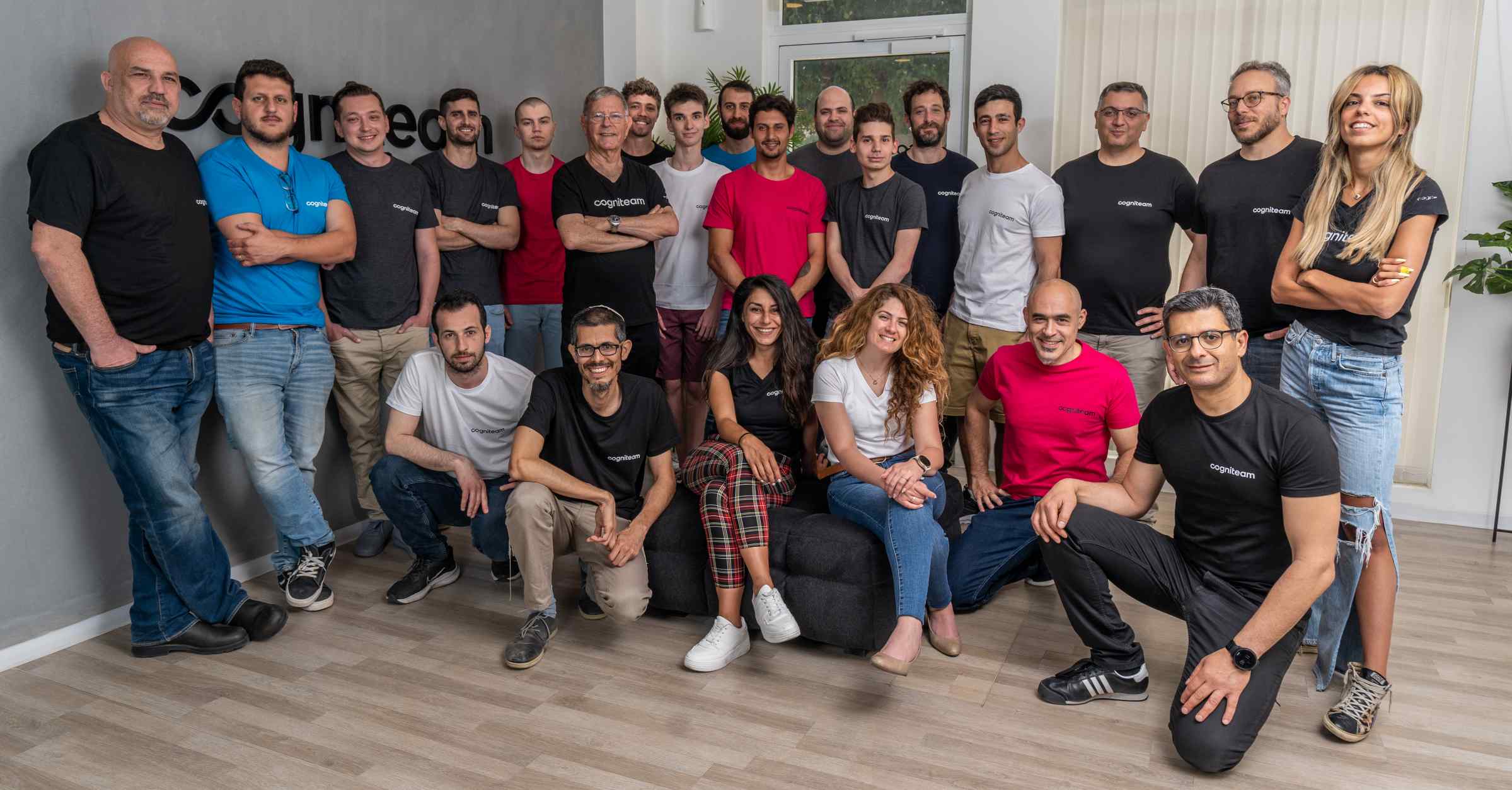
Cogniteam boosts collaborative robotic development capabilities, helping companies bring new robotic programs to market in a fraction of the time. “Our low-code approach to robotics development is changing the programming landscape,” said Dr. Yehuda Elmaliach, Co-Founder & CEO of Cogniteam.
Cogniteam, a robotics development company that recently launched the Nimbus robotics AI operating platform, announced the closing of a $5.6 million in series A. The round of funding comprised the previous investors of Seabarn Management, (Andrew Owens) and UK-based Panthera family office members. This round enables Cogniteam to boost product development and Nimbus sales further as the robotics revolution continues to show both consumer and commercial demand.
Developing a modern robotics system is traditionally a time-consuming process where software engineers yield their development to hardware engineers until they complete the build-out of physical systems needed to meet project specifications. This requires the full robotics concept to deployment process to take up to 6 years. During this time, technological development moves forward, making hardware, software, and control systems obsolete by the time new robots are deployed commercially.
“We reimagined what is possible to accelerate and future-proof robotic development with the Nimbus platform,” said Dr. Yehuda Elmaliach, Co-Founder & CEO of Cogniteam. “Nimbus’ low-code approach is changing the programming landscape by offering a simulated environment where software developers can thoroughly test their capabilities before the prototype physical robot build-out has been completed.”
Alongside this virtual testing environment, developers can select pre-built software packages from the popular ROS operating system, NVIDIA’s ISAAC SDK GEMs toolset, and field-tested algorithms that were developed in-house by Cogniteam. Once mobilized, Nimbus-operated robots are kept up to date throughout their life with the latest software developments and AI learnings through regular Cloud updates and lesson sharing.
These funds will enable Cogniteam to expand sales and support teams to onboard more companies who want to enable their robots with field-tested features. “We seized the opportunity to increase our investment in Cogniteam following the successful launch of Nimbus and the team’s demonstrated ability to surpass critical milestones,” said lead investor Andrew Owens. Cogniteam’s proven capabilities have generated exciting demand from the market, which the investors are excited to facilitate.”
In addition to the new round, Cogniteam has been handpicked to co-lead a $20 million Human-Robot Interaction (HRI) consortium, funded by the Israeli Innovation Authority. Together with other leading Israeli private and academic institutions, they are working on verbal and non-verbal communication gestures that robots can use to engage with society as they execute tasks.
In line with their mission of easy adoption of advanced capabilities, Cogniteam will open the consortium’s capabilities to their Nimbus platform for companies to utilize.
- 09:00 am
xpate, the rapidly-growing simplified cross-border payment solution provider, has announced a significant expansion of its disruptive developer team, with 35 new team members onboard to speed up building services aimed to enhance flexibility and data processing for merchants and acquirers.
The new appointments, with extensive experience at leading ecommerce platforms AliExpress, and enterprise cloud infrastructure builder Mirantis, will bring unrivalled levels of technical agility and creative user-focused design strengths to xpate.
The company’s ambitious growth plans, focused on helping customers to optimise payment flows and lower operational risk, have come to fruition over the last 12 months for the scaling company. The latest wave of developer hires takes xpate’s headcount to 135, from just three employees at the firm’s inception in 2018.
xpate’s momentum has been fuelled by the launch of breakthrough services such as its acquiring platform Links, and its Core Banking Solution (CBS) which speeds up and streamlines integration with various acquiring systems to give clients access to real-time data processing.
Supporting these services is xpate’s development of its own data warehouse, allowing the company to collect and store data in a centralised location to generate more deep analytics and reporting power for clients. Among the elevated service capabilities is the ability to offer businesses automatic reconciliation of third-party transactions, an internal monitoring and incident reporting system, and a customisable payment page for xpate’s merchants.
Mike Shafro, CEO of xpate, comments: “The past three years have been something of a whirlwind, in terms of both the success of our product offerings and the growth of our team – specifically developers.
“Since xpate’s inception, we have worked tirelessly to build a company that combines technical ingenuity with a simplified user experience, to empower merchants to capitalise on all the opportunities in cross-border ecommerce. Our people are at the heart of our culture, and as such, we have assembled a diverse team of talented individuals who not only understand the importance of this ethos, but also offer unparalleled expertise and experience across the financial sector.
“While xpate has witnessed an incredible start to the business, we will certainly not be resting on our laurels. We are constantly working on improving our products and services, and look forward to sharing these exciting and ambitious developments with our customers throughout 2022 and beyond.”
These latest additions to the company’s team follow xpate achieving Mastercard principal member status in 2021 – a significant strategic partnership that has allowed xpate to enhance its platform, offer innovative solutions to new clients, bolster its merchant acquiring portfolio, and take advantage of an extended range of products and services to strengthen market offering.
For more information on xpate, go to: www.xpate.com.
- 05:00 am
Provenir, a global leader in AI-powered risk decisioning software for the fintech industry, today announced it is part of the Visa Ready for BNPL program, providing lenders offering Buy Now Pay Later (BNPL) services the ability to make data-fueled and AI-powered intelligent decisions.
Today’s announcement builds on Provenir’s established partnership with Visa, leveraging Visa’s collaboration, expertise and vast network. In addition to Visa Ready for BNPL, Provenir is also an enabling partner with Visa’s Fintech Fast Track Program and Visa Fintech Partner Connect.
Provenir’s AI-Powered Decisioning Platform is comprised of three essential components that enable financial institutions to rapidly overcome the challenges that hold them back -- data integration, AI deployment and decisioning automation. Provenir works with disruptive financial services organizations in more than 50 countries and processes more than 3 billion transactions annually.
Says Kathy Stares, Executive Vice President, North America at Provenir:
“Provenir is proud to join Visa Ready for BNPL as an enabling partner providing AI-risk decisioning for Visa clients in the BNPL sector. In the fast-moving BNPL sector, risk decisioning that’s accurate and based on real-time information is essential. Our AI-powered risk decisioning platform provides a cohesive risk ecosystem to enable smarter decisions across the entire customer lifecycle to power many of the world’s leading BNPL providers across all continents.”
Through the Visa Ready for BNPL program, Visa establishes a robust ecosystem of partners to scale Visa’s BNPL portfolio of solutions worldwide. Visa Ready for BNPL program partners provide Visa clients access to solutions and capabilities to support standing up BNPL capabilities including acquirers, POS systems, commerce platforms, issuer/virtual card processors, digital banking providers, origination platforms, system integrators and more.
- 01:00 am
U.S. Bank announced today that it has entered into a collaboration agreement with trade-finance fintech LiquidX to help expedite and simplify supply-chain transactions between suppliers and buyers.
This collaboration – which comes at a time of unparalleled stress in the global supply chain – will pair the bank’s strong balance sheet with LiquidX’s streamlined platform technology to help address supply-chain- finance friction and cash-flow challenges facing many companies. Suppliers and buyers will be able to connect their supply-chain systems directly to U.S. Bank and transact through LiquidX’s easy-to-use platform. U.S. Bank financing solutions delivered through this collaboration will enable suppliers to be paid nearly immediately and buyers to receive extended payment terms.
“With so many supply-chain challenges for businesses, we want to help make the financing process as smooth as possible,” said Dan Son, who oversees global trade and supply-chain finance at U.S. Bank. “This new collaboration will deliver a single intuitive interface that seamlessly connects suppliers, buyers and our bank in the supply-chain ecosystem. As one of the most trusted banks in the U.S., with some of the highest debt ratings, we can unlock valuable working capital for our clients.”
The collaboration between U.S. Bank and LiquidX enhances existing supply-chain finance solutions currently available to U.S. Bank clients. The Receivables Purchase Program allows sellers to convert credit sales to immediate cash flows and reduce days sales outstanding while extending payment terms for buyers. The Approved Payables Financing Program helps buyers pay suppliers early, reduces payment-processing costs, and gives suppliers faster and more predictable access to cash.
“We are thrilled to enter this collaboration with U.S. Bank, one of the country’s largest and most innovative banks, to deliver much-needed liquidity to today’s supply chains,” said Jim Toffey, CEO of LiquidX. “We are proud that our scalable and flexible technology will make it easier, faster, and cheaper for U.S. Bank and its corporate clients to transact.”
As supply-chain decisions become strategically critical for businesses, Son said, innovative supply-chain- finance solutions provide opportunities to strengthen vendor and client relationships, reduce costs, and diversify sources of working-capital funding. In addition, supply-chain finance solutions can advance other important company priorities, such as Environmental, Social and Governance (ESG) initiatives by providing financial incentives and greater access to working capital for diverse suppliers.
- 03:00 am
Leading cryptocurrency platform Wirex has secured over 150,000 registrations to its crypto app that launched in the US 6 weeks ago. Linked to a crypto-backed Visa card, Wirex will work with Visa, a world leader in digital payments, to provide a unique set of payment and crypto services that aims to improve the everyday lives of fintech fans and crypto enthusiasts alike.
With a mission of bridging the gap between the traditional and digital economies, the London-based company has a long-standing relationship with Visa. Back in 2015, Wirex launched one of the world’s first crypto-enabled debit cards, allowing consumers to spend crypto in their everyday lives using real-time conversion at point-of-sale. They’ve gone on to develop a crypto rewards programme, Cryptoback™, which allows users to earn up to 8% in X-Points for any purchases made, automatically added to their Wirex account in-app.
With the EEA and APAC regions already bringing in over 5 million customers, Wirex is now looking forward to working with Visa and to bringing these services to a US audience, allowing crypto* to be spent throughout the US, as well as over 80 million merchant locations across the globe.
Wirex’s US product will offer users the ability to buy, hold, exchange and sell US dollars and 37 cryptocurrencies from a single intuitive app. Features include the ability to seamlessly send and receive crypto from external wallets, free domestic and international ATM withdrawals**, no annual fee or exchange fees, near instant crypto transactions, and live transaction notifications, with instant debit card top-up at zero cost. Last week, the company announced that they had enabled on-chain transactions for selected cryptocurrencies, including BTC, LTC and DOGE.
In 2020, Wirex became Visa’s second crypto-native company to be awarded principal membership of Visa in Europe. The company has invested in safety and security, upholding the highest license and regulatory standards where they exist, and using sophisticated and resilient technology such as Visa Secure, Visa’s program for authenticating ecommerce transactions using the EMV 3DS standard.
Harold Montgomery, Managing Director of Wirex USA said: “We’re delighted to tap into Visa’s expertise and global network to bring our award-winning app and card to millions of US customers. Regardless of age, background or experience, we’re endeavouring to enable mainstream users to take advantage of the benefits of crypto in the everyday. Research shows that Americans are demanding easy-to-use, affordable and safe crypto products, and Wirex’s successful launch in the US is already helping to meet these needs.”
“We want to serve as the bridge between the crypto ecosystem and our global network of merchants and financial institutions. We’re excited to work with innovative platforms like Wirex, to make it easy and seamless for consumers to spend from a crypto balance – anywhere Visa is accepted,” said AJ Shanley, VP of Visa Crypto.
Wirex will continue to serve US customers by expanding the products and features available. Over the coming months, they plan to allow users to top-up their card using Plaid and ACH, as well as seamless payments with Apple and Google Pay. For crypto users, there will be new tokens across the Bitcoin, Ethereum and Avalanche blockchains, and level 2 network support for lower gas fees and faster crypto transaction times.
- 06:00 am

Leading global AI-powered credit decision platform provider, Scienaptic AI announced that SECU (State Employees’ Credit Union of Maryland) is planning to implement its AI-powered credit decisioning platform. The deployment, scheduled for later this year, will enhance and augment SECU’s credit decisioning and underwriting capabilities for new and prospective members.
SECU began operations in October 1951 in the hallway of the Miller Building in downtown Baltimore. Its first member was the late Governor Theodore R. McKeldin. In January 1952, SECU made its first loan – for $180. Thanks to the enthusiastic response by state employees, membership and services grew, and SECU was able to open its first official office in Spring 1953. Today, SECU is Maryland’s largest credit union with 25 branches throughout Maryland, Virtual Financial Center and 50,000+ free ATMs. It is a full-service financial institution serving over 250,000 members and managing over $4 billion in assets.
“We lead with our hearts - our vision remains to make a positive contribution to the financial well-being of those we serve,” said Kevin Kesecker, EVP and Chief Administrative Officer at SECU. “In Scienaptic AI we have found a partner whose mission, vision and culture uniquely align with ours. Through the deployment of the Scienaptic AI platform, we will be able to approve more credit at lower loss rates, make faster credit decisions and offer solutions that help our members achieve financial well-being. It will strengthen our member relationships, support their financial needs and enhance their experience."
"We are driven to improve the financial lives of members SECU serves through credit empowerment and personalized decisions,” said Pankaj Jain, Co-founder and President of Scienaptic AI. “In our shared passion to WOW members and exceed their expectations, we feel privileged that our AI will help increase credit access and support SECU members in fulfilling their dreams.”








